
Salesforce MuleSoft Integration Architect I Practice Exams
Last updated on Nov 16,2026- Exam Code: MuleSoft Integration Architect I
- Exam Name: Salesforce Certified MuleSoft Integration Architect I
- Certification Provider: Salesforce
- Latest update: Nov 16,2026
A banking company is developing a new set of APIs for its online business. One of the critical API’s is a master lookup API which is a system API. This master lookup API uses persistent object store. This API will be used by all other APIs to provide master lookup data.
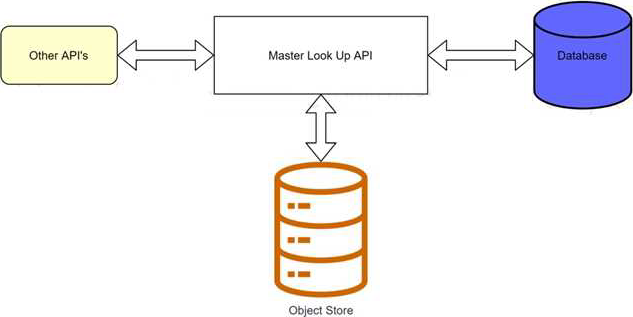
Master lookup API is deployed on two cloudhub workers of 0.1 vCore each because there is a lot of master data to be cached. Master lookup data is stored as a key value pair. The cache gets refreshed if they key is not found in the cache.
Doing performance testing it was observed that the Master lookup API has a higher response time due to database queries execution to fetch the master lookup data.
Due to this performance issue, go-live of the online business is on hold which could cause potential financial loss to Bank.
As an integration architect, which of the below option you would suggest to resolve performance issue?
- A . Implement HTTP caching policy for all GET endpoints for the master lookup API and implement locking to synchronize access to object store
- B . Upgrade vCore size from 0.1 vCore to 0,2 vCore
- C . Implement HTTP caching policy for all GET endpoints for master lookup API
- D . Add an additional Cloudhub worker to provide additional capacity
An organization is creating a set of new services that are critical for their business. The project team prefers using REST for all services but is willing to use SOAP with common WS-" standards if a particular service requires it.
What requirement would drive the team to use SOAP/WS-* for a particular service?
- A . Must use XML payloads for the service and ensure that it adheres to a specific schema
- B . Must publish and share the service specification (including data formats) with the consumers of the service
- C . Must support message acknowledgement and retry as part of the protocol
- D . Must secure the service, requiring all consumers to submit a valid SAML token
D
Explanation:
Security Assertion Markup Language (SAML) is an open standard that allows identity providers (IdP) to pass authorization credentials to service providers (SP).
SAML transactions use Extensible Markup Language (XML) for standardized communications between the identity provider and service providers.
SAML is the link between the authentication of a user’s identity and the authorization to use a service.
WS-Security is the key extension that supports many authentication models including: basic username/password credentials, SAML, OAuth and more.
A common way that SOAP API’s are authenticated is via SAML Single Sign On (SSO). SAML works by facilitating the exchange of authentication and authorization credentials across applications. However, there is no specification that describes how to add SAML to REST web services.
Reference: https://www.oasis-open.org/committees/download.php/16768/wss-v1.1-spec-os-SAMLTokenProfile.pdf
What Anypoint Connectors support transactions?
- A . Database, JMS, VM
- B . Database, 3MS, HTTP
- C . Database, JMS, VM, SFTP
- D . Database, VM, File
A
Explanation:
Below Anypoint Connectors support transactions ● JMS C Publish C Consume ● VM C Publish C Consume ● Database C All operations
What is required before an API implemented using the components of Anypoint Platform can be managed and governed (by applying API policies) on Anypoint Platform?
- A . The API must be published to Anypoint Exchange and a corresponding API instance ID must be obtained from API Manager to be used in the API implementation
- B . The API implementation source code must be committed to a source control management system (such as GitHub)
- C . A RAML definition of the API must be created in API designer so it can then be published to Anypoint Exchange
- D . The API must be shared with the potential developers through an API portal so API consumers can interact with the API
A
Explanation:
Context of the question is about managing and governing mule applications deployed on Anypoint platform.
Anypoint API Manager (API Manager) is a component of Anypoint Platform that enables you to manage, govern, and secure APIs. It leverages the runtime capabilities of API Gateway and Anypoint Service Mesh, both of which enforce policies, collect and track analytics data, manage proxies, provide encryption and authentication, and manage applications.
Mule Ref Doc: https://docs.mulesoft.com/api-manager/2.x/getting-started-proxy
Reference: https://docs.mulesoft.com/api-manager/2.x/api-auto-discovery-new-concept
An organization plans to use the Anypoint Platform audit logging service to log Anypoint MQ actions.
What consideration must be kept in mind when leveraging Anypoint MQ Audit Logs?
- A . Anypoint MQ Audit Logs include logs for sending, receiving, or browsing messages
- B . Anypoint MQ Audit Logs include fogs for failed Anypoint MQ operations
- C . Anypoint MQ Audit Logs include logs for queue create, delete, modify, and purge operations
An organization has just developed a Mule application that implements a REST API. The mule application will be deployed to a cluster of customer hosted Mule runtimes.
What additional infrastructure component must the customer provide in order to distribute inbound API requests across the Mule runtimes of the cluster?
- A . A message broker
- B . An HTTP Load Balancer
- C . A database
- D . An Object Store
B
Explanation:
Correct answer is An HTTP Load Balancer.
Key thing to note here is that we are deploying application to customer hosted Mule runtime. This means we will need load balancer to route the requests to different instances of the cluster. Rest all options are distractors and their requirement depends on project use case.
A Mule application is being designed to do the following:
Step 1: Read a SalesOrder message from a JMS queue, where each SalesOrder consists of a header and a list of SalesOrderLineltems.
Step 2: Insert the SalesOrder header and each SalesOrderLineltem into different tables in an RDBMS. Step 3: Insert the SalesOrder header and the sum of the prices of all its SalesOrderLineltems into a table In a different RDBMS.
No SalesOrder message can be lost and the consistency of all SalesOrder-related information in both RDBMSs must be ensured at all times.
What design choice (including choice of transactions) and order of steps addresses these requirements?
- A . 1) Read the JMS message (NOT in an XA transaction)
2) Perform BOTH DB inserts in ONE DB transaction
3) Acknowledge the JMS message - B . 1) Read the JMS message (NOT in an XA transaction)
2) Perform EACH DB insert in a SEPARATE DB transaction
3) Acknowledge the JMS message - C . 1) Read the JMS message in an XA transaction
2) In the SAME XA transaction, perform BOTH DB inserts but do NOT acknowledge the JMS message - D . 1) Read and acknowledge the JMS message (NOT in an XA transaction)
2) In a NEW XA transaction, perform BOTH DB inserts
A
Explanation:
● Option A says "Perform EACH DB insert in a SEPARATE DB transaction". In this case if first DB insert is successful and second one fails then first insert won’t be rolled back causing inconsistency. This option is ruled out.
● Option D says Perform BOTH DB inserts in ONE DB transaction.
Rule of thumb is when one or more DB connections are required we must use XA transaction as local transactions support only one resource. So this option is also ruled out.
● Option B acknowledges the before DB processing, so message is removed from the queue. In case of system failure at later point, message can’t be retrieved.
● Option C is Valid: Though it says "do not ack JMS message", message will be auto acknowledged at the end of transaction. Here is how we can ensure all components are part of XA transaction: https://docs.mulesoft.com/jms-connector/1.7/jms-transactions
Additional Information about transactions:
● XA Transactions – You can use an XA transaction to group together a series of operations from multiple transactional resources, such as JMS, VM or JDBC resources, into a single, very reliable, global transaction.
● The XA (eXtended Architecture) standard is an X/Open group standard which specifies the interface between a global transaction manager and local transactional resource managers.
The XA protocol defines a 2-phase commit protocol which can be used to more reliably coordinate and sequence a series of "all or nothing" operations across multiple servers, even servers of different types
● Use JMS ack if
C Acknowledgment should occur eventually, perhaps asynchronously
C The performance of the message receipt is paramount
C The message processing is idempotent
C For the choreography portion of the SAGA pattern
● Use JMS transactions
C For all other times in the integration you want to perform an atomic unit of work
C When the unit of work comprises more than the receipt of a single message
C To simply and unify the programming model (begin/commit/rollback)
An API client is implemented as a Mule application that includes an HTTP Request operation using a default configuration. The HTTP Request operation invokes an external API that follows standard HTTP status code conventions, which causes the HTTP Request operation to return a 4xx status code.
What is a possible cause of this status code response?
- A . An error occurred inside the external API implementation when processing the HTTP request that was received from the outbound HTTP Request operation of the Mule application
- B . The external API reported that the API implementation has moved to a different external endpoint
- C . The HTTP response cannot be interpreted by the HTTP Request operation of the Mule application after it was received from the external API
- D . The external API reported an error with the HTTP request that was received from the outbound HTTP Request operation of the Mule application
D
Explanation:
Correct choice is: "The external API reported an error with the HTTP request that was received from the outbound HTTP Request operation of the Mule application"
Understanding HTTP 4XX Client Error Response Codes: A 4XX Error is an error that arises in cases where there is a problem with the user’s request, and not with the server.
Such cases usually arise when a user’s access to a webpage is restricted, the user misspells the URL, or when a webpage is nonexistent or removed from the public’s view.
In short, it is an error that occurs because of a mismatch between what a user is trying to access, and its availability to the user ― either because the user does not have the right to access it, or because what the user is trying to access simply does not exist. Some of the examples of 4XX errors are 400 Bad Request The server could not understand the request due to invalid syntax. 401
Unauthorized Although the HTTP standard specifies "unauthorized", semantically this response means "unauthenticated". That is, the client must authenticate itself to get the requested response. 403 Forbidden The client does not have access rights to the content; that is, it is unauthorized, so the server is refusing to give the requested resource. Unlike 401, the client’s identity is known to the server. 404 Not Found The server can not find the requested resource. In the browser, this means the URL is not recognized. In an API, this can also mean that the endpoint is valid but the resource itself does not exist. Servers may also send this response instead of 403 to hide the existence of a resource from an unauthorized client. This response code is probably the most famous one due to its frequent occurrence on the web. 405 Method Not Allowed The request method is known by the server but has been disabled and cannot be used. For example, an API may forbid DELETE-ing a resource. The two mandatory methods, GET and HEAD, must never be disabled and should not return this error code. 406 Not Acceptable This response is sent when the web server, after performing server-driven content negotiation, doesn’t find any content that conforms to the criteria given by the user agent. The external API reported that the API implementation has moved to a different external endpoint cannot be the correct answer as in this situation 301 Moved Permanently The URL of the requested resource has been changed permanently. The new URL is given in the response.
In Lay man’s
term the scenario would be: API CLIENT ―> MuleSoft API – HTTP request “Hey, API.. process this” ―> External API API CLIENT <C MuleSoft API – http response "I’m sorry Client.. something is wrong with that request" <C (4XX) External API
In Anypoint Platform, a company wants to configure multiple identity providers (IdPs) for multiple lines of business (LOBs). Multiple business groups, teams, and environments have been defined for these LOBs.
What Anypoint Platform feature can use multiple IdPs across the company’s business groups, teams, and environments?
- A . MuleSoft-hosted (CloudHub) dedicated load balancers
- B . Client (application) management
- C . Virtual private clouds
- D . Permissions
A
Explanation:
To use a dedicated load balancer in your environment, you must first create an Anypoint VPC. Because you can associate multiple environments with the same Anypoint VPC, you can use the same dedicated load balancer for your different environments.
Reference: https://docs.mulesoft.com/runtime-manager/cloudhub-dedicated-load-balancer
An integration Mute application is being designed to process orders by submitting them to a backend system for offline processing. Each order will be received by the Mute application through an HTTPS POST and must be acknowledged immediately. Once acknowledged, the order will be submitted to a backend system. Orders that cannot be successfully submitted due to rejections from the backend system will need to be processed manually (outside the backend system).
The Mule application will be deployed to a customer-hosted runtime and is able to use an existing ActiveMQ broker if needed.
The backend system has a track record of unreliability both due to minor network connectivity issues and longer outages.
What idiomatic (used for their intended purposes) combination of Mule application components and ActiveMQ queues are required to ensure automatic submission of orders to the backend system, while minimizing manual order processing?
- A . An On Error scope Non-persistent VM ActiveMQ Dead Letter Queue for manual processing
- B . An On Error scope MuleSoft Object Store ActiveMQ Dead Letter Queue for manual processing
- C . Until Successful component MuleSoft Object Store ActiveMQ is NOT needed or used
- D . Until Successful component ActiveMQ long retry Queue ActiveMQ Dead Letter Queue for manual processing
D
Explanation:
Correct answer is using below set of activities Until Successful component ActiveMQ long retry Queue ActiveMQ Dead Letter Queue for manual processing We will see why this is correct answer but before that lets understand few of the concepts which we need to know. Until Successful Scope. The Until Successful scope processes messages through its processors until the entire operation succeeds. Until Successful repeatedly retries to process a message that is attempting to complete an activity such as: – Dispatching to outbound endpoints, for example, when calling a remote web service that may have availability issues. – Executing a component method, for example, when executing on a Spring bean that may depend on unreliable resources. – A sub-flow execution, to keep re-executing several actions until they all succeed, – Any other message processor execution, to allow more complex scenarios.
How this will help requirement: Using Until Successful Scope we can retry sending the order to backend systems in case of error to avoid manual processing later. Retry values can be configured in Until Successful Scope Apache ActiveMQ It is an open source message broker written in Java together with a full Java Message Service client ActiveMQ has the ability to deliver messages with delays thanks to its scheduler. This functionality is the base for the broker redelivery plug-in. The redelivery plug-in can intercept dead letter processing and reschedule the failing messages for redelivery. Rather than being delivered to a DLQ, a failing message is scheduled to go to the tail of the original queue and redelivered to a message consumer.
How this will help requirement: If backend application is down for a longer duration where Until Successful Scope wont work, then we can make use of ActiveMQ long retry Queue. The redelivery plug-in can intercept dead letter processing and reschedule the failing messages for redelivery. Mule
Reference: https://docs.mulesoft.com/mule-runtime/4.3/migration-core-until-successful