
Salesforce MuleSoft Integration Architect I Practice Exams
Last updated on Nov 16,2026- Exam Code: MuleSoft Integration Architect I
- Exam Name: Salesforce Certified MuleSoft Integration Architect I
- Certification Provider: Salesforce
- Latest update: Nov 16,2026
A company is implementing a new Mule application that supports a set of critical functions driven by a rest API enabled, claims payment rules engine hosted on oracle ERP. As designed the mule application requires many data transformation operations as it performs its batch processing logic. The company wants to leverage and reuse as many of its existing java-based capabilities (classes, objects, data model etc.) as possible
What approach should be considered when implementing required data mappings and transformations between Mule application and Oracle ERP in the new Mule application?
- A . Create a new metadata RAML classes in Mule from the appropriate Java objects and then perform transformations via Dataweave
- B . From the mule application, transform via theXSLT model
- C . Transform by calling any suitable Java class from Dataweave
- D . Invoke any of the appropriate Java methods directly, create metadata RAML classes and then perform required transformations via Dataweave
What aspect of logging is only possible for Mule applications deployed to customer-hosted Mule runtimes, but NOT for Mule applications deployed to CloudHub?
- A . To send Mule application log entries to Splunk
- B . To change tog4j2 tog levels in Anypoint Runtime Manager without having to restart the Mule application
- C . To log certain messages to a custom log category
- D . To directly reference one shared and customized log4j2.xml file from multiple Mule applications
D
Explanation:
* Correct answer is To directly reference one shared and customized log4j2.xml file from multiple Mule applications. Key word to note in the answer is directly.
* By default, CloudHub replaces a Mule application’s log4j2.xml file with a CloudHub log4j2.xml file. This specifies the CloudHub appender to write logs to the CloudHub logging service.
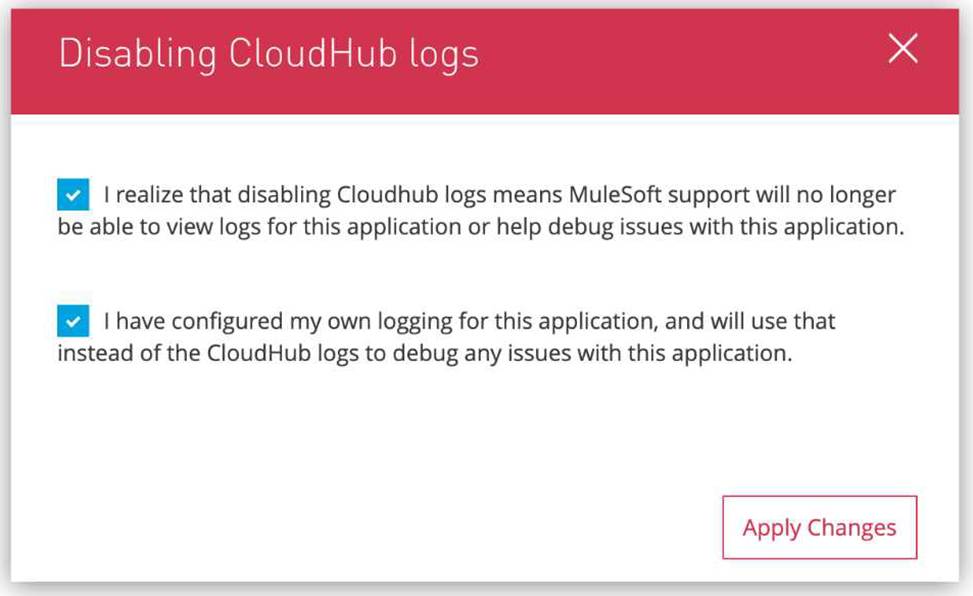
* You cannot modify CloudHub log4j2.xml file to add any custom appender. But there is a process in order to achieve this. You need to raise a request on support portal to disable CloudHub provided Mule application log4j2 file.
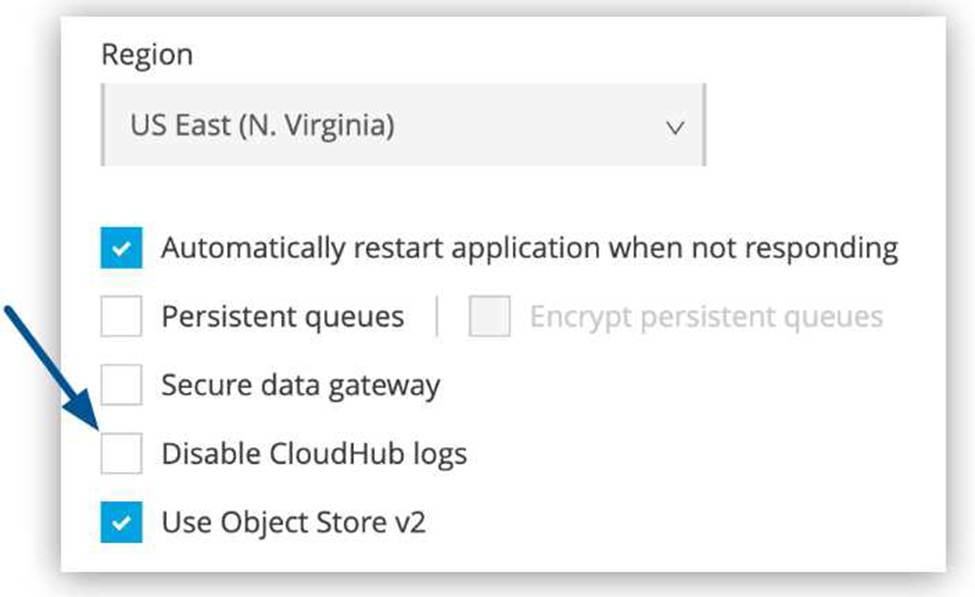
* Once this is done, Mule application’s log4j2.xml file is used which you can use to send/export application logs to other log4j2 appenders, such as a custom logging system MuleSoft does not own any responsibility for lost logging data due to misconfiguration of your own log4j appender if it happens by any chance.
* One more difference between customer-hosted Mule runtimes and CloudHub deployed mule instance is that
– CloudHub system log messages cannot be sent to external log management system without installing custom CH logging configuration through support
– where as Customer-hosted runtime can send system and application log to external log management system
MuleSoft
Reference:
https://docs.mulesoft.com/runtime-manager/viewing-log-data
https://docs.mulesoft.com/runtime-manager/custom-log-appender
A team would like to create a project skeleton that developers can use as a starting point when creating API Implementations with Anypoint Studio. This skeleton should help drive consistent use of best practices within the team.
What type of Anypoint Exchange artifact(s) should be added to Anypoint Exchange to publish the project skeleton?
- A . A custom asset with the default API implementation
- B . A RAML archetype and reusable trait definitions to be reused across API implementations
- C . An example of an API implementation following best practices
- D . a Mule application template with the key components and minimal integration logic
D
Explanation:
* Sharing Mule applications as templates is a great way to share your work with other people who are in your organization in Anypoint Platform. When they need to build a similar application they can create the mule application using the template project from Anypoint studio.
* Anypoint Templates are designed to make it easier and faster to go from a blank canvas to a production application. They’re bit for bit Mule applications requiring only Anypoint Studio to build and design, and are deployable both on-premises and in the cloud.
* Anypoint Templates are based on five common data Integration patterns and can be customized and extended to fit your integration needs. So even if your use case involves different endpoints or connectors than those included in the template, they still offer a great starting point.
Some of the best practices while creating the template project: – Define the common error handler as part of template project, either using pom dependency or mule config file – Define common logger/audit framework as part of the template project – Define the env specific properties and secure properties file as per the requirement – Define global.xml for global configuration – Define the config file for connector configuration like Http,Salesforce,File,FTP etc – Create separate folders to create DWL,Properties,SSL certificates etc – Add the dependency and configure the pom.xml as per the business need – Configure the mule-artifact.json as per the business need
An automation engineer needs to write scripts to automate the steps of the API lifecycle, including steps to create, publish, deploy and manage APIs and their implementations in Anypoint Platform.
What Anypoint Platform feature can be used to automate the execution of all these actions in scripts in the easiest way without needing to directly invoke the Anypoint Platform REST APIs?
- A . Automated Policies in API Manager
- B . Runtime Manager agent
- C . The Mule Maven Plugin
- D . Anypoint CLI
D
Explanation:
Anypoint Platform provides a scripting and command-line tool for both Anypoint Platform and Anypoint Platform Private Cloud Edition (Anypoint Platform PCE). The command-line interface (CLI) supports both the interactive shell and standard CLI modes and works with: Anypoint Exchange Access management Anypoint Runtime Manager
An organization is using Mulesoft cloudhub and develops API’s in the latest version. As a part of requirements for one of the API’s, third party API needs to be called. The security team has made it clear that calling any external API needs to have include listing
As an integration architect please suggest the best way to accomplish the design plan to support these requirements?
- A . Implement includelist IP on the cloudhub VPC firewall to allow the traffic
- B . Implement the validation of includelisted IP operation
- C . Implement the Any point filter processor to implement the include list IP
- D . Implement a proxy for the third party API and enforce the IPinclude list policy and call this proxy from the flow of the API
A team has completed the build and test activities for a Mule application that implements a System API for its application network.
Which Anypoint Platform component should the team now use to both deploy and monitor the System AP implementation?
- A . API Manager
- B . Design Center
- C . Anypoint Exchange
- D . Runtime Manager
What Is a recommended practice when designing an integration Mule 4 application that reads a large XML payload as a stream?
- A . The payload should be dealt with as a repeatable XML stream, which must only be traversed (iterated-over) once and CANNOT be accessed randomly from DataWeave expressions and scripts
- B . The payload should be dealt with as an XML stream, without converting it to a single Java object (POJO)
- C . The payload size should NOT exceed the maximum available heap memory of the Mute runtime on which the Mule application executes
- D . The payload must be cached using a Cache scope If It Is to be sent to multiple backend systems
C
Explanation:
If the size of the stream exceeds the maximum, a STREAM_MAXIMUM_SIZE_EXCEEDED error is raised.
An external web UI application currently accepts occasional HTTP requests from client web browsers to change (insert, update, or delete) inventory pricing information in an inventory system’s database. Each inventory pricing change must be transformed and then synchronized with multiple customer experience systems in near real-time (in under 10 seconds). New customer experience systems are expected to be added in the future.
The database is used heavily and limits the number of SELECT queries that can be made to the database to 10 requests per hour per user.
What is the most scalable, idiomatic (used for its intended purpose), decoupled. reusable, and maintainable integration mechanism available to synchronize each inventory pricing change with the various customer experience systems in near real-time?
- A . Write a Mule application with a Database On Table Row event source configured for the inventory pricing database, with the watermark attribute set to an appropriate database column
In the same now, use a Scatter-Gather to call each customer experience system’s REST API with transformed inventory-pricing records - B . Add a trigger to the inventory-pricing database table so that for each change to the inventory pricing database, a stored procedure is called that makes a REST call to a Mule application
Write the Mule application to publish each Mule event as a message to an Anypoint MQ exchange
Write other Mule applications to subscribe to the Anypoint MQ exchange, transform each received message, and then update the Mule application’s corresponding customer experience system(s) - C . Replace the external web UI application with a Mule application to accept HTTP requests from client web browsers
In the same Mule application, use a Batch Job scope to test if the database request will succeed, aggregate pricing changes within a short time window, and then update both the inventory pricing database and each customer experience system using a Parallel For Each scope - D . Write a Mule application with a Database On Table Row event source configured for the inventory pricing database, with the ID attribute set to an appropriate database column
In the same flow, use a Batch Job scope to publish transformed Inventory-pricing records to an Anypoint MQ queue
Write other Mule applications to subscribe to the Anypoint MQ queue, transform each received message, and then update the Mule application’s corresponding customer experience system(s)
What is true about the network connections when a Mule application uses a JMS connector to interact with a JMS provider (message broker)?
- A . To complete sending a JMS message, the JMS connector must establish a network connection with the JMS message recipient
- B . To receive messages into the Mule application, the JMS provider initiates a network connection to the JMS connector and pushes messages along this connection
- C . The JMS connector supports both sending and receiving of JMS messages over the protocol determined by the JMS provider
- D . The AMQP protocol can be used by the JMS connector to portably establish connections to various types of JMS providers
C
Explanation:
* To send message or receive JMS (Java Message Service) message no separate network connection need to be established. So option A, C and D are ruled out.
Correct Answer. The JMS connector supports both sending and receiving of JMS Explanation. messages over the protocol determined by the JMS provider.
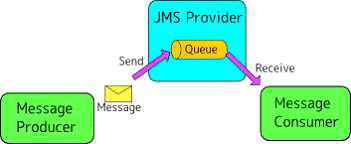
* JMS Connector enables sending and receiving messages to queues and topics for any message service that implements the JMS specification.
* JMS is a widely used API for message-oriented middleware.
* It enables the communication between different components of a distributed application to be loosely coupled, reliable, and asynchronous.
MuleSoft Doc
Reference: https://docs.mulesoft.com/jms-connector/1.7/
Insurance organization is planning to deploy Mule application in MuleSoft Hosted runtime plane. As a part of requirement, application should be scalable . highly available. It also has regulatory requirement which demands logs to be retained for at least 2 years.
As an Integration Architect what step you will recommend in order to achieve this?
- A . It is not possible to store logs for 2 years in CloudHub deployment. External log management system is required.
- B . When deploying an application to CloudHub, logs retention period should be selected as 2 years
- C . When deploying an application to CloudHub, worker size should be sufficient to store 2 years data
- D . Logging strategy should be configured accordingly in log4j file deployed with the application.
A
Explanation:
Correct answer is It is not possible to store logs for 2 years in CloudHub deployment. External log management system is required. CloudHub has a specific log retention policy, as described in the documentation: the platform stores logs of up to 100 MB per app & per worker or for up to 30 days, whichever limit is hit first. Once this limit has been reached, the oldest log information is deleted in chunks and is irretrievably lost. The recommended approach is to persist your logs to a external logging system of your choice (such as Splunk, for instance) using a log appender. Please note that this solution results in the logs no longer being stored on our platform, so any support cases you lodge will require for you to provide the appropriate logs for review and case resolution