
Microsoft DP-203 Practice Exams
Last updated on Nov 16,2026- Exam Code: DP-203
- Exam Name: Data Engineering on Microsoft Azure
- Certification Provider: Microsoft
- Latest update: Nov 16,2026
You are deploying a lake database by using an Azure Synapse database template.
You need to add additional tables to the database. The solution must use the same grouping method as the template tables.
‘Which grouping method should you use?
- A . business area
- B . size
- C . facts and dimensions
- D . partition style
You have an Azure Synapse workspace named MyWorkspace that contains an Apache Spark database named mytestdb.
You run the following command in an Azure Synapse Analytics Spark pool in MyWorkspace.
CREATE TABLE mytestdb.myParquetTable(
EmployeeID int,
EmployeeName string,
EmployeeStartDate date)
USING Parquet
You then use Spark to insert a row into mytestdb.myParquetTable.
The row contains the following data.

One minute later, you execute the following query from a serverless SQL pool in MyWorkspace.
SELECT EmployeeID
FROM mytestdb.dbo.myParquetTable
WHERE name = ‘Alice’;
What will be returned by the query?
- A . 24
- B . an error
- C . a null value
HOTSPOT
You are planning the deployment of Azure Data Lake Storage Gen2.
You have the following two reports that will access the data lake:
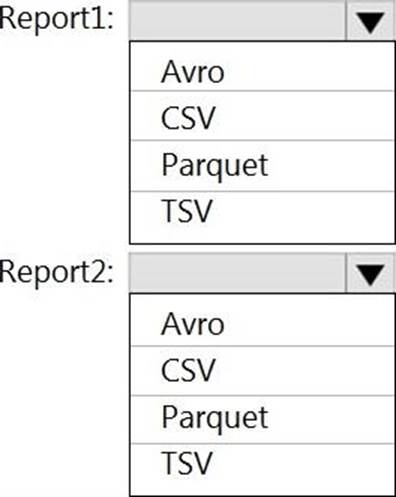
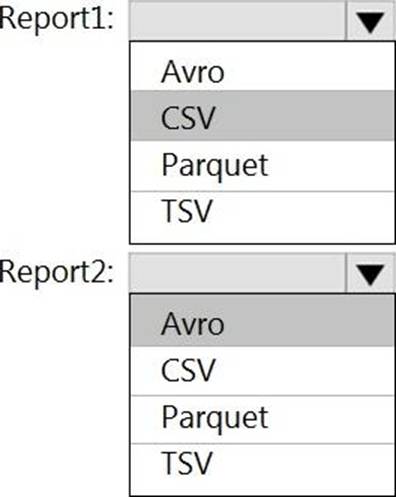
✑ Report1: Reads three columns from a file that contains 50 columns.
✑ Report2: Queries a single record based on a timestamp.
You need to recommend in which format to store the data in the data lake to support the reports. The solution must minimize read times.
What should you recommend for each report? To answer, select the appropriate options in the answer area. NOTE: Each correct selection is worth one point.
You have an Azure data factory.
You need to examine the pipeline failures from the last 180 flays.
What should you use?
- A . the Activity tog blade for the Data Factory resource
- B . Azure Data Factory activity runs in Azure Monitor
- C . Pipeline runs in the Azure Data Factory user experience
- D . the Resource health blade for the Data Factory resource
You create an Azure Databricks cluster and specify an additional library to install.
When you attempt to load the library to a notebook, the library in not found.
You need to identify the cause of the issue.
What should you review?
- A . notebook logs
- B . cluster event logs
- C . global init scripts logs
- D . workspace logs
You create an Azure Databricks cluster and specify an additional library to install.
When you attempt to load the library to a notebook, the library in not found.
You need to identify the cause of the issue.
What should you review?
- A . notebook logs
- B . cluster event logs
- C . global init scripts logs
- D . workspace logs
HOTSPOT
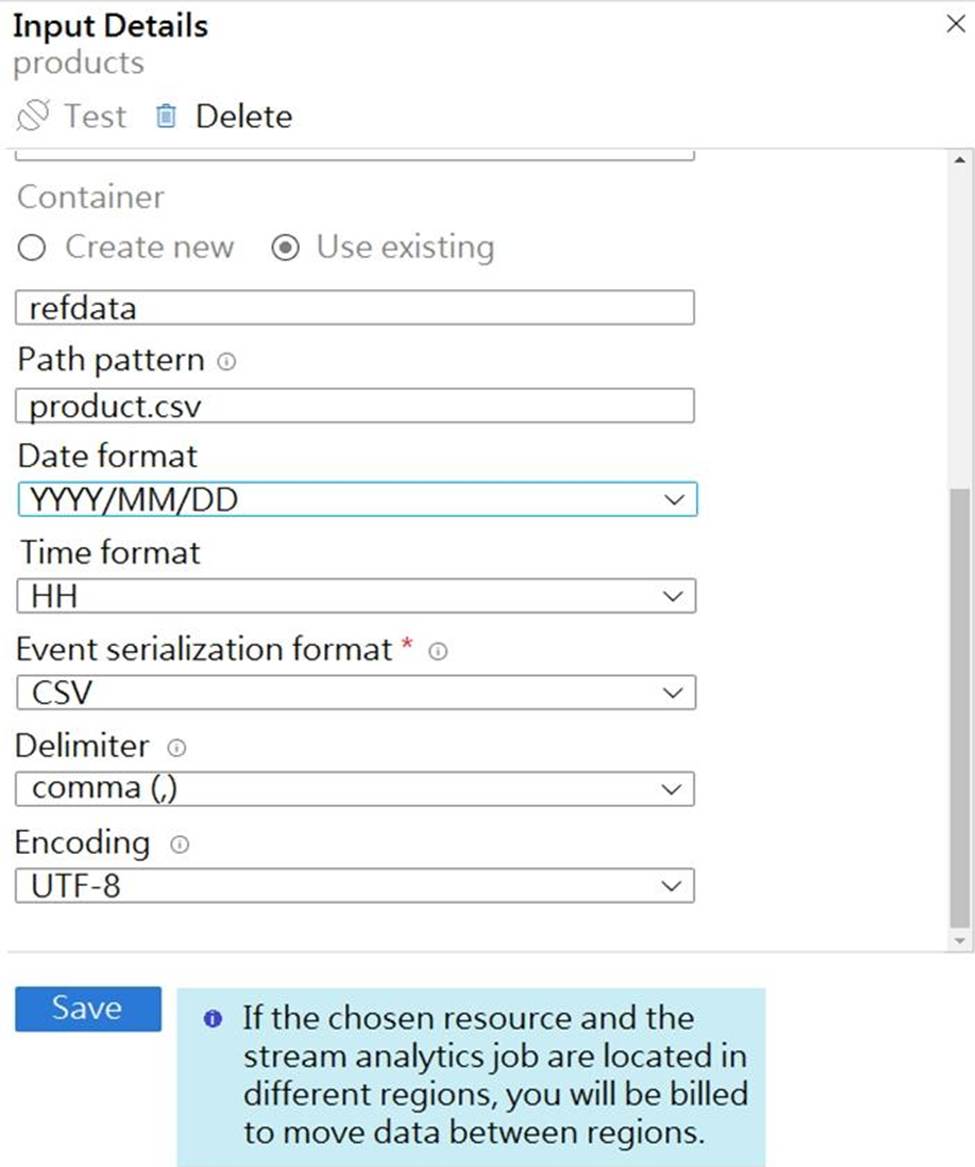
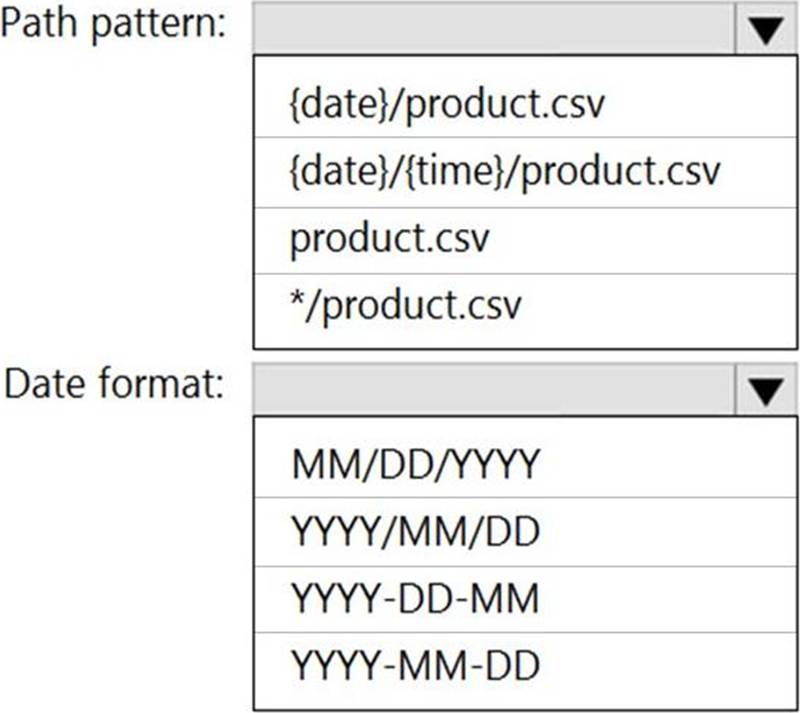
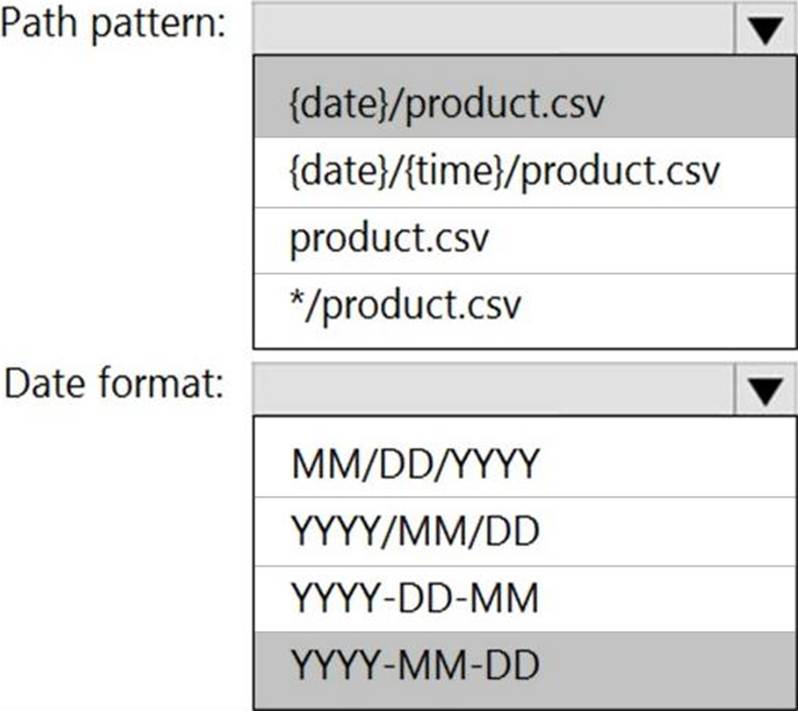
You are building an Azure Stream Analytics job that queries reference data from a product catalog file. The file is updated daily.
The reference data input details for the file are shown in the Input exhibit. (Click the Input tab.)
The storage account container view is shown in the Refdata exhibit. (Click the Refdata tab.)
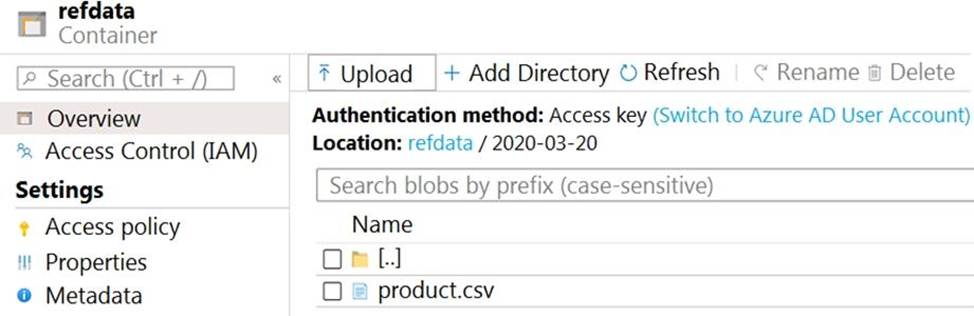
You need to configure the Stream Analytics job to pick up the new reference data.
What should you configure? To answer, select the appropriate options in the answer area. NOTE: Each correct selection is worth one point.
DRAG DROP
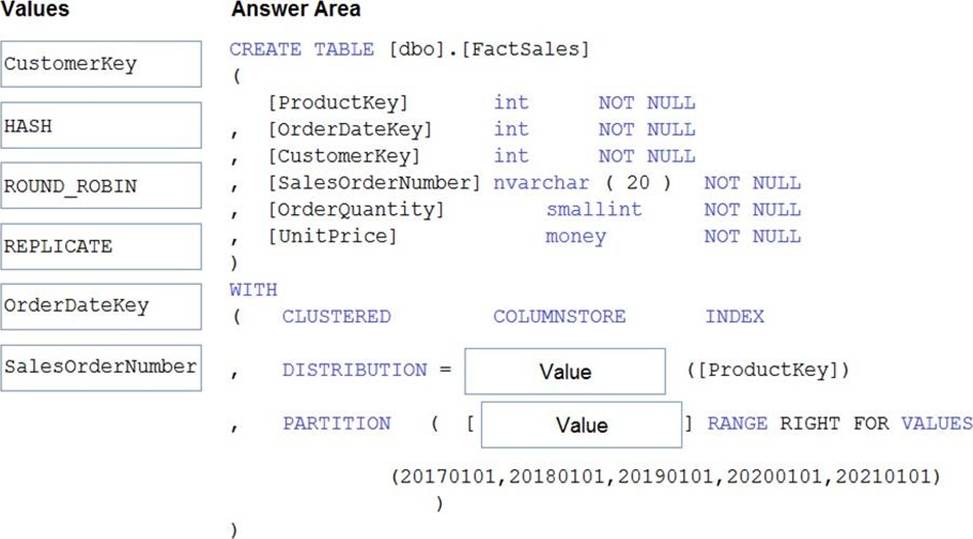
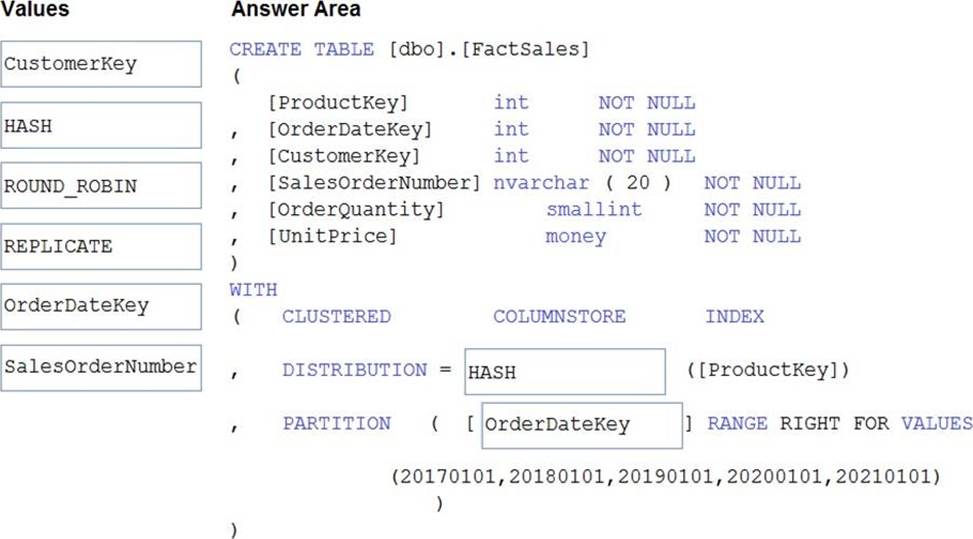
You plan to create a table in an Azure Synapse Analytics dedicated SQL pool.
Data in the table will be retained for five years. Once a year, data that is older than five years will be deleted.
You need to ensure that the data is distributed evenly across partitions. The solution must minimize the amount of time required to delete old data.
How should you complete the Transact-SQL statement? To answer, drag the appropriate values to the correct targets. Each value may be used once, more than once, or not at all. You may need to drag the split bar between panes or scroll to view content. NOTE: Each correct selection is worth one point.
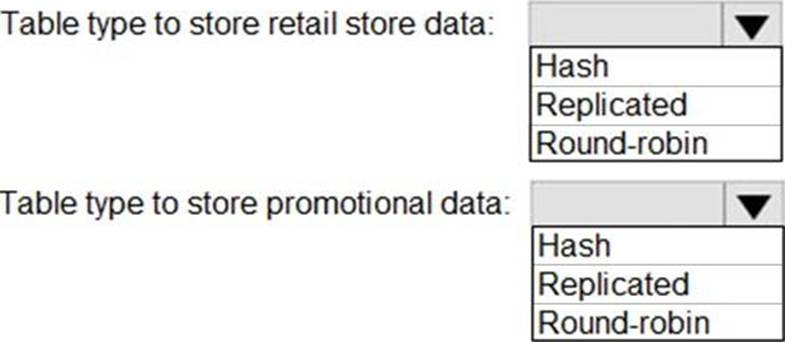
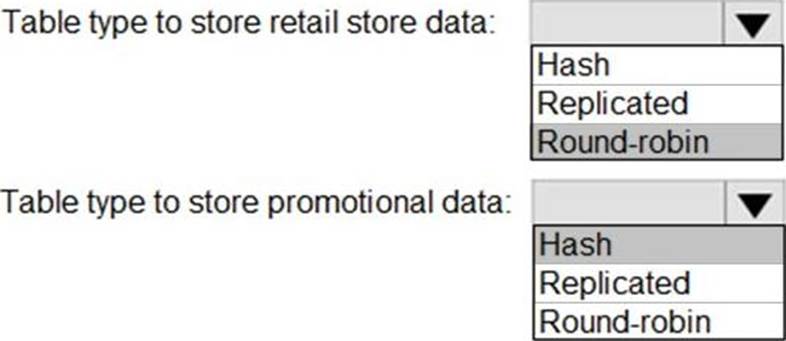
HOTSPOT
You need to design an analytical storage solution for the transactional data. The solution must meet the sales transaction dataset requirements.
What should you include in the solution? To answer, select the appropriate options in the answer area. NOTE: Each correct selection is worth one point.
You are creating an Azure Data Factory data flow that will ingest data from a CSV file, cast columns to specified types of data, and insert the data into a table in an Azure Synapse Analytic dedicated SQL pool. The CSV file contains three columns named username, comment, and date.
The data flow already contains the following:
✑ A source transformation.
✑ A Derived Column transformation to set the appropriate types of data.
✑ A sink transformation to land the data in the pool.
You need to ensure that the data flow meets the following requirements:
✑ All valid rows must be written to the destination table.
✑ Truncation errors in the comment column must be avoided proactively.
✑ Any rows containing comment values that will cause truncation errors upon insert must be written to a file in blob storage.
Which two actions should you perform? Each correct answer presents part of the solution . NOTE: Each correct selection is worth one point.
- A . To the data flow, add a sink transformation to write the rows to a file in blob storage.
- B . To the data flow, add a Conditional Split transformation to separate the rows that will cause truncation errors.
- C . To the data flow, add a filter transformation to filter out rows that will cause truncation errors.
- D . Add a select transformation to select only the rows that will cause truncation errors.