
Microsoft AZ-120 Practice Exams
Last updated on Nov 16,2026- Exam Code: AZ-120
- Exam Name: Planning and Administering Microsoft Azure for SAP Workloads
- Certification Provider: Microsoft
- Latest update: Nov 16,2026
HOTSPOT
You have an Azure Availability Set that is configured as shown in the following exhibit.
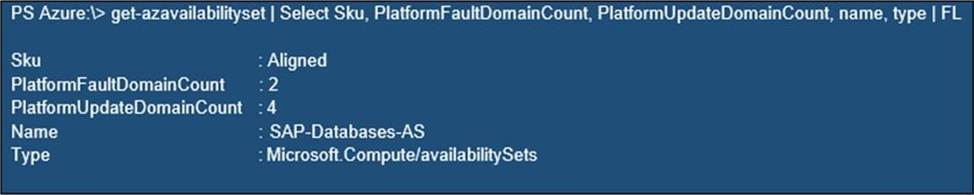
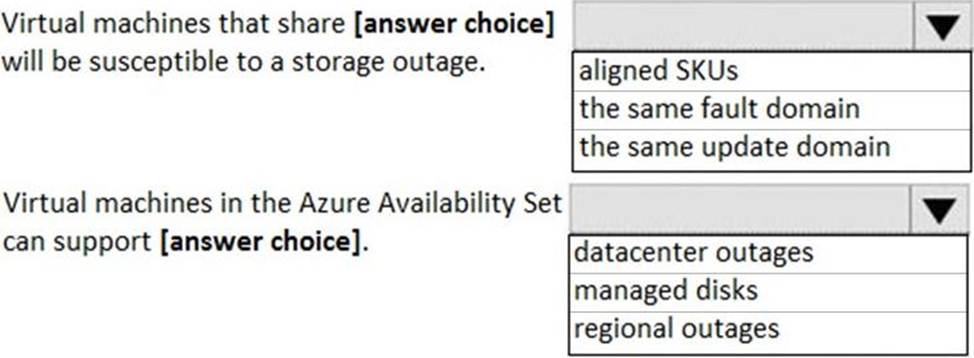
Use the drop-down menus to select the answer choice that completes each statement based on the information presented in the graphic. NOTE: Each correct selection is worth one point.
Explanation:
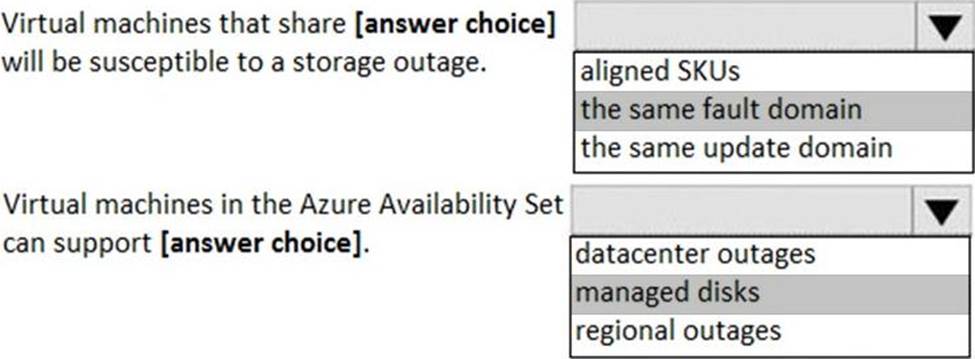
Box 1: the same fault domain
Fault domains define the group of virtual machines that share a common power source and network switch. If a storage fault domain fails due to hardware or software failure, only the VM instance with disks on the storage fault domain fails.
Box 2: managed disks
Managed disks provide better reliability for Availability Sets by ensuring that the disks of VMs in an Availability Set are sufficiently isolated from each other to avoid single points of failure. It does this by automatically placing the disks in different storage fault domains (storage clusters) and aligning them with the VM fault domain.
Reference: https://docs.microsoft.com/en-us/azure/virtual-machines/windows/manage-availability
HOTSPOT
You are designing the backup for an SAP database.
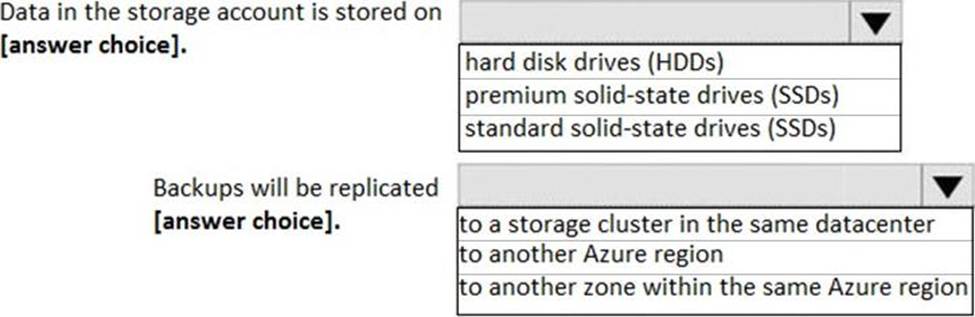
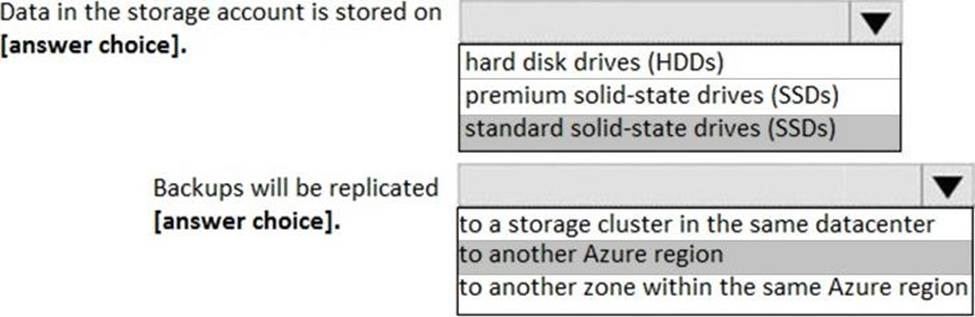
You have an Azure Storage account that is configured as shown in the following exhibit.
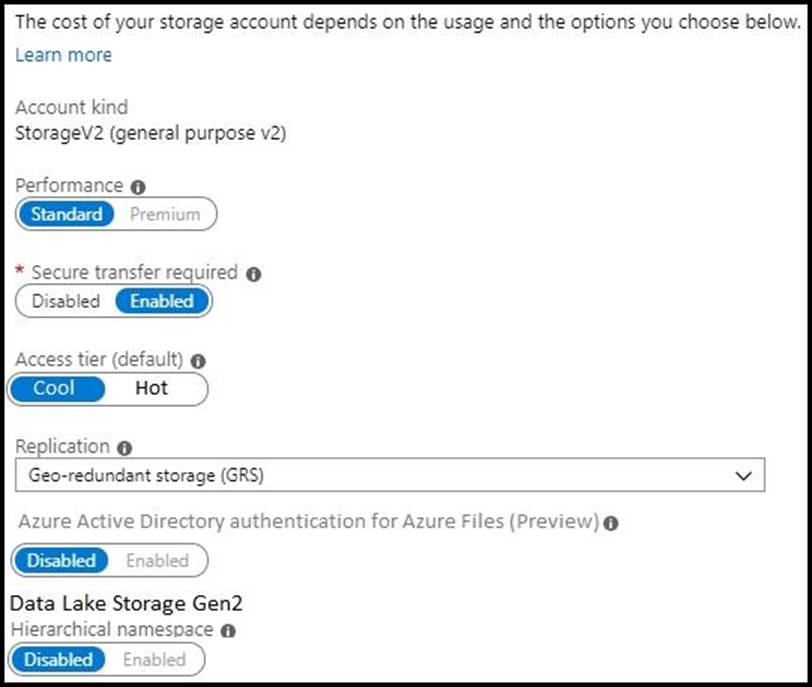
Use the drop-down menus to select the answer choice that completes each statement based on the information presented in the graphic. NOTE: Each correct selection is worth one point.
Explanation:
Box 1: hard disk drives (HDDs)
Box 2: to another Azure region
Geo-redundant storage (GRS) copies your data synchronously three times within a single physical
location in the primary region using LRS. It then copies your data asynchronously to a single physical
location in a secondary region that is hundreds of miles away from the primary region.
Reference:
https://azure.microsoft.com/en-us/pricing/details/managed-disks/
https://docs.microsoft.com/en-us/azure/storage/common/storage-redundancy#geo-redundant-storage
https://docs.microsoft.com/en-us/azure/virtual-machines/workloads/sap/planning-guide-storage#azure-standard-hdd-storage
You have an on-premises SAP NetWeaver development landscape that contains the resources shown in the following table.

You have a 500-Mbps ExpressRoute circuit between the on-premises environment and a virtual network.
You plan to migrate the landscape to Azure.
What should you include in the solution?
- A . Azure Site Recovery
- B . Microsoft System Center 2019 – Data Protection Manager (DPM 2019)
- C . Azure Data Box
- D . Azure Backup Server
A
Explanation:
Simplify cloud migration by using Site Recovery to migrate your SAP deployment to Azure.
Reference: https://docs.microsoft.com/en-us/azure/site-recovery/site-recovery-sap
DRAG DROP
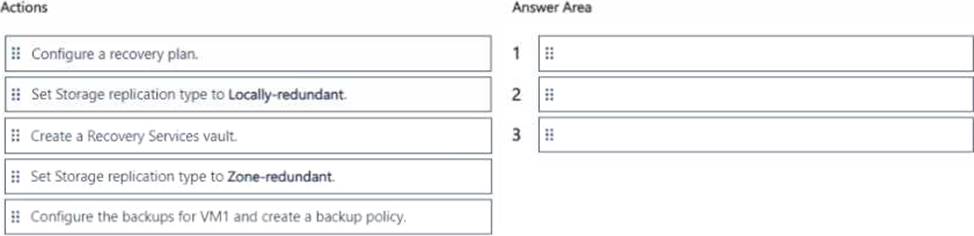
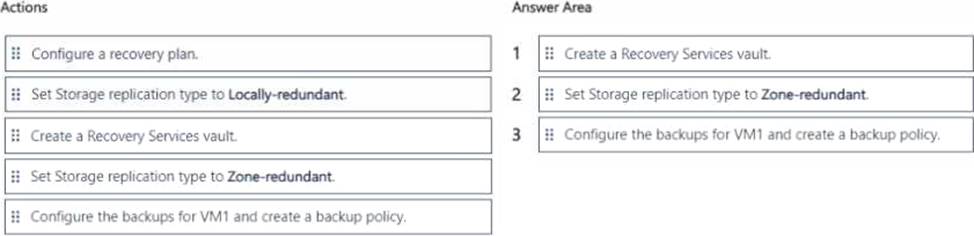
You have an SAP on Azure landscape that contains a virtual machine named VM1. VM1 hosts an SAP HANA database. You need to back up the database.
The solution must meet the following requirements:
• Maintain six copies of each backup.
• Store the copies in two datacenters in the same geographical region.
• Minimize costs.
Which three actions should you perform in sequence? To answer, move all actions from the list of actions to the answer area and arrange them in the correct order.
You have an SAP production landscape that uses SAP HANA databases on Azure. The HANA database server is a Standard.M32ms Azure virtual machine that has 864 GB of RAM.
The HANA database is 400 GB. You expect the database to grow by 40 percent during the next 12 months.
You resize the HANA database server virtual machine to Standard_m64ms and ,024 GB of RAM. You need to recommend additional changes to minimize performance degradation caused by database growth
What should you recommend for the HANA database server?
- A . Increase the number of vCPUs.
- B . Configure additional disks
- C . Add a secondary network interface.
- D . Add a scale out node.
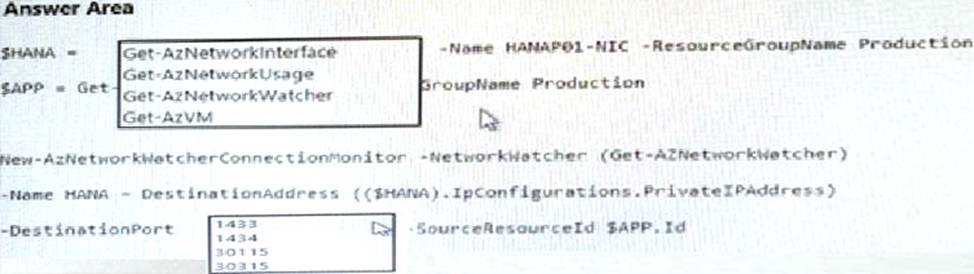
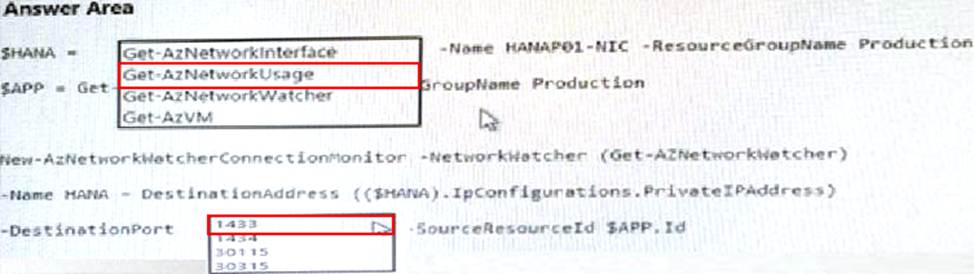
HOTSPOT
You have ah SAP environment on Azure that contains a single-tenant SAP NANA server at instance 03.
You need to monitor the network throughput from an SAP application server to the SAP HANA server.
How should you complete the script? To answer, select the appropriate options in the answer are. NOTE: Each correct selection is worth one point.
Your company has a an on-premises SAP environment.
Recently, the company split into two companies named Litware, inc and Contoso.Ltd. Litware retained the SAP environment.
Litware plans to export data that is relevant only to Contoso. The export will be 1.5 TB.
Contoso build a new SAP environment on Azure.
You need to recommend a solution for Litware to make the data available to Contoso in Azure.
The solution must meet the following requirements:
– Minimize the impact on the network.
– Minimize the administrative effort for Litware.
What should you include in the recommendation.
- A . Azure Migrate
- B . Azure Databox
- C . Azure Site Recovery
- D . Azure import/Export service
You deploy an SAP environment on Azure.
You need to ensure that incoming requests are distributed evenly across the application servers.
What should you use?
- A . SAP Web Dispatcher
- B . SAP Solution Manager
- C . SAP Control
- D . Azure Monitor
A
Explanation:
The SAP Web Dispatcher (SWD) component is used as a load balancer for SAP traffic among the SAP application servers.
Reference: https://docs.microsoft.com/en-us/azure/architecture/reference-architectures/sap/sap-netweaver
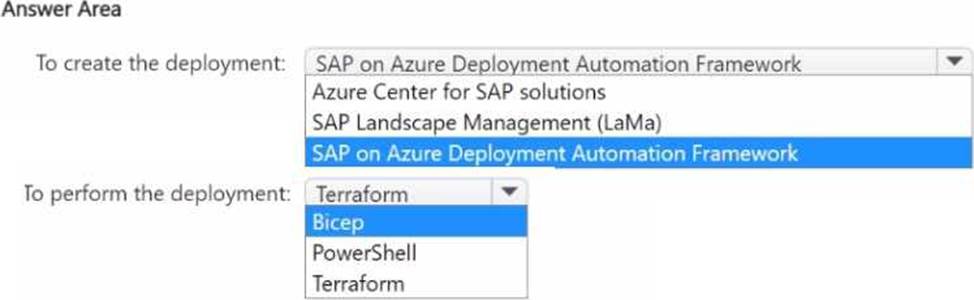
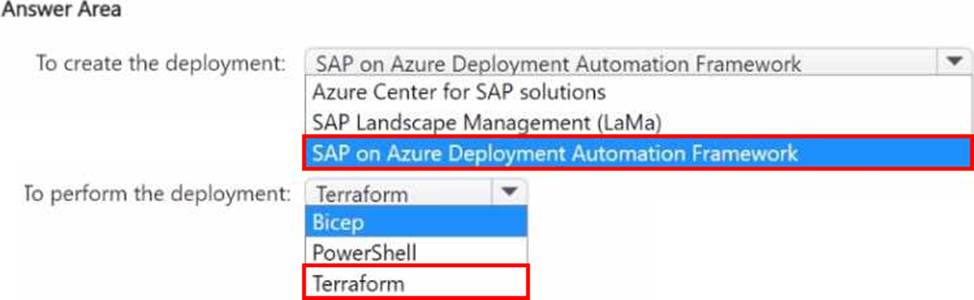
HOTSPOT
You plan to deploy a highly available SAP development landscape in Azure.
You need to automate the deployment.
The solution must meet the following requirements:
• Ensure that SAP services can be managed by using the Azure portal.
• Create a reproduceable deployment.
• Minimize administrative effort.
What should you use? To answer, select the appropriate options in the answer area. NOTE: Each correct selection is worth one point.
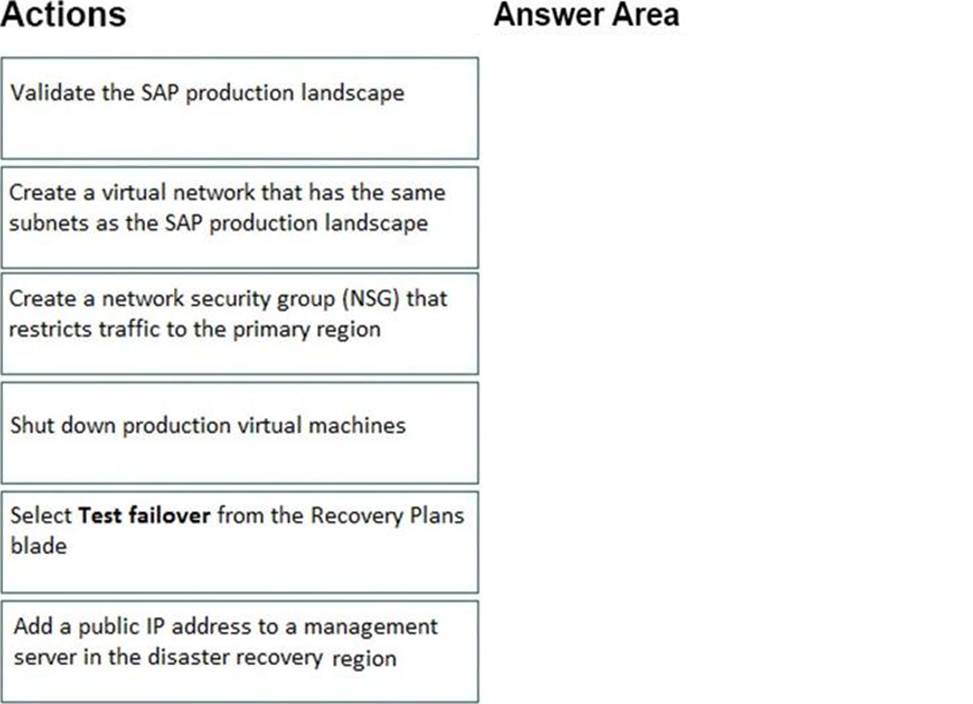
DRAG DROP
You have an SAP environment on Azure.
You use Azure Site Recovery to protect an SAP production landscape.
You need to validate whether you can recover the landscape in the event of a failure. The solution must minimize the impact on the landscape.
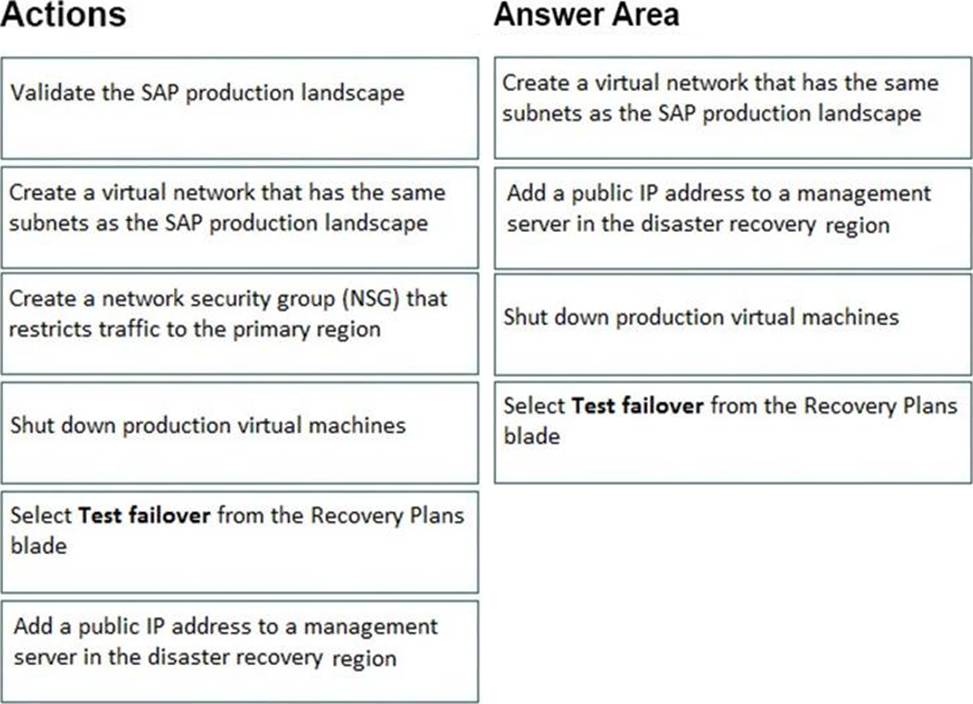
Which four actions should you perform in sequence? To answer, move the appropriate actions from the list of actions to the answer area and arrange them in the correct order.
Explanation:
Step 1: Create a virtual network…
We recommended that for test failover, you choose a network that’s isolated from the production recovery site network specific in the Compute and Network settings for each VM. By default, when you create an Azure virtual network, it is isolated from other networks.
The test network should mimic your production network:
The test network should have same number of subnets as your production network.
Subnets should have the same names.
The test network should use the same IP address range.
Step 2: Add a public IP address…
Because Site Recovery does not replicate the cloud witness, we recommend that you deploy the cloud witness in the disaster recovery region.
Step 3: Shut down production virtual machines
Make sure that the primary VM is shut down when you run the test failover. Otherwise there will be two VMs with the same identity, running in the same network at the same time.
This can lead to unexpected consequences.
Step 4: Select Test failover from the Recovery Plans blade
References: https://docs.microsoft.com/en-us/azure/site-recovery/site-recovery-test-failover-to-azure