
Fortinet NSE7_OTS-7.2.0 Practice Exams
Last updated on Oct 21,2026- Exam Code: NSE7_OTS-7.2.0
- Exam Name: Fortinet NSE 7 - OT Security 7.2.0
- Certification Provider: Fortinet
- Latest update: Oct 21,2026
Refer to the exhibit.
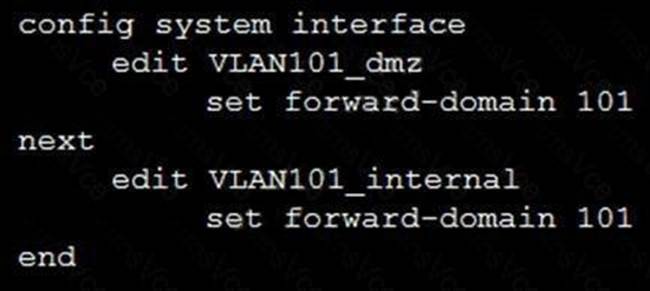
Given the configurations on the FortiGate, which statement is true?
- A . FortiGate is configured with forward-domains to reduce unnecessary traffic.
- B . FortiGate is configured with forward-domains to forward only domain controller traffic.
- C . FortiGate is configured with forward-domains to forward only company domain website traffic.
- D . FortiGate is configured with forward-domains to filter and drop non-domain controller traffic.
Refer to the exhibit.
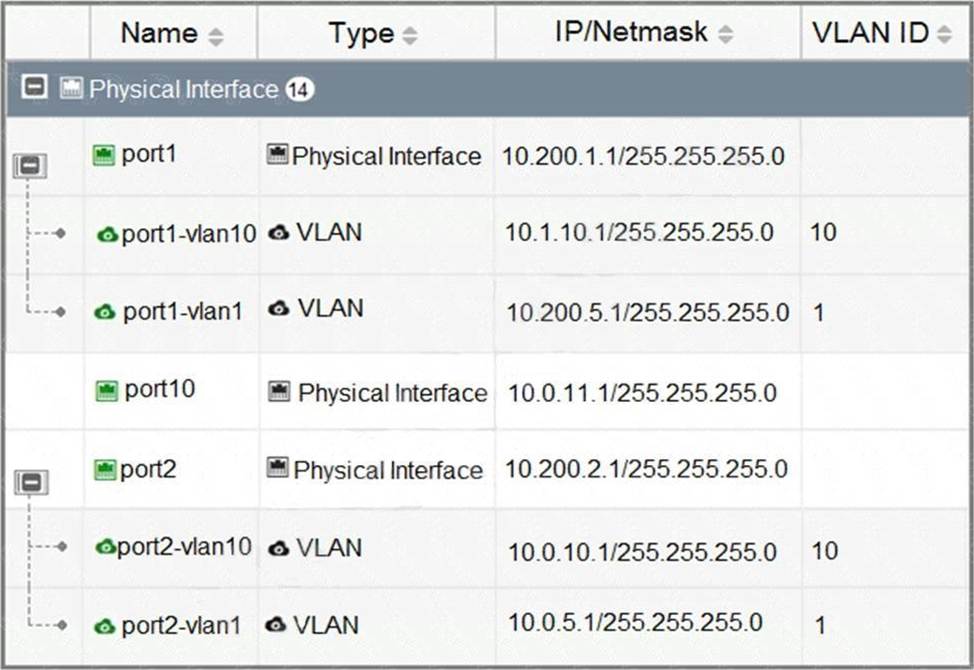
Which statement about the interfaces shown in the exhibit is true?
- A . port2, port2-vlan10, and port2-vlan1 are part of the software switch interface.
- B . The VLAN ID of port1-vlan1 can be changed to the VLAN ID 10.
- C . port1-vlan10 and port2-vlan10 are part of the same broadcast domain
- D . port1, port1-vlan10, and port1-vlan1 are in different broadcast domains
Refer to the exhibit.
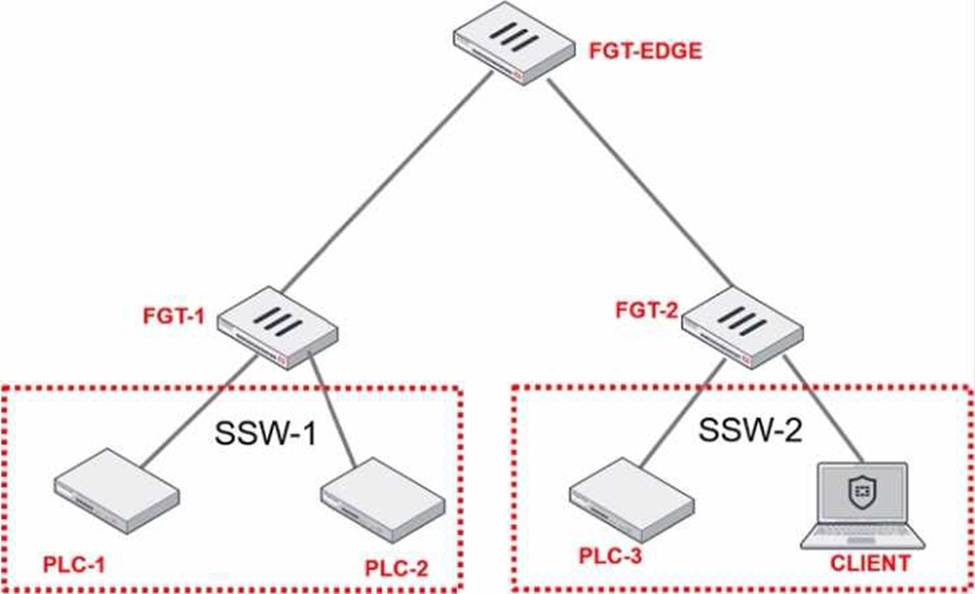
PLC-3 and CLIENT can send traffic to PLC-1 and PLC-2. FGT-2 has only one software switch (SSW-1) connecting both PLC-3 and CLIENT. PLC-3 and CLIENT cannot send traffic to each other.
Which two statements about the traffic between PCL-1 and PLC-2 are true? (Choose two.)
- A . The switch on FGT-2 must be hardware to implement micro-segmentation.
- B . Micro-segmentation on FGT-2 prevents direct device-to-device communication.
- C . Traffic must be inspected by FGT-EDGE in OT networks.
- D . FGT-2 controls intra-VLAN traffic through firewall policies.
To increase security protection in an OT network, how does application control on ForliGate detect industrial traffic?
- A . By inspecting software and software-based vulnerabilities
- B . By inspecting applications only on nonprotected traffic
- C . By inspecting applications with more granularity by inspecting subapplication traffic
- D . By inspecting protocols used in the application traffic
An OT administrator deployed many devices to secure the OT network. However, the SOC team is reporting that there are too many alerts, and that many of the alerts are false positive. The OT administrator would like to find a solution that eliminates repetitive tasks, improves efficiency, saves time, and saves resources.
Which products should the administrator deploy to address these issues and automate most of the manual tasks done by the SOC team?
- A . FortiSIEM and FortiManager
- B . FortiSandbox and FortiSIEM
- C . FortiSOAR and FortiSIEM
- D . A syslog server and FortiSIEM
Which three criteria can a FortiGate device use to look for a matching firewall policy to process traffic? (Choose three.)
- A . Services defined in the firewall policy.
- B . Source defined as internet services in the firewall policy
- C . Lowest to highest policy ID number
- D . Destination defined as internet services in the firewall policy
- E . Highest to lowest priority defined in the firewall policy
ADE
Explanation:
The three criteria that a FortiGate device can use to look for a matching firewall policy to process traffic are:
A) Services defined in the firewall policy – FortiGate devices can match firewall policies based on the
services defined in the policy, such as HTTP, FTP, or DNS.
D) Destination defined as internet services in the firewall policy – FortiGate devices can also match firewall policies based on the destination of the traffic, including destination IP address, interface, or internet services.
E) Highest to lowest priority defined in the firewall policy – FortiGate devices can prioritize firewall policies based on the priority defined in the policy. The device will process traffic against the policy with the highest priority first and move down the list until it finds a matching policy.
Reference: Fortinet NSE 7 – Enterprise Firewall 6.4 Study Guide, Chapter 4: Policy Implementation, page 4-18.
Refer to the exhibit.
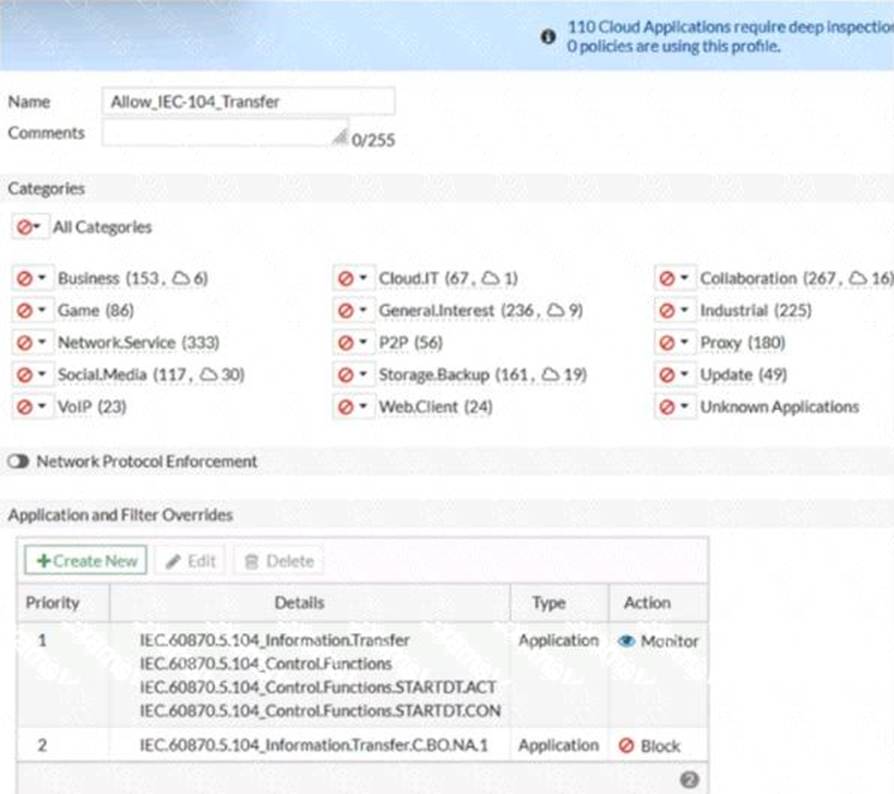
An OT network security audit concluded that the application sensor requires changes to ensure the correct security action is committed against the overrides filters.
Which change must the OT network administrator make?
- A . Set all application categories to apply default actions.
- B . Change the security action of the industrial category to monitor.
- C . Set the priority of the C.BO.NA.1 signature override to 1.
- D . Remove IEC.60870.5.104 Information.Transfer from the first filter override.
D
Explanation:
According to the Fortinet NSE 7 – OT Security 6.4 exam guide1, the application sensor settings allow you to configure the security action for each application category andnetwork protocol override. The security action determines how the FortiGate unit handles traffic that matches the application category or network protocol override.
The security action can be one of the following:
Allow: The FortiGate unit allows the traffic without any further inspection.
Monitor: The FortiGate unit allows the traffic and logs it for monitoring purposes.
Block: The FortiGate unit blocks the traffic and logs it as an attack.
The priority of the network protocol override determines the order in which the FortiGate unit applies the security action to the traffic. The lower the priority number, the higher the priority. For example, a priority of 1 is higher than a priority of 10.
In the exhibit, the application sensor has the following settings:
The industrial category has a security action of allow, which means that the FortiGate unit will not inspect or log any traffic that belongs to this category.
The IEC.60870.5.104 Information.Transfer network protocol override has a security action of block, which means that the FortiGate unit will block and log any traffic that matches this protocol.
The IEC.60870.5.104 Control.Functions network protocol override has a security action of monitor, which means that the FortiGate unit will allow and log any traffic that matches this protocol.
The IEC.60870.5.104 Start/Stop network protocol override has a security action of allow, which means that the FortiGate unit will not inspect or log any traffic that matches this protocol.
The IEC.60870.5.104 Transfer.C.BO.NA.1 network protocol override has a security action of block, which means that the FortiGate unit will block and log any traffic that matches this protocol.
The problem with these settings is that the IEC.60870.5.104 Transfer.C.BO.NA.1 network protocol override has a lower priority than the IEC.60870.5.104 Information.Transfer network protocol override. This means that if the traffic matches both protocols, the FortiGate unit will apply the security action of the higher priority override, which is block. However, the IEC.60870.5.104 Transfer.C.BO.NA.1 protocol is used to transfer binary outputs, which are essential for controlling OT devices. Therefore, blocking this protocol could have negative consequences for the OT network.
To fix this issue, the OT network administrator must set the priority of the IEC.60870.5.104 Transfer.C.BO.NA.1 network protocol override to 1, which is higher than the priority of the IEC.60870.5.104 Information.Transfer network protocol override. This way, the FortiGate unit will apply the security action of the lower priority override, which is allow, to the traffic that matches both protocols. This will ensure that the FortiGate unit does not block the traffic that is used to transfer binary outputs, while still blocking the traffic that is used to transfer information.
1: NSE 7 Network Security Architect – Fortinet
Which two statements about the Modbus protocol are true? (Choose two.)
- A . Modbus uses UDP frames to transport MBAP and function codes.
- B . Most of the PLC brands come with a built-in Modbus module.
- C . You can implement Modbus networking settings on internetworking devices.
- D . Modbus is used to establish communication between intelligent devices.
How can you achieve remote access and internet availability in an OT network?
- A . Create a back-end backup network as a redundancy measure.
- B . Implement SD-WAN to manage traffic on each ISP link.
- C . Add additional internal firewalls to access OT devices.
- D . Create more access policies to prevent unauthorized access.
Which type of attack posed by skilled and malicious users of security level 4 (SL 4) of IEC 62443 is designed to defend against intentional attacks?
- A . Users with access to moderate resources
- B . Users with low access to resources
- C . Users with unintentional operator error
- D . Users with substantial resources