
DELL EMC D-PE-OE-23 Practice Exams
Last updated on Oct 23,2026- Exam Code: D-PE-OE-23
- Exam Name: Dell Technologies PowerEdge Operate 2023
- Certification Provider: DELL EMC
- Latest update: Oct 23,2026
A technician needs to add a server as a host to an existing VMware environment. The server has 2x 1Gb LOM ethernet ports and a 4-port 1Gb Broadcom NIC.
The 2 LOM ports are teamed to be used as SAN connections. All active data and management traffic should utilize the 4x 1Gb ports on the Broadcom NIC. The technician needs to achieve management and data redundancy at the hardware level to handle a single port failure.
What is the most effective way to meet this requirement?
- A . Team the ports together in the OS
- B . Connect the 4x 1Gb ports to a load balancer
- C . Buy an additional 10Gb NIC for the server
- D . Partition the ports using NPAR in the system BIOS
In addition to hashing, what algorithms are used by TPM?
- A . Random number generation
Asymmetric key generation
Asymmetric encryption/decryption - B . Sequential number generation
Symmetric key generation
Symmetric encryption/decryption - C . Random number generation
Symmetric key generation
Symmetric encryption/decryption - D . Sequential number generation
Asymmetric key generation
Asymmetric encryption/decryption
The Dell EMC PowerEdge R740 contains 24 memory slots that are split into two sets of 12, one set per processor. An engineer installs an additional 2 x 32GB Dual Rank RDIMM, 2933MT/s to the existing 2 x 32GB 2666MT/s RDIMMs.
What is the result of the upgrade?
- A . Only 2933MT/s RDIMMs will be usable
- B . Only 2666MT/s RDIMMs will be usable
- C . The memory will trigger error message
- D . All usable memory will operate at the slower speed
Which is a feature of an AMD processor in a PowerEdge server?
- A . Supports up to four sockets
- B . Up to 60 cores
- C . Fastest processor speeds
- D . Secure Encrypted Virtualization
D
Explanation:
Understanding Features of AMD Processors in Dell PowerEdge Servers Server Components (26%) Define the different processor, memory options, and memory configurations Analyze server security features
Overview
AMD processors, specifically the AMD EPYC series, are utilized in Dell PowerEdge servers to provide high performance, scalability, and advanced security features. One of the standout features of AMD processors is Secure Encrypted Virtualization (SEV).
Explanation of Options
Option A: Supports up to four sockets
AMD EPYC processors in current Dell PowerEdge servers typically support up to two sockets. Intel processors are more commonly associated with supporting up to four sockets in server configurations.
Conclusion: Incorrect.
Option B: Up to 60 cores
AMD EPYC processors offer up to 64 cores per processor. While "up to 60 cores" is close, it does not fully capture the maximum core count offered.
Conclusion: While partially correct, not the most distinctive feature.
Option C: Fastest processor speeds
Processor speeds vary depending on specific models and configurations. Both AMD and Intel offer processors with high clock speeds. Claiming the "fastest processor speeds" is subjective and not a definitive feature.
Conclusion: Not a unique feature.
Option D: Secure Encrypted Virtualization
SEV is a security feature unique to AMD processors. It allows for the encryption of virtual machine memory, providing isolation between VMs and enhancing security in virtualized environments.
Features:
Encrypts VM memory with individual keys.
Protects against hypervisor-level attacks.
Enhances data security and compliance.
Conclusion: Correct Answer.
Dell Operate Reference
Server Components (26%):
Define the different processor, memory options, and memory configurations: Understanding the features and capabilities of AMD processors in server environments.
Analyze server security features: SEV is a significant security feature offered by AMD processors, enhancing virtualization security.
Conclusion
The standout feature of AMD processors in Dell PowerEdge servers is Secure Encrypted Virtualization, which enhances security in virtualized environments by encrypting VM memory.
The customer implemented ten Dell PowerEdge R660 servers in their data center. The environment also has two MX7000 chassis. The system administrator requires a management application that can help holistically manage and monitor the storage, server, and network environment.
What would be the recommended solution?
- A . iSM
- B . OME
- C . Group Manager
- D . OMSA
B
Explanation:
Selecting a Management Application for Holistic Management of Dell PowerEdge Servers and MX7000 Chassis
Server Management and Configuration Tools (14%)
Explain the management interface options – LCC, racadm, OMSA, iSM, OME System Administration (18%)
Configure BIOS, Storage, virtual media, networking, user access, lockdown mode, and group management
Understanding Customer Requirements
Environment:
Ten Dell PowerEdge R660 servers (rack servers).
Two MX7000 chassis (modular servers).
Requirement:
A management application that can holistically manage and monitor storage, servers, and network environment.
Evaluation of Options
Option A: iSM (Integrated Dell Remote Access Controller Service Module)
iSM is a software module that enhances iDRAC functionality by providing OS-level monitoring and management.
It is installed on individual servers to facilitate communication between the OS and iDRAC.
Limitation:
Not a centralized management application.
Does not provide holistic management across multiple servers and chassis.
Conclusion: Not suitable.
Option B: OME (OpenManage Enterprise)
Dell OpenManage Enterprise is a web-based, one-to-many systems management application.
Features:
Provides comprehensive management of Dell EMC servers, storage, and networking devices.
Supports both rack servers (R660) and modular chassis (MX7000).
Offers monitoring, configuration, deployment, and update capabilities.
User-friendly dashboard for holistic infrastructure management.
Conclusion: Correct Answer.
Option C: Group Manager
Group Manager is an iDRAC feature that allows basic grouping of servers for simplified management.
Limitations:
Limited to servers of the same generation and similar configurations.
Does not support the full range of management functions required.
Not suitable for managing storage and network environments.
Conclusion: Not sufficient.
Option D: OMSA (OpenManage Server Administrator)
OMSA is a software agent that provides a comprehensive, one-to-one systems management solution.
Installed on individual servers to manage and monitor hardware components.
Limitations:
Does not provide a centralized, holistic view.
Lacks the ability to manage multiple servers and chassis collectively.
Conclusion: Not appropriate.
Dell Operate Reference
Server Management and Configuration Tools (14%)
Explain the management interface options – LCC, racadm, OMSA, iSM, OME: Understanding the capabilities and limitations of various management tools is essential for selecting the appropriate solution.
System Administration (18%)
Group management: OpenManage Enterprise facilitates group management of diverse hardware.
Conclusion
OpenManage Enterprise (OME) is the recommended solution. It provides a unified management console capable of holistically managing and monitoring the customer’s storage, server, and network environment, including both rack servers and modular chassis.
An engineer needs to install an additional PSU on an existing, single PSU Dell EMC PowerEdge R740. They complete the initial installation and cabling procedures. They connect an AC cable and the power distribution unit produces normal AC output. The engineer checks power management and sees that the new PSU is in the Failed state.
What task should be completed to troubleshoot this issue?
- A . Confirm the System Input Power CAP is not set to Low
- B . Set the PSU AC redundancy to 1+1
- C . Set the PSU AC redundancy to 1+0
- D . Verify the new PSU is the same type and wattage rating
SPECIAL INSTRUCTIONS
The remaining Part1 questions are associated with four case studies that describe various environments or settings. Each case study appears on its own display screen. Questions for each case study will appear on separate display screens. When displaying a question, you can easily review the related case study by clicking on the “Review Case Study” icon shown below:
Case Study 5 – Refer to the Exhibit.
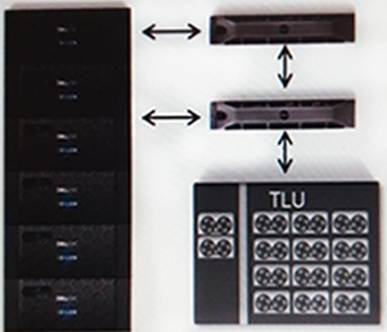
Backing up data from a Dell EMC Isilon cluster exceeds the company’s backup window. Because the company has a large amount of data with a continuous high growth rate, they want to change their backup strategy. The Gen 6 Isilon cluster consists of 24 nodes.
Their current backup strategy is an NDMP three-way backup performing weekly full backups to tape and incremental backups each night. The strategy uses Dell EMC Net Worker. The DMA uses Include paths to specify what data to backup. All data on the cluster must remain accessible.
The company’s IT team is now looking for a method to increase the performance of their backups. After some investigation, you notice that the backup job targets two paths. This could be the cause of the lengthy backup times.
What advice should be provided to the team?
- A . Exclude the largest datasets from the backup job
- B . Add A100 Backup Accelerators and configure for two-way NDMP
- C . Create more parallel streams to utilize multi-stream NDMP backups.
- D . Change the backup strategy to token-based backups.
A technician has a 13G system that is giving NO video to a crash cart connected to the front VGA port. The LCD is NOT reporting any errors.
The system reports ‘CPU Resetting’ messages sporadically in the lifecycle log. The iDRAC runs an Express license. The technician needs to most efficiently determine if the system is completing POST despite the video issue.
Which two steps should the technician take to perform this task? (Choose two.)
- A . Reduce to minimum to post
- B . Launch the iDRAC virtual console
- C . Connect to rear VGA port
- D . Hold the system identification button for 6 seconds
Case Study 4
A company is experiencing a noticeable decrease in performance when accessing data purpose file shares. In addition, a file pool policy moves data that has not been modified for the slow data access.
The number of users accessing the cluster has not changed. The administrator has shared the following baseline metrics. The outputs were captured from a performance-acceptable time frame.
Trace route shows:
– 3 hops between clients and the cluster
– Average latency is 3 ms
Iperf shows:
– 940 Mb/s average bandwidth
– 005 ms average jitter
Netstat on the local network shows:
– 05% average re-transmission rate
Hostcache list:
– 20 ms average roundtrip time across all clients
The administrator shows you the following output from the netstat command:
– 32366653 data packets (35556615947 bytes)
– 8010 data packets (9525723 bytes) re-transmitted
Based on the output, what information should be provided to the administrator?
- A . Re-transmission rates have no impact on performance
- B . Re-transmission rate exceeds recommendations
- C . Re-transmission rate is in the acceptable range
- D . Change in the re-transmission rate indicates an issue