
DELL EMC D-PE-OE-23 Practice Exams
Last updated on Oct 22,2026- Exam Code: D-PE-OE-23
- Exam Name: Dell Technologies PowerEdge Operate 2023
- Certification Provider: DELL EMC
- Latest update: Oct 22,2026
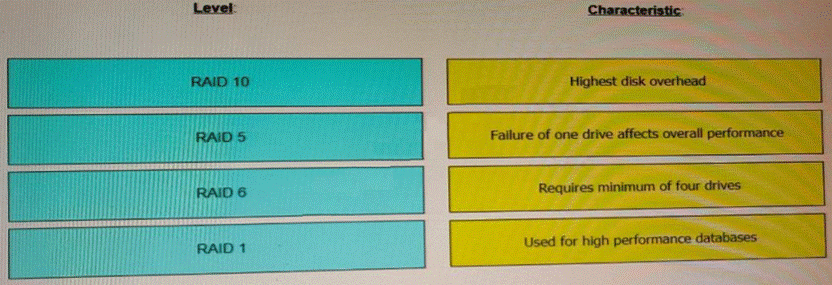
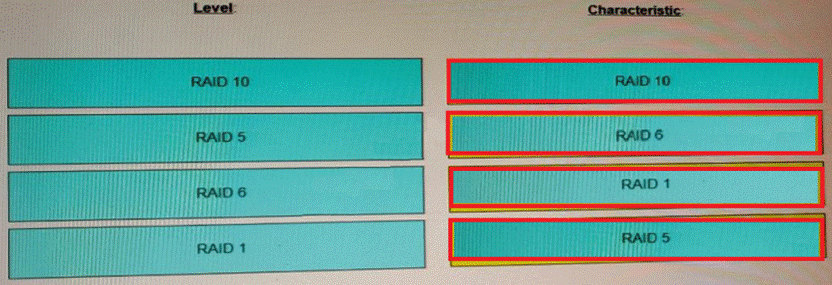
A server is configured with a RAID 5 Virtual Disk across 5 hard disks and 1 spare disk. If a hard disk failure occurs within the RAID 5 virtual disk, the spare disk needs to be online as quickly as possible. It is acceptable for users to experience decreased performance during the rebuild procedure.
How should this requirement met?
- A . Change cache to Write Through
- B . Select Fast Rebuild
- C . Increase Rebuild Rate
- D . Enable Rebuild Priority
A technician is troubleshooting a rackmount server that is NOT displaying video.
The technician has the following information:
– Known good monitor does NOT work when plugged into the front VGA port
– The power button is on
– iDRAC has an enterprise license
– The "i" button is blue
– NO operating system is installed on the server
Which two steps should the technician take to troubleshoot the issue? (Choose two.)
- A . Press the “i” button down for 20 seconds to reset the iDRAC
- B . Plug the known good monitor to the rear VGA port
- C . Perform a cold boot of the system via the iDRAC
- D . Use iDRAC Virtual Console to check video
- E . Run system diagnostics from the Lifecycle Controller
Which mobile devices are supported by Quick Sync in 13G Dell EMC PowerEdge servers?
- A . Android devices only
- B . iOS and Android devices only
- C . iOS devices only
- D . iOS, Android, and Windows Phone devices
The OS and iDRAC report 120 GB of RAM. The technician has very little time to troubleshoot the issue and cannot run diagnostics.
They are working with the following information:
– Memory mode is Optimizer
– 8x 16 GB DIMMs installed
– 2 CPUs
– No entries in the SEL in the iDRAC
– No errors in the OS
To troubleshoot this issue, what action should the technician take prior to monitoring POST for any resulting errors?
- A . Reseat all memory modules
- B . Modify server profile for Performance
- C . Add an additional memory module
- D . Change memory mode to Advanced ECC
A technician has received a new server with 5 drives and needs to configure the drives into a specific configuration as provided by the administrator.
The administrator will also add additional disks as separate raid arrays at a later date.
– Drive 0 is passed through to the OS (to be managed by the OS)
– Drives 1-3 as a RAID 5 with drive 4 as a hot spare just for this newly created RAID 5
How should the technician do this in the PERC BIOS?
- A . Set drive 0 to Ready, set drives 1-3 as a RAID 5, and drive 4 as a Global Hot Spare
- B . Set drive 0 to Ready, set drives 1-3 as a RAID 5, and drive 4 as a Dedicated Hot Spare
- C . Set drive 0 to Non-Raid, set drives 1-3 as a RAID 5, and drive 4 as a Global Hot Spare
- D . Set drive 0 to Non-Raid, set drives 1-3 as a RAID 5, and drive 4 as a Dedicated Hot Spare
Which two models are 16th generation PowerEdge rack servers? (Select 2)
- A . R650
- B . MX760C
- C . R760
- D . C6620
- E . XE9680
C, E
Explanation:
Identifying 16th Generation PowerEdge Rack Servers
Server Portfolio and Features (10%)
Define chassis form factors and numbering nomenclature
Identify server features and specifications
Position the server in the market landscape
Understanding Dell PowerEdge Server Generations and Models
Dell PowerEdge servers are categorized by generation (denoted as "G") and model numbers. The 16th Generation (16G) represents the latest series of Dell servers as of 2023, featuring the newest technologies and enhancements.
Evaluation of Options:
Option A: R650
The PowerEdge R650 is a 15th Generation (15G) server.
Conclusion: Not a 16G server.
Option B: MX760C
The PowerEdge MX760c is a compute sled for the Dell PowerEdge MX7000 modular chassis.
Generation: It is part of the 16th Generation, but it is a modular blade server, not a rack server.
Conclusion: Since the question asks for rack servers, this may not be the best fit.
Option C: R760
The PowerEdge R760 is a 16th Generation rack server.
Features:
2U rack form factor
Supports latest Intel Xeon Scalable processors
Enhanced performance and scalability
Conclusion: Correct Answer.
Option D: C6620
The PowerEdge C6620 is a 15th Generation server designed for high-density compute environments.
Conclusion: Not a 16G server.
Option E: XE9680
The PowerEdge XE9680 is a 16th Generation rack server designed for extreme performance, particularly for AI and HPC workloads.
Features:
Supports up to eight GPUs
High-performance computing capabilities
Conclusion: Correct Answer.
Additional Notes:
Rack Servers vs. Modular Servers:
Rack Servers: Standalone servers that mount directly into standard server racks (e.g., R-series, XE-series).
Modular Servers: Compute modules that fit into a shared chassis (e.g., MX-series). While they can be mounted in racks, they are not considered standalone rack servers.
Dell Operate
Reference: Server Portfolio and Features (10%)
Define chassis form factors and numbering nomenclature: Understanding model numbers helps identify the server generation.
Identify server features and specifications: Recognizing the characteristics of 16G servers.
Position the server in the market landscape: Knowing which servers are current and their intended workloads.
Conclusion:
The PowerEdge R760 and XE9680 are both 16th Generation rack servers. They represent the latest in Dell’s server technology and are designed to meet modern data center needs.
A Dell EMC PowerEdge server has been updated with an LCC and iDRAC DUP to the latest firmware when performing a firmware rollback?
- A . The LCC can be rolled back; the iDRAC cannot be rolled back
- B . The iDRAC cannot be rolled back and the LCC cannot be rolled back
- C . The iDRAC can be rolled back; the LCC cannot be rolled back
- D . Both the iDRAC and the LCC can be rolled back
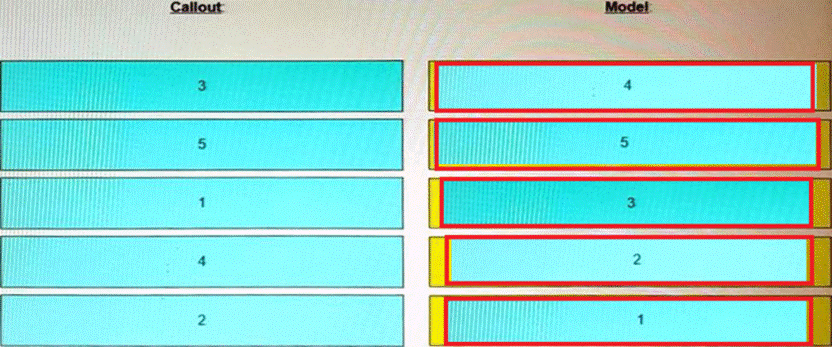
Refer to the exhibit.
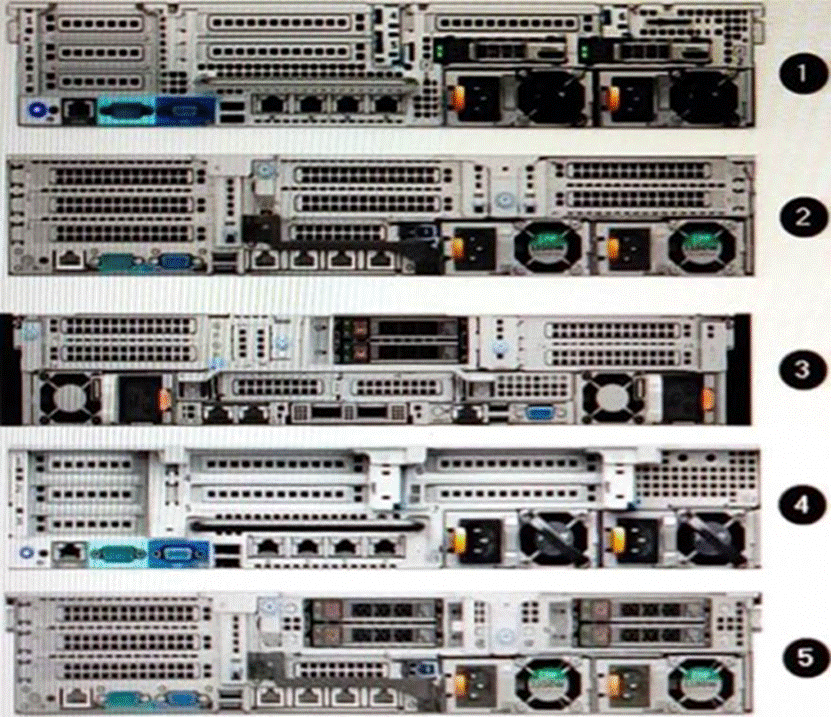
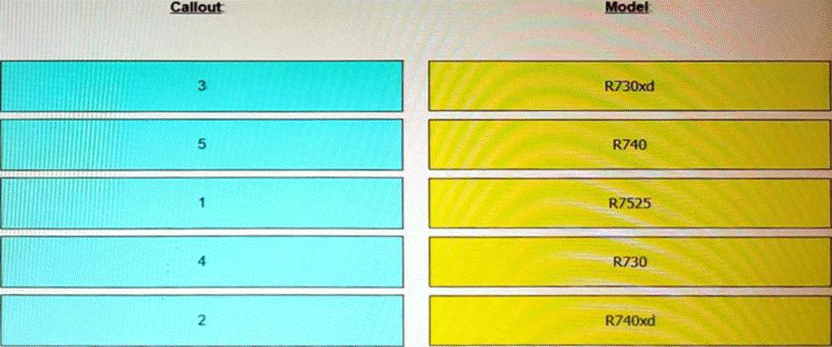
Match each callout to the Dell EMC PowerEdge server model shown.
Which iDRAC feature requires the Enterprise license?
- A . Customizable Security Banner
- B . iDRAC Direct
- C . SSD wear monitoring
- D . Boot and Crash Capture