
CompTIA N10-009 Practice Exams
Last updated on Nov 16,2026- Exam Code: N10-009
- Exam Name: CompTIA Network+ Certification
- Certification Provider: CompTIA
- Latest update: Nov 16,2026
A network administrator is troubleshooting a connectivity issue between two devices on two different subnets. The administrator verifies that both devices can successfully ping other devices on the same subnet.
Which of the following is the most likely cause of the connectivity issue?
- A . Incorrect default gateway
- B . Faulty Ethernet cable
- C . Wrong duplex settings
- D . VLAN mismatch
A
Explanation:
When two devices on different subnets are unable to communicate, but can communicate with other devices on their own subnet, the issue is most often related to routing. Devices on different subnets require a default gateway to route traffic between networks.
If the default gateway is incorrectly configured, the device won’t know how to reach other subnets. Faulty cables (Option B) or duplex mismatches (Option C) would likely cause connectivity issues even
within the local subnet, which is not the case here.
VLAN mismatches (Option D) are typically issues with switch port configurations and would likely cause total loss of connectivity, including within the same subnet.
✅ So, the most probable and logical cause is an incorrect default gateway.
Reference: CompTIA Network+ N10-009 Official Study Guide ― Objective 2.4: "Compare and contrast routing technologies."
A user’s VoIP phone and workstation are connected through an inline cable. The user reports that the VoIP phone intermittently reboots, but the workstation is not having any network-related issues.
Which of the following is the most likely cause?
- A . The PoE power budget is exceeded.
- B . Port security is violated.
- C . The signal is degraded
- D . The Ethernet cable is not working
A
Explanation:
Power over Ethernet (PoE) delivers power to devices such as VoIP phones over the same cables used for data. If the total power requirement of connected devices exceeds the PoE power budget of the switch or injector, some devices may not receive adequate power and could intermittently reboot. This issue would not affect the workstation, which is likely receiving power separately.
Reference: CompTIA Network+ Exam Objectives and official study guides.
Which of the following cloud service models most likely requires the greatest up-front expense by the customer when migrating a data center to the cloud?
- A . Infrastructure as a service
- B . Software as a service
- C . Platform as a service
- D . Network as a service
A
Explanation:
Reference: CompTIA Network+ Certification Exam Objectives – Cloud Models section.
SIMULATION
A network technician needs to resolve some issues with a customer’s SOHO network.
The customer reports that some of the devices are not connecting to the network, while others appear to work as intended.
INSTRUCTIONS
Troubleshoot all the network components and review the cable test results by Clicking on each device and cable.
Diagnose the appropriate component(s) by identifying any components with a problem and recommend a solution to correct each problem.
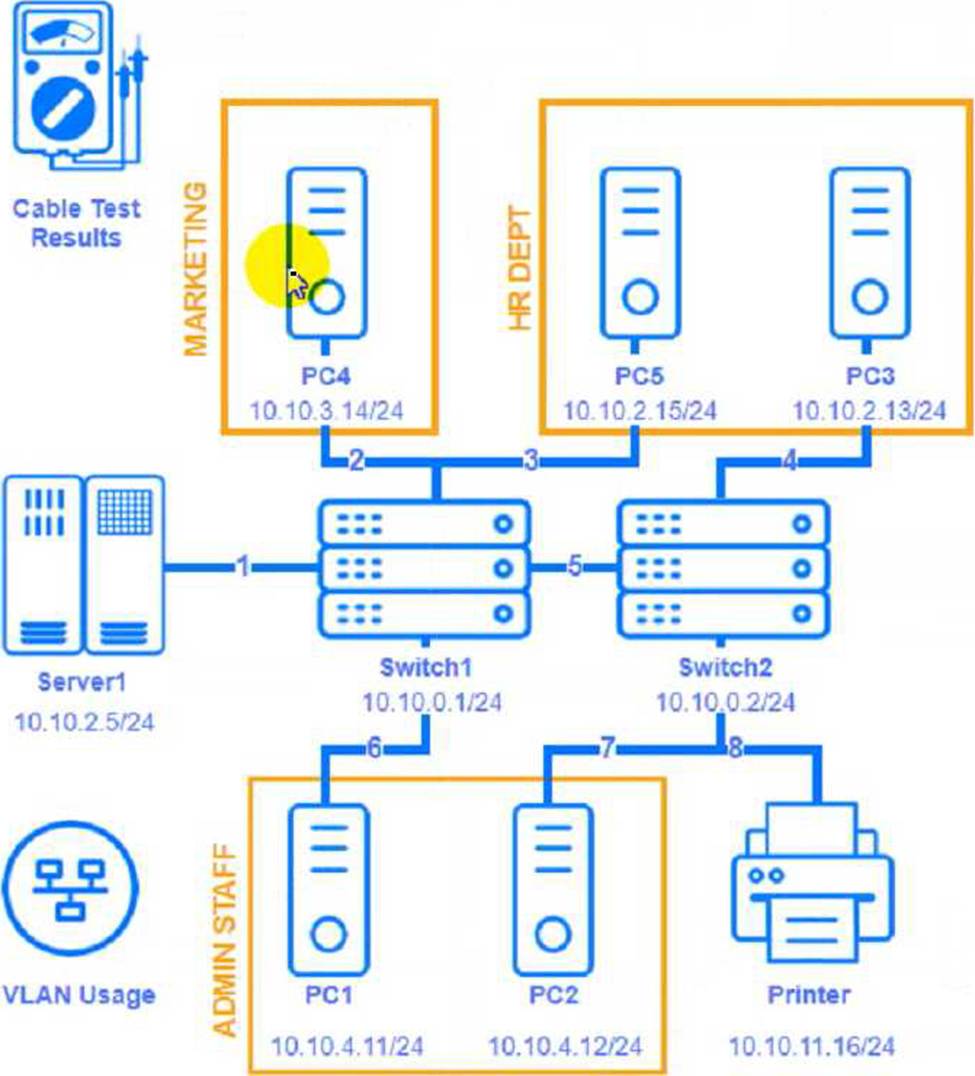
Cable Test Results:
Cable 1:
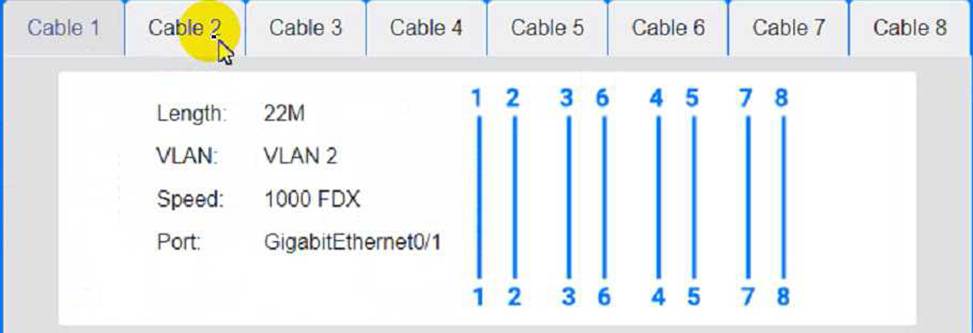
Cable 2:
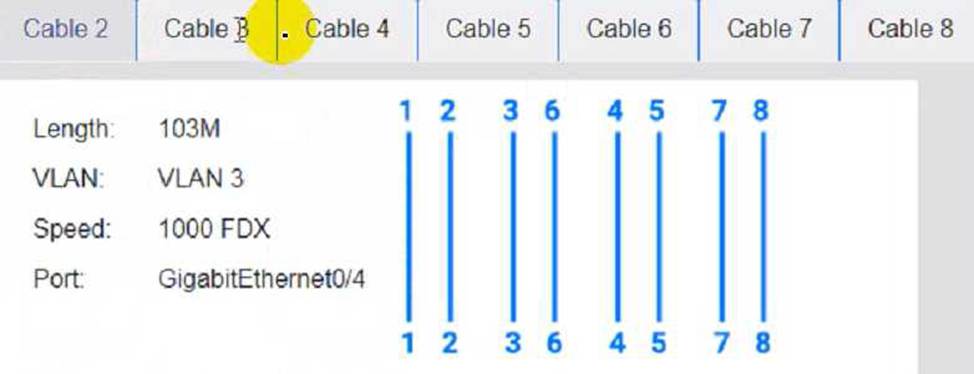
Cable 3:
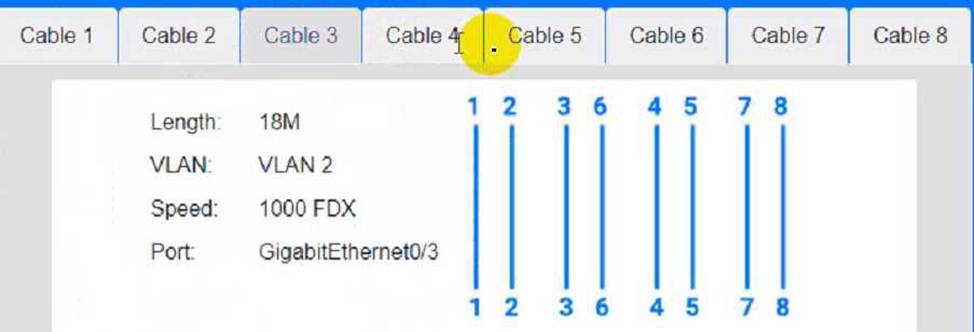
Cable 4:
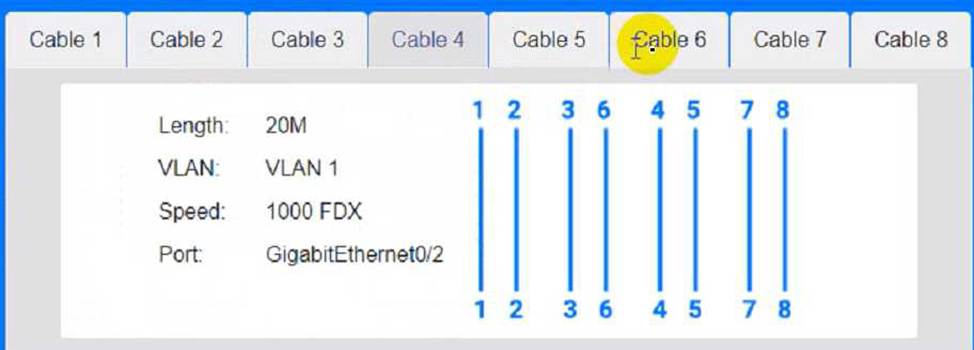
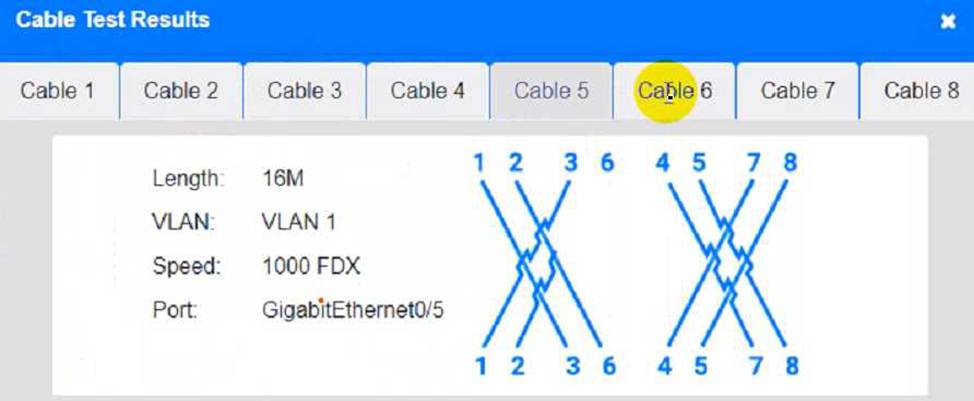
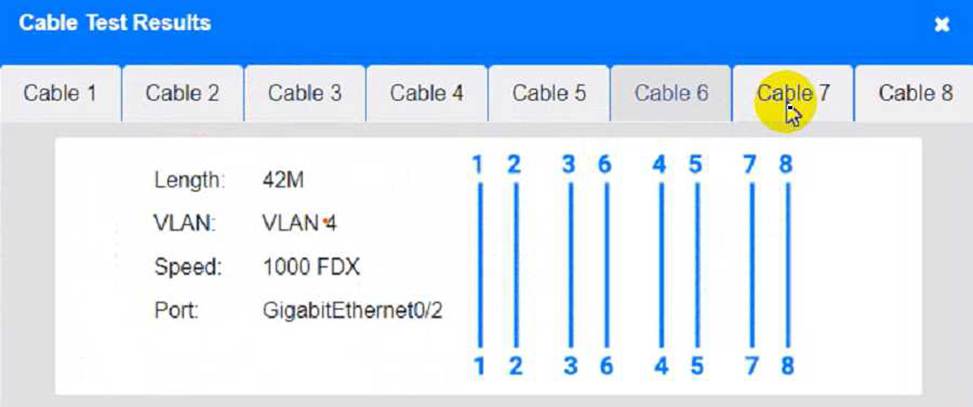
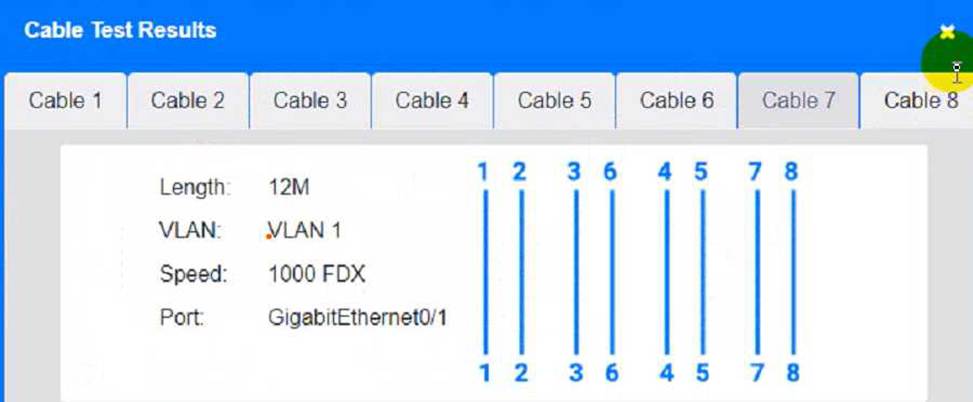
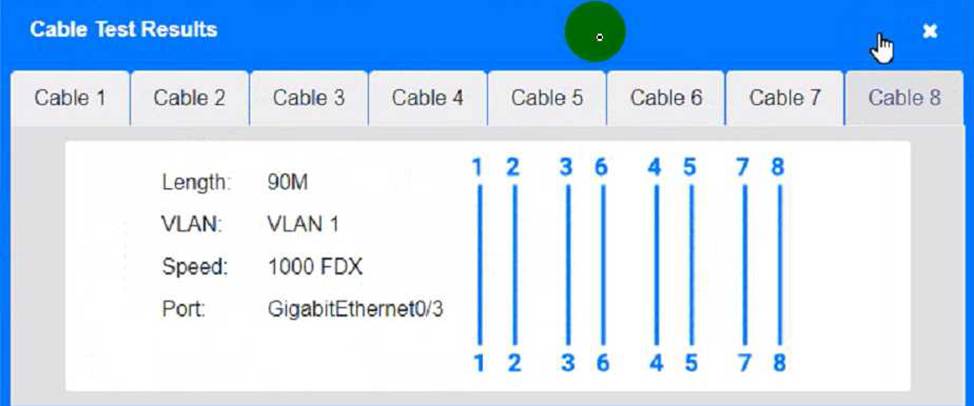
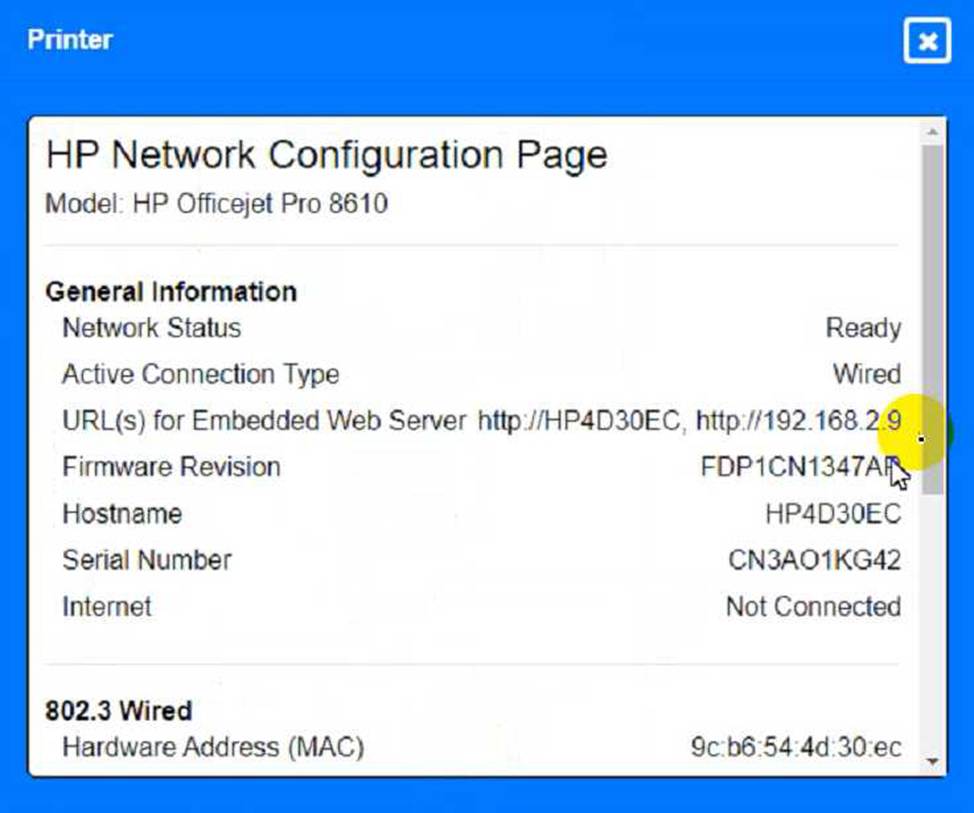
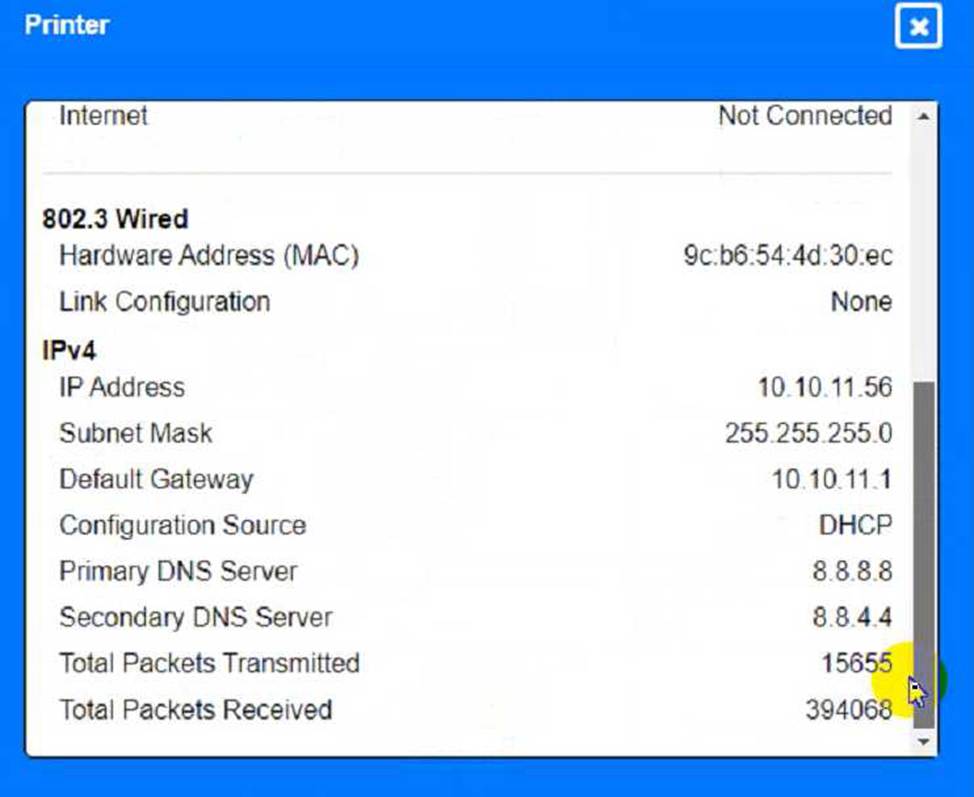
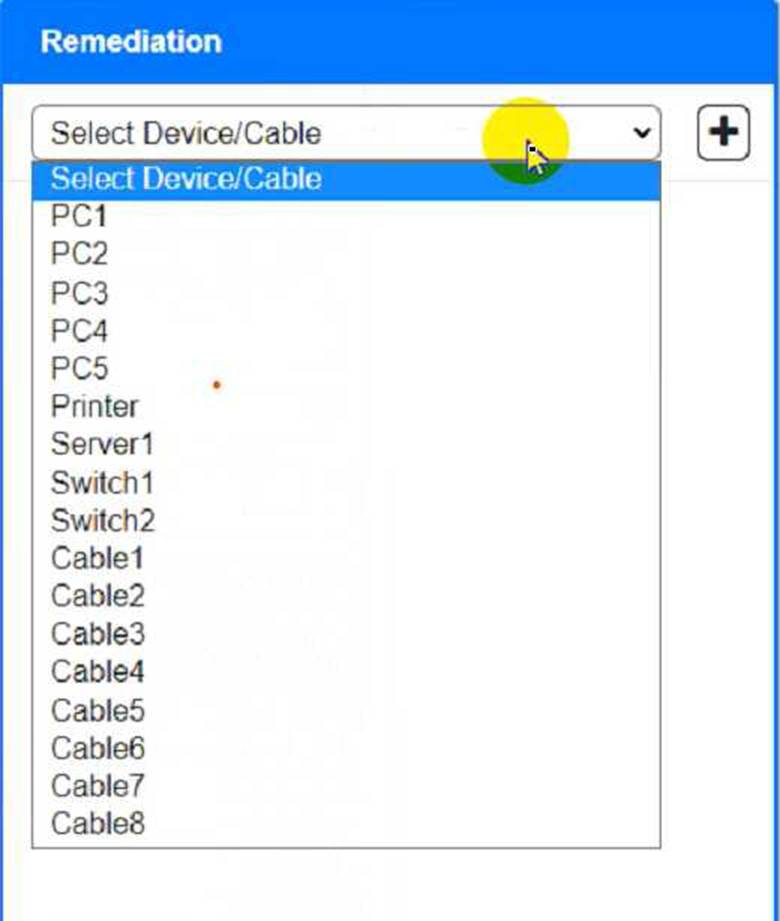
To troubleshoot all the network components and review the cable test results, you can use the following steps:
Click on each device and cable to open its information window.
Review the information and identify any problems or errors that may affect the network connectivity or performance.
Diagnose the appropriate component(s) by identifying any components with a problem and recommend a solution to correct each problem.
Fill in the remediation form using the drop-down menus provided. Here is an example of how to fill in the remediation form for PC1: The component with a problem isPC1. The problem is Incorrect IP address.
The solution isChange the IP address to 192.168.1.10.
You can use the same steps to fill in the remediation form for other components.
To enter commands in each device, you can use the following steps:
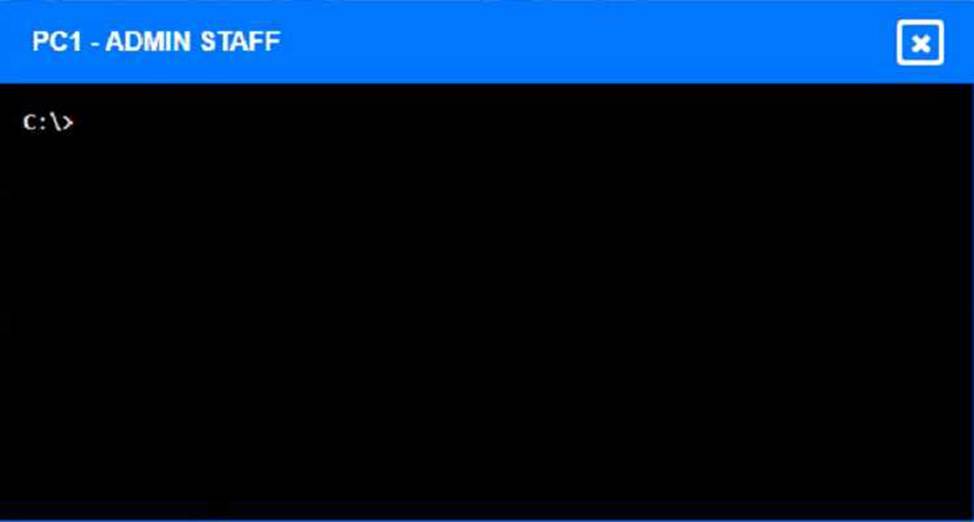
Click on the device to open its terminal window.
Enter the command ipconfig /allto display the IP configuration of the device, including its IP address, subnet mask, default gateway, and DNS servers.
Enter the commandping <IP address> to test the connectivity and reachability to another device on the network by sending and receiving echo packets. Replace <IP address> with the IP address of the destination device, such as 192.168.1.1 for Core Switch 1.
Enter the command tracert <IP address> to trace the route and measure the latency of packets from the device to another device on the network by sending and receiving packets with increasing TTL values. Replace <IP address> with the IP address of the destination device, such as 192.168.1.1 for Core Switch 1.
Here is an example of how to enter commands in PC1:
Click on PC1 to open its terminal window.
Enter the commandipconfig /all to display the IP configuration of PC1. You should see that PC1 has an incorrect IP address of 192.168.2.10, which belongs to VLAN 2 instead of VLAN 1.
Enter the commandping 192.168.1.1 to test the connectivity to Core Switch 1. You should see that PC1 is unable to ping Core Switch 1 because they are on different subnets.
Enter the command tracert 192.168.1.1to trace the route to Core Switch 1. You should see that PC1 is unable to reach Core Switch 1 because there is no route between them.
You can use the same steps to enter commands in other devices, such as PC3, PC4, PC5, and Server 1.
Which of the following steps of the troubleshooting methodology would most likely include checking through each level of the OSI model after the problem has been identified?
- A . Establish a theory.
- B . Implement the solution.
- C . Create a plan of action.
- D . Verify functionality.
D
Explanation:
Introduction to Troubleshooting Methodology:
Network troubleshooting involves a systematic approach to identifying and resolving network issues. The CompTIA Network+ certification emphasizes a structured troubleshooting methodology. Troubleshooting Steps:
Identify the problem: Gather information, identify symptoms, and question users.
Establish a theory of probable cause: Consider possible reasons for the issue.
Test the theory to determine cause: Validate the theory with tests.
Establish a plan of action to resolve the problem and implement the solution: Create and execute a resolution plan.
Verify functionality and implement preventive measures: Ensure the solution works and prevent recurrence.
Verifying Functionality:
After implementing a solution, verifying functionality ensures that the problem is fully resolved. This involves testing the network to confirm that it operates correctly.
Checking through each level of the OSI model helps to ensure that all potential issues at different layers (physical, data link, network, transport, session, presentation, and application) are addressed. Explanation of the Options:
A Chief Executive Officer (CEO) of a company purchases a new phone that will be used while traveling to different countries. The CEO needs to be able to place outgoing calls and receive incoming calls on the phone using a SIM card.
Which of the following cellular technologies does the CEO’s phone need?
- A . WDMA
- B . CDMA
- C . GSM
- D . SLA
C
Explanation:
GSM (Global System for Mobile communications) is the international standard that uses SIM cards to authenticate and connect phones to the cellular network. GSM allows users to place and receive calls while traveling globally, provided they have a SIM card. CDMA, on the other hand, does not use SIM cards in the same way and is primarily used in the United States. (Reference: CompTIA Network+ Study Guide, Chapter on Network Fundamentals)
Which of the following protocols has a default administrative distance value of 90?
- A . RIP
- B . EIGRP
- C . OSPF
- D . BGP
B
Explanation:
EIGRP (Enhanced Interior Gateway Routing Protocol) has a default administrative distance (AD) value of 90 for internal routes. The administrative distance is used to rate the trustworthiness of routing information received from different routing protocols. EIGRP, developed by Cisco, has an AD of 90, which is lower than that of RIP (120) and OSPF (110), making it more preferred if multiple protocols provide a route to the same destination.
Reference: CompTIA Network+ study materials.
A technician is implementing a new SD-WAN device with a default configuration. The technician receives a URL via email and connects the new device to the internet to complete the installation.
Which of the following is this an example of?
- A . SASE device installation
- B . Zero-touch provisioning
- C . Infrastructure as code
- D . Configuration management
B
Explanation:
This process describes Zero-touch provisioning (ZTP), where a device automatically pulls its configuration from a cloud controller or URL once connected to the internet. It’s common in SD-WAN and modern network appliances.
Which of the following are the best device-hardening techniques for network security? (Select two).
- A . Disabling unused ports
- B . Performing regular scanning of unauthorized devices
- C . Monitoring system logs for irregularities
- D . Enabling logical security such as SSO
- E . Changing default passwords
- F . Ensuring least privilege concepts areinplace
A,E
Explanation:
Disabling unused ports prevents unauthorized access and reduces the attack surface by ensuring that no inactive or unmonitored entry points are available for exploitation. Changing default passwords is critical for security because default credentials are widely known and can easily be exploited by attackers. These techniques are fundamental steps in hardening devices against unauthorized access and ensuring network security.
Reference: CompTIA Network+ Exam Objectives and official study guides.