
Cisco 300-410 Practice Exams
Last updated on Nov 16,2026- Exam Code: 300-410
- Exam Name: Implementing Cisco Enterprise Advanced Routing and Services (ENARSI)
- Certification Provider: Cisco
- Latest update: Nov 16,2026
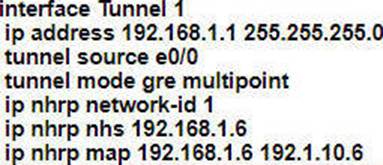
Refer to the exhibit.
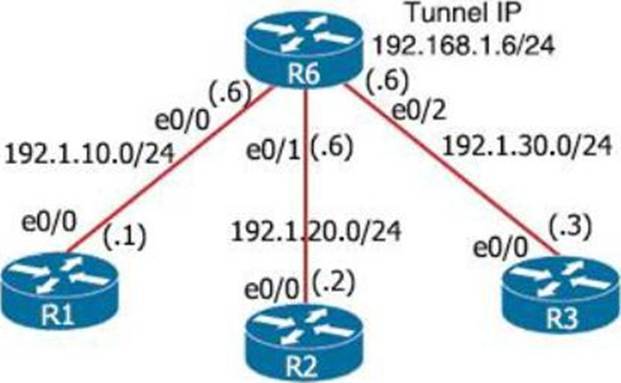
An engineer must establish multipoint GRE tunnels between hub router R6 and branch routers R1, R2, and R3.
Which configuration accomplishes this task on R1?
A)
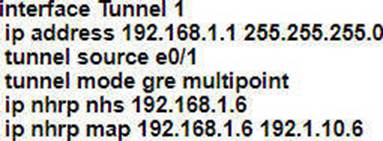
B)
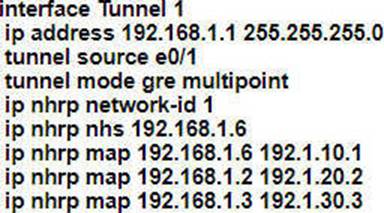
C)
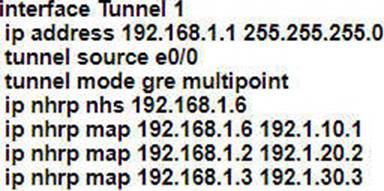
D)
- A . Option A
- B . Option B
- C . Option C
- D . Option D
D
Explanation:
We have an example of how to configure DMVPN Phase II and we show the configuration here for your reference:
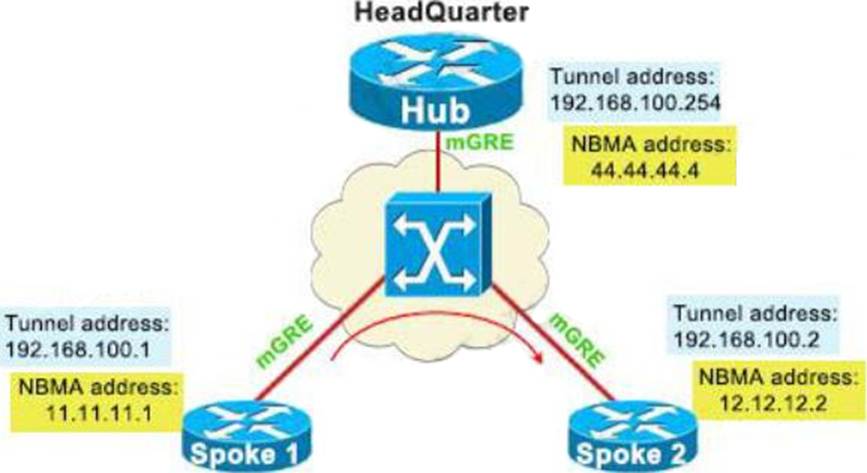
Diagram Description automatically generated
DMVPN Phase II C Dynamic Mapping
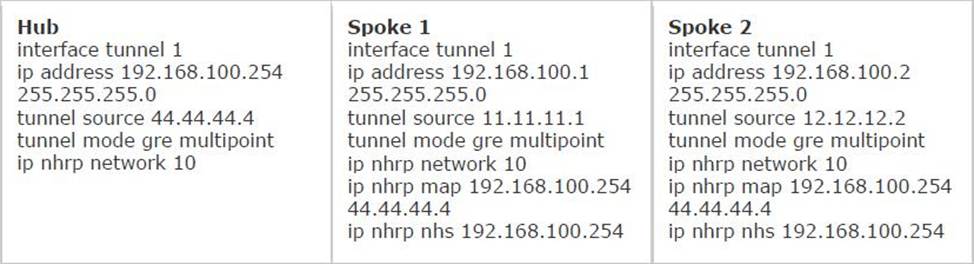
Text Description automatically generated
Note: Although Phase II C Dynamic Mapping is “dynamic” but we still need to add a static entry for the hub because without that entry, the NHRP registration cannot be sent.
Refer to the exhibit.
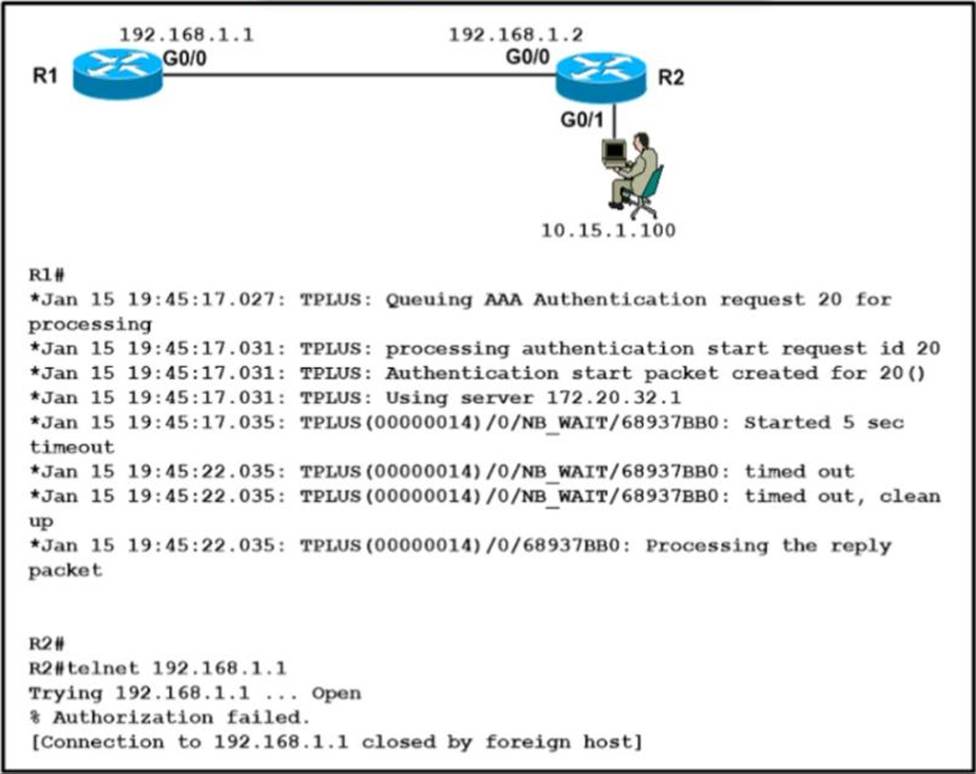
A network engineer is troubleshooting an AAA authentication issue for R1 from R2 When an engineer tries to open a telnet connection to R1 it opens the connection but shows a %Authorization failed error message on the terminal and closes the connection silently.
Which action resolves the issue?
- A . Resolve tacacs+ server host IP authentication miss configuration on the R1 router
- B . Resolve tacacs+ server reachability from the R1 router.
- C . Configure the tacacs+ server host IP on the R1 router
- D . Configure authorization commands in the tacacs* server for the R1 router.
Refer to the exhibit.
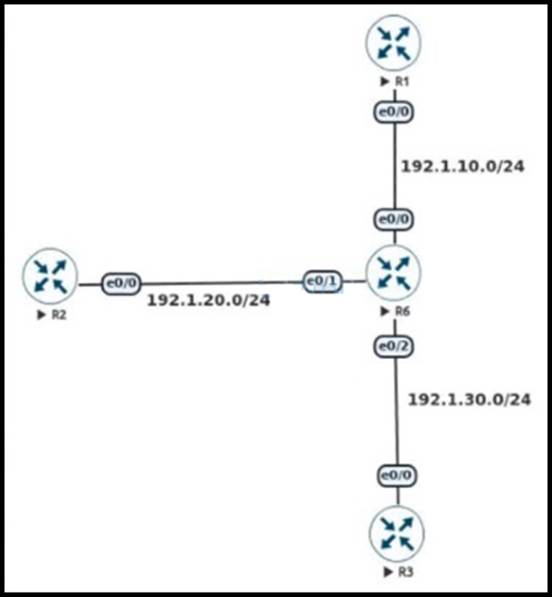
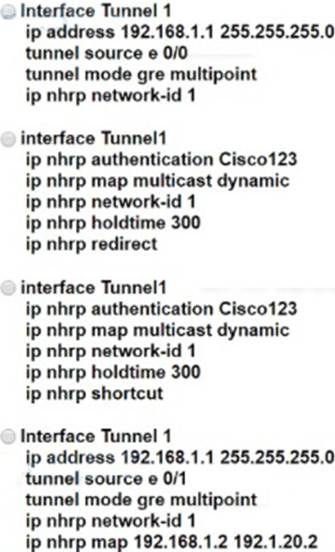
An engineer must configure DMVPN Phase 3 hub-and-spoke topology to enable a spoke-to-spoke tunnel.
Which NHRP configuration meets the requirement on R6?
- A . Option A
- B . Option B
- C . Option C
- D . Option D
Refer to the exhibit.
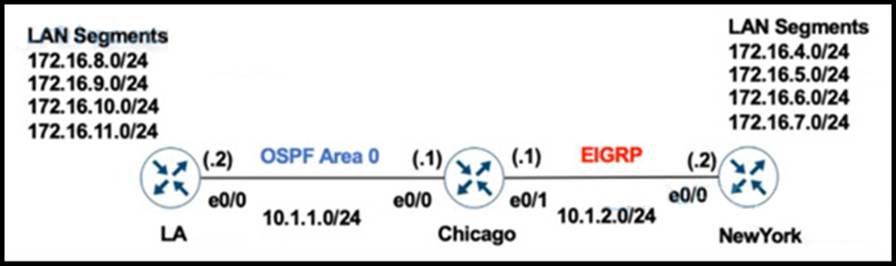
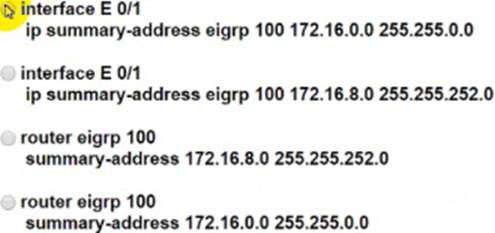
The network administrator configured the Chicago router to mutually redistribute the LA and NewYork routes with OSPF routes to be summarized as a single route in EIGRP using the longest summary mask:
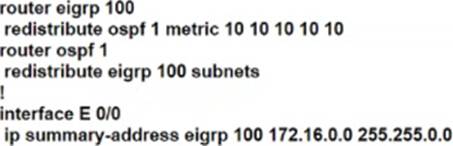
After the configuration, the New York router receives all the specific LA routes but the summary route.
Which set of configurations resolves the issue on the Chicago router?
- A . Option A
- B . Option B
- C . Option C
- D . Option D
Refer to the exhibit.
The network administrator configured the Chicago router to mutually redistribute the LA and NewYork routes with OSPF routes to be summarized as a single route in EIGRP using the longest summary mask:
After the configuration, the New York router receives all the specific LA routes but the summary route.
Which set of configurations resolves the issue on the Chicago router?
- A . Option A
- B . Option B
- C . Option C
- D . Option D
Refer to the exhibit.
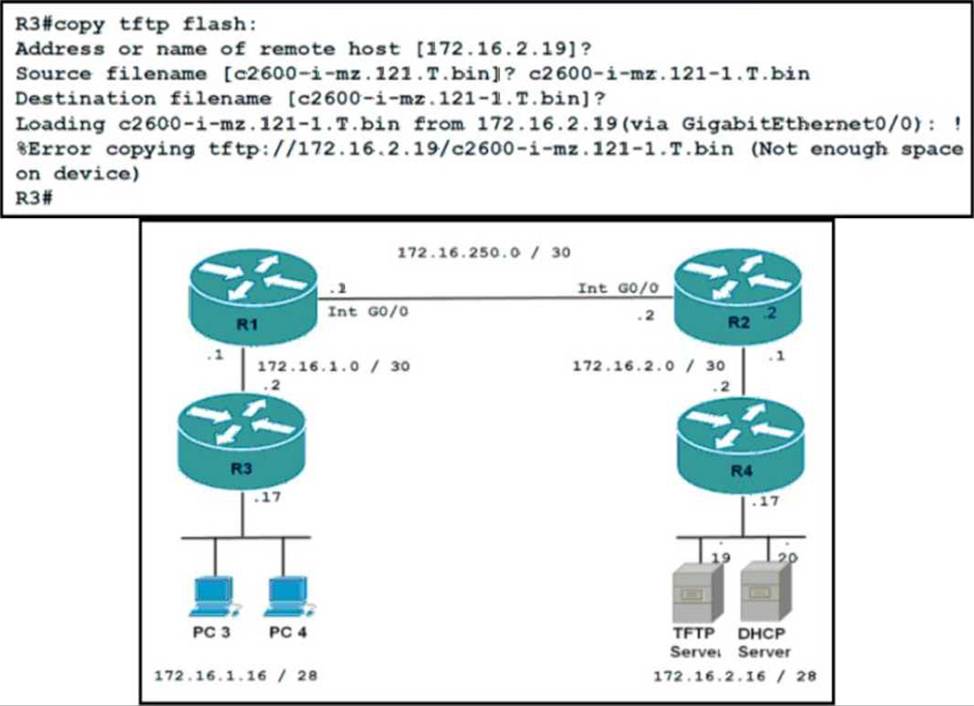
The engineer is getting an error when trying to transfer a new IOS file to the router.
Which action resolves the issue?
- A . Delete some files on the router flash memory.
- B . Delete some files on the router NVRAM.
- C . Remove any access-list filtering the TFTP file transfer.
- D . Split the file into parts to transfer them one by one.
Refer to the exhibit.
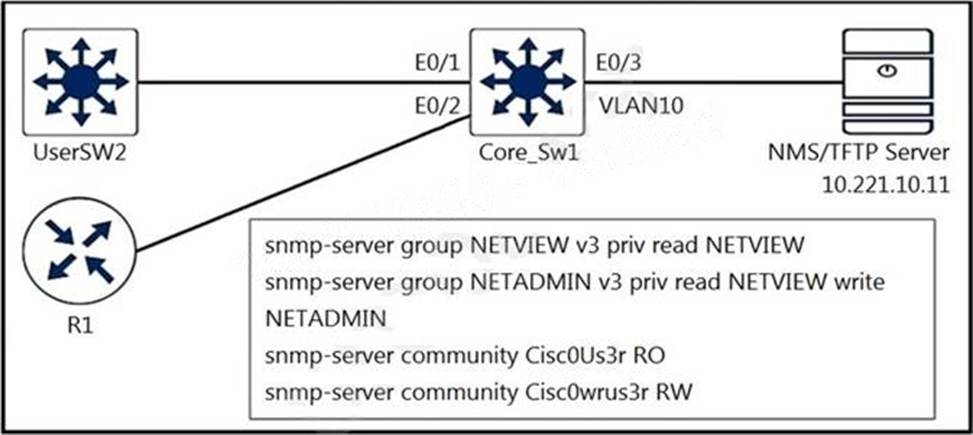
A junior engineer configured SNMP to network devices. Malicious users have uploaded different configurations to the network devices using SNMP and TFTP servers.
Which configuration prevents changes from unauthorized NMS and TFTP servers?
- A . access-list 20 permit 10.221.10.11
access-list 20 deny any log
!
snmp-server group NETVIEW v3 priv read NETVIEW access 20
snmp-server group NETADMIN v3 priv read NETVIEW write NETADMIN access 20
snmp-server community Cisc0Us3r RO 20
snmp-server community Cisc0wrus3r RW 20
snmp-server tftp-server-list 20 - B . access-list 20 permit 10.221.10.11
access-list 20 deny any log
!
snmp-server group NETVIEW v3 priv read NETVIEW access 20
snmp-server group NETADMIN v3 priv read NETVIEW write NETADMIN access 20
snmp-server community Cisc0wrus3r RO 20
snmp-server community Cisc0Us3r RW 20
snmp-server tftp-server-list 20 - C . access-list 20 permit 10.221.10.11
access-list 20 deny any log - D . access-list 20 permit 10.221.10.11
Refer to Exhibit.
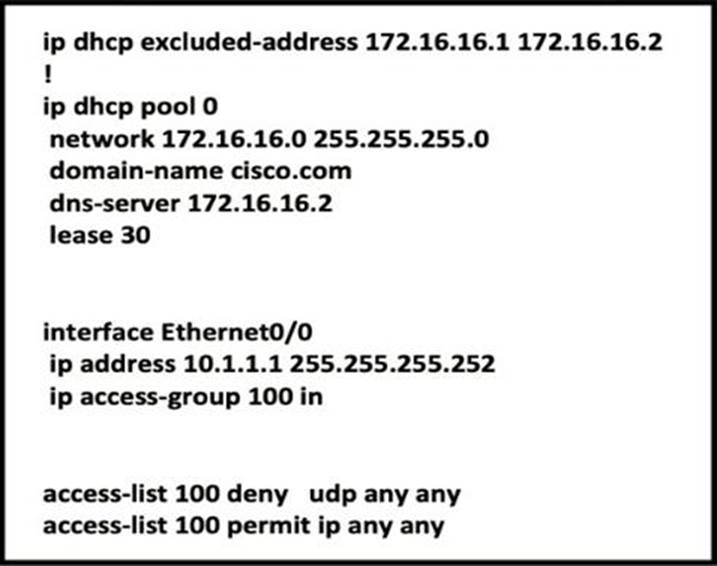
Which two configurations allow clients to get dynamic ip addresses assigned?
- A . Configure access-list 100 permit udp any any eq 61 as the first line
- B . Configure access-list 100 permit udp any any eq 86 as the first line
- C . Configure access-list 100 permit udp any any eq 68 as the first line
- D . Configure access-list 100 permit udp any any eq 69 as the first line
- E . Configure access-list 100 permit udp any any eq 67 as the first line
C,E
Explanation:
A DHCP server that receives a DHCPDISCOVER message may respond with a DHCPOFFER message on UDP port 68 (BootP client).
…
In the event that the DHCP server is not on the local subnet, the DHCP server will send the DHCPOFFER, as a unicast packet, on UDP port 67, back to the DHCP/BootPRelay Agent from which the DHCPDISCOVER came.
Reference: https://www.cisco.com/c/en/us/support/docs/ip/dynamic-address-allocation-resolution/27470-100.html
Refer to the exhibit.
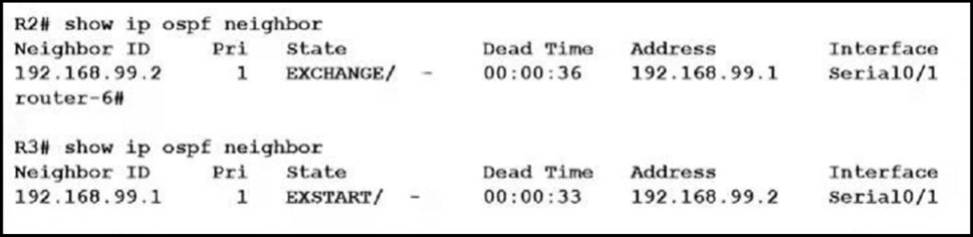
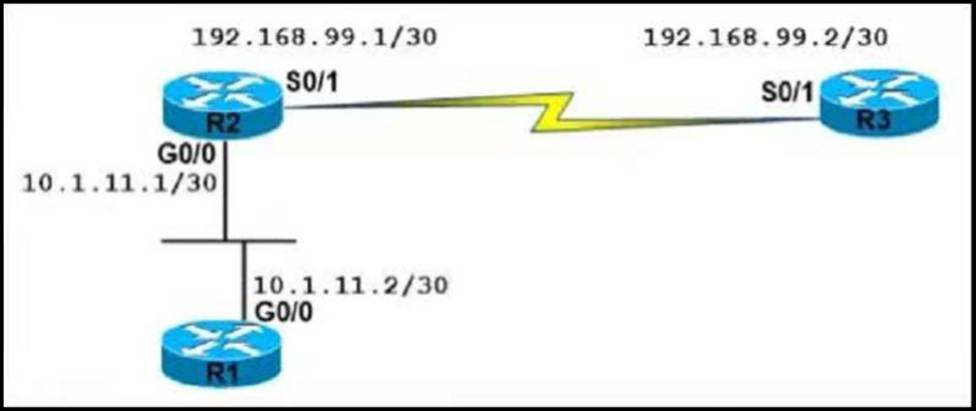
An OSPF neighbor relationship between R2 and R3 is showing stuck in EXCHANGE/EXSTART state. The neighbor is established between R1 and R2. The network engineer can ping from R2 to R3 and vice versa, but the neighbor is still down.
Which action resolves the issue?
- A . Restore the Layer 2/Layer 3 conectivity issue in the ISP network.
- B . Match MTU on both router interfaces or ignore MTU.
- C . Administrative "shut then no shut" both router interfaces.
- D . Enable OSPF on the interface, which is required.
B
Explanation:
After two OSPF neighboring routers establish bi-directional communication and complete DR/BDR election (on multi-access networks), the routers transition to the exstart state. In this state, the neighboring routers establish a master/slave relationship and determine the initial database descriptor (DBD) sequence number to use while exchanging DBD packets.
Neighbors Stuck in Exstart/Exchange State
The problem occurs most frequently when attempting to run OSPF between a Cisco router and another vendor’s router. The problem occurs when the maximum transmission unit (MTU) settings for neighboring router interfaces don’t match. If the router with the higher MTU sends a packet larger that the MTU set on the neighboring router, the neighboring router ignores the packet.
Refer to the exhibit.
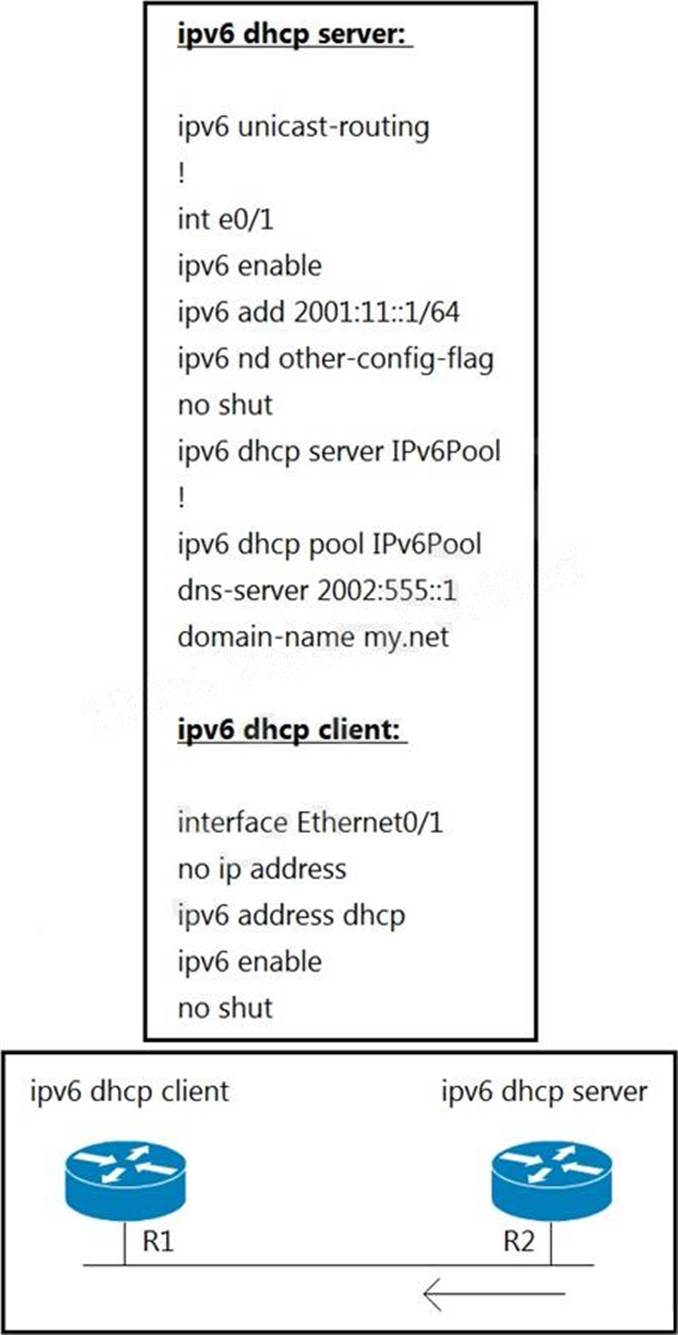
A network administrator is troubleshooting IPv6 address assignment for a DHCP client that is not getting an IPv6 address from the server.
Which configuration retrieves the client IPv6 address from the DHCP server?
- A . ipv6 address autoconfig command on the interface
- B . ipv6 dhcp server automatic command on DHCP server
- C . ipv6 dhcp relay-agent command on the interface
- D . service dhcp command on DHCP server