
CIPS L4M5 Practice Exams
Last updated on Oct 22,2026- Exam Code: L4M5
- Exam Name: Commercial Negotiation
- Certification Provider: CIPS
- Latest update: Oct 22,2026
All of the following shift the supply of watches to the right except…?
- A . An advance in the technology used to manufacture watches
- B . A decrease in the wage of workers employed to manufacture watches
- C . An increase in the price of watches
- D . Manufacturers’ expectation of higher watch prices in the future
C
Explanation:
A supply curve will slope upward from left to right showing more supply at higher prices, as illustrated in the graph below:
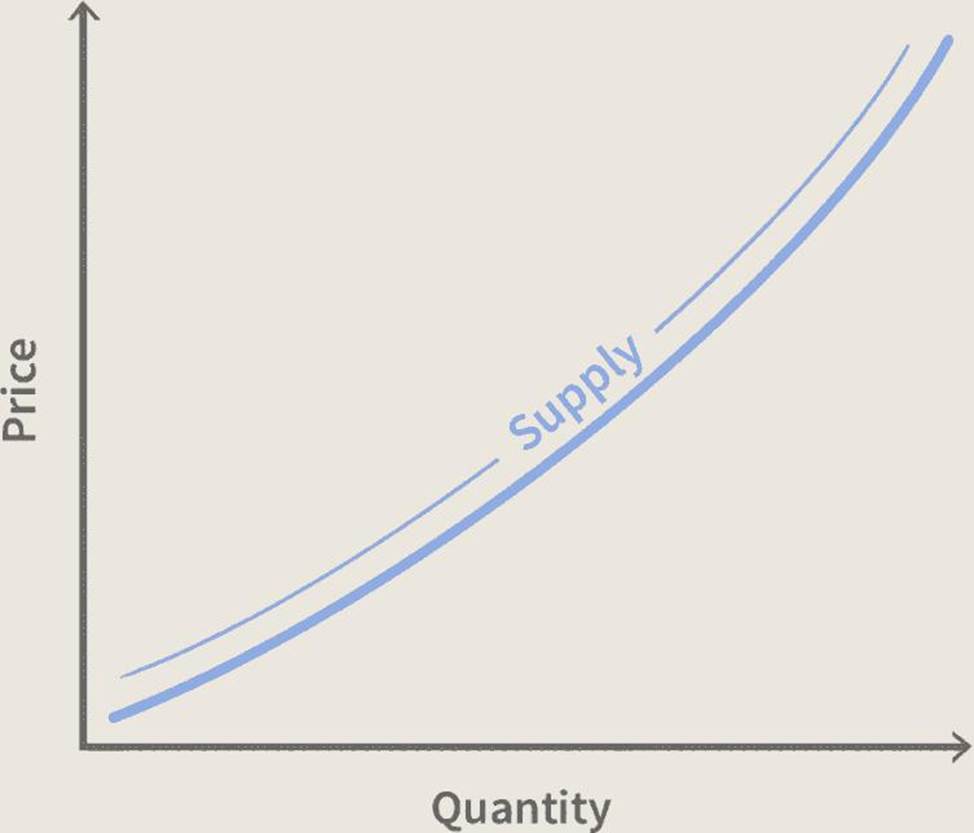
A movement along the supply curve will be brought about by a change in price, but a shift of the whole curve will be caused by a determinant other than price:
– The physical feasibility and time and energy required to produce the products
– Technology and innovation
– The objectives of the producers and their future expectations
– Prices of other goods and services
– Government’s policies
LO 2, AC 2.2
All of the following shift the supply of watches to the right except…?
- A . An advance in the technology used to manufacture watches
- B . A decrease in the wage of workers employed to manufacture watches
- C . An increase in the price of watches
- D . Manufacturers’ expectation of higher watch prices in the future
C
Explanation:
A supply curve will slope upward from left to right showing more supply at higher prices, as illustrated in the graph below:
A movement along the supply curve will be brought about by a change in price, but a shift of the whole curve will be caused by a determinant other than price:
– The physical feasibility and time and energy required to produce the products
– Technology and innovation
– The objectives of the producers and their future expectations
– Prices of other goods and services
– Government’s policies
LO 2, AC 2.2
Influence
- A . 3 and 4 only
- B . 1 and 3 only
- C . 1 and 2 only
- D . 2 and 3 only
C
Explanation:
Listening is a hugely important skill in the world of work. It’s a key part of effective communication […].
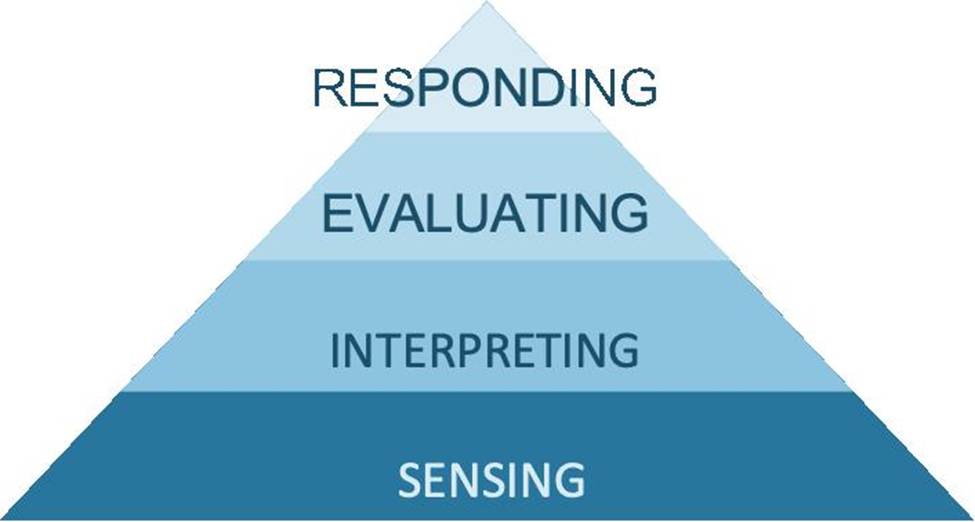
Regarding active listening, there is a model called ‘The SIER Hierarchy of Active Listening’. It details four key stages required for effective listening. As with all models associated with active listening, its purpose is to help the listener be a better, more effective listener who really hears what is being said, connects with the individual with whom they are communicating and builds effective relationships. The model is a hierarchical model meaning that each stage builds on the stage before it. While the model is sometimes used for training in the sales arena, it is helpful in all walks of life. The stages of the model are: Sensing (including hearing and watching body language), Interpreting, Evaluating and
Responding.
Reference: – CIPS study guide page 171-173
– The SIER Hierarchy of Active Listening: Become a Better Listener LO 3, AC 3.3
Influence
- A . 3 and 4 only
- B . 1 and 3 only
- C . 1 and 2 only
- D . 2 and 3 only
C
Explanation:
Listening is a hugely important skill in the world of work. It’s a key part of effective communication […].
Regarding active listening, there is a model called ‘The SIER Hierarchy of Active Listening’. It details four key stages required for effective listening. As with all models associated with active listening, its purpose is to help the listener be a better, more effective listener who really hears what is being said, connects with the individual with whom they are communicating and builds effective relationships. The model is a hierarchical model meaning that each stage builds on the stage before it. While the model is sometimes used for training in the sales arena, it is helpful in all walks of life. The stages of the model are: Sensing (including hearing and watching body language), Interpreting, Evaluating and
Responding.
Reference: – CIPS study guide page 171-173
– The SIER Hierarchy of Active Listening: Become a Better Listener LO 3, AC 3.3
An automotive company purchases high quality steel to produce components. The steel is an important raw material and the contract value is enormous. They sources the steel from oversea and contact some potential suppliers. One of the potential suppliers invites the procurement team to their premise for a new business opportunity.
Should the procurement team accept the invitation?
- A . No, because negotiating over telephone is enough to collect information on supplier’s capability
- B . Yes, because the visit would increase the buyer’s bargaining power
- C . Yes, because this is an opportunity to assess the supplier’s capacity
- D . No, because the travel would incur unnecessary costs
C
Explanation:
In the scenario, the value of contract as well as the importance of purchased item justify the procurement’s travel. Visiting a supplier at their HQ or operational facility may facilitate the procurement team in assessing, albeit briefly, the culture of the organisation, how busy they seem and how staff engage with each other. A visit is a good opportunity to assess supplier’s capacity. LO 2, AC 2.2
Which of the following are rules of attentive listening? Select TWO that apply.
- A . Prepare for what to say next
- B . React to the person who is speaking
- C . Listen deliberately
- D . Only focus on verbal cues
- E . Do not interrupt when the other party is speaking
C, E
Explanation:
Hearing is passive but listening is active, and some people need to learn to be a good, attentive listener.
The following rules of attentive listening will help you to become a successful negotiator:
• Be motivated to listen
• Be alert to non-verbal cues
• Do not interrupt the other party when they are speaking
• Fight off distractions
• Write everything down
• Listen with a goal in mind
• Give the other party your undivided attention
• React to the message, not the person
LO 3, AC 3.3
Should a buyer use closed questions in a negotiation?
- A . Yes, because closed questions help to reconfirm certain facts
- B . Yes, because they urge the supplier to provide more:
- C . No, the buyer should maximise the use of open questions
- D . No, supplier will consider closed questions as provocation
A
Explanation:
Asking questions the right way is both an art and a science. Ask the question the wrong way, and the other negotiator might act like a turtle, becoming defensive and withdrawing into their shell. Ask the question the right way, and the other negotiator might “spill the beans.”.
Closed Questions: How and when to use them?
Closed questions are those that require a short and focused answer, and are especially helpful in the beginning stages of the negotiation to encourage interaction. They can be used to clarify a point, or to reconfirm certain facts. For example, you can use a closed question to confirm the amount of units the company can produce in a week, or to clarify that what they are really saying is that they don’t feel comfortable outsourcing their accounts to India. Most closed questions only require a simple “yes” or “no” response, so there really isn’t much room for misinterpretation C great for finding out where both you and they stand.
Reference: CIPS study guide page 169
What Questions Can We Ask In Negotiations?
Which of the following are examples of connected stakeholders in a private organisation? Select TWO that apply.
- A . Customers
- B . Local community
- C . Media
- D . Government
- E . Shareholders
A, E
Explanation:
Connected stakeholders are those who, by contractual or commercial relationships, have a significant stake in organisation activity. As a general rule, connected stakeholder (with the exception of suppliers) have a low level of influence on procurement negotiations.
Examples of connected stakeholders are: suppliers, customers, bank where the organisation opens its account, shareholders.