
CIPS L4M5 Practice Exams
Last updated on Oct 22,2026- Exam Code: L4M5
- Exam Name: Commercial Negotiation
- Certification Provider: CIPS
- Latest update: Oct 22,2026
What is the most likely outcome when two organisations with adversarial relationship negotiate with each other?
- A . Deadlocked
- B . Lose lose
- C . Win lose
- D . Win win
C
Explanation:
An adversarial relationship in purchasing and supply arises when identical or equivalent good or services are available from competing suppliers and buyers/sellers are trying to gain an advantage over each other. Low levels of trust are characteristic of adversarial relationships. The outcome when two organisations with adversarial negotiate is most likely to be win-lose.
Reference: Adversarial purchasing – Wikipedia
CIPS study guide page 32-35
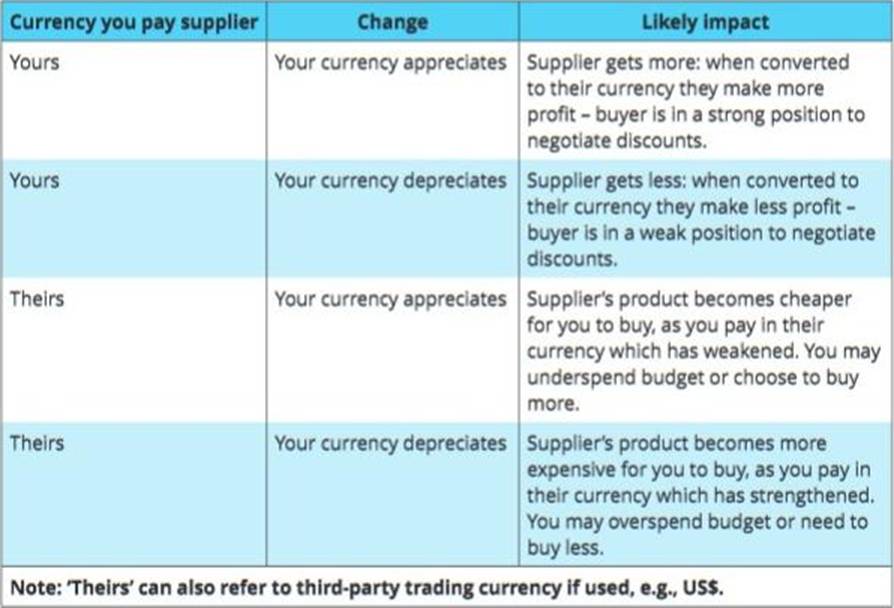
XYZ Ltd is importing goods from overseas. They prefer to pay their supplier in their own currency.
Which of the following is a true statement?
- A . Supplier will receive less if XYZ’s currency appreciates
- B . XYZ has an advantage in negotiating discounts if their currency appreciates
- C . XYZ is able to pay less if their currency depreciates
- D . XYZ has to pay more if their currency depreciates
B
Explanation:
The effect of a change of relative exchange rates will be determined by which currency you pay your supplier in.
LO 2, AC 2.2
In airline industry, suppliers prefer to adopt dynamic pricing in order to constantly monitor and change their fares in response to market conditions. Dynamics pricing is based on which costing method?
- A . Activity-based costing
- B . Cost plus costing
- C . Absorption costing
- D . Marginal costing
D
Explanation:
Dynamic pricing is the practice of dynamically calculating the price of a product or service in order to incorporate real-time market conditions, input costs, and/or competitive perspectives. Dynamic pricing which is based on marginal costing, is used by airlines and many other organisations. Marginal cost is the cost of producing an additional unit of output. Marginal Costing is a costing technique wherein the marginal cost, i.e. variable cost is charged to units of cost, while the fixed cost for the period is completely written off against the contribution.
All of the following shift the supply of watches to the right except…?
- A . An advance in the technology used to manufacture watches
- B . A decrease in the wage of workers employed to manufacture watches
- C . An increase in the price of watches
- D . Manufacturers’ expectation of higher watch prices in the future
C
Explanation:
A supply curve will slope upward from left to right showing more supply at higher prices, as illustrated in the graph below:
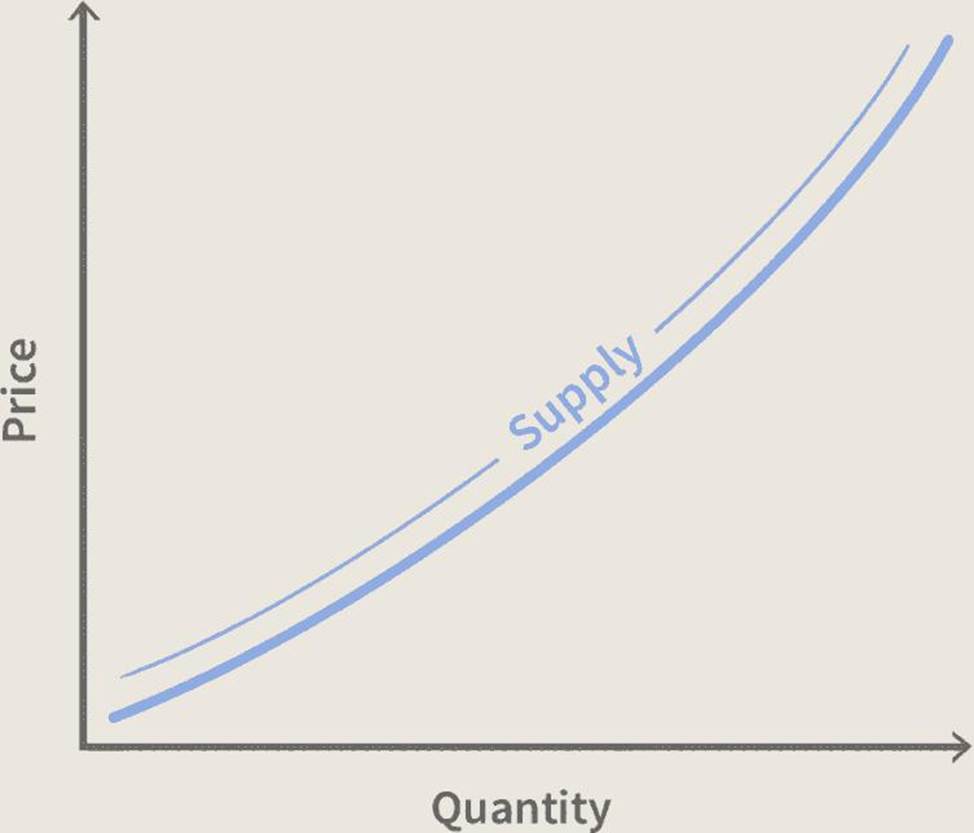
A movement along the supply curve will be brought about by a change in price, but a shift of the whole curve will be caused by a determinant other than price:
– The physical feasibility and time and energy required to produce the products
– Technology and innovation
– The objectives of the producers and their future expectations
– Prices of other goods and services
– Government’s policies
LO 2, AC 2.2
All of the following shift the supply of watches to the right except…?
- A . An advance in the technology used to manufacture watches
- B . A decrease in the wage of workers employed to manufacture watches
- C . An increase in the price of watches
- D . Manufacturers’ expectation of higher watch prices in the future
C
Explanation:
A supply curve will slope upward from left to right showing more supply at higher prices, as illustrated in the graph below:
A movement along the supply curve will be brought about by a change in price, but a shift of the whole curve will be caused by a determinant other than price:
– The physical feasibility and time and energy required to produce the products
– Technology and innovation
– The objectives of the producers and their future expectations
– Prices of other goods and services
– Government’s policies
LO 2, AC 2.2