
CIPS L4M5 Practice Exams
Last updated on Oct 22,2026- Exam Code: L4M5
- Exam Name: Commercial Negotiation
- Certification Provider: CIPS
- Latest update: Oct 22,2026
Influencing
- A . 1 and 2 only
- B . 2 and 3 only
- C . 1 and 3 only
- D . 2 and 4 only
A
Explanation:
Listening involves both hearing (1) and interpreting (2) the information shared by the other party. Effective listening is an active process that goes beyond simply hearing words; it involves interpreting meaning, understanding the speaker’s intent, and responding accordingly. CIPS emphasizes these steps as part of effective communication in negotiations.
Which of the following would cause a demand curve for a good to be price inelastic?
- A . There are a great number of substitutes for the good
- B . The consultancy service
- C . The luxury goods
- D . The necessary goods
D
Explanation:
Essential goods and services such as electricity, fuel, basic food stuffs, commuter transport and habitual products such as tobacco, alcohol and sugar-based drinks are often sited as facing a relatively inelastic demand curve. This means when the price goes up, the quantity demanded does not decrease very much and so they are often the target of government taxation. LO2, AC 2.2
A buying organisation with a low spend but the reputation for paying on-time. In order to increase buyer’s leverage in negotiation with suppliers, which of the following should be a priority of this buyer?
- A . Unclear tender award criteria
- B . Volume separation
- C . Spend concentration
- D . Unavailable technical support
C
Explanation:
According to Paul Steele’s ‘The Seller’s Perspective’, customer can be classified into 4 categories as below:
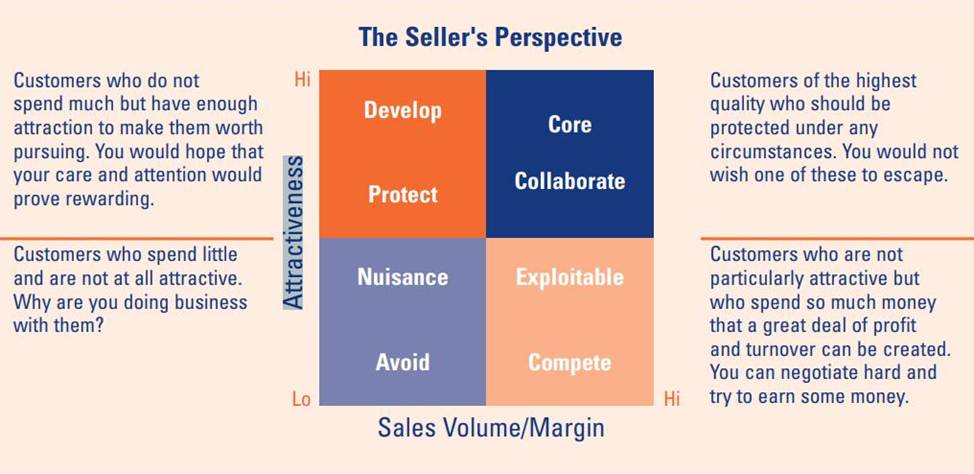
To increase the leverage in negotiation, buyer may increase its attractiveness and/or increase spend value. In this scenario, the buyer is already attractive to supplier as it always pays on-time, but the spend is still low. So to have greater leverage, the buyer has to increase its spend volume by spend concentration.
Spend concentration may take many forms as following:
– Vendor base reduction
– Volume pooling
– Volume redistribution
– Volume consolidation across categories
– Standardisation and harmonisation of specifications
– Forming purchasing consortia
LO 1, AC 1.3
A buying organisation with a low spend but the reputation for paying on-time. In order to increase buyer’s leverage in negotiation with suppliers, which of the following should be a priority of this buyer?
- A . Unclear tender award criteria
- B . Volume separation
- C . Spend concentration
- D . Unavailable technical support
C
Explanation:
According to Paul Steele’s ‘The Seller’s Perspective’, customer can be classified into 4 categories as below:
To increase the leverage in negotiation, buyer may increase its attractiveness and/or increase spend value. In this scenario, the buyer is already attractive to supplier as it always pays on-time, but the spend is still low. So to have greater leverage, the buyer has to increase its spend volume by spend concentration.
Spend concentration may take many forms as following:
– Vendor base reduction
– Volume pooling
– Volume redistribution
– Volume consolidation across categories
– Standardisation and harmonisation of specifications
– Forming purchasing consortia
LO 1, AC 1.3
The stages of commercial negotiation involve which of the following characteristics?
- A . Preparation, proposal, bargain, leave
- B . Open, testing, bargaining, closing, revisiting
- C . Preparing, opening, bargaining, agreement, closure
- D . Opening, debating, promising, testing, disagreeing, closing
C
Explanation:
The typical stages of commercial negotiation are Preparing, opening, bargaining, agreement, and closure. This sequence facilitates a structured approach where negotiators prepare strategies, initiate discussions, engage in bargaining, reach agreements, and formally close the negotiation. This structure is emphasized in CIPS materials as essential for achieving a balanced negotiation process.