
CIPS L4M5 Practice Exams
Last updated on Oct 23,2026- Exam Code: L4M5
- Exam Name: Commercial Negotiation
- Certification Provider: CIPS
- Latest update: Oct 23,2026
JCB is a large manufacturer of heavy machinery. The CPO is going to a negotiation with a Chinese supplier about procuring some major components. He is wondering about balance of power in the negotiation.
Which of the following micro factors are most likely to shift the balance of power towards the buying organisation in this commercial negotiation? Select TWO that apply
- A . Buyers purchase in small volumes
- B . Suppliers are more concentrated than buyer
- C . Eruption of epidemic in supply market
- D . JCB’s switching costs are low
- E . These components are highly standardised
D, E
Explanation:
There are many factors that can influence the balance of power in a negotiation. These factors are
classified into 3 levels:
– Macro level: STEEPLE framework: social, technological, economic, environment, political, legal and ethical
– Micro level: Porter’s five forces:
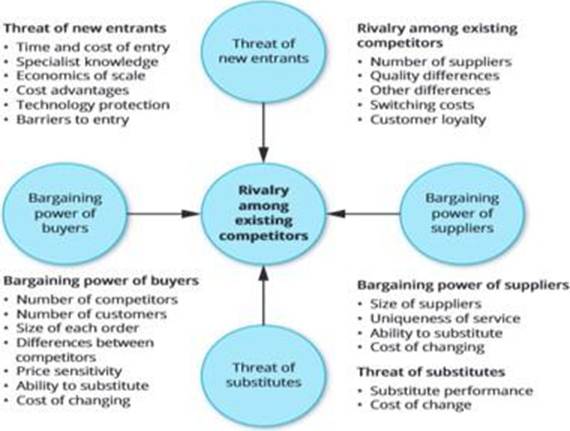
– One-to-one buyer-supplier dynamics.
The question asks about the micro factors that increases buyer’s bargaining power. Among 5 answers, only 2 are likely to increase buyer’s power:
– JCB’s switching costs are low: Buyer may easily switch its suppliers anytime
– These components are highly standardised: The products are not different any more, buyer may choose to buy from any supplier available.
Other answers cannot be correct because:
– Suppliers are more concentrated than buyer: Suppliers are forming oligopoly market, their bargaining power tend to be greater.
– Eruption of epidemic in supply market: this is a macro factor. Eruption of epidemic may cause factories closed and disruptions on supply chain.
– Buyers purchase in small volumes: Buyer will be seen as less potential to suppliers. Buying organisation may have difficulties to deal better price with suppliers.
LO 1, AC 1.3
JCB is a large manufacturer of heavy machinery. The CPO is going to a negotiation with a Chinese supplier about procuring some major components. He is wondering about balance of power in the negotiation.
Which of the following micro factors are most likely to shift the balance of power towards the buying organisation in this commercial negotiation? Select TWO that apply
- A . Buyers purchase in small volumes
- B . Suppliers are more concentrated than buyer
- C . Eruption of epidemic in supply market
- D . JCB’s switching costs are low
- E . These components are highly standardised
D, E
Explanation:
There are many factors that can influence the balance of power in a negotiation. These factors are
classified into 3 levels:
– Macro level: STEEPLE framework: social, technological, economic, environment, political, legal and ethical
– Micro level: Porter’s five forces:
– One-to-one buyer-supplier dynamics.
The question asks about the micro factors that increases buyer’s bargaining power. Among 5 answers, only 2 are likely to increase buyer’s power:
– JCB’s switching costs are low: Buyer may easily switch its suppliers anytime
– These components are highly standardised: The products are not different any more, buyer may choose to buy from any supplier available.
Other answers cannot be correct because:
– Suppliers are more concentrated than buyer: Suppliers are forming oligopoly market, their bargaining power tend to be greater.
– Eruption of epidemic in supply market: this is a macro factor. Eruption of epidemic may cause factories closed and disruptions on supply chain.
– Buyers purchase in small volumes: Buyer will be seen as less potential to suppliers. Buying organisation may have difficulties to deal better price with suppliers.
LO 1, AC 1.3
An organisation is developing the specification for a capital purchase project. An important stakeholder has doubt on the draft specification. The buyer invites him to the product function meetings. In these meeting the attendees can raise their concerns, the specification development team takes in all the concerns and adjusts the specification accordingly.
What kind of technique is the specification development team using?
- A . Directive
- B . Persuasive reasoning
- C . Coalition
- D . Visionary
C
Explanation:
In the scenario, anyone who has concerns can join a meeting to raise their thoughts. The project team takes the stakeholders’ ideas into account. This is known as coalition: A group of people or organisations come together and work collaboratively to achieve some goals. Specifically in this scenario, the goal is creating a high-quality and unified specification for an important project.
Reference: CIPS study guide page 164-165
What Is a Coalition Anyway?
According French and Raven’s base model, which of the following are sources of personal power that can be used in commercial negotiation? Select THREE that apply.
- A . Purchasing spend power
- B . Expert power
- C . Competitive power
- D . Trademark power
- E . Coercive power
- F . Legitimate power
B, E, F
Explanation:
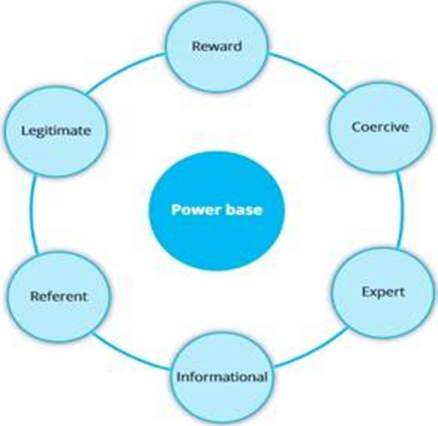
A useful model of personal power that has survived the test of time and provide a simple way to analyse negotiation in French and Raven’s Power Base Model, which describes six bases of power:
According French and Raven’s base model, which of the following are sources of personal power that can be used in commercial negotiation? Select THREE that apply.
- A . Purchasing spend power
- B . Expert power
- C . Competitive power
- D . Trademark power
- E . Coercive power
- F . Legitimate power
B, E, F
Explanation:
A useful model of personal power that has survived the test of time and provide a simple way to analyse negotiation in French and Raven’s Power Base Model, which describes six bases of power:
When is an adversarial style of negotiation appropriate?
- A . When one party has high bargaining power
- B . When a buyer feels the relationship is important
- C . When both parties want a win/win outcome
- D . When a sustainable partnership is key
A
Explanation:
An adversarial negotiation style is appropriate when one party has high bargaining power and is focused on maximizing its benefit rather than maintaining a long-term relationship. This approach often involves competitive tactics that leverage power disparities, aligning with CIPS guidance on when adversarial tactics may be strategically used in negotiations.
Which of the following is most likely to be a reason why a supplier charges its customer higher price after it has reached the break-even point?
- A . Supplier may need to open new facilities to meet increasing customer’s demand
- B . Supplier may have high fixed cost – variable cost ratio
- C . Supplier may want to encourage buyer’s demand
- D . The supplier may have reached economy of scale
A
Explanation:
‘Supplier may want to encourage buyer’s demand’: the buyer tends to prefer lower price, if supplier wants to encourage its customers to buy more, it needs to offer discount at bulk amount. So this option is not acceptable.
‘Supplier may have high fixed cost – variable cost ratio’: Supplier with high fixed cost needs high volumes to break even, but once achieved, it may be able to offer significant discounts for bulk orders
‘The supplier may have reached economy of scale’: when economy of scale is reached, cost per unit will be minimal which often leads to more favourable price.
‘Supplier may need to open new facilities to meet increasing customer’s demand’: Increasing
customer’s demands may excess supplier’s current capacity. Therefore, supplier may need to extend
its capacity by investing more in facilities. To cover these fixed cost investment, supplier may charge
higher price.
LO 2, AC 2.1
Representatives from South African Department of Health is negotiating the price of hospital drugs with US pharmaceutical companies.
Which of the following are most likely to be macro factors that influence the outcomes of the negotiation? Select TWO that apply.
- A . Forward integration
- B . Digitalisation of medicine
- C . Order quantity
- D . Regulations on health and safety
Switching costs of buyer
B, D
Explanation:
All one-to-one commercial negotiations between a specific purchaser and a specific supplier take place within an industrial market and a larger business environment characterised by multiple forces which both parties typically have little control over.
STEEPLE framework highlights the 6 main external influences on a business:
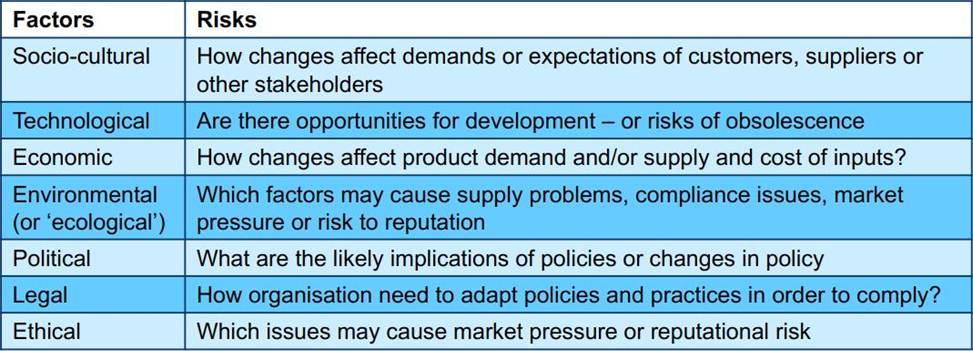
Particularly, pharmaceutical industry is a heavily regulated sector, therefore, legal and regulatory matters in the industry is highly important. Otherwise, technological trends also permeate into pharmaceutical companies, technologies like digitalisation may transform the balance of power in such negotiation.
LO 1, AC 1.3
Representatives from South African Department of Health is negotiating the price of hospital drugs with US pharmaceutical companies.
Which of the following are most likely to be macro factors that influence the outcomes of the negotiation? Select TWO that apply.
- A . Forward integration
- B . Digitalisation of medicine
- C . Order quantity
- D . Regulations on health and safety
Switching costs of buyer
B, D
Explanation:
All one-to-one commercial negotiations between a specific purchaser and a specific supplier take place within an industrial market and a larger business environment characterised by multiple forces which both parties typically have little control over.
STEEPLE framework highlights the 6 main external influences on a business:
Particularly, pharmaceutical industry is a heavily regulated sector, therefore, legal and regulatory matters in the industry is highly important. Otherwise, technological trends also permeate into pharmaceutical companies, technologies like digitalisation may transform the balance of power in such negotiation.
LO 1, AC 1.3