
CIPS L4M2 Practice Exams
Last updated on Oct 24,2026- Exam Code: L4M2
- Exam Name: Defining Business Needs
- Certification Provider: CIPS
- Latest update: Oct 24,2026
When developing a business case for a new product, a procurement department must consider…
- A . Terms and conditions of contract
- B . The supply market
- C . The supplier positioning model
- D . Indirect costs
When developing a business case for a new product, a procurement department must consider…
- A . Terms and conditions of contract
- B . The supply market
- C . The supplier positioning model
- D . Indirect costs
A procurement organisation is keen to encourage innovation available within the supply market in the execution of an upcoming significant contract opportunity. A team member suggests that the specification should define the performance indicators so that supplier’s solution can be checked against them.
Which of the following will enable the organisation to achieve this goal?
- A . Using an outcome focused specification
- B . Establishing transparent selection criteria
- C . Using an output focused specification
- D . Applying a precise performance framework
C
Explanation:
The buying organisation is keen to encourage innovation so they should use the outcome or output based specification. In an outcome-based specification, umbrella statements like ‘good quality’, ‘ambient temperature’, ‘convenient way’ are often used. This may confuse the suppliers, and it’s hard to check the solution that supplier offers. On the other hand, ouputbased specifications often include measurable requirements. For example, a specification for air conditioning system states that the system should maintain the room temperature at 19-24 degrees Celsius. Therefore, output specification is more appropriate in this case.
Reference: CIPS study guide page 119-124
LO 3, AC 3.1
An IT category buyer wishes to include social and environmental criteria within a supplier specification. The focus is on the avoidance of hardware manufacturing inputs that have been derived from ‘conflict minerals’, e.g. from politically unstable areas.
Is this the right approach?
- A . Yes, as this means the lowest cost within the market will be achieved
- B . Yes, as this can enhance the reputation of the brand
- C . No, because this will be in breach of competition laws
- D . No, because this will prevent innovation opportunities
Competitors are increasingly deploying robotics and automation to boost productivity.
Which of the below business sectors does EV Inc belong to?
- A . Construction
- B . Manufacturing
- C . Financial services
- D . Retails
B
Explanation:
Every sector among the options requires intensive capital investment. However, only manufacturing and retails bury much of their working capital in form of inventory. Raw materials and WIP only present in manufacturing sector.
The manufacturing industry is undergoing massive change, rivaling the Industrial Revolution that began in England and continued on Detroit’s assembly lines. But today’s revolution is “smart,” thanks to factories using artificial intelligence and robots.
A new trend is the “cobot” ― a collaborative robot designed to work with humans. One company called Moduform uses them to make furniture in the U.S. The company credits using cobots for reducing their staffing turnover, since the robots do mundane repetitive tasks that bore humans, while people can now do cognitive tasks requiring judgment and diversified responsibilities. Other innovations include 3D printing, Artificial Intelligence and automation.
Today’s artificial intelligence manufacturing revolution improves performance in two key areas of manufacturing: productivity and quality control.
Reference: – The Key Characteristics of Manufacturing (bizfluent.com)
– CIPS study guide page 74-76
LO 2, AC 2.1
A procurement manager has noticed that profitability within a market has increased steadily over the years. In addition, the market is relatively easy to enter, and demand within the market is predicted to remain high.
Which of the following is likely to happen in this particular market as a direct consequence of these factors?
- A . Buyers will switch to a different market
- B . The market will attract new entrants
- C . Suppliers will invest more heavily in technology
- D . The regulator will intervene and establish pricing controls
Which of the following factors should be assessed to understand the competitiveness of a supply market?
- A . Presence of a minimum wage
- B . Gross National Product of the country of manufacture
- C . Number of suppliers within the market
- D . Previous price paid for goods
Warwickshire Ambulance Service (WAS) is an NHS Trust. It operates throughout Warwickshire and the neighbouring areas. It has three core areas of activity, namely the provision of Emergency Ambulance Services, routine Patient Transport Services, and Logistic Medical Services. The agency is working towards higher service level through benchmarking.
Which of the following is the benefit of benchmarking to WAS?
- A . Benchmarking is a panacea for all WAS’s problems
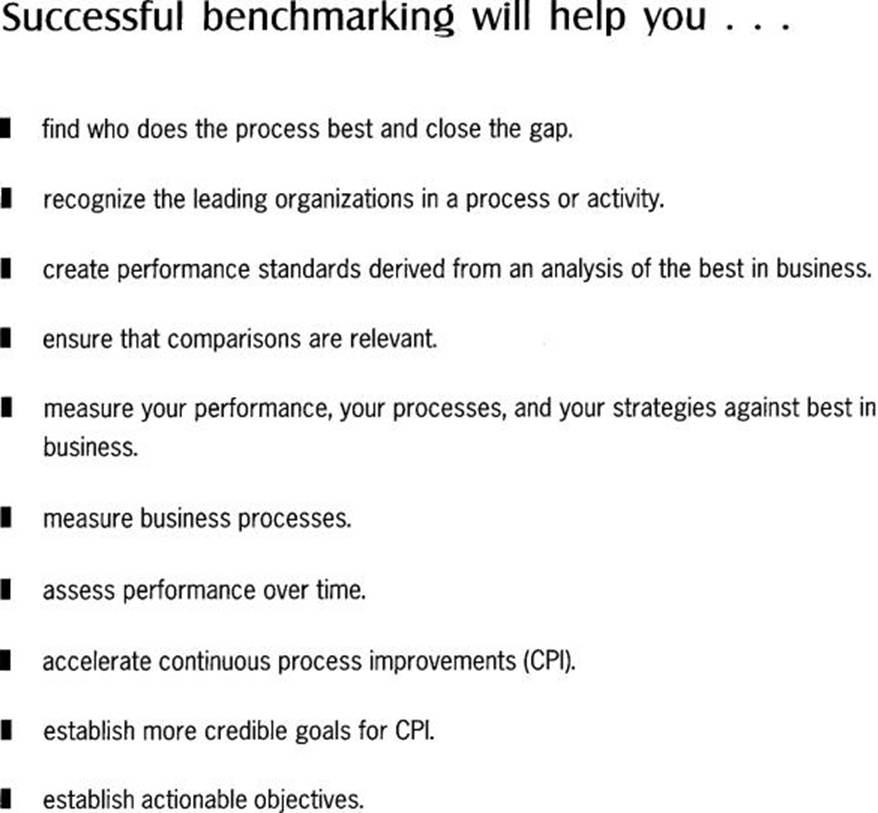
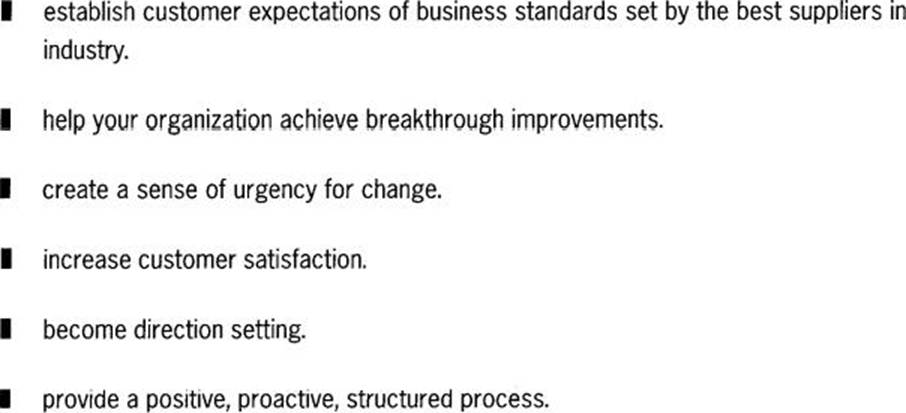
- B . It will help WAS create performance standards derived from an analysis of the best in business
- C . It helps WAS identify better ways to deliver service through a cookbook process
- D . It will help WAS analyse the competitors in the industry
B
Explanation:
Benchmarking is ‘the pursuit by organisations of enhanced performance by learning from the suc-cessful practices of others. Benchmarking is a continuous activity; key internal processes are adjusted, performance is monitored, new comparisons are made with the current best performers and further changes are explored. Where information about these key processes is obtained through a co-operative partnership with specific organisations (rather than via a third party such as an independently-maintained database), there is an expectation of mutual benefit over a period of time.
Reference: – The Department of Navy Benchmarking Handbook: A system view – CIPS study guide page 49-51
LO 1, AC 1.3
Total cost of ownership of a solar panel is $5,000 and it is expected that the panel will make a sav-ing of $1,000 each year. So it would take 5 years for the benefits to repay the investment. Therefore, the firm plans to keep the solar panel for at least 5 years. Is payback period calculation right for making the business decision?
- A . Yes, because it takes everything into account
- B . No, because payback period can be only used to calculate the depreciation of a fixed asset
- C . No, because payback period doesn’t take into account price fluctuations
- D . Yes, because payback period shows how long the firm recovers the investment
D
Explanation:
There are many factors that need to be considered when making a business decision. Costs and benefits are among those factor. To estimate the length of time in which an investment reaches a break-even point, businesses often use the payback period. The payback period refers to the amount of time it takes to recover the cost of an investment.
‘Yes, because it takes everything into account’: It ignores the time value of money (TVM), unlike other methods of capital budgeting such as net present value (NPV), internal rate of return (IRR), and discounted cash flow.
‘No, because payback period doesn’t take into account price fluctuations’: Though it doesn’t take into account price fluctuation, payback period is still useful in financial and capital budgeting.
‘No, because payback period can be only used to calculate the depreciation of a fixed asset’: Payback period only calculates the length of time in which the benefits of a charge repay its costs. LO 1, AC 1.3
Standardisation
- A . 2 and 3 only
- B . 1 and 3 only
- C . 3 and 4 only
- D . 1 and 4 only
D
Explanation:
Value analysis is often defined as a systematic process for improving the value of a product, service or project.
It is typically used in the following ways:
– To determine the value of each component used
– To find cost reduction opportunities by optimising the components used
Segment analysis helps procurement and supply to shape and manage the supply markets.
There is no concept known as Variety reduction.
Standardisation is the process which is used to reduce varieties of products or parts.
In this scenario, the company’s objective is cost reduction, then value analysis or value engineering is more likely to be applied. Also the company aims at reducing variety, standardisation can be combined with value analysis to produce the best results. LO 3, AC 3.4