
CIPS L4M2 Practice Exams
Last updated on Oct 24,2026- Exam Code: L4M2
- Exam Name: Defining Business Needs
- Certification Provider: CIPS
- Latest update: Oct 24,2026
Which of the following always impact negatively on a company’s cash flow? Select TWO that ap-ply
- A . Increasing revenue
- B . More inventory
- C . Depreciation of fixed asset
- D . Supplier shortens their payment period
- E . Customers agree to pay immediately
B, D
Explanation:
To answer this question, candidates are required to remember the cash flow cycle and cost entries as well as the impact of their timing on a business.
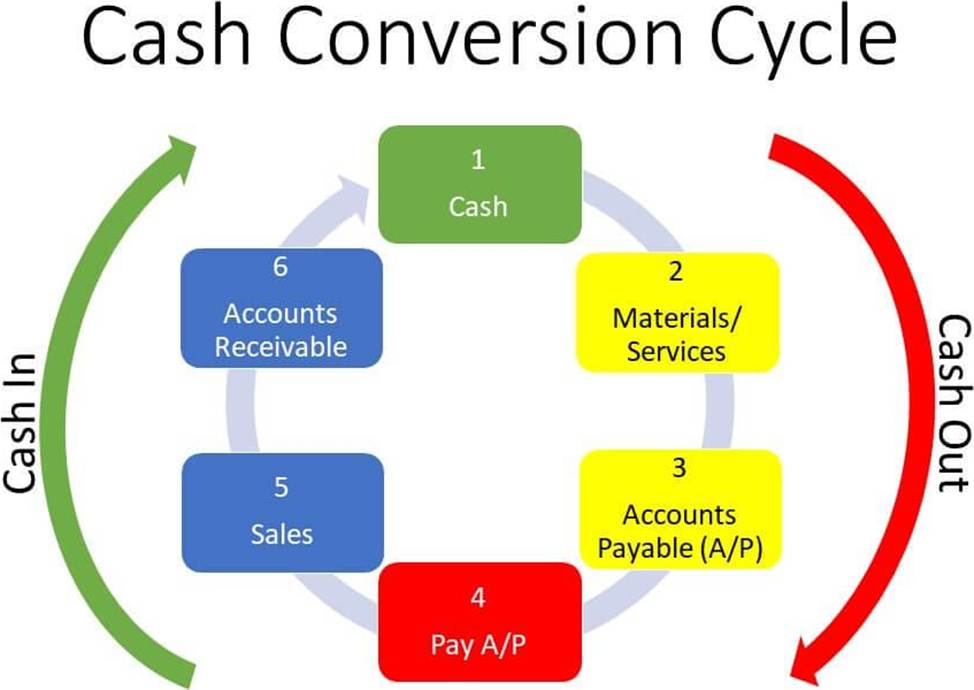
Source: https://cfoperspective.com/free-your-cash-trapped-in-the-cash-conversion-cycle/ Shorter payment term and more inventory are likely to have negative impact on the cash flow be-cause the buyer has to pay sooner and greater.
"Customers agree to pay immediately" will increase the organisation’s bank account sooner. Depreciation has no impact on cash flow as it is only listed in Profit and Loss statement. Increasing revenue may have negative or positive impact on cash flow, depending on the real situation.
Reference: CIPS study guide page 54
LO 1, AC 1.4
How can a procurement department meet the business needs when purchasing leverage items?
- A . Developing long-term relationships such as partnerships
- B . Developing efficient order processes such as e-procurement
- C . Developing effective contracts such as call-off contracts
- D . Developing buying power such as competitive tendering
Apple’s CPO is planning a budget for purchasing carbon-free aluminium next year. There are 27.4 tonnes of aluminum in stock, while Apple will need 200 tonnes for production next year and double inventory for production in the following year.
How much aluminum will Apple need to purchase in next year?
- A . 172.6 tonnes
- B . 117.8 tonnes
- C . 282.2 tonnes
- D . 227.4 tonnes
D
Explanation:
The quantity of aluminium Apple needs to buy is calculated as follows:
Quantity needed for production + the inventory needed at the end of the year – inventory at start of the year
That formula is quantified as: 200 + 54.8 – 27.4 = 227.4
Reference: CIPS study guide page 103
LO 2, AC 2.3
Housing Ltd is inviting a number of contractors to a tender for the construction of a commercial building. In the attachment to the invitation to tender, there is a document which describes the re-quired materials and installation methods. This document is known as…?
- A . Functional specification
- B . Prescriptive specification
- C . Drawings
- D . Performance specification
B
Explanation:
This question mentions about specification in construction. In this sector, specifications are written documents that describe the materials and workmanship required for a development. They do not include cost, quantity or drawn information and need to be read alongside other contract documentation such as quantities, schedules and drawings.
Specifications vary considerably depending on the stage to which the design has been developed, ranging from performance (open) specifications that require further development by a contractor or supplier, to prescriptive (closed) specifications for which the design is already complete when the project is tendered.
Prescriptive specifications typically contain detailed descriptions of the following components:
– General requirements relating to regulations and standards.
– The type of products and materials required.
– The execution and installation methods required.
Prescriptive specifications give the client much more certainty about the end product when making investment decisions (such as when they appoint the contractor), and place a greater burden on the designer to ensure proper installation rather than the contractor.
Reference: – CIPS study guide page 116-120
– Prescriptive specification – Designing Buildings Wiki LO 3, AC 3.1
Which of the following are prerequisites to run a successful bidding process? Select TWO that apply:
- A . The value of the purchase must be high enough to justify the associated bidding costs of potential suppliers
- B . The market contains an adequate number of suitably qualified suppliers
- C . Only those suppliers who have worked with the buyer in the past are allowed to bid
- D . Bids must be submitted within twenty calendar days
- E . The requirement can be met without the need for subcontracting
A, B
Explanation:
A (Purchase value): A competitive bidding process is only justifiable when the cost of running it is outweighed by its potential value.
B (Qualified suppliers): Ensuring a sufficient number of capable suppliers promotes competition and delivers better results.
Restricting suppliers (C) or rigid timeframes (D) can hinder the process, while subcontracting (E) is not a core consideration in most bids.
Reference: CIPS Level 4, Bidding and Tendering.
Which of the following is an assumption of Kano model?
- A . The relationship between product functionality and customer satisfaction is always linear
- B . Different types of customer requirements have different impact on customer satisfaction
- C . All types of customer requirements have the same impact on customer satisfaction
- D . All customer requirements are basic requirements
B
Explanation:
Kano model of excitement and basic quality (Kano et al, 1984; Berger et al, 1993; Matzler et al, 1996)
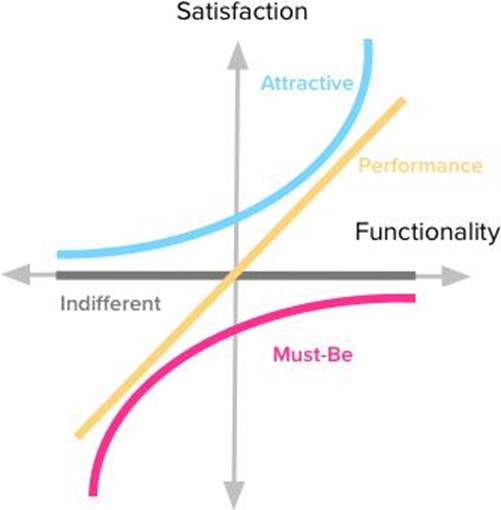
brings a different perspective for the analysis of improvement opportunities in products and services because it takes in consideration the asymmetrical and non-linear relationship between performance and satisfaction. The Kano model classifies customers requirements in three categories (figure 3):
a) Basic Requirements. The basic requirements fulfill the basic functions of a product. If they are not present or their performance is insufficient, customers will be extremely dissatisfied. On the other hand, if they are present or have sufficient performance, they don’t bring satisfaction. Customers see them as prerequisites. For instance, for luxury automobiles, "air bags" are considered basic. A customer won’t feel satisfied if the automobile has "air bag", however he/she will not buy it if “air bag” is not present.
b) Performance Requirements. As for these requirements, satisfaction is proportional to the performance level C the higher the performance, the higher the customer’s satisfaction will be and vice-versa. Gas consumption in automobiles is an example of these requirements. Usually customers explicitly demand performance requirements.
c) Excitement Requirements. These requirements are key to customer satisfaction. If they are pre-sent or have sufficient performance, they will bring superior satisfaction. On the other hand, if they are not present or their performance is insufficient, customers will not get dissatisfied. For instance, a surprise gift at the end of a dinner in a restaurant will certainly bring satisfaction, but it will not cause dissatisfaction if not offered. These requirements are not demanded nor expected by customers.
Two other types of requirements may be identified in the Kano model: neutral and reverse ones. Neutral requirements do not bring either satisfaction or dissatisfaction. Reverse requirements bring more satisfaction if absent than if present.
Reference: – Integrating Kano model and QFD for Designing New Products – CIPS study guide page 171-172
One of the disadvantages of using standards in specification is that…
- A . Standards lengthen the time to produce a specification
- B . Standards tend to be rigid and they often don’t encourage innovation
- C . Standards don’t allow the buyers to add health and safety requirements into the specification
- D . Standards tend to be inaccurate and ambiguous, causing confusion among suppliers
B
Explanation:
Using standards in specification is very convenient. They reduce the time and effort to produce. They tend to be very accurate with correct technical terminologies. They are well recognised and accepted by a wide range of suppliers and buyers. However, since a standard is very specific, complex and lengthy, it requires a lot of time to be drafted and approved. Therefore, standard tends to be static and don’t encourage innovation. It may also not accommodate latest technology and trends.
Reference: CIPS study guide page 125
LO 3, AC 3.1
When developing a business case for a new product, a procurement department must consider…
- A . Terms and conditions of contract
- B . The supply market
- C . The supplier positioning model
- D . Indirect costs
When developing a business case for a new product, a procurement department must consider…
- A . Terms and conditions of contract
- B . The supply market
- C . The supplier positioning model
- D . Indirect costs