Microsoft DP-300 Practice Exams
Last updated on Nov 16,2026- Exam Code: DP-300
- Exam Name: Administering Microsoft Azure SQL Solutions
- Certification Provider: Microsoft
- Latest update: Nov 16,2026
DRAG DROP
You have two instances of SQL Server on Azure virtual Machines named VM1 and VM2. VM1 hosts a database named dbl.
You plan to create a database availability group (DAG) for dbl. The solution must use certificate authentication between VM1 and VM2.
You need to configure authentication for the outbound connections of VM1.
Which three actions should you perform in sequence? To answer, move the appropriate actions from the list of actions to the answer area and arrange them in the correct order.


DRAG DROP
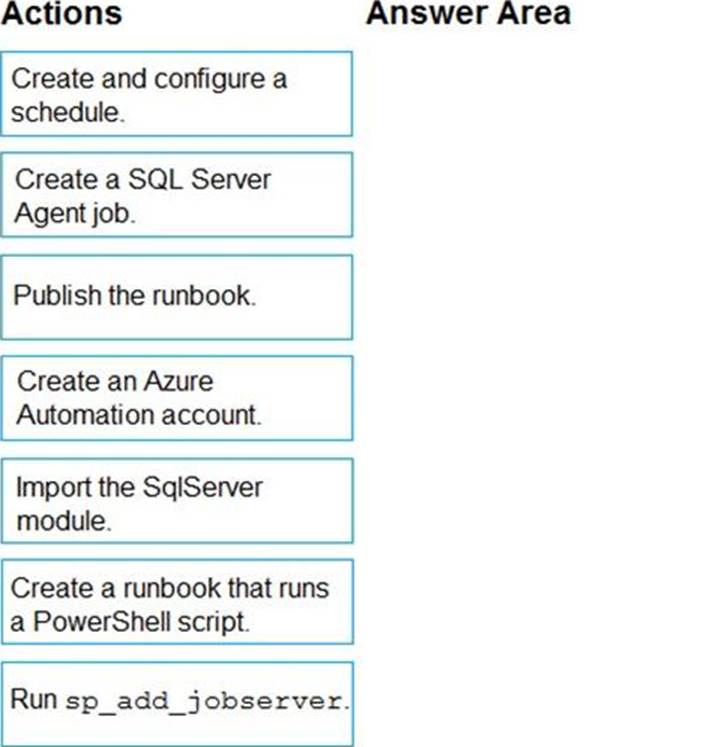
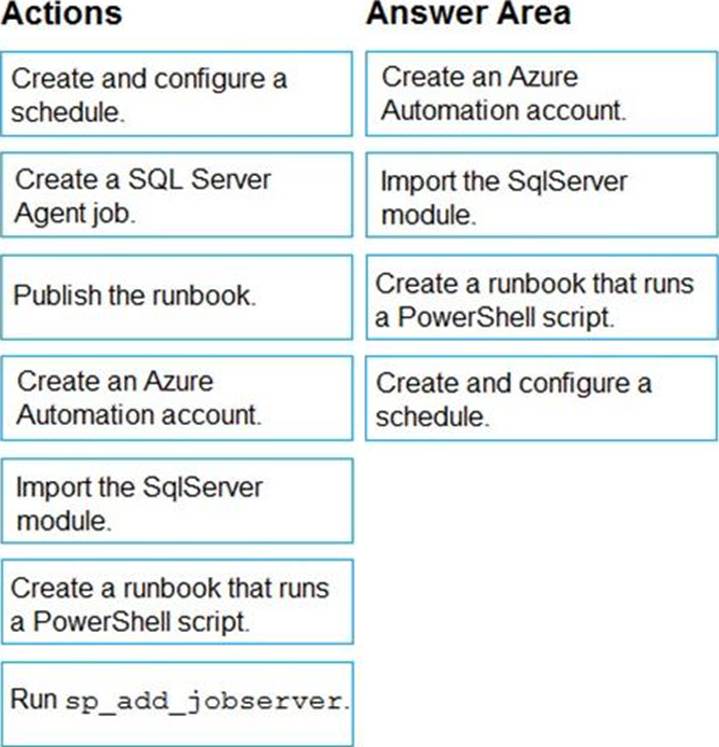
You need to implement statistics maintenance for SalesSQLDb1. The solution must meet the technical requirements.
Which four actions should you perform in sequence? To answer, move the appropriate actions from the list of actions to the answer area and arrange them in the correct order.
You have a data warehouse in Azure Synapse Analytics.
You need to ensure that the data in the data warehouse is encrypted at rest.
What should you enable?
- A . Transparent Data Encryption (TDE)
- B . Advanced Data Security for this database
- C . Always Encrypted for all columns
- D . Secure transfer required
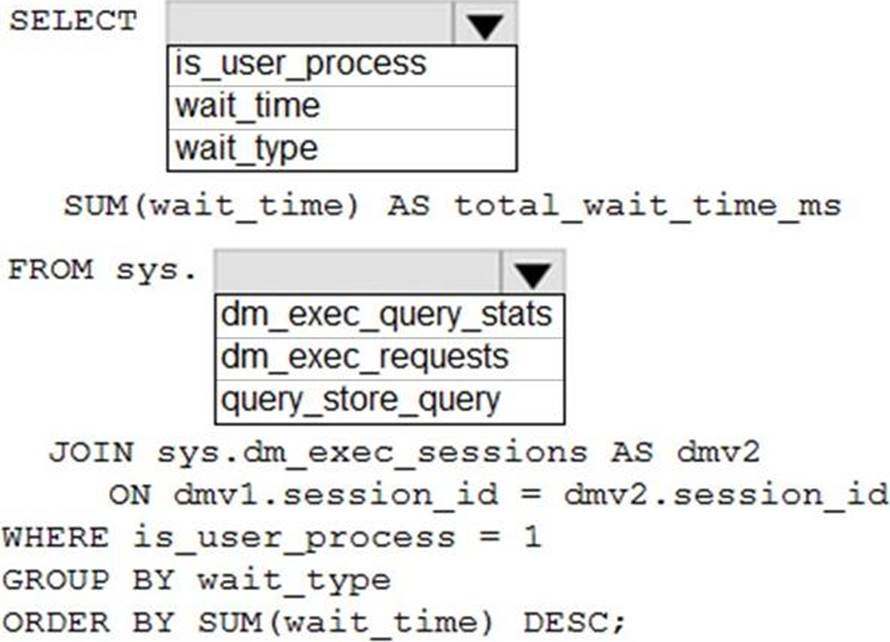
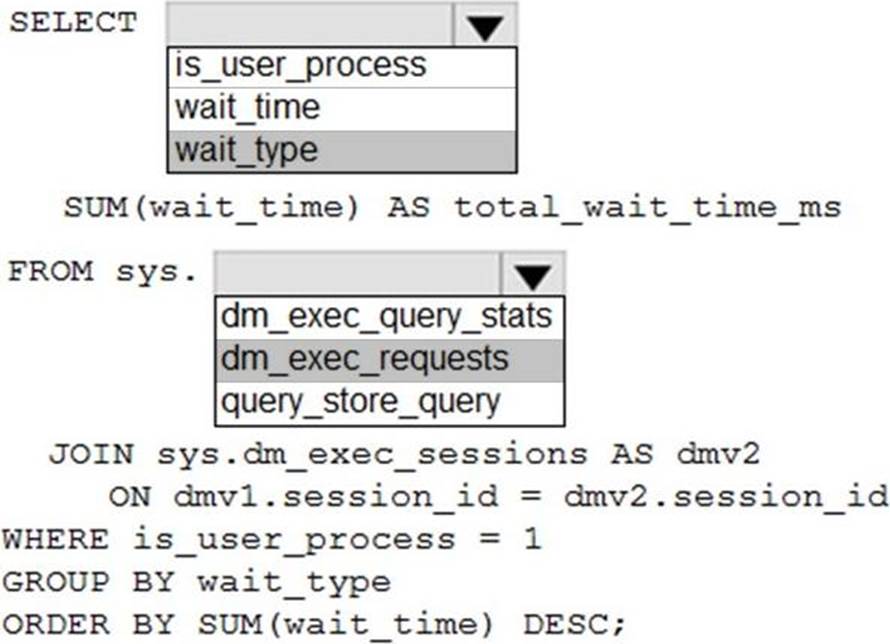
HOTSPOT
You have an Azure subscription that contains an Azure SQL database.
The database fails to respond to queries in a timely manner.
You need to identify whether the issue relates to resource_semaphore waits.
How should you complete the Transact-SQL query? To answer, select the appropriate options in the answer area. NOTE: Each correct selection is worth one point.
HOTSPOT
You have a 50-TB Microsoft SQL Server database named DB1.
You need to reduce the time it takes to perform database consistency checks of DB1.
Which Transact-SQL command should you run? To answer, select the appropriate options in the answer area. NOTE: Each correct selection is worth one point.


You need to recommend a solution to ensure that the performance of DB3 is optimized after the migration to Azure SQL Database. The solution must meet availability requirements.
What should you include in the recommendation?
- A . Resource Governor
- B . a custom resource pool
- C . vertical scaling
- D . horizontal scaling
You have an Azure subscription that contains a SQL Server on Azure Virtual Machines instance named SQLVM1.
SQLVM1 has the following configurations:
• Automated patching is enabled.
• The SQL Server laaS Agent extension is installed.
• The Microsoft SQL Server instance on SQLVM1 is managed by using the Azuie portal.
You need to automate the deployment of cumulative updates to SQLVM1 by using Azure Update Manager. The solution must ensure that the SQL Server instance on SQLVM1 can be managed by using the Azure portal.
What should you do first on SQLVM1?
- A . Install the Azure Monitor Agent.
- B . Uninstall the SQL Server laaS Agent extension.
- C . Install the Log Analytics agent.
- D . Set Automated patching to Disable
You have an Azure Databricks workspace named workspace1 in the Standard pricing tier. Workspace1 contains an all-purpose cluster named cluster1.
You need to reduce the time it takes for cluster1 to start and scale up. The solution must minimize costs.
What should you do first?
- A . Upgrade workspace1 to the Premium pricing tier.
- B . Configure a global init script for workspace1.
- C . Create a pool in workspace1.
- D . Create a cluster policy in workspace1.
You have an Azure SQL database named db1 on a server named server1.
You need to modify the MAXDOP settings for db1.
What should you do?
- A . Connect to db1 and run the sp_configure command.
- B . Connect to the master database of server1 and run the sp_configure command.
- C . Configure the extended properties of db1.
- D . Modify the database scoped configuration of db1.
HOTSPOT
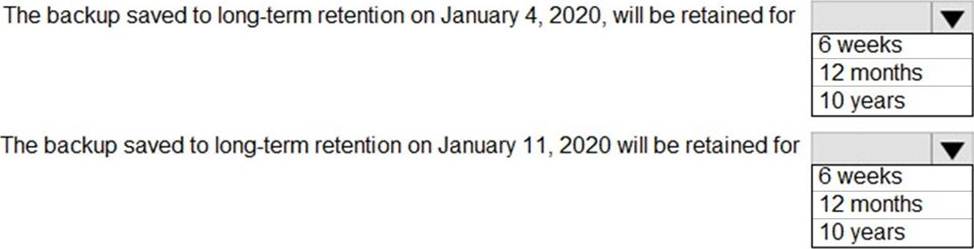
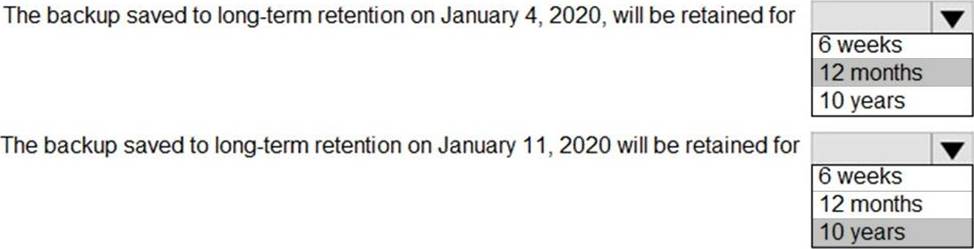
You configure a long-term retention policy for an Azure SQL database as shown in the exhibit. (Click the Exhibit tab.)
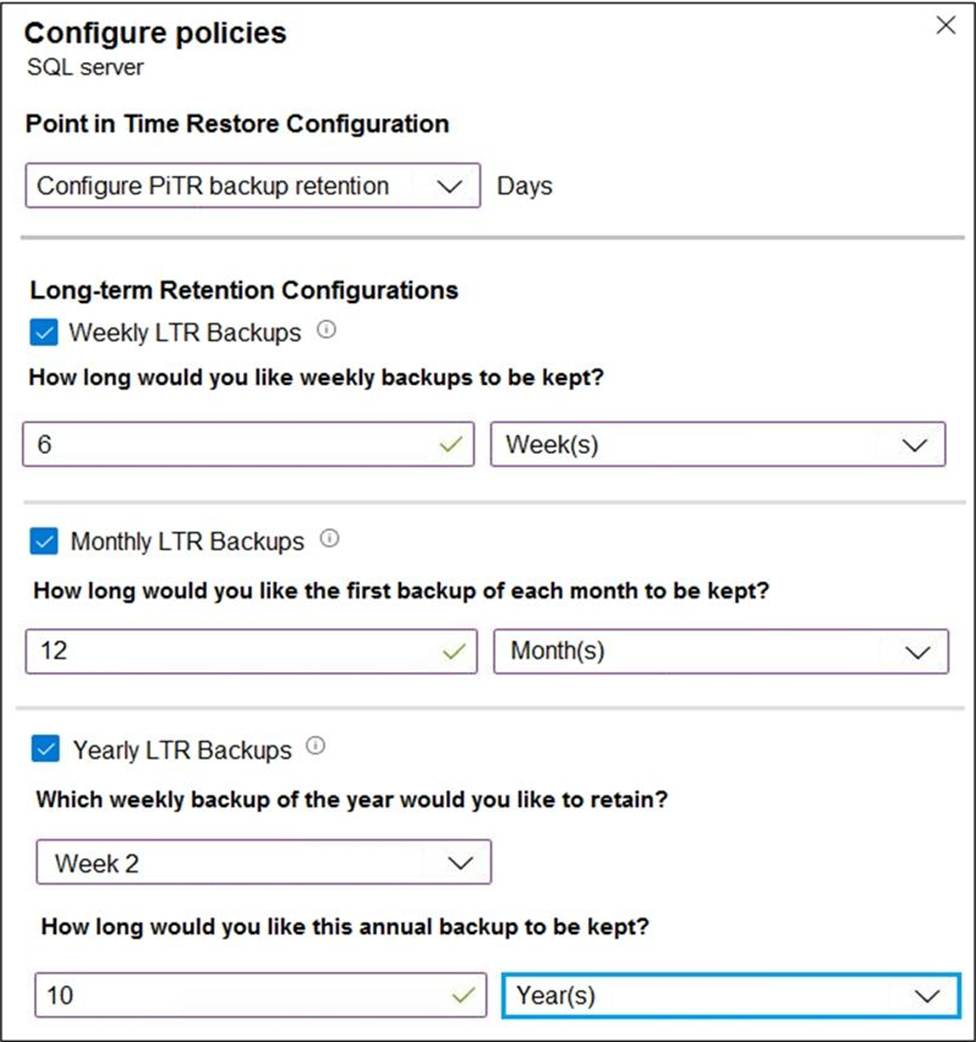
The first weekly backup occurred on January 4, 2020.
The dates for the first 10 weekly backups are:
✑ January 4, 2020
✑ January 11, 2020
✑ January 18, 2020
✑ January 25, 2020
✑ February 1, 2020
✑ February 8, 2020
✑ February 15, 2020
✑ February 22, 2020
✑ February 29, 2020
✑ March 7, 2020
Use the drop-down menus to select the answer choice that completes each statement based on the information presented in the graphic. NOTE: Each correct selection is worth one point.