
Microsoft DP-300 Practice Exams
Last updated on Nov 16,2026- Exam Code: DP-300
- Exam Name: Administering Microsoft Azure SQL Solutions
- Certification Provider: Microsoft
- Latest update: Nov 16,2026
You have an on-premises datacenter that contains a 14-TB Microsoft SQL Server database.
You plan to create an Azure SQL managed instance and migrate the on-premises database to the new instance.
Which three service tiers support the SQL managed instance? Each correct answer presents a complete solution. NOTE: Each correct selection is worth one point.
- A . General Purpose Standard
- B . Business Critical Premium
- C . Business Critical Memory Optimized Premium
- D . General Purpose Premium
- E . Business Critical Standard
Your on-premises network contains a Microsoft SQL Server 2016 server that hosts a database named db1.
You have an Azure subscription.
You plan to migrate db1 to an Azure SQL managed instance.
You need to create the SQL managed instance. The solution must minimize the disk latency of the instance.
Which service tier should you use?
- A . Hyperscale
- B . General Purpose
- C . Premium
- D . Business Critical
You have an Azure SQL managed instance named MI1.
You need to implement automatic tuning for the databases of MI1.
What should you do?
- A . Use the REST API to call the patch operation and modify the AutomaticTuningServerMode property.
- B . Use Transact-SQL to enable the force_last_good_plan option.
- C . From the Azure portal, configure automatic tuning.
HOTSPOT
You have the following Azure Resource Manager template.
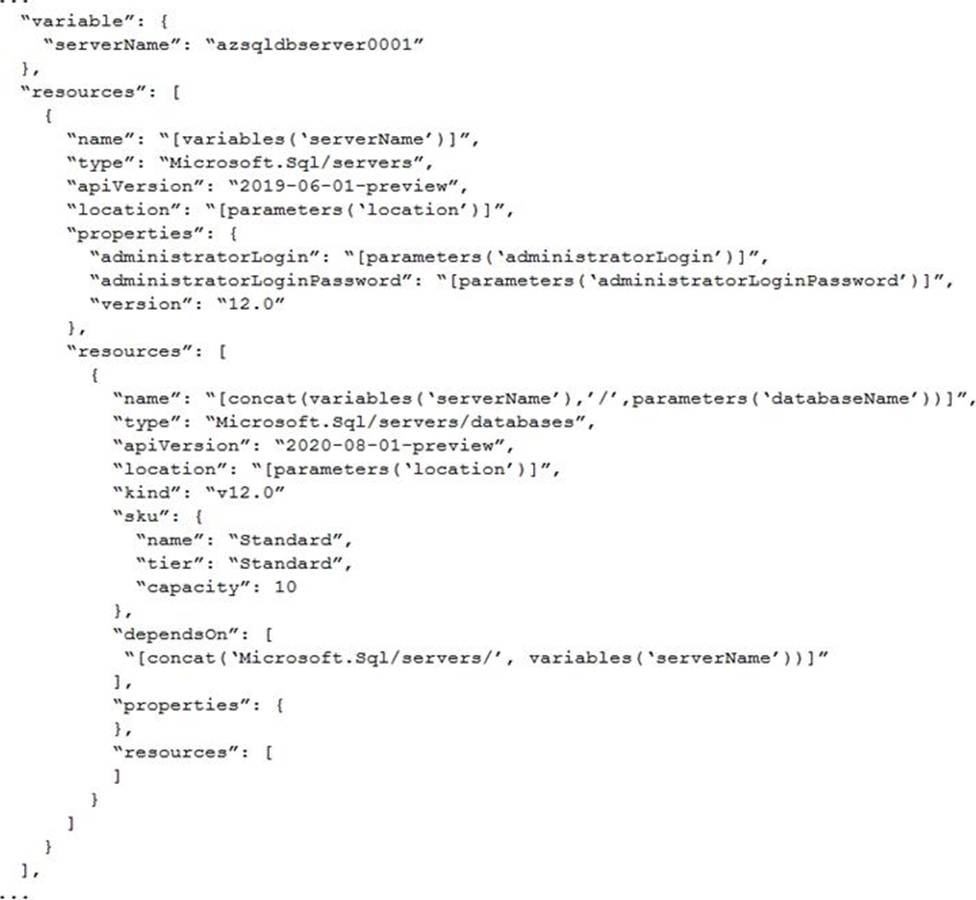
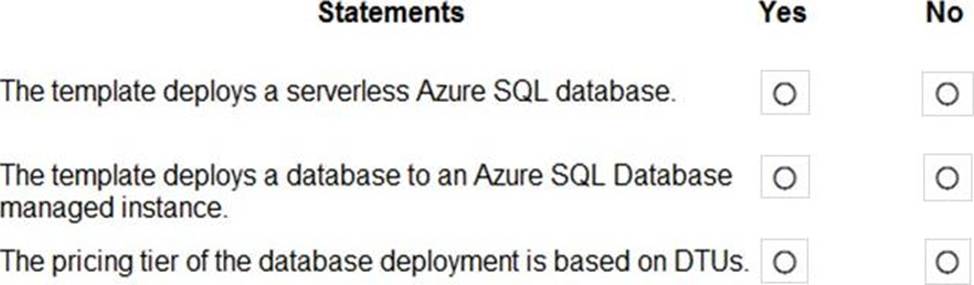
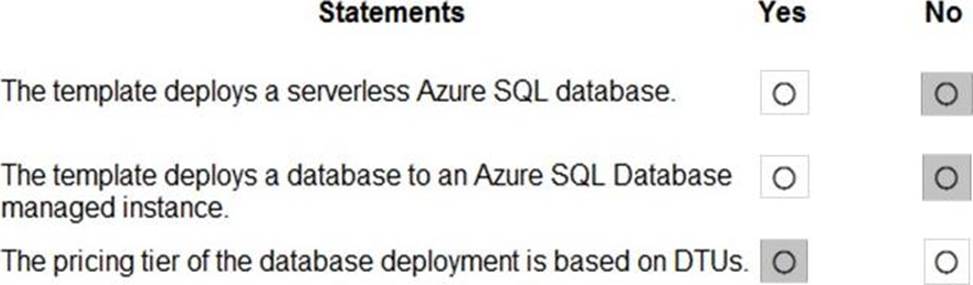
For each of the following statements, select Yes if the statement is true. Otherwise, select No. NOTE: Each correct selection is worth one point.
You have an Azure SQL database named DB1 in the General Purpose service tier.
The performance metrics for DB1 are shown in the following exhibit.
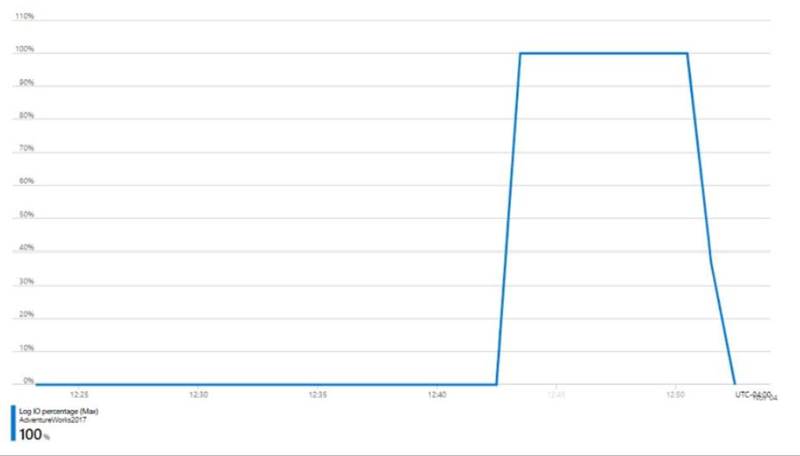
You need to reduce the Log 10 percentage. The solution must minimize costs.
What should you do?
- A . Increase the number of vCores.
- B . Change Recovery model to Simple.
- C . Perform a checkpoint operation.
- D . Change Service tier to Business Critical.
HOTSPOT
You configure version control for an Azure Data Factory instance as shown in the following exhibit.
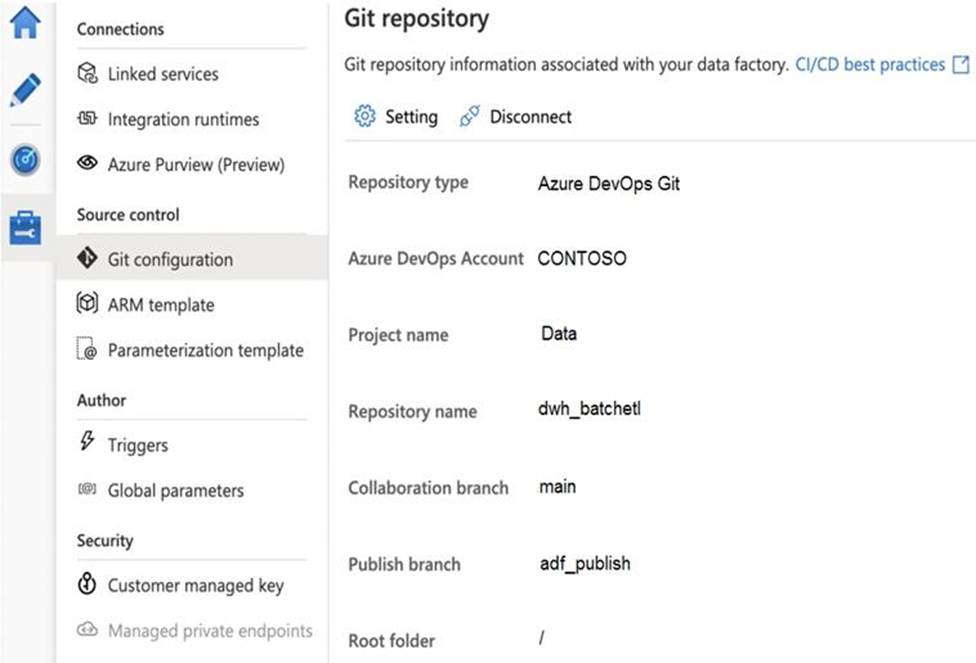
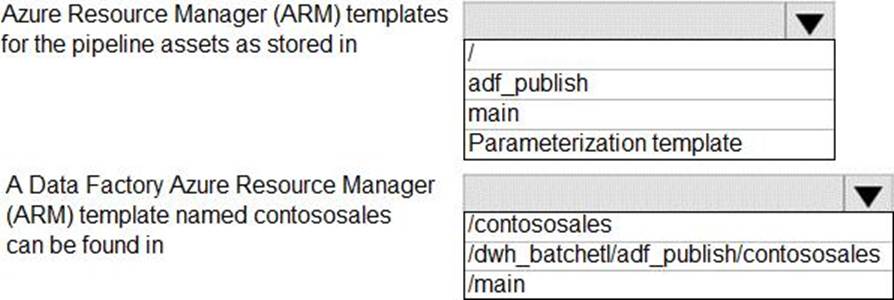
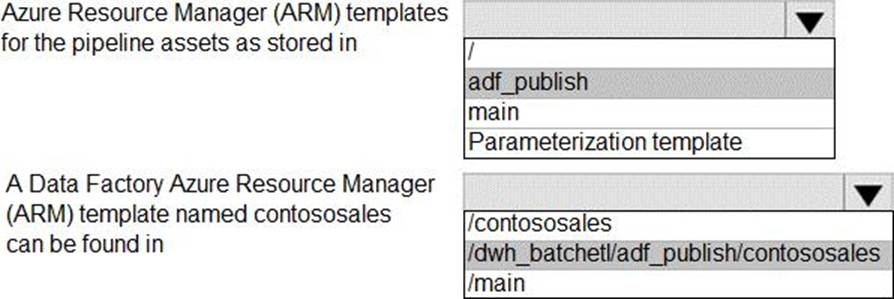
Use the drop-down menus to select the answer choice that completes each statement based on the information presented in the graphic. NOTE: Each correct selection is worth one point.
You have an Azure subscription that contains 20 Azure SQL databases.
You create a Transact-SQL statement to perform index maintenance on a database.
You need to schedule the statement to run once daily against each database by using Transact-SQL commands.
What should you use to schedule the statement?
- A . Azure Automation
- B . an elastic job
- C . a SQL Server Agent job
- D . an Azure function
You have an Azure SQL database.
Users report that the executions of a stored procedure are slower than usual. You suspect that a regressed query is causing the performance issue.
You need to view the query execution plan to verify whether a regressed query is causing the issue.
The solution must minimize effort.
What should you use?
- A . Performance Recommendations in the Azure portal
- B . Extended Events in Microsoft SQL Server Management Studio (SSMS)
- C . Query Store in Microsoft SQL Server Management Studio (SSMS)
- D . Query Performance Insight in the Azure portal
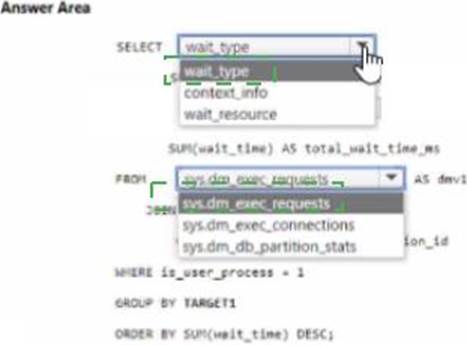
HOTSPOT
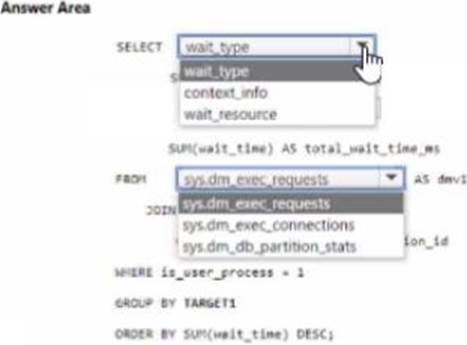
You have an Azure SQL database.
You need to identify whether a delayed query execution is associated to a RESOURCE wait.
How should you complete the Transact CSQL statement? To answer, select the appropriate option in the answer area. NOTE: Each correct selection is worth one point.
You have an Azure Data Factory that contains 10 pipelines.
You need to label each pipeline with its main purpose of either ingest, transform, or load. The labels must be
available for grouping and filtering when using the monitoring experience in Data Factory.
What should you add to each pipeline?
- A . an annotation
- B . a resource tag
- C . a run group ID
- D . a user property
- E . a correlation ID