Microsoft DP-100 Practice Exams
Last updated on Nov 16,2026- Exam Code: DP-100
- Exam Name: Designing and Implementing a Data Science Solution on Azure
- Certification Provider: Microsoft
- Latest update: Nov 16,2026
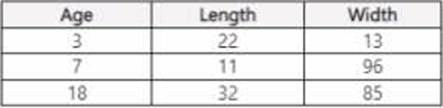
You use Azure Machine Learning Designer to load the following datasets into an experiment:
Data set 1
Dataset 2
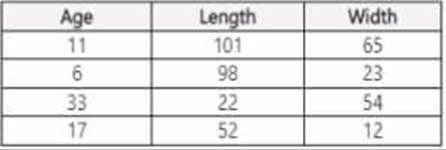
You need to create a dataset that has the same columns and header row as the input datasets and contains all rows from both input datasets.
Solution: Use the Apply Transformation component.
Does the solution meet the goal?
- A . Yes
- B . No
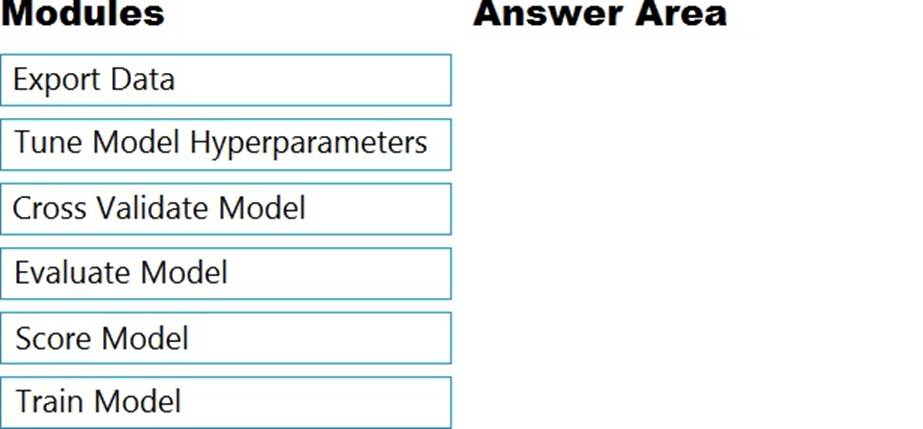
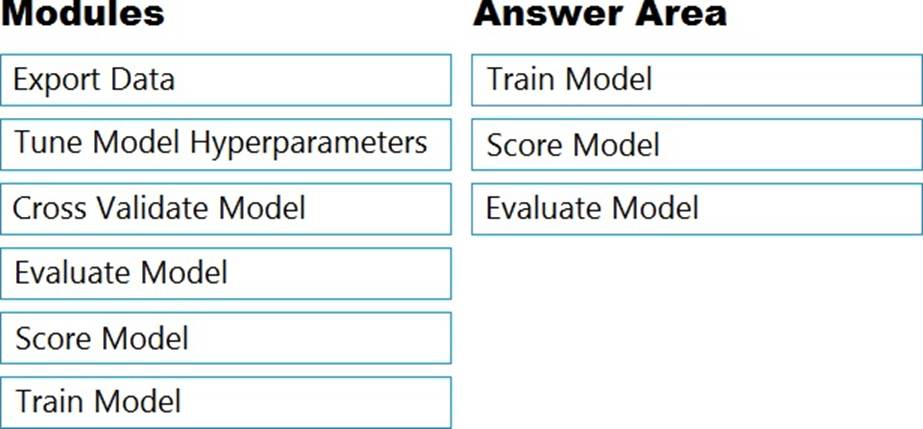
DRAG DROP
You are building an experiment using the Azure Machine Learning designer.
You split a dataset into training and testing sets. You select the Two-Class Boosted Decision Tree as the algorithm.
You need to determine the Area Under the Curve (AUC) of the model.
Which three modules should you use in sequence? To answer, move the appropriate modules from the list of modules to the answer area and arrange them in the correct order.
HOTSPOT
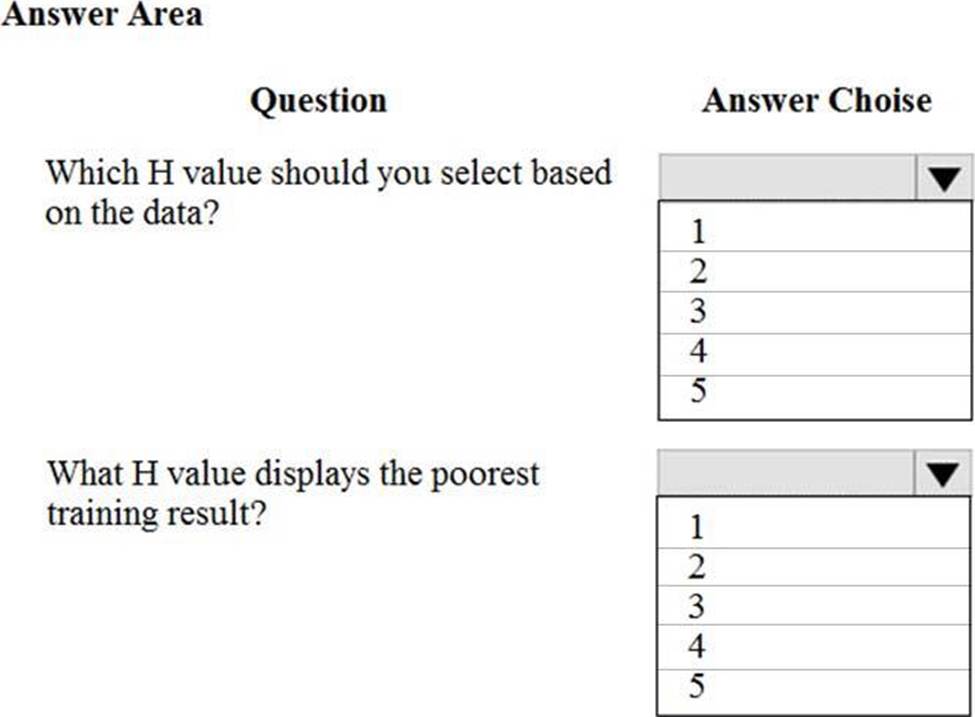
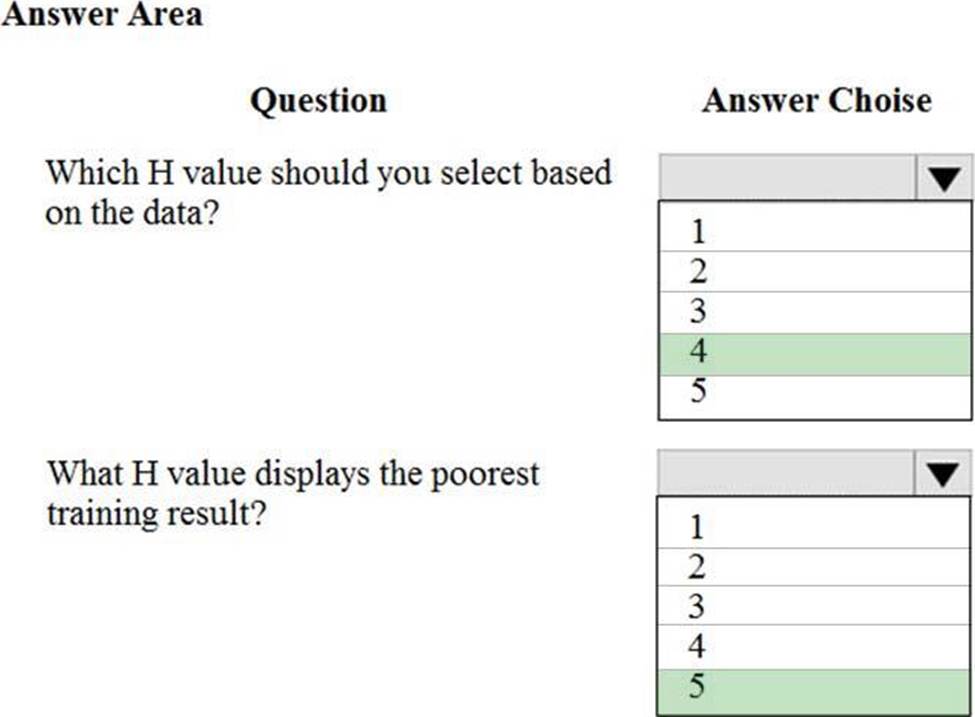
You are tuning a hyperparameter for an algorithm. The following table shows a data set with different hyperparameter, training error, and validation errors.
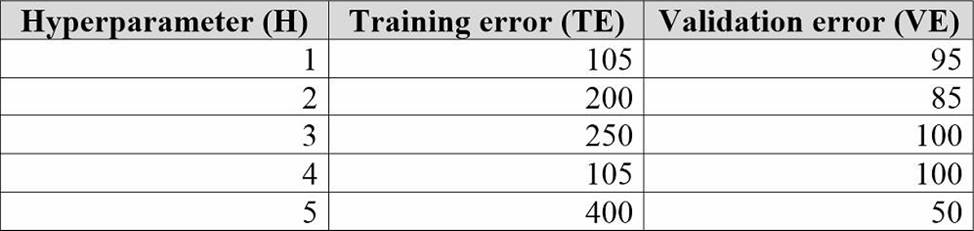
Use the drop-down menus to select the answer choice that answers each question based on the information presented in the graphic.
Note: This question is part of a series of questions that present the same scenario. Each question in the series contains a unique solution that might meet the stated goals. Some question sets might have more than one correct solution, while others might not have a correct solution.
After you answer a question in this section, you will NOT be able to return to it. As a result, these questions will not appear in the review screen.
You are creating a new experiment in Azure Machine Learning Studio.
One class has a much smaller number of observations than tin- other classes in the training set.
You need to select an appropriate data sampling strategy to compensate for the class imbalance.
Solution: You use the Principal Components Analysis (PCA) sampling mode.
Does the solution meet the goal?
- A . Yes
- B . No
HOTSPOT
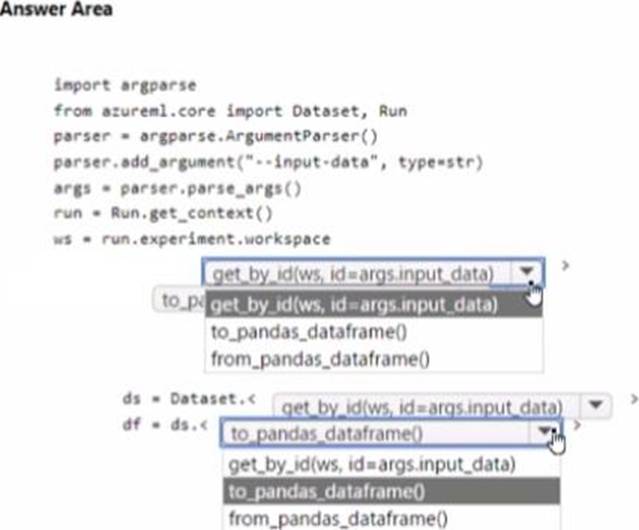
You have an Azure Machine learning workspace. The workspace contains a dataset with data in a tabular form.
You plan to use the Azure Machine Learning SDK for Python vl to create a control script that will load the dataset into a pandas dataframe in preparation for model training. The script will accept a parameter designating the dataset
You need to complete the script.
How should you complete the script? To answer, select the appropriate options in the answer area. NOTE: Each correct selection is worth one point.
HOTSPOT
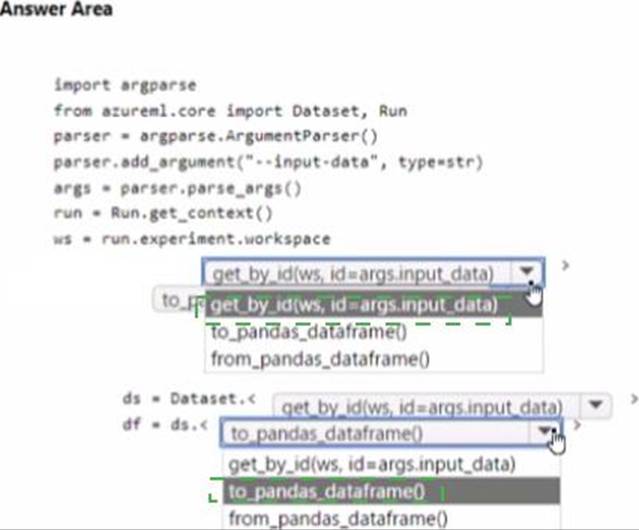
You have an Azure Machine learning workspace. The workspace contains a dataset with data in a tabular form.
You plan to use the Azure Machine Learning SDK for Python vl to create a control script that will load the dataset into a pandas dataframe in preparation for model training. The script will accept a parameter designating the dataset
You need to complete the script.
How should you complete the script? To answer, select the appropriate options in the answer area. NOTE: Each correct selection is worth one point.
HOTSPOT
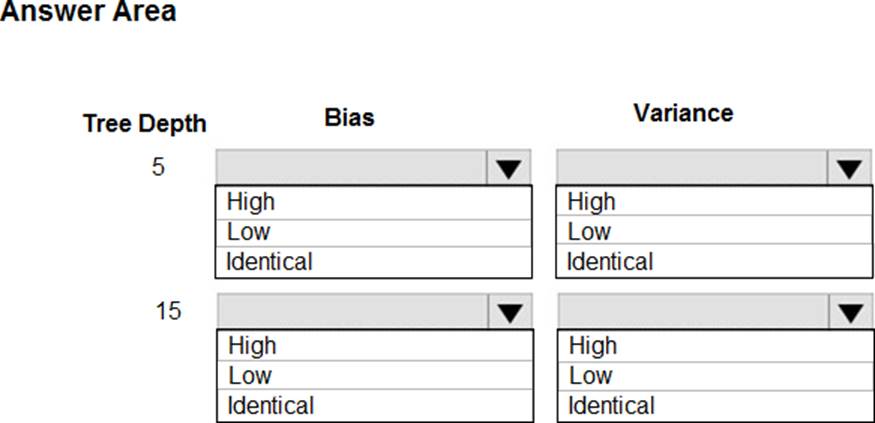
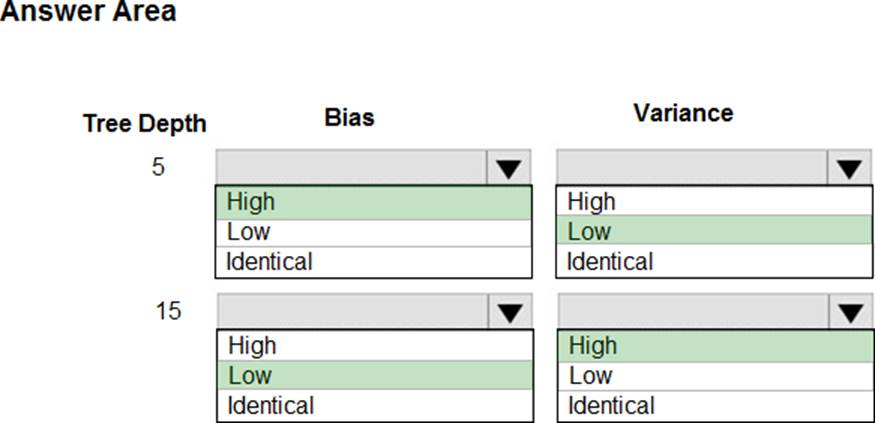
You are using a decision tree algorithm. You have trained a model that generalizes well at a tree depth equal to 10.
You need to select the bias and variance properties of the model with varying tree depth values.
Which properties should you select for each tree depth? To answer, select the appropriate options in the answer area.
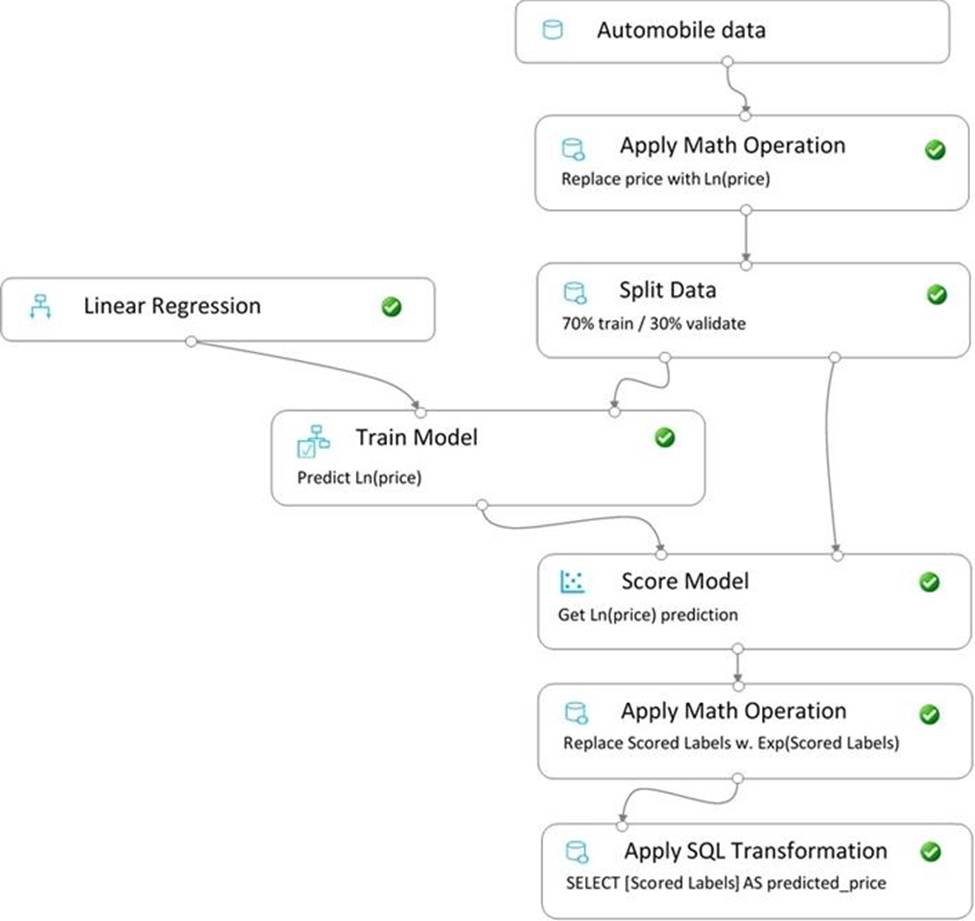
You create a pipeline in designer to train a model that predicts automobile prices.
Because of non-linear relationships in the data, the pipeline calculates the natural log (Ln) of the prices in the training data, trains a model to predict this natural log of price value, and then calculates the exponential of the scored label to get the predicted price.
The training pipeline is shown in the exhibit. (Click the Training pipeline tab.)
Training pipeline
You create a real-time inference pipeline from the training pipeline, as shown in the exhibit. (Click the Real-time pipeline tab.)
Real-time pipeline
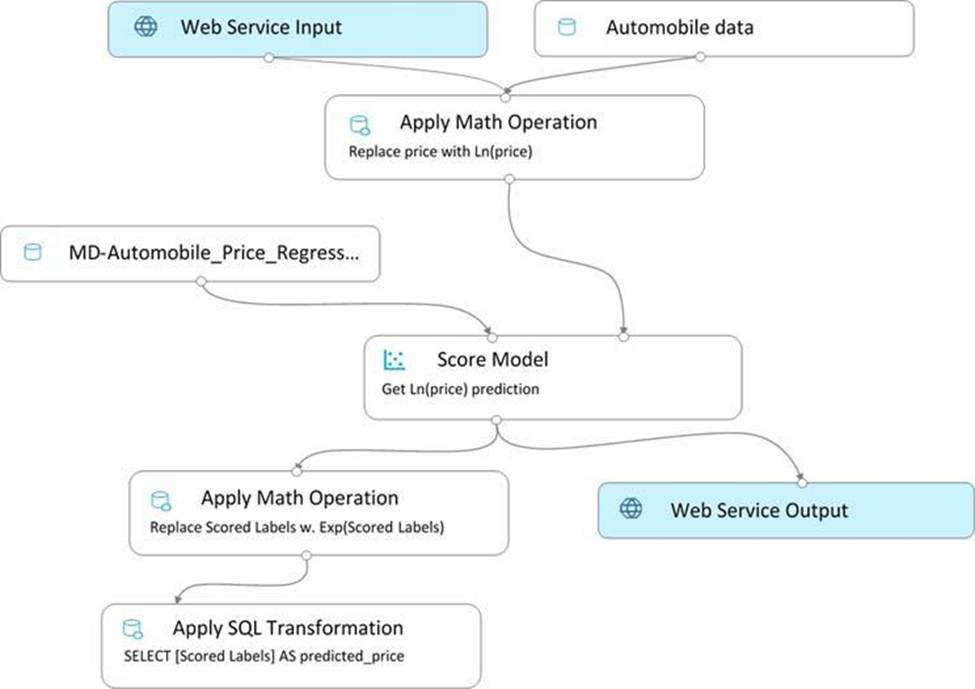
You need to modify the inference pipeline to ensure that the web service returns the exponential of the scored label as the predicted automobile price and that client applications are not required to include a price value in the input values.
Which three modifications must you make to the inference pipeline? Each correct answer presents part of the solution. NOTE: Each correct selection is worth one point.
- A . Connect the output of the Apply SQL Transformation to the Web Service Output module.
- B . Replace the Web Service Input module with a data input that does not include the price column.
- C . Add a Select Columns module before the Score Model module to select all columns other than price.
- D . Replace the training dataset module with a data input that does not include the price column.
- E . Remove the Apply Math Operation module that replaces price with its natural log from the data flow.
- F . Remove the Apply SQL Transformation module from the data flow.
You create a workspace to include a compute instance by using Azure Machine Learning Studio. You are developing a Python SDK v2 notebook in the workspace. You need to use Intellisense in the notebook.
What should you do?
- A . Start the compute instance.
- B . Run a %pip magic function on the compute instance.
- C . Run a !pip magic function on the compute instance.
- D . Stop the compute instance.
HOTSPOT
You use Azure Machine Learning to train and register a model.
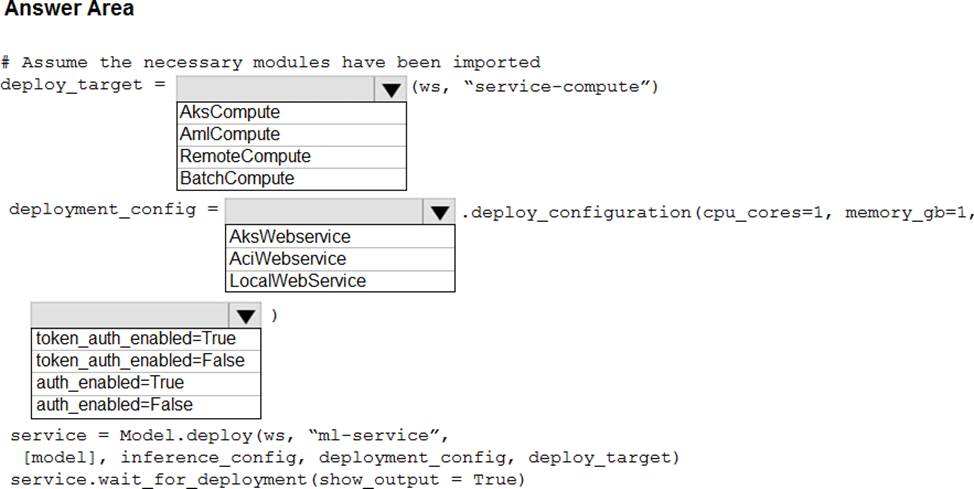
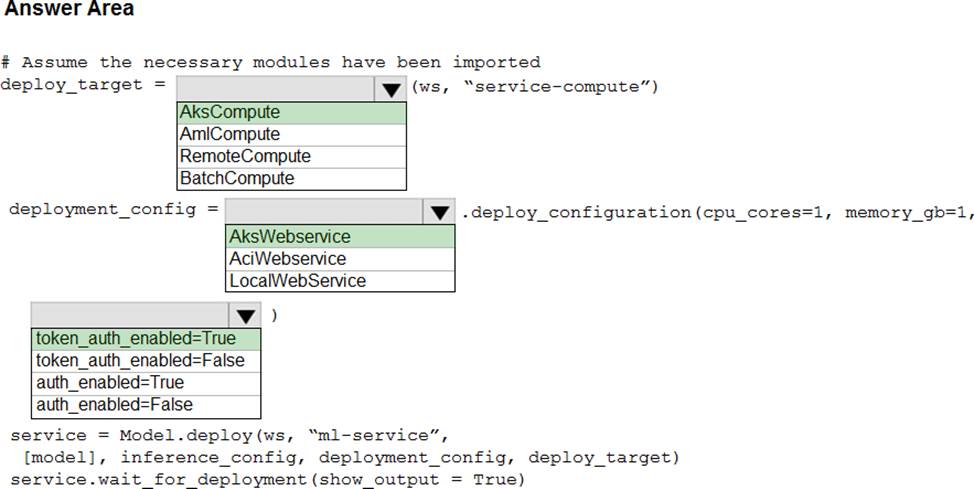
You must deploy the model into production as a real-time web service to an inference cluster named service-compute that the IT department has created in the Azure Machine Learning workspace.
Client applications consuming the deployed web service must be authenticated based on their Azure Active Directory service principal.
You need to write a script that uses the Azure Machine Learning SDK to deploy the model. The necessary modules have been imported.
How should you complete the code? To answer, select the appropriate options in the answer area. NOTE: Each correct selection is worth one point.