
Microsoft AZ-801 Practice Exams
Last updated on Nov 16,2026- Exam Code: AZ-801
- Exam Name: Configuring Windows Server Hybrid Advanced Services
- Certification Provider: Microsoft
- Latest update: Nov 16,2026
HOTSPOT
Your network contains an Active Directory Domain Services (AD DS) domain named contoso.com.
The domain contains the organizational units (OUs) shown in the following table.
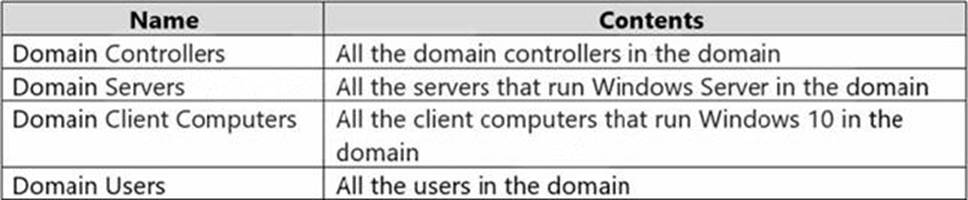
In the domain, you create the Group Policy Objects (GPOs) shown in the following table.

You need to implement IPsec authentication to ensure that only authenticated computer accounts can connect to the members in the domain. The solution must minimize administrative effort.
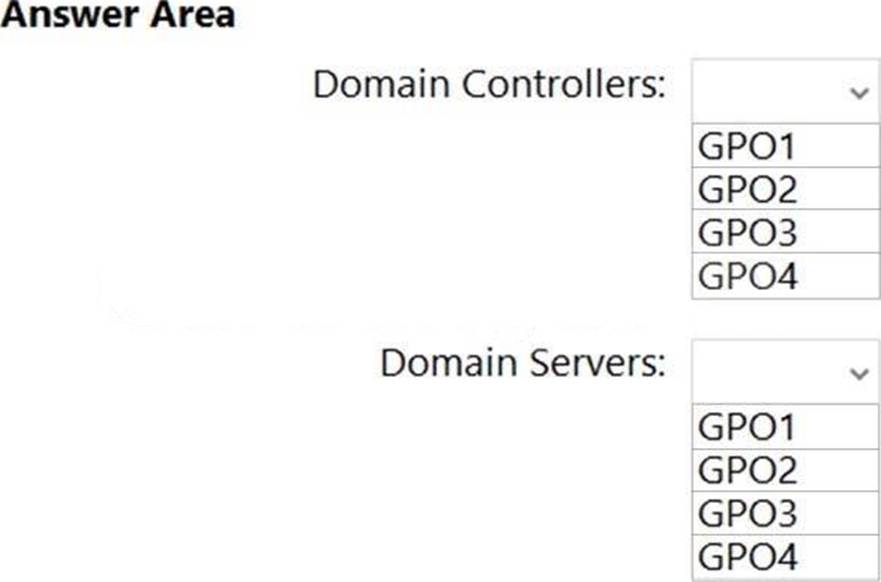
Which GPOs should you apply to the Domain Controllers OU and the Domain Servers OU? To answer, select the appropriate options in the answer area. NOTE: Each correct selection is worth one point.
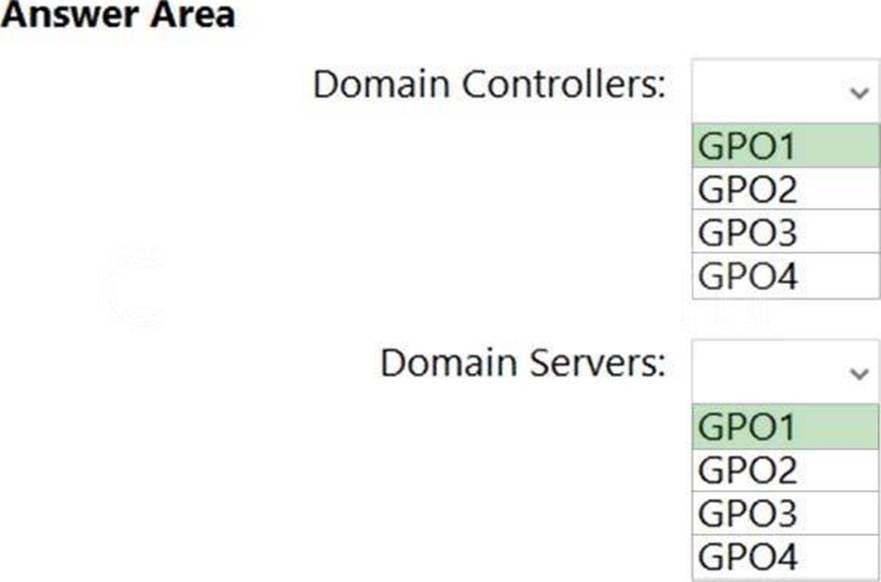
Explanation:
Reference: https://docs.microsoft.com/en-us/windows/security/threat-protection/windows-firewall/configure-authentication-methods
HOTSPOT
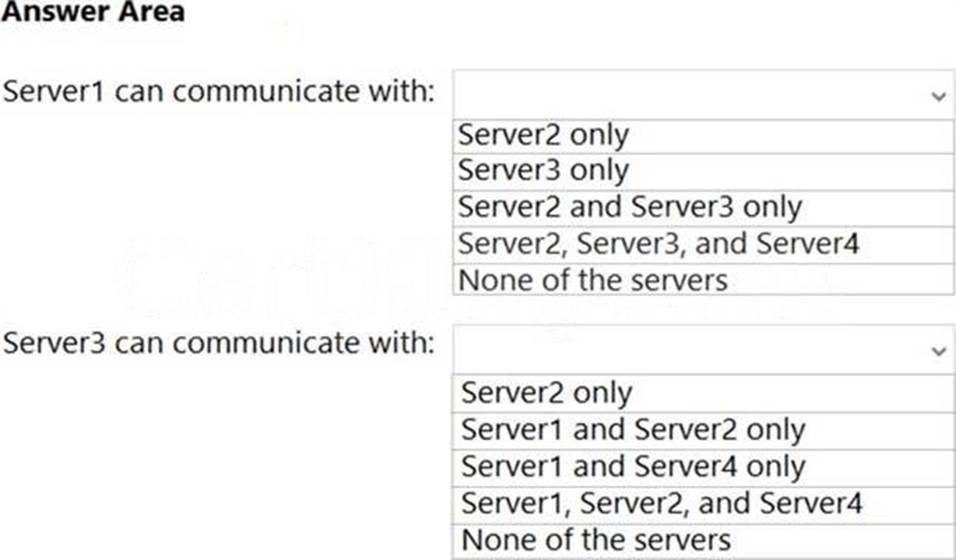
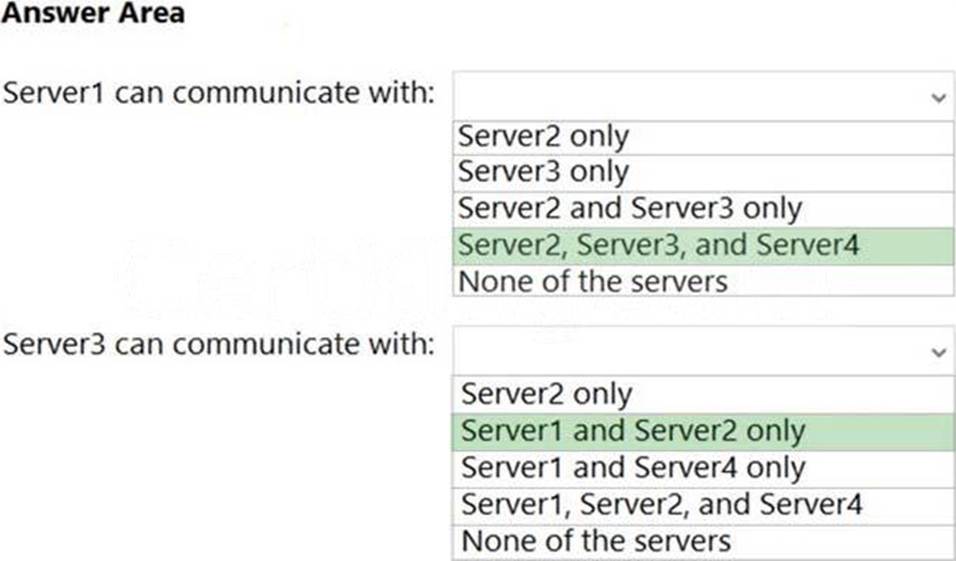
With which servers can Server1 and Server3 communicate? To answer, select the appropriate options in the answer area. NOTE: Each correct selection is worth one point.
Note: This question is part of a series of questions that present the same scenario. Each question in the series contains a unique solution that might meet the stated goals. Some question sets might have more than one correct solution, while others might not have a correct solution.
After you answer a question in this section, you will NOT be able to return to it. As a result, these questions will not appear in the review screen.
You have a failover cluster named Cluster1 that hosts an application named App1.
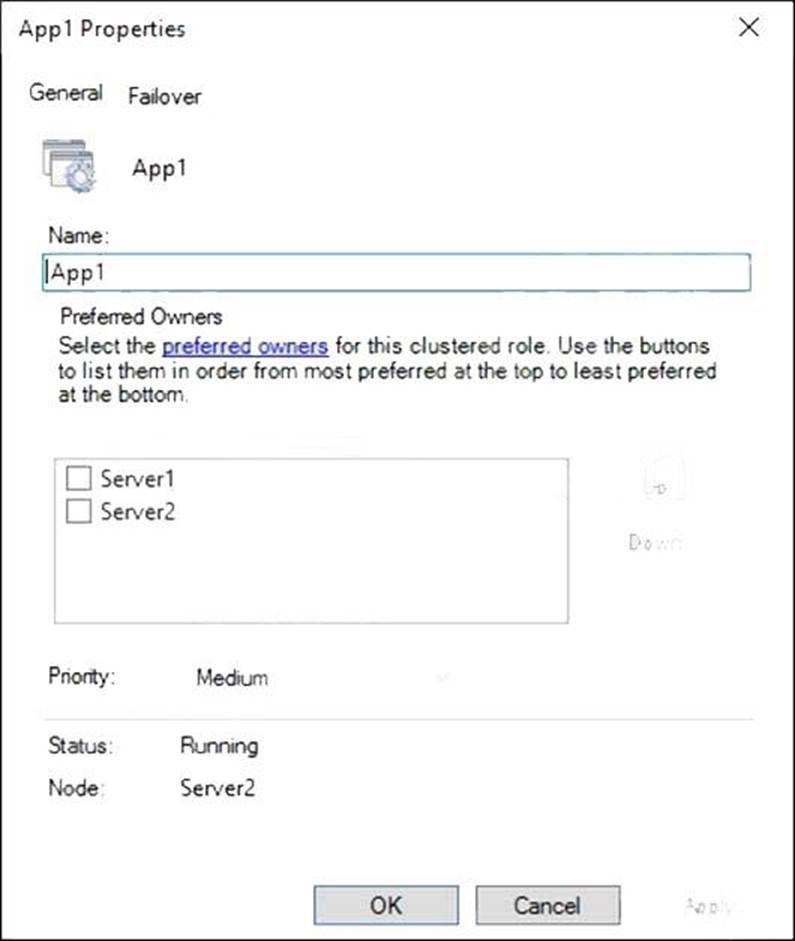
The General tab in App1 Properties is shown in the General exhibit. (Click the General tab.)
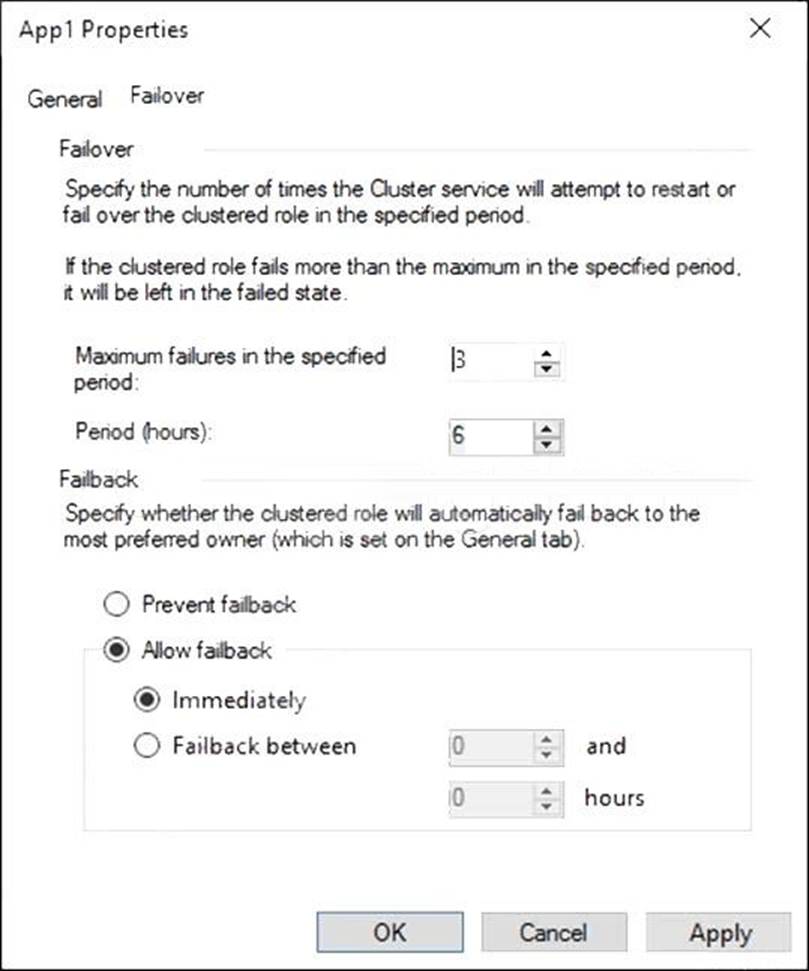
The Failover tab in App1 Properties is shown in the Failover exhibit. (Click the Failover tab.)
Server1 shuts down unexpectedly.
You need to ensure that when you start Server1, App1 continues to run on Server2.
Solution: You increase Maximum failures in the specified period for the App1 cluster role.
Does this meet the goal?
- A . Yes
- B . No
B
Explanation:
The Maximum failures setting is used to determine when the cluster determines that a node is offline. It does not affect whether a cluster will fail back when a node comes online.
Your network contains an Active Directory Domain Services (AD DS> domain. The domain contains 20 Active Directory sites. All user management is performed from a central site.
You add users to a group.
You discover that group changes do NOT appear on a domain controller in a remote site.
You need to identify whether the group changes appear on other domain controllers.
What should you use?
- A . Microsoft Support and Recovery Assistant
- B . File Replication Service (FRS) Status Viewer
- C . Active Directory Replication Status Tool
- D . Active Directory Sites and Services
HOTSPOT
Your network contains an on-premises Active Directory Domain Services (AD DS) domain.
The domain contains the servers shown in the following table.
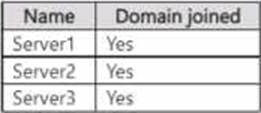
Server1 has the connection security rule as shown in the Server1 exhibit. (Click the Server1 tab.)

Server2 has the connection security rule as shown in the Server2 exhibit. (Click the Server2 tab.)

Server1 has the inbound firewall rules as shown in the Server1 inbound rules exhibit. (Click the Server1 inbound rules tab.)
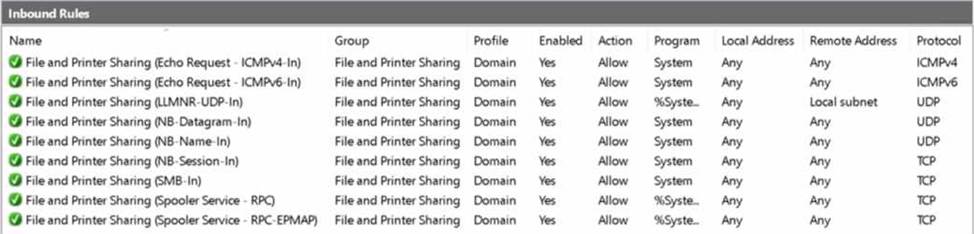
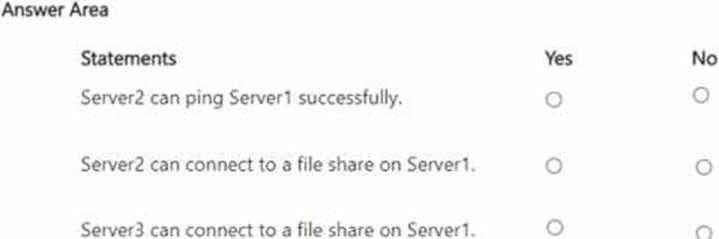
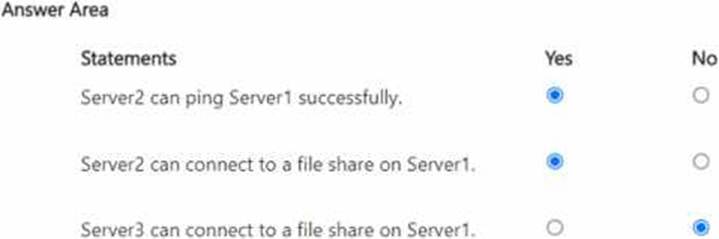
For each of the following statements, select Yes if the statement is true. Otherwise, select No.
You have a server named Server1 that runs Windows Server and has the Hyper-V server role installed.
You import the Azure Migrate appliance as VM1.
You need to register VM1 with Azure Migrate.
What should you do in Azure Migrate? Each correct answer presents part of the solution. NOTE: Each correct selection is worth one point.
- A . Create a project.
- B . Add a migration tool.
- C . Add an assessment tool.
- D . Generate a project key.
- E . Download the Azure Migrate installer script ZIP file.
AD
Explanation:
Reference: https://docs.microsoft.com/en-us/azure/migrate/how-to-set-up-appliance-hyper-v
Note: This question is part of a series of questions that present the same scenario. Each question in the series contains a unique solution that might meet the stated goals. Some question sets might have more than one correct solution, while others might not have a correct solution.
After you answer a question in this section, you will NOT be able to return to it. As a result, these questions will not appear in the review screen.
You have a server named Server1 that runs Windows Server.
You need to ensure that only specific applications can modify the data in protected folders on Server1.
Solution: From Virus & threat protection, you configure Tamper Protection.
Does this meet the goal?
- A . Yes
- B . No
B
Explanation:
Reference: https://docs.microsoft.com/en-us/microsoft-365/security/defender-endpoint/customize-controlled-folders?view=o365-worldwide
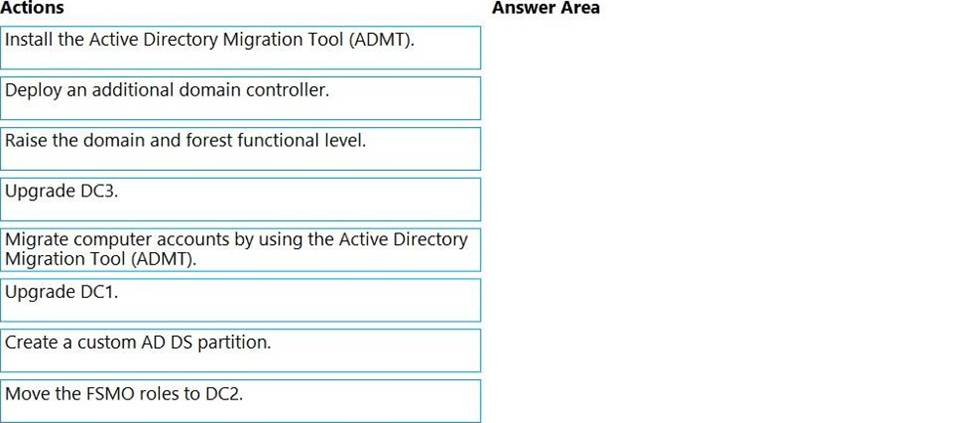
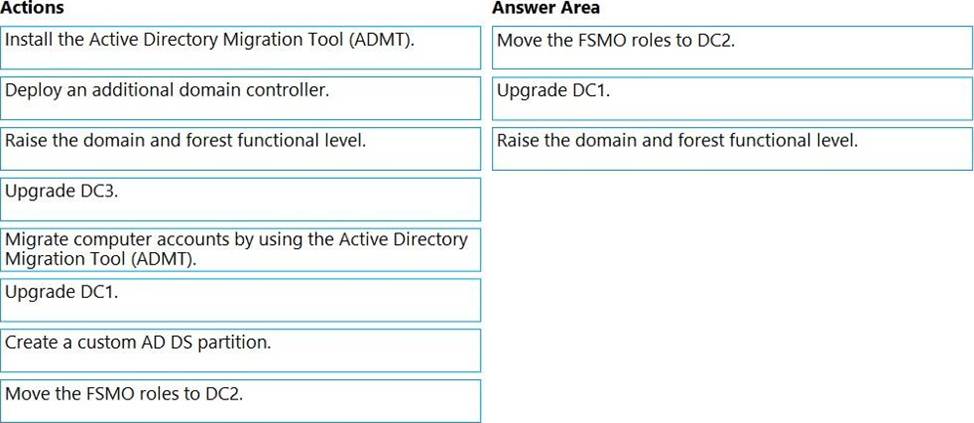
DRAG DROP
Your network contains an Active Directory Domain Services (AD DS) domain named contoso.com. The functional level of the forest and the domain is Windows Server 2012 R2.
The domain contains the domain controllers shown in the following table.
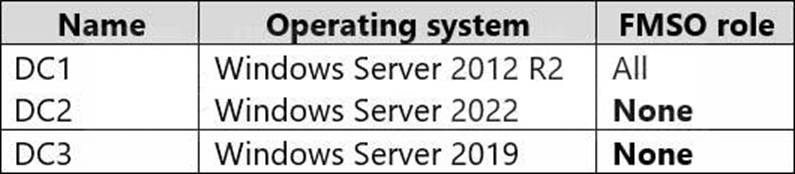
You need to raise the forest functional level to Windows Server 2016.
The solution must meet the following requirements:
✑ Ensure that there are three domain controllers after you raises the level.
✑ Minimize how long the FSMO roles are unavailable.
Which three actions should you perform in sequence? To answer, move the appropriate actions from the list of actions to the answer area and arrange them in the correct order.
You have 200 Azure virtual machines.
You create a recovery plan in Azure Site Recovery to fail over all the virtual machines to an Azure region. The plan has three manual actions.
You need to replace one of the manual actions with an automated process.
What should you use?
- A . an Azure Desired State Configuration (DSC) virtual machine extension
- B . an Azure Automation runbook
- C . an Azure PowerShell function
- D . a Custom Script Extension on the virtual machines
B
Explanation:
Reference: https://docs.microsoft.com/en-us/azure/site-recovery/recovery-plan-overview
You have an Azure virtual machine named VM1 that runs Windows Server.
When you attempt to install the Azure Performance Diagnostics extension on VM I, the installation fails.
You need to identify the cause of the installation failure.
What are two possible ways to achieve the goal? Each correct answer presents a complete solution. NOTE: Each correct selection is worth one point.
- A . Sign in to VM1 and verify the WaAppAgentlog file.
- B . From the Azure portal, view the alerts for VM1.
- C . From the Azure portal, view the activity log for VM1.
- D . Sign into VM1 and verify the MonitoringAgentlog file.