
Microsoft AZ-120 Practice Exams
Last updated on Nov 16,2026- Exam Code: AZ-120
- Exam Name: Planning and Administering Microsoft Azure for SAP Workloads
- Certification Provider: Microsoft
- Latest update: Nov 16,2026
Which Azure service should you deploy for the approval process to meet the technical requirements?
- A . Just in time (JIT) VM access
- B . Azure Active Directory (Azure AD) Identity Protection
- C . Azure Active Directory (Azure AD) Privileged identity Manager (PIM)
- D . Azure Active Directory (Azure AD) conditional access
HOTSPOT
For each of the following statements, select Yes if the statement is true. Otherwise, select No. NOTE: Each correct selection is worth one point.
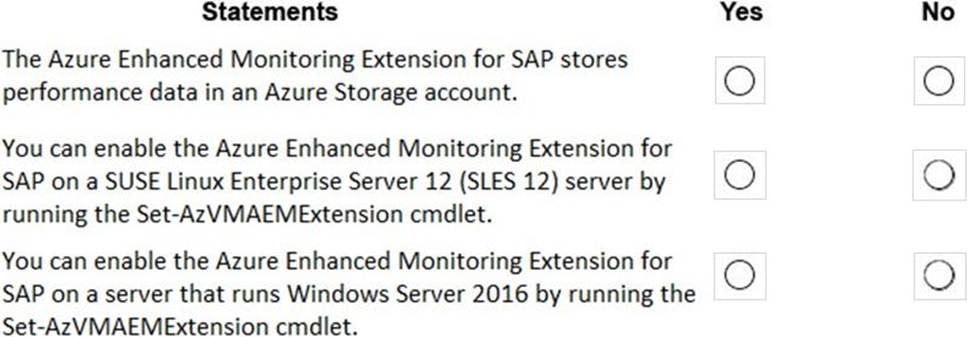
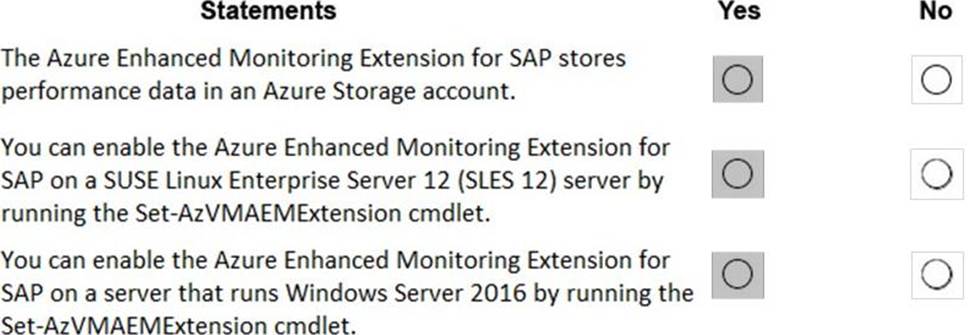
Explanation:
Box 1: Yes
The SAP Azure Enhanced Monitoring Extension builds on top of the Azure Diagnostic extension, which stores its data in an Azure Storage account that you specify.
Box 2: Yes
The Set-AzVMAEMExtension cmdlet updates the configuration of a virtual machine to enable or update the support for monitoring for SAP systems that are installed on the virtual machine. The cmdlet installs the Azure Enhanced Monitoring (AEM) extension that collects the performance data and makes it discoverable for the SAP system.
The -OSType specifies the OS. Either Windows or Linux.
Box 3: Yes
Reference:
https://docs.microsoft.com/en-us/azure/azure-monitor/platform/diagnostics-extension-overview
https://docs.microsoft.com/en-us/powershell/module/az.compute/set-azvmaemextension
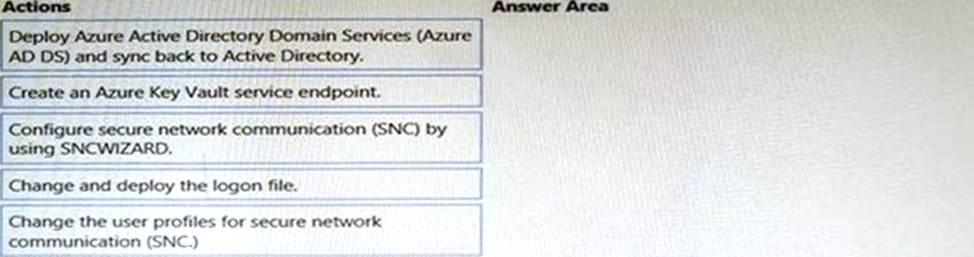
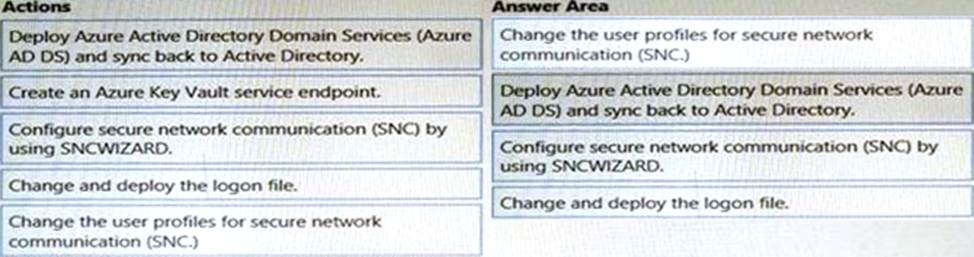
DRAG DROP
Your on-premises network contains an Active Directory domain.
You are deploying a new SAP environment on Azure.
You need to configure SAP Single Sign-On to ensure that users can authenticate lo SAP GUI and SAP WebGUI.
Which four actions should you perform in sequence? To answer, move the appropriate actions from the list of actions to the answer area and arrange them in the correct order.
HOTSPOT
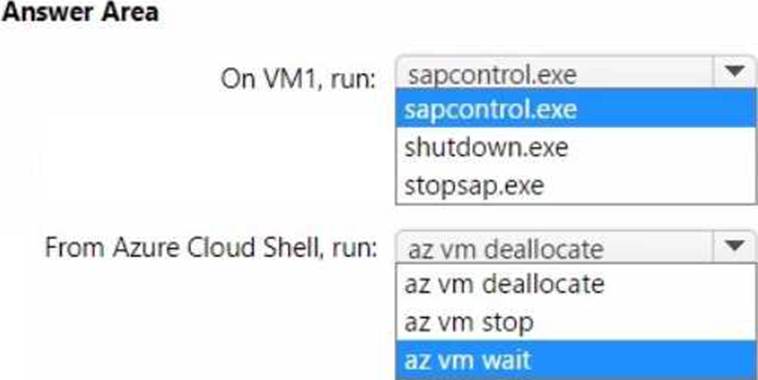
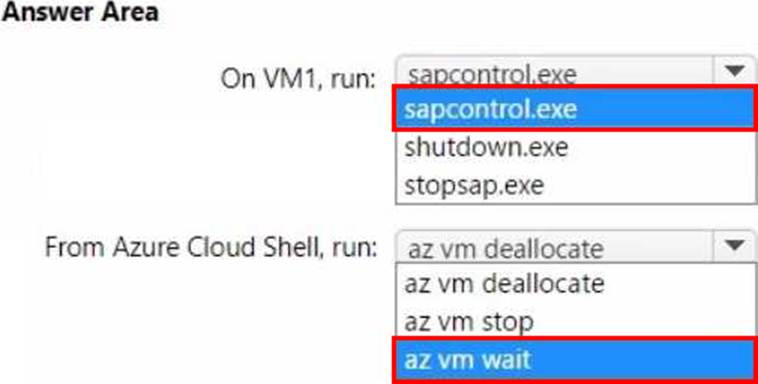
You have an Azure virtual machine named VM1 that hosts an SAP application server.
You need to implement snoozing for VM1.
The solution must meet the following requirements:
• Minimize compute costs for VM1.
• Gracefully terminate the SAP application.
What should you do? To answer, select the appropriate options in the answer area. NOTE: Each correct selection is worth one point.
You deploy an SAP environment on Azure.
Your company has a Service Level Agreement (SLA) of 99.99% for SAP.
You implement Azure Availability Zones that have the following components:
* Redundant SAP application servers
* ASCS/ERS instances that use a failover cluster
* Database high availability that has a primary instance and a secondary instance
You need to validate the load distribution to the application servers.
What should you use?
- A . SAP Solution Manager
- B . Azure Monitor
- C . SAP Control
- D . SAP Web Dispatcher
C
Explanation:
Load balancers. These are used to distribute traffic to virtual machines in the application-tier subnet. For high availability, use the built-in SAP Web Dispatcher, Azure Load Balancer, or network appliances, depending on the traffic type (such as HTTP or SAPGUI) or the required network services, such as Secure Sockets Layer (SSL) termination.
Reference: https://docs.microsoft.com/en-us/azure/architecture/reference-architectures/sap/sap-netweaver
HOTSPOT
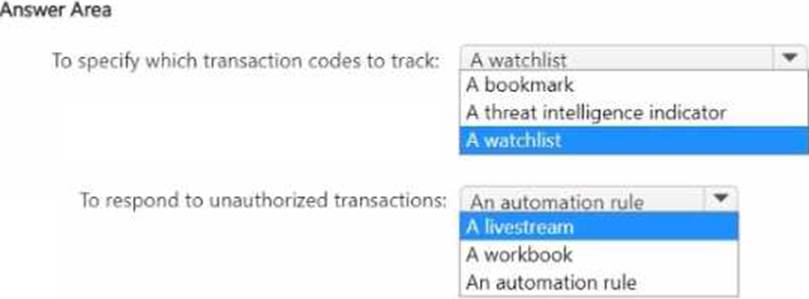
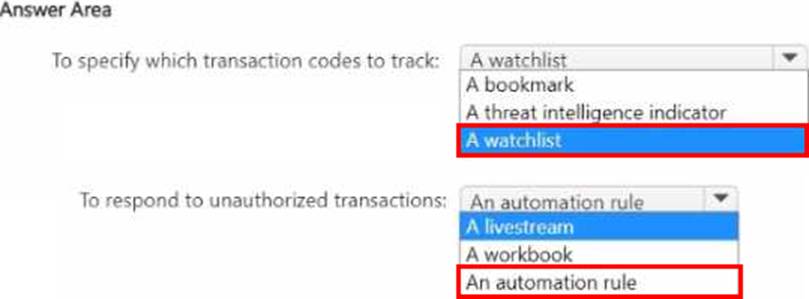
You have an Azure subscription named Sub! that contains a Microsoft Sentinel workspace named Workspace1.
You have an SAP RISE managed workload that is integrated with Sub1.
You need to implement the Microsoft Sentinel solution for SAP applications in Workspace1.
The solution must meet the following requirements:
• Generate an incident based on transaction codes when a sensitive SAP transaction is executed by an unauthorized user.
• When an incident is generated, send a notification to a designated Microsoft Teams channel.
• Minimize administrative effort.
What should you include in the solution? To answer, select the appropriate options in the answer area. NOTE: Each correct selection is worth one point.
HOTSPOT
You have an on-premises SAP environment.
Backups are performed by using tape backups. There are SO TB of backups.
A Windows file server has BMP images of checks used by SAP Finance. There are 9 IB of images. You need to recommend a method to migrate the images and the tape backups to Azure. The solution must maintain continuous replication of the images.
What should you include in the recommendation? To answer, select the appropriate options in the answer area. NOTE: Each correct selection is worth one point.


Explanation:
Tape Backups – Azure Databox
File Server – Azure Storage Explorer
HOTSPOT
You have an SAP production landscape on Azure that contains the virtual machines shown in the following table.
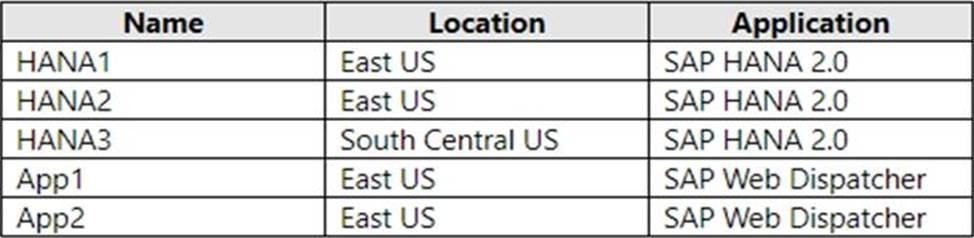
You configure HANA system replication as shown in the following table.

You configure two load balancers as shown in the following table.

For each of the following statements, select Yes if the statement is true. Otherwise, select No. NOTE: Each correct selection is worth one point.
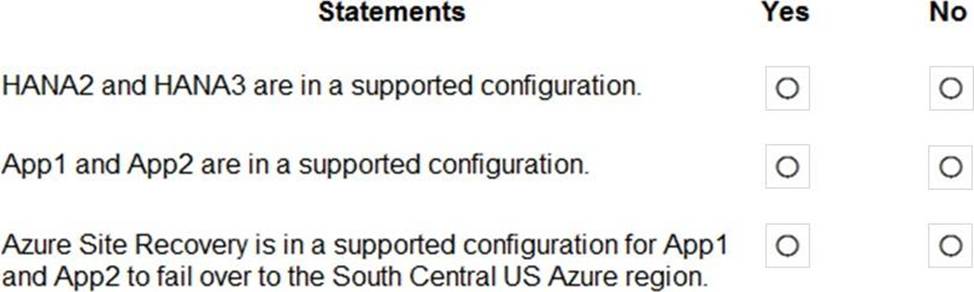
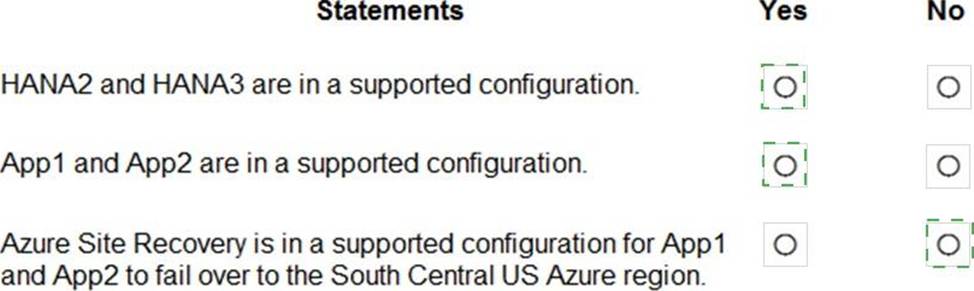
Explanation:
Reference:
https://help.sap.com/viewer/6b94445c94ae495c83a19646e7c3fd56/2.0.02/en-US/f730f308fede4040bcb5ccea6751e74d.html
https://docs.microsoft.com/en-us/azure/virtual-machines/workloads/sap/sap-hana-high-availability
HOTSPOT
You deploy an Azure Internal load balancer.
You deploy a node of an SAP NetWeaver 7.4 ABAP system named SP1.
You plan to deploy a second node.
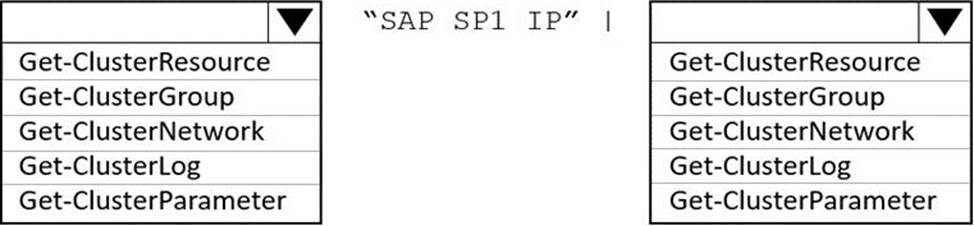
You need to verify that the health probe port is configured for the cluster. The cluster IP address resource name is SAP SP1 IP.
How should you complete the command? To answer, select the appropriate options in the answer area. NOTE: Each correct selection is worth one point.
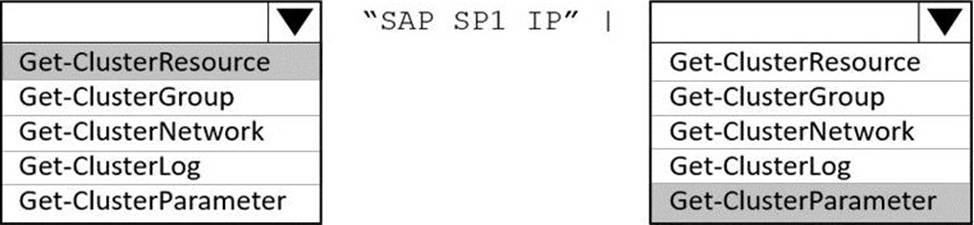
Explanation:
Box 1: Get-ClusterResource
Example:
Get-ClusterResource -Name $SAPIPresourceName | Get-ClusterParameter
Write-Output " "
Write-Output "Current probe port property of the SAP cluster resource ‘$SAPIPresourceName’ is ‘$OldProbePort’."
Write-Output " "
Write-Output "Setting the new probe port property of the SAP cluster resource ‘$SAPIPresourceName’ to ‘$ProbePort’ …"
Write-Output " "
Box 2: Get-ClusterParameter
Reference: https://docs.microsoft.com/en-us/azure/virtual-machines/workloads/sap/sap-high-availability-installation-wsfc-shared-disk
You have two Azure virtual machines named VM1 and VM2. VM1 hosts a single database container (SDC) for SAP HANA instance named sdl. VM2 hosts an SDC HANA instance named sd2. Azure Backup is enabled for the HANA databases on VM1 and VM2.
You need to restore sd1 to sd2 and overwrite the database instance on VM2.
What should you do first in the Azure portal?
- A . Rename the SystemDB database of sd2.
- B . From Restore Configuration, set Restored DB Name to sd1 (sdc).
- C . From Restore Configuration, set Restored DB Name to sd2(sdc).
- D . Upgrade sd2 to Multiple Database Container (MDQ.