
Huawei H12-831_V1.0 Practice Exams
Last updated on Oct 22,2026- Exam Code: H12-831_V1.0
- Exam Name: HCIP-Datacom-Advanced Routing & Switching Technology V1.0
- Certification Provider: Huawei
- Latest update: Oct 22,2026
Network administrators can use the clock time zone command to set the time zone information of the device. If the time zone settings of two network devices are inconsistent, the dynamic routing protocols running on the two devices will not be able to establish a normal neighbor relationship.
- A . True
- B . False
An enterprise network deploys the MUX VLAN function to control the Layer 2 communication between employees and guests. Which of the following descriptions are correct about the scenario shown in the figure? (Multiple choice)
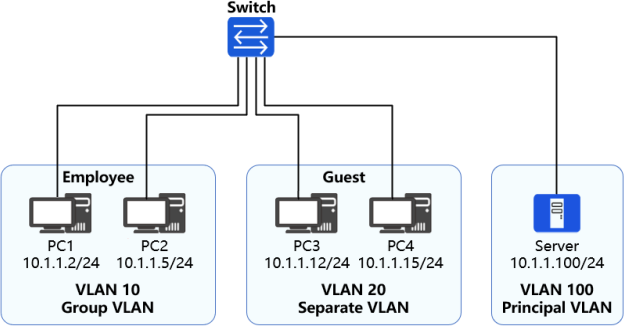
- A . PC3 and PC4 can communicate at Layer 2
- B . PC1 and PC4 cannot communicate at Layer 2
- C . PC1~PC4 can access the Server
- D . PC1 and PC2 cannot communicate at Layer 2
In the OSPFv3 network shown in the figure, area 1 is a stub area, area 2 is a normal area, and area 3 is an NSSA area. Which of the following types of LSAs will only appear in area 2?
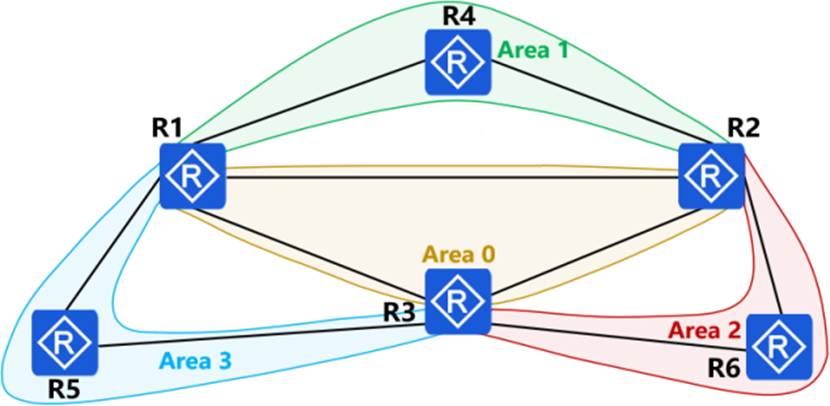
- A . AS-External-LSA
- B . Router-LSA
- C . Link-LSA
- D . Intra-Area-Prefix-LSA
In the OSPP network shown in the figure, area 1 is a Totally NSSA area, area 2 is a common area, and R4 imports the external route 10.0.4.4/32. The Router ID of each device is 10.0.XX, where X is the device number.
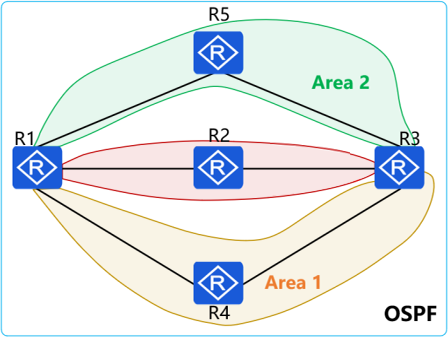
in the OSPF processes of R1 and R3. Which of the following descriptions is correct?
- A . There is no Type 7 LSA in area 2
- B . There is no Type 7 LSA in area 1
- C . There is no Type 4 LSA in area 0
- D . There is no Type 5 LSA in area 0
A network engineer wants to clear the serial port login password. Which of the following should he enter?
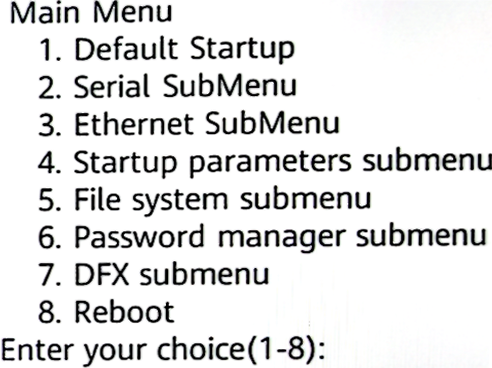
- A . 5
- B . 3
- C . 6
- D . 4
A certain enterprise network is shown in the figure, in which CE and PE communicate with each other by deploying EBGP. At this time, CE1 transmits a private network route to PE1.
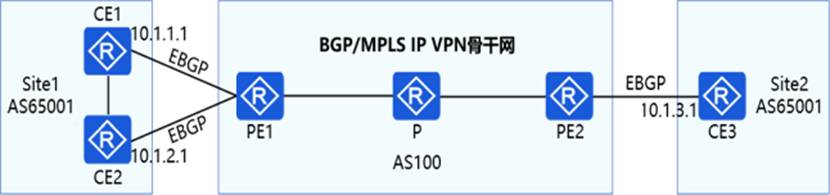
what are the errors in the following analysis of this scenario? (Multiple choice)
- A . If no additional measures are taken, CE3 will discard the route.
- B . If the commands peer 10.1.1.1 soo 200:1 and peer 10.1.2.1 soo 200:1 are configured on PE1, CE2 will receive the route.
- C . If the command peer 10.1.3.1 substitute-as is configured on PE2, CE3 will receive the route
- D . If you want CE3 to successfully receive the route, you need to configure the command peer 10.1.1.1 soo 200:1 on PE1.
OSPFv3 messages are encapsulated in IPv6 messages and can be sent in unicast, multicast and broadcast forms.
- A . True
- B . False
As shown in the figure, CE1 sends VPN1 traffic to PE1. After receiving it, PE1 will forward the VPN traffic. Which of the following descriptions of this scenario are correct? (Multiple choice)

- A . The interface on which PE1 receives the data is bound to the VPN1 instance.
- B . PE1 will use the LDP label corresponding to the Next_Hop address of the VPNv4 route as the outer label of the label message
- C . PE1 will check the forwarding table corresponding to the VPN1 instance and obtain the Tunnel ID information
- D . PE1 will search for the corresponding private network label according to Tunnel 1D and push the label header into the message.
In the network shown in the figure, R1 and R2 establish an EBGP neighbor relationship through the Loopback0 interface. R1 imports the route 2001::1/128 into BGP, and then cancels the import of the route. After R1 cancels the import of the route, the value of the Next Hop field of MP_UREACH_NLRI in the Update message sent by R1 is 2000::1.
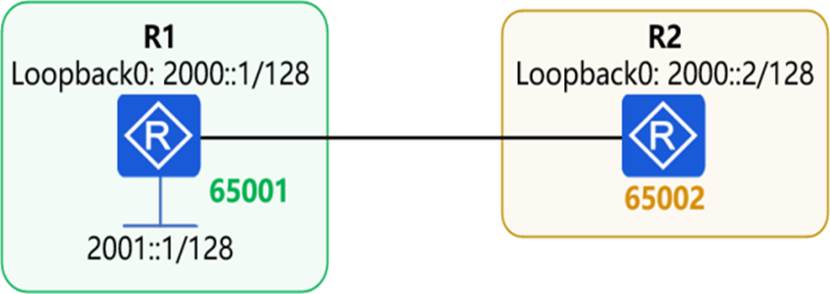
- A . True
- B . False
In the OSPFv3 network shown in the figure, the interfaces of R1 and R2 both have two IPv6 addresses. Although the prefix lengths of the IPv6 addresses of R1 and R2 are different, they can still establish an OSPFv3 neighbor relationship. If R2 is the DR, then the Intra-Area-Prefix-LSA generated by R2 will contain four prefixes.
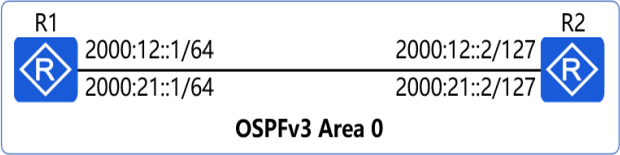
- A . True
- B . False