
HP HPE0-J68 Practice Exams
Last updated on Oct 23,2026- Exam Code: HPE0-J68
- Exam Name: HPE Storage Solutions
- Certification Provider: HP
- Latest update: Oct 23,2026
The customer is deploying a new HPE Alletra dHCI solution.
Which tool can be used to discover the new HPE Alletra array?
- A . HPE Storage Setup Manager
- B . HPE GreenLake Data Ops Manager console
- C . HPE GreenLake Block Storage console
- D . HPE StoreServ Management Console
HOTSPOT
A customer has a Nimble HF40 and needs to create a support ticket.
Click the option in the InfoSight portal where the customer can perform this task.
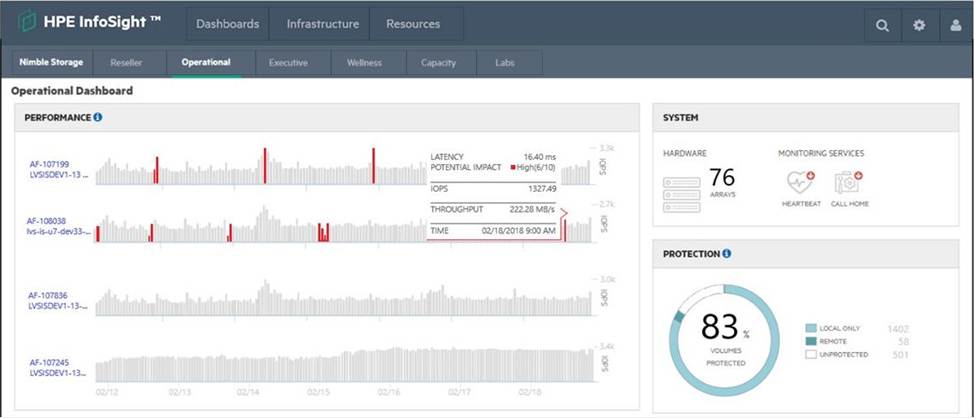
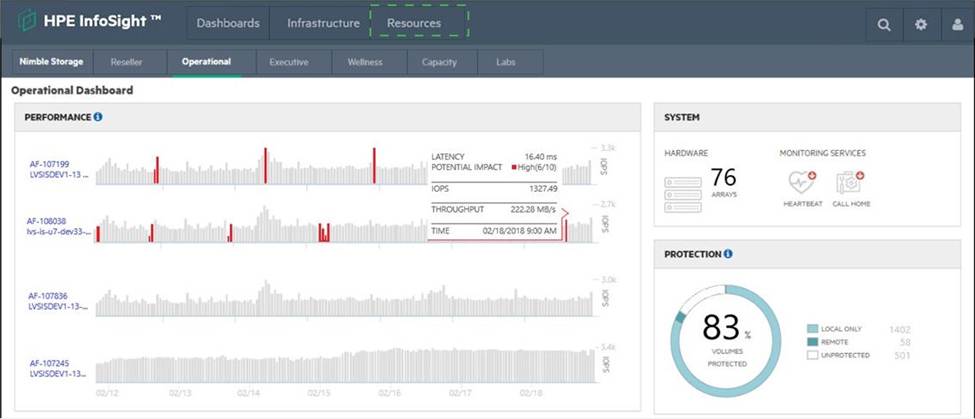
Explanation:
Graphical user interface, website, timeline Description automatically generated
DRAG DROP
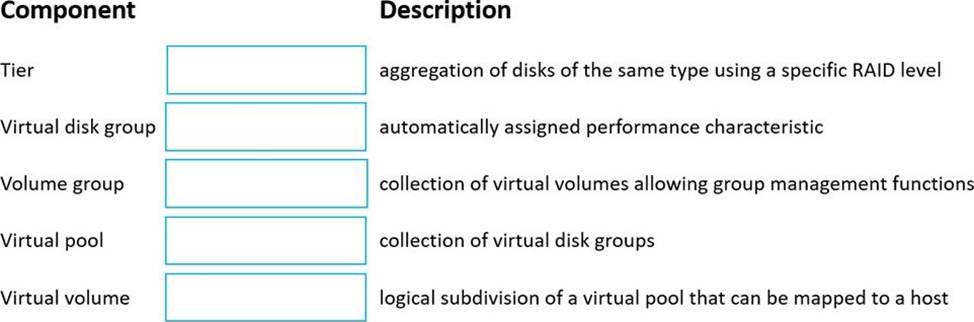
Match the MSA architecture components with their descriptions.
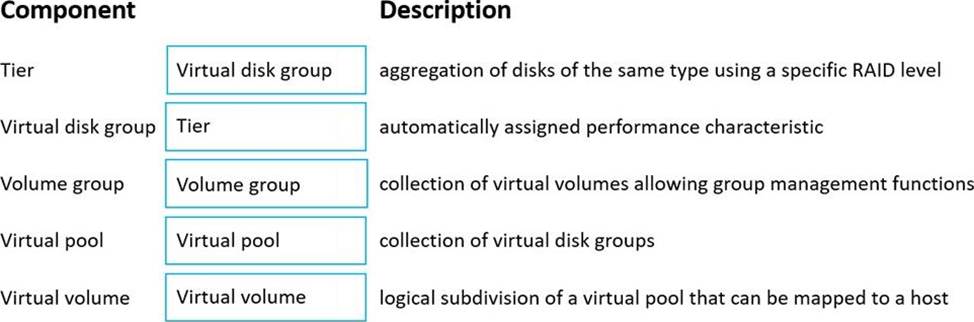
Explanation:
Virtual Disk group
Tier
Volume Group
Virtual pool
Virtual Volume
You are designing a new HPE 3PAR StoreServ all-flash array for the customer.
Which ratio should you expect to have the highest efficiency?
- A . Read/write ratio
- B . Reclamation ratio
- C . Compaction Ratio
- D . Thin provisioning ratio
C
Explanation:
In an all-flash array like the HPE 3PAR StoreServ, the compaction ratio typically offers the highest efficiency. Compaction includes both deduplication and compression, which reduces the amount of physical storage needed by eliminating redundant data and compressing the data that is stored. The compaction ratio directly impacts storage efficiency, allowing for more effective utilization of the available flash storage, thereby reducing the total cost of ownership and improving performance.
Reference: HPE 3PAR StoreServ All-Flash Arrays
HPE Storage Efficiency
Which technology is used in a B-series SAN switch to prevent communicate between unauthorized device?
- A . Port isolation
- B . IVR
- C . Zoning
- D . VSAN
C
Explanation:
Zoning is a technology used in B-series SAN switches to control and prevent communication between unauthorized devices within a SAN fabric. By creating zones, administrators can define which devices (like servers and storage arrays) can communicate with each other, enhancing security and reducing the risk of unauthorized access. This approach is fundamental in maintaining secure and organized SAN environments.
HPE Storage
Reference: HPE B-Series SAN Switches
HPE SAN Solutions and Zoning
Which 5SD controller component is responsible for wear leveling?
- A . SATA interface chip
- B . NAND memory controller
- C . DRAM
- D . Processor
B
Explanation:
The NAND memory controller is the component responsible for wear leveling in SSDs. Wear leveling is a process used to extend the lifespan of NAND flash memory by ensuring that write and erase cycles are distributed evenly across the memory cells. This prevents any single cell from being overused, which could lead to premature failure. The NAND memory controller plays a crucial role in managing this process, ensuring the reliability and longevity of the SSD.
For more details, refer to:
HPE Storage Solutions
Which protocol can be used for accessing StoreOnce VTL target from Veeam?
- A . FC
- B . NFSv4
- C . iSCSI
- D . SMBv3
A
Explanation:
For accessing StoreOnce VTL (Virtual Tape Library) targets from Veeam, the recommended protocol is FC (Fibre Channel). FC provides the high throughput and low latency necessary for backup operations, making it ideal for environments where speed and reliability are critical. StoreOnce VTL supports FC as a primary protocol for integrating with backup applications like Veeam.
Reference: HPE StoreOnce VTL
Veeam and HPE StoreOnce Integration
Which statement is true when defining object storage?
- A . It is most suited for sharing files and characterized by volumes
- B . It is most suited for unstructured data and characterized by file share protocols like NFS
- C . It is most suited for unstructured data and characterized by containers or buckets
- D . suited for database It is most and characterized by containers or buckets
C
Explanation:
Object storage is best suited for unstructured data, such as images, videos, and backups, and it is characterized by the use of containers or buckets. Unlike traditional file storage systems, which use hierarchical structures like file systems, object storage uses a flat namespace and stores data as objects within these containers or buckets. This approach allows for scalability and easy management of large amounts of unstructured data, making it ideal for cloud storage and big data applications.
HPE Storage
Reference: HPE Object Storage Solutions
HPE Scalable Object Storage
You are proposing a new Nimble solution to a customer that recently experienced data loss in their existing storage array.
Which features of the Nimble array should you emphasize to your customer to address their concerns? (Choose two.)
- A . quick RAID rebuild
- B . deduplication
- C . compression
- D . encryption
- E . triple party
A,E
Explanation:
When addressing a customer’s concerns about data loss, the features of the HPE Nimble array that should be emphasized are the quick RAID rebuild (Option A) and triple parity (Option E).
Quick RAID Rebuild: This feature is crucial in reducing downtime and data loss risk after a disk failure. Nimble’s RAID technology ensures that if a drive fails, the rebuild process is swift, minimizing the exposure time during which data is vulnerable.
Triple Parity: This feature provides an additional layer of protection against multiple simultaneous drive failures. Triple parity RAID allows the array to withstand up to three drive failures without data loss, which significantly enhances the reliability and durability of the storage system.
These features work together to provide a robust, resilient storage solution that mitigates the risk of data loss and ensures high availability, making them particularly important for customers who have experienced data loss in the past.
Reference: HPE Nimble Storage Data Protection
HPE Storage Reliability and Resilience
A customer is deploying a new StoreOnce VSA solution.
How can the necessary storage capacity be added to the VSA? (Choose two.)
- A . Verify sufficient capacity LTUs are available
- B . Add a new virtual hard disk to the virtual machine
- C . The Cloud bank container needs to be configured once the VSA boots
- D . The Cloud bank container needs to be configured from the vCenter client
A,B
Explanation:
When deploying a new StoreOnce VSA (Virtual Storage Appliance), expanding storage capacity can be done by the following methods:
Verify sufficient capacity LTUs are available: License to Use (LTU) is required to allocate more storage to the VSA. Ensuring that there are sufficient LTUs available is essential before increasing capacity. Add a new virtual hard disk to the virtual machine: This is the process of physically increasing the storage allocated to the VSA. By adding a new virtual hard disk to the virtual machine, you expand the storage capacity that the VSA can utilize.
These steps are critical for correctly scaling the storage capacity of a StoreOnce VSA solution.
Reference: HPE StoreOnce VSA Deployment
HPE StoreOnce Capacity Licensing