
CIPS L6M9 Practice Exams
Last updated on Oct 22,2026- Exam Code: L6M9
- Exam Name: Supply Network Design
- Certification Provider: CIPS
- Latest update: Oct 22,2026
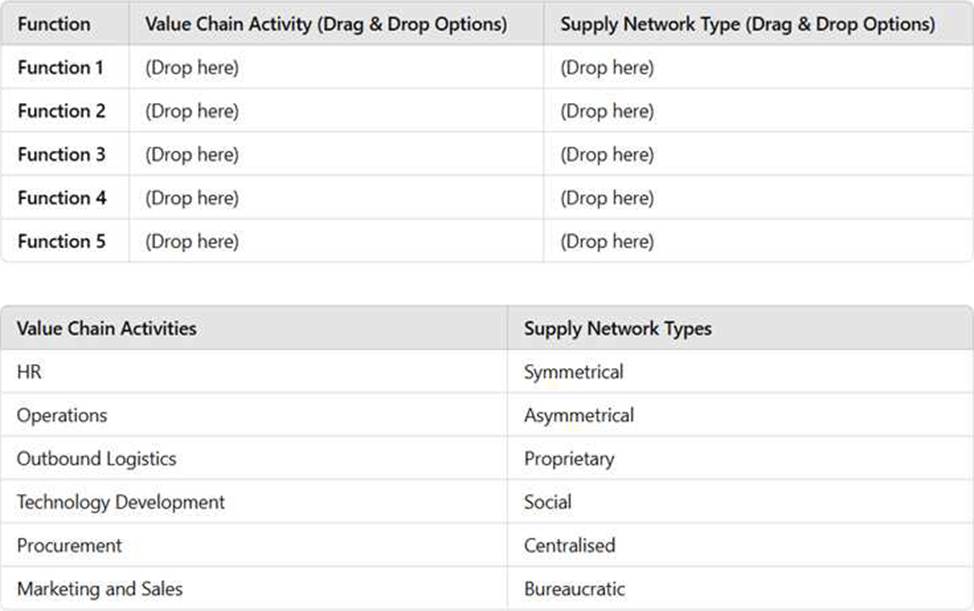
DRAG DROP
Scenario:
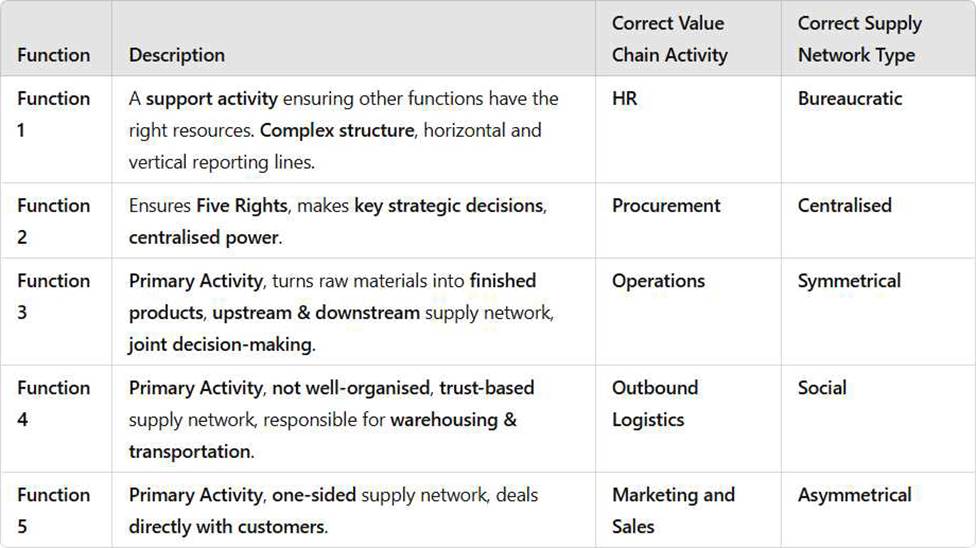
Blue Bear Ltd is a multifunctional manufacturing organisation with a global supply chain and customers in over 30 different countries. Each function within the company has different supply networks and relationships.
For each function, select the correct Value Chain Activity and Supply Network Type from the given options.
Salgo Ltd is an oil refinery organisation that has been in operation for 30 years. It has made increasing profits each year, with the most recent year’s takings in excess of £20m. Salgo Ltd uses an Emergent Strategy principle when it comes to resource planning.
What are the characteristics of this approach? Select ALL that apply.
- A . There is a lot of forward planning
- B . The strategy is based on historical patterns
- C . The strategy is effective at creating change
- D . A new strategy is created each year to replace the old one
- E . The organisation responds to market changes
Megan, the Director of Operations at Orange Windows Ltd, is concerned about overcapacity. Should she be worried?
- A . Yes – overcapacity means that the organisation has wasted resources
- B . Yes – overcapacity means that some customer orders may not be fulfilled
- C . No – overcapacity means there are unused resources within the operations department
- D . No – undercapacity will lead to unsold products
Who are the four business players in the Value Net? Select ALL that apply.
- A . Customer
- B . Buyer
- C . Supplier
- D . Distributor
- E . Complementor
- F . Competitor
Mabel, the Operations Director at a hotel, is engaged in a debate about trade-offs. The CFO believes that efficiency and effectiveness cannot be achieved together.
Is this correct?
- A . Yes – the hotel must make a trade-off between efficiency or effectiveness, it cannot have both
- B . Yes – engaging in trade-offs means that continuous improvement methodologies are no longer required
- C . No – the concept of trade-offs means that the organisation can position itself to achieve both effectiveness and efficiency
- D . No – with improvements to technology and communications, there is no need for trade-offs
Which of the following are not characteristics of good information?
- A . Relevant
- B . Timely
- C . Analysed
- D . Accurate
- E . Interpreted
Which of the following appear in the concept of Theory of Constraints? Select ALL that apply.
- A . Boat
- B . Rope
- C . Buffer
- D . Drum
- E . Safe harbour
Which of the following is a technique for continuous improvement that employs a full-time specialist improvement team?
- A . Kaizen
- B . Employee suggestion scheme
- C . Six Sigma
- D . Value stream mapping