
CIPS L6M1 Practice Exams
Last updated on Oct 22,2026- Exam Code: L6M1
- Exam Name: Strategic Ethical Leadership
- Certification Provider: CIPS
- Latest update: Oct 22,2026
SIMULATION
Explain how stress in the workplace can impact upon employees.
What are factors that can lead to stress in the workplace and how can an organisation look after its workforce when it comes to reducing stress? (25 points).
Below you will find how you can plan and draft the essay. Remember this is an example of one way you could approach the question. At Level 6 the questions are much more open so your response may be completely different and that’s okay.
Essay Plan
Intro C stress has impacts both for employee and employer
P1 C how stress impacts on employees
P2 C factors that lead to stress C quote HSE
P3 C how an organisation can look after workforce
Conclusion C stress has far reaching consequences
Example Essay
Workplace stress is a prevalent issue that can have profound effects on employees and organizational performance. Stress arises from various sources and can significantly impact an individual’s well-being, productivity, and job satisfaction. Recognizing the importance of addressing workplace stress, organizations have adopted strategies to mitigate its adverse effects. This essay explores the impact of workplace stress on employees, the factors contributing to stress, and organizational strategies for stress reduction.
Impact of Workplace Stress on Employees:
Physical Health Effects: Persistent workplace stress can lead to physical health issues such as headaches, digestive problems, and hypertension. In extreme cases, it has been known for stress to cause heart-attacks.
Mental Health Implications: Stress is closely linked to mental health disorders like anxiety and depression. Employees experiencing high levels of stress are at greater risk of developing these conditions, leading to decreased concentration, motivation, and overall job satisfaction.
Decreased Productivity: Stressed employees often find it challenging to focus on tasks, leading to reduced productivity and lower quality work. This can affect project timelines and overall organizational performance.
Increased Absenteeism: Stress-related illnesses can lead to increased absenteeism, impacting team dynamics and workload distribution. Absences can also result in increased costs for organizations.
Low Morale and Job Satisfaction: A stressed workforce may experience reduced job satisfaction and morale. This can lead to decreased engagement, a higher turnover rate, and difficulties in attracting and retaining talent.
Factors Contributing to Workplace Stress: The Health and Safety Executive (HSE) Management Standards of 2003 have identified six causes of work-related stress:
Lack of Support: Insufficient support from supervisors or peers can exacerbate stress, as employees may feel isolated and unsupported in challenging situations.
Excessive Workload (Demands): High workloads, unrealistic deadlines, and excessive overtime can overwhelm employees, leading to stress.
Lack of Control: Employees who have limited autonomy or decision-making authority may feel stressed due to a perceived lack of control over their work.
Role Ambiguity: Unclear job roles and responsibilities can create confusion and stress, as employees struggle to meet undefined expectations.
Change and Uncertainty: Frequent organizational changes, such as restructuring or layoffs, can create job insecurity and stress among employees.
Workplace Relationships: Poor relationships with colleagues or supervisors can contribute significantly to workplace stress. For example bullying or harassment in the workplace.
Organizational Strategies for Stress Reduction:
HSE Management Standards: Organizations can adopt the HSE Management Standards as a framework to identify and address stressors. This involves assessing workplace conditions related to the six stress factors and taking action to improve them.
Mental Health Support: Offer employee assistance programs (EAPs), mental health resources, and counselling services to help employees cope with stress and mental health challenges.
Training and Education: Provide training on stress management, resilience, and work-life balance to empower employees with coping strategies.
Workload Management: Ensure workload distribution is reasonable and aligned with employees’ capabilities. Encourage breaks and discourage excessive overtime.
Communication: Promote open and transparent communication channels to address concerns, clarify roles, and keep employees informed about organizational changes.
Flexible Working Arrangements: Offer flexible working options, such as remote work or flexible hours, to help employees achieve a better work-life balance.
Leadership Training: Train managers to recognize signs of stress, provide support, and create a supportive and inclusive work environment.
In conclusion, workplace stress has far-reaching consequences on employees and organizational outcomes. A recent study by CIPD has shown that stress is the leading cause of long-term absence from work. Recognizing the sources of stress, organizations can implement strategies, and use the HSE Management Standards, to mitigate its impact. By fostering a supportive and healthy work environment, organizations can reduce stress levels, enhance employee well-being, and improve overall performance.
Tutor Notes
– I really wanted to add studying for CIPS when you have a full-time job is a factor that can lead to stress in the workplace. It’s definitely not a wrong answer, but an examiner may not share my sense of humour haha
– I’ve chosen to write this essay in bullet points to show you how it can be done. This is a useful style if you’re running out of time, and if English isn’t your first language. The important thing with answering CIPS questions is to actually answer the question. You don’t need ‘posh’ language like ‘furthermore’ and ‘moreover’. You can get a good score by writing simply and succinctly.
– HSE Management Standards 2003 identifies six causes of work-related stress that I wrote about above. Here’s a fun mnemonic to help you learn them: – SDCRRC C stress does create really crappy realities
– The study guide doesn’t talk about this, but you could mention Mental Health First Aid Courses, which are growing in popularity, and also the use of confidential counselling.
– Your essay could have mentioned Hatton vs Sutherland (2002). This case is an important precedent
C it shows that just because a workplace offers confidential counselling to employees, this does not negate responsibility for employee stress C the company is still liable for causing you stress.
SIMULATION
What is situational leadership? (5 points) Discuss and evaluate how this approach may be used in supply chain management (20 points)
Leadership effectiveness depends on how well a leader adapts to changing situations, team capabilities, and organizational needs. Situational Leadership, developed by Paul Hersey and Ken Blanchard, is a flexible leadership model that suggests no single leadership style is best in all situations. Instead, leaders must adapt their approach based on the maturity, competence, and motivation of their team members.
In the context of supply chain management, where conditions are constantly evolving due to market dynamics, supplier relationships, technological changes, and risk factors, situational leadership is a highly relevant approach.
SIMULATION
Discuss the 5 approaches to management of the Blake Mouton Managerial Grid.
How can this be applied to the role of a procurement manager? (25 points)
Management effectiveness is critical for organizational success, particularly in functions like procurement, where balancing cost efficiency, supplier relationships, and operational effectiveness is key. The Blake Mouton Managerial Grid provides a framework for evaluating leadership styles based on a manager’s concern for people (team members, stakeholders, suppliers) versus concern for production (task completion, efficiency, and profitability).
This essay will discuss the five approaches to management outlined in the Blake Mouton Managerial Grid and explore how procurement managers can apply them to enhance procurement performance.
Understanding the Blake Mouton Managerial Grid
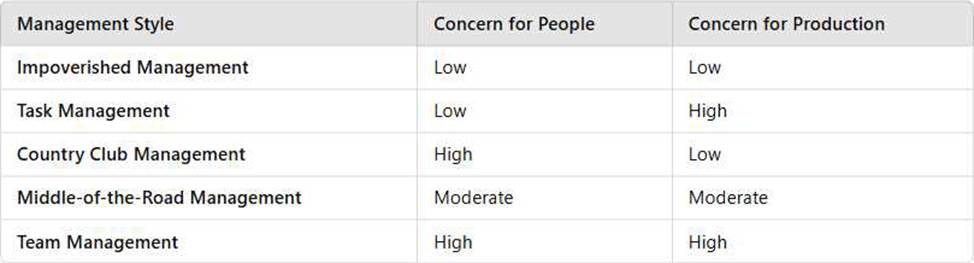
The Blake Mouton Managerial Grid (1964) classifies management styles based on two axes:
Concern for People C The degree to which a leader considers employee motivation, satisfaction, and well-being.
Concern for Production (or Task) C The extent to which a leader focuses on achieving organizational goals, efficiency, and productivity.
This results in five distinct leadership styles, each with its strengths and weaknesses.
The Five Approaches to Management in the Blake Mouton Grid
SIMULATION
Discuss the 5 approaches to management of the Blake Mouton Managerial Grid.
How can this be applied to the role of a procurement manager? (25 points)
Management effectiveness is critical for organizational success, particularly in functions like procurement, where balancing cost efficiency, supplier relationships, and operational effectiveness is key. The Blake Mouton Managerial Grid provides a framework for evaluating leadership styles based on a manager’s concern for people (team members, stakeholders, suppliers) versus concern for production (task completion, efficiency, and profitability).
This essay will discuss the five approaches to management outlined in the Blake Mouton Managerial Grid and explore how procurement managers can apply them to enhance procurement performance.
Understanding the Blake Mouton Managerial Grid
The Blake Mouton Managerial Grid (1964) classifies management styles based on two axes:
Concern for People C The degree to which a leader considers employee motivation, satisfaction, and well-being.
Concern for Production (or Task) C The extent to which a leader focuses on achieving organizational goals, efficiency, and productivity.
This results in five distinct leadership styles, each with its strengths and weaknesses.
The Five Approaches to Management in the Blake Mouton Grid