
CIPS L4M5 Practice Exams
Last updated on Oct 23,2026- Exam Code: L4M5
- Exam Name: Commercial Negotiation
- Certification Provider: CIPS
- Latest update: Oct 23,2026
Using subjective criteria
- A . 2 and 3 only
- B . 2 and 4 only
- C . 1 and 3 only
- D . 1 and 4 only
C
Explanation:
Principled negotiation is based on four fundamentals: people, interest, options and criteria:
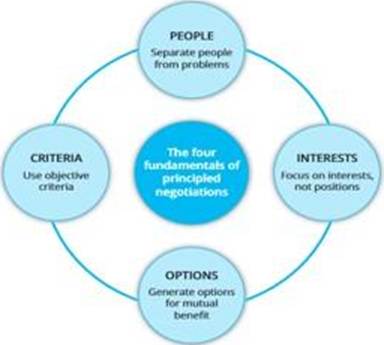
1st Principle: separate the people from the problem: Negotiator should depersonalise the situation and accepting that the subject matter of the negotiation. This can be difficult for untrained negotiators, but this is a key skill to develop
2nd principle: focus on interests, not positions: It is important in principled negotiations not to focus on their parties’ positions (what are expressed during negotiations), but on the interests (underlying needs) behind them
3rd principle: invent options for mutual gains: this principle aims to help the parties find a solution that both would benefit from. The more options – or tradeables – that can be brought to the table the better.
4th principle: insist on using objective criteria: is about making sure that the negotiation stays focused on outcomes based on objective criteria and that it is productive. LO 1, AC 1.2
Using subjective criteria
- A . 2 and 3 only
- B . 2 and 4 only
- C . 1 and 3 only
- D . 1 and 4 only
C
Explanation:
Principled negotiation is based on four fundamentals: people, interest, options and criteria:
1st Principle: separate the people from the problem: Negotiator should depersonalise the situation and accepting that the subject matter of the negotiation. This can be difficult for untrained negotiators, but this is a key skill to develop
2nd principle: focus on interests, not positions: It is important in principled negotiations not to focus on their parties’ positions (what are expressed during negotiations), but on the interests (underlying needs) behind them
3rd principle: invent options for mutual gains: this principle aims to help the parties find a solution that both would benefit from. The more options – or tradeables – that can be brought to the table the better.
4th principle: insist on using objective criteria: is about making sure that the negotiation stays focused on outcomes based on objective criteria and that it is productive. LO 1, AC 1.2
Which of the following are typical characteristics of activity-based costing (ABC) method? Select TWO that apply.
- A . ABC provides the information required to take action and realise improvements
- B . Limited understanding of true costs incurred
- C . ABC has tended to over cost products on long runs and under cost those on short runs
- D . Costs are allocated based on volume
- E . Variable and all related overhead expenses are specifically assigned to a business activity
A, E
Explanation:
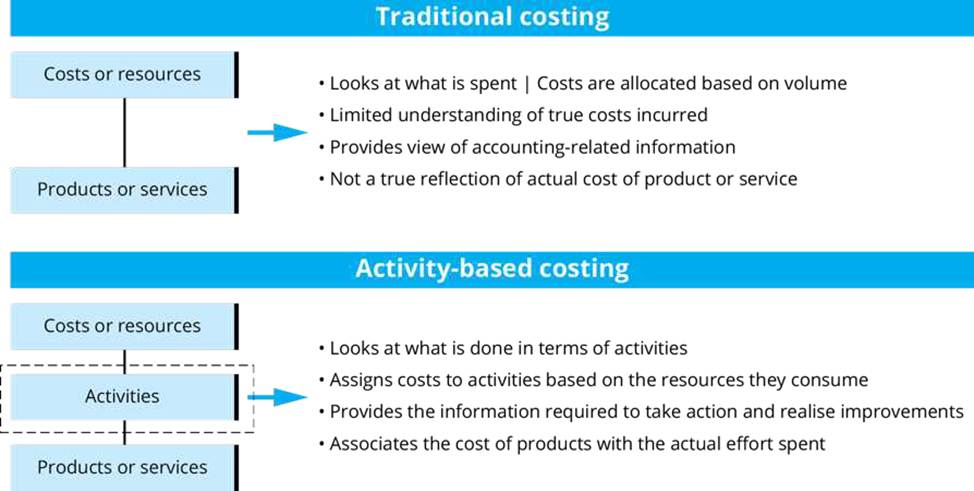
Activity-based costing is an alternative approach to traditional absorption costing.
The characteristics of these two methods are illustrated in the graph below:
A procurement professional is preparing for a negotiation of purchasing non-critical commodity products. He knows that the product can be easily replaced by other substitutes in the market.
The negotiation for these products is typified by which of the following?
- A . The buyer should focus on wider costs and risk elements
- B . The approach must be collaborative
- C . There will be only limited negotiation
- D . There will be regular structured negotiations
C
Explanation:
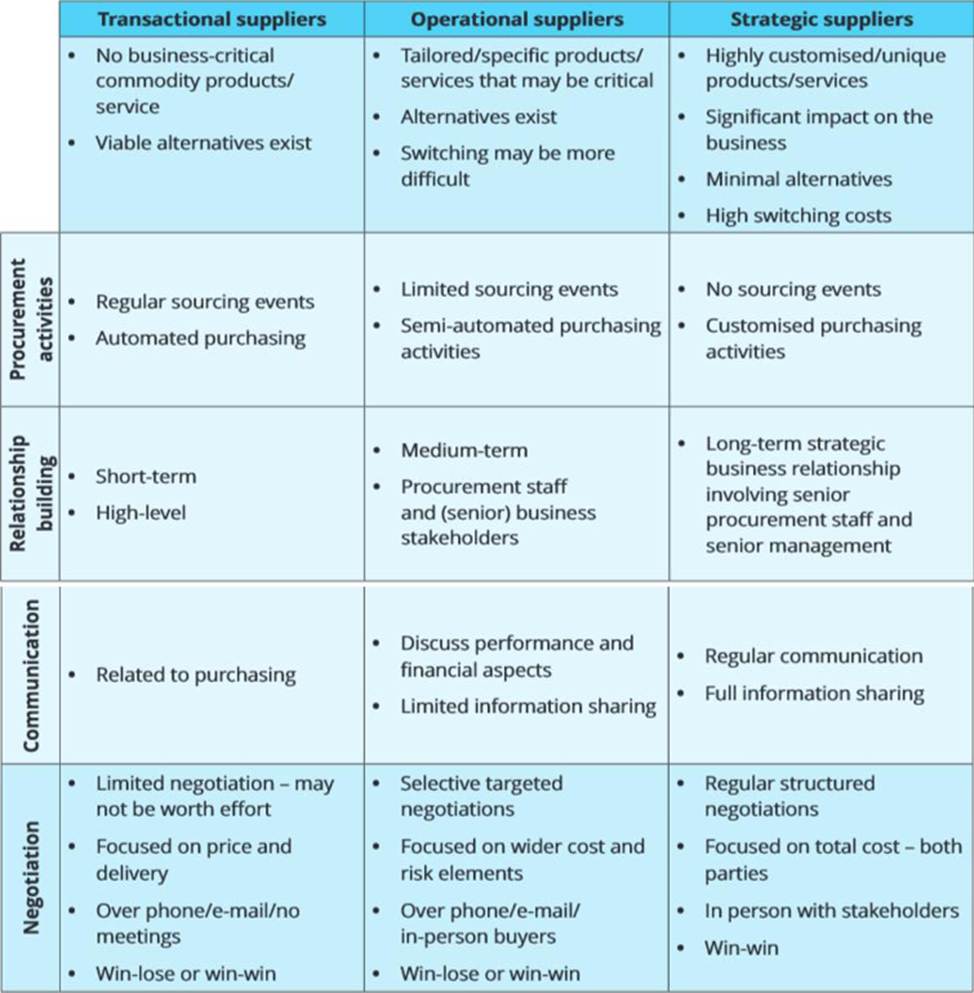
With non-critical commodity products, the relationship will be transactional. Buyer should not spend
too much time and effort into the negotiation.
LO 1, AC 1.4
In addition to organisational power, personal power of each negotiator can influence the outcomes of a negotiation. A good negotiator can leverage different sources of power.
Is this statement true?
- A . Yes, because the good negotiator recognises his own power in a negotiation
- B . No, because each person has only one superior source of personal power
- C . Yes, because all sources of power have similar effectiveness in every situation
- D . No, because only organisational power can be leveraged during a negotiation
A
Explanation:
Both organisational and personal power have the ability to influence the outcomes of negotiation.
Good negotiators recognises the different sources of relative personal power they possess in a negotiation. There is no one superior source of personal power; they will vary in their effectiveness based on the situation. The more personal sources available the better, even if some not used, these can be used as a fallback.
LO 1, AC 1.3
A procurement manager is preparing for a negotiation with an important supplier. He plans to withhold some crucial information so that his company gains the upper hand in the negotiation.
Is this correct when considering using integrative approach to the negotiation?
- A . No, this approach requires honest and open discussion
- B . Yes, the supplier must know what buyer wants and how to provide that even when the buyer is silent on these matters
- C . Yes, the buying organisation must maximise its gain, even at the detriment of the other party
- D . No, holding back information will prompt the supplier gain higher negotiation power
A
Explanation:
Integrative negotiation is a negotiation strategy in which the involved parties work together to find a solution that satisfies the needs and concerns of each. This process often involves group brainstorming and creative thinking for individuals to suggest different ideas that benefit both parties.
Compromising is often common in integrative negotiation, and both sides may need to give up certain needs to reach a solution. Honesty can also promote successful integrative negotiation because it can lead to a comprehensive understanding of the issue and what each party needs to be satisfied with the result.
Reference: CIPS study guide page 29-31
Integrative Negotiation: Definition, Tips and Examples | Indeed.com
Which of the following are most likely to be characteristics of a perfectly competitive market? Select TWO that apply
- A . In a competitive market, both buyers and sellers are price givers
- B . Firms can freely enter or exit the market
- C . In a perfectly competitive market, each seller has a large impact on the market price. A perfectly competitive market consists of products that are all slightly different from one another
- D . There are many buyers and sellers in the market
B, D
Explanation:
A perfectly competitive market is one with the following features:
– There are many firms producing identical or very similar (homogeneous) goods or services
– There are no barriers to entry to the market or exit from the market – anyone can enter or leave easily
– Both producers and customers have perfect knowledge of the market place, prices, costs of production and influences on demand and supply
Under these conditions, the price and quantity will always tend toward equilibrium as any producer that sets a price above equilibrium will not sell anything at all, and any producer that sets a price below a equilibrium will obtain 100% market share in theory. The demand curve is perfectly elastic, which means that it will be horizontal. In a perfectly competitive market, it is difficult to increase profits through pricing, and suppliers instead must focus on their cost structure. As these conditions imply, there are few if any examples of perfectly competitive market.
LO 2, AC 2.2