
CIPS L4M5 Practice Exams
Last updated on Oct 23,2026- Exam Code: L4M5
- Exam Name: Commercial Negotiation
- Certification Provider: CIPS
- Latest update: Oct 23,2026
Which of the following are most likely to be sources of conflict that can emerge from the content of commercial negotiations? Select TWO that apply.
- A . Framework arrangement
- B . Payment terms
- C . Contract governing law
- D . Requisition
- E . Cultural differences
B, C
Explanation:
There are multiple sources of divergent positions that can arise in situations where money is exchange for goods and services. There are 2 different types of sources. Those that arise from the content or subject matter of the negotiation (what is being negotiated) and those that arise from the process of negotiation (how it is being negotiated). Sources of divergent position – the content of negotiation:
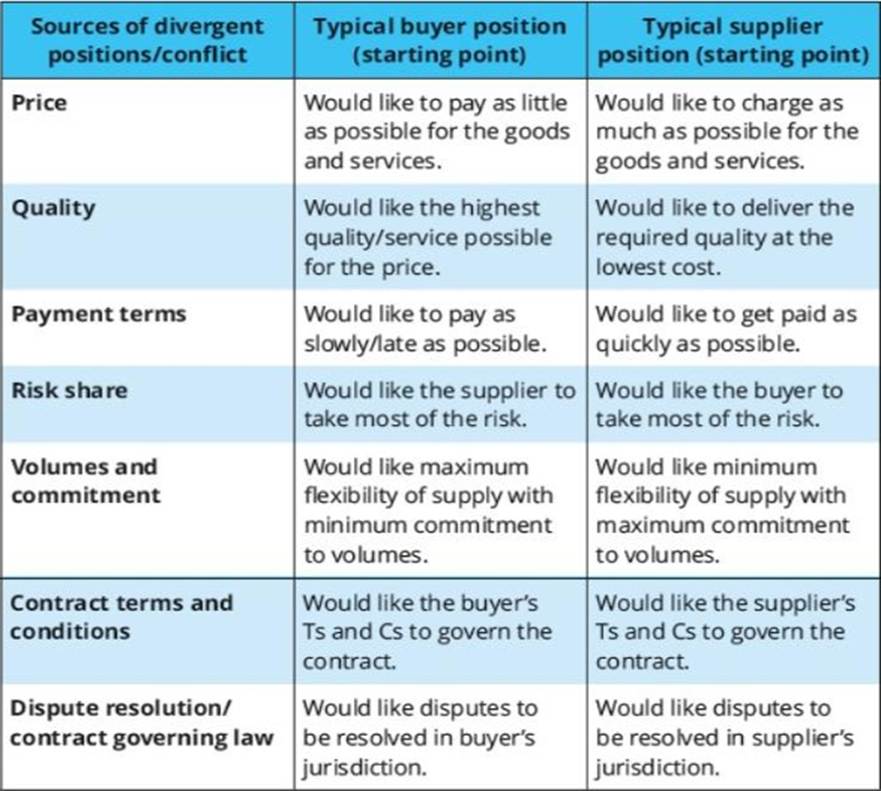
Cultural differences are the source of conflict in the process of negotiation.
Requisition is an internal document raised by user or store to communicate to procurement the need to buy the product or service specified. This is merely a internal document.
Framework arrangement is a rather loose set-up, without any legal standing. It usually occurs when an organisation has decided for itself to limit the number of suppliers it is willing to work with and, through a purely internal process, sets up an approved list of such suppliers. LO 1, AC 1.1
Which of the following constitutes a key element to developing high-trust supplier relationships?
- A . Contract management
- B . Supplier audits
- C . Delivering on commitments
- D . Information gathering
C
Explanation:
Delivering on commitments is fundamental to building high-trust relationships. When an organization reliably fulfills its promises, it reinforces the supplier’s confidence in the partnership, fostering long-term collaboration. While contract management and audits are supportive processes, delivering on commitments directly strengthens trust, as emphasized in CIPS best practices for relationship management.
An adversarial style of negotiation is appropriate where the buyer has greater bargaining power over the supplier. In what other situations may the buyer adopt this style of negotiation?
- A . When the supplier is a monopolist and some advantages need to be gained from the agreement
- B . In a market that is full of alternative sources and substitute products
- C . Where there is a single sourcing strategy to eliminate the competing suppliers and retain only one
- D . In a market where the buyers are competing for fewer supply sources
B
Explanation:
An adversarial negotiation style is more suitable in a market with many alternative sources and substitutes (B). When there are multiple suppliers, buyers have the upper hand and can adopt a competitive stance without risking supply continuity. This aligns with CIPS guidance on the use of adversarial styles in competitive markets with numerous alternatives.
Where a negotiator uses numerical reasoning with facts as part of their negotiation approach, which of the following techniques will they be adopting?
- A . Threat
- B . Logic
- C . Emotion
- D . Power
B
Explanation:
Using logic involves applying numerical data and factual evidence to support arguments in a negotiation. Logical reasoning appeals to objective analysis rather than emotional or coercive tactics and is effective in convincing the other party through structured, fact-based arguments, aligning with CIPS’s guidance on logical negotiation techniques.
According to Professor Gavin Kennedy, in which of the following forms of dispute resolution, both parties will voluntarily exchange their ideas and beliefs?
- A . Litigation
- B . Persuasion
- C . Negotiation
- D . Gambling
C
Explanation:
Professor Gavin Kennedy highlights that we need to distinguish negotiation from other forms of decision-making by focusing on what is unique about it (the voluntary exchange) and not shared by other techniques such as persuasion, gambling (e.g., coin tossing), command decision, instruction, litigation and coercion.
Which of the following are most likely to be macro factors that may influence the balance of power in commercial negotiation? Select THREE that apply.
- A . Economic growth rates
- B . Disruptive technologies
- C . Purchasing spend volume
- D . Sustainability of natural resources
- E . Intensity of competition in a industry
- F . Number of substitute products or services
A, B, D
Explanation:
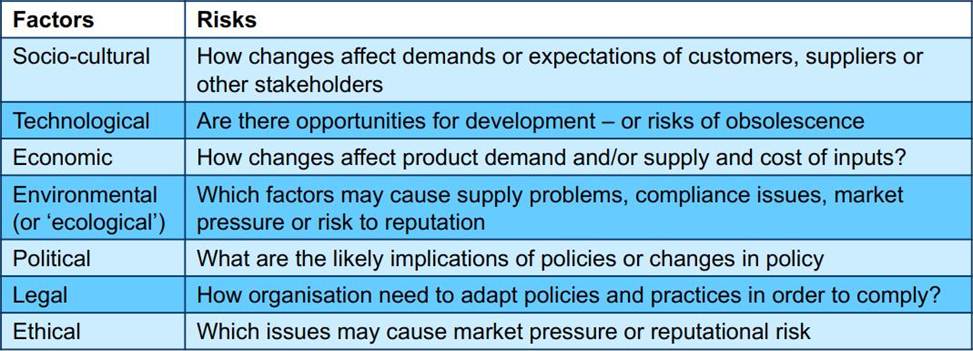
All one-to-one commercial negotiations between a specific purchaser and a specific supplier take place within an industrial market and a larger business environment characterised by multiple forces which both parties typically have little control over. STEEPLE framework highlights the 6 main external influences on a business:
LO 1, AC 1.3
Champion Toys (CT) is negotiating a large order of luxury toys with its supplier, Top Teds. CT has identified that lead times, order quantities, and delivery locations are tradeables that could be used in this negotiation.
At which negotiation stage should CT introduce these tradeables?
- A . Bargaining
- B . Closure
- C . Proposing
- D . Opening
A
Explanation:
Bargaining is the negotiation stage where tradeables are typically introduced and discussed. During this phase, both parties exchange offers and concessions, using tradeables such as lead times and order quantities to find a mutually acceptable agreement. This aligns with CIPS’s guidance on the stages of negotiation.
Which of the following is the process enabling the buyer to share with the supplier their purposes and needs to focus on some specific areas such as quality, cost, social and environmental standards, etc in the supplier’s bids?
- A . Supplier selection
- B . Supply positioning
- C . Supplier appraisal
- D . Supplier conditioning
D
Explanation:
Supplier conditioning is the process of influencing a supplier or suppliers to behave in a certain way, or to accept certain circumstances. Within a negotiation, the buyer needs to make sure that the supplier has a number of messages in mind, about the outcomes that the buyer needs to achieve and about the shared sense of purpose that buying organisation has in achieving these outcomes. Supplier appraisal is a process of evaluating a supplier’s ability to carry out a contract in term of quality, delivery, price and other contributing factors.
Supplier positioning is the process of classifying spend with a supplier in terms of the profit potential and supply risk and assists in prioritising categories of spend and developing the right strategy. Supplier selection is the process of selecting a supplier to acquire the necessary materials to support the outputs of organisations. Selection of the best and/or the most suitable suppliers is based on assessing supplier capabilities (Shih et al., 2004).