
CIPS L4M2 Practice Exams
Last updated on Oct 24,2026- Exam Code: L4M2
- Exam Name: Defining Business Needs
- Certification Provider: CIPS
- Latest update: Oct 24,2026
Which of the following are typical social considerations throughout the contract life cycle? Select the TWO that apply.
- A . Using recycled materials
- B . Minimizing use of non-renewable resources
- C . Support small local businesses
- D . Managing waste
- E . Health and safety
C, E
Explanation:
The following are typical social criteria in procurement:
• Reducing unemployment
• Preventing the use of child labour
• Preventing discrimination on the grounds of race, religion, disability, sex or sexual orientation
• Encouraging good employment practice
• Reducing local unemployment
• Reducing social exclusion
• Promoting training opportunities for the young or disadvantaged
• Encouraging access to work for people with disabilities
Reference: CIPS study guide page 137
LO 3, AC 3.2
When procuring a machinery, at which stage buyer must check whether it is working to the standards set out in the design specification?
- A . Installation
- B . Maintenance and repair activities
- C . Customer support
- D . Manufacture
A
Explanation:
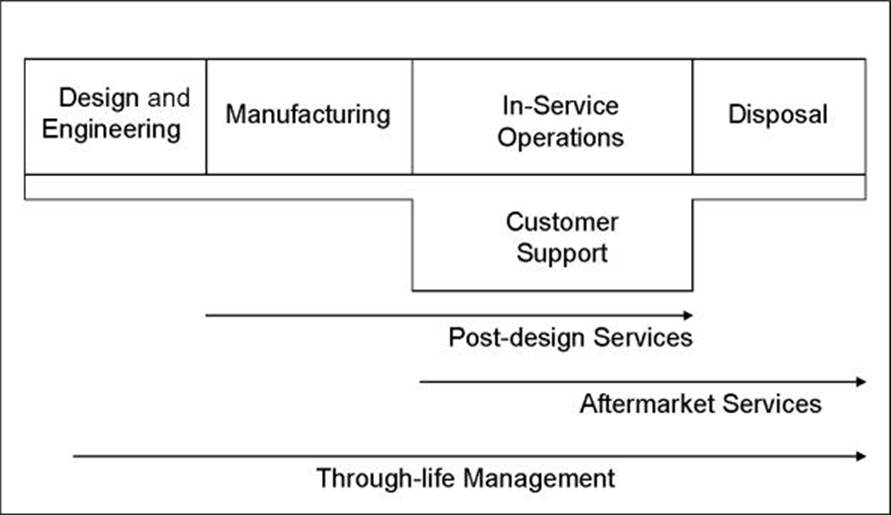
Through-life Management involves the life-cycle management of the products, services and activities required to deliver a fully integrated capability to the customer, while reducing the cost of ownership for the customer.
Source: Andrew Graves
The installation stage occurs in In-Service Operations. At this stage, the machinery is shipped and installed on the buyer’s premises and check to ensure that it is working to the standards set out in the design specification.
Reference: CIPS study guide page 130
LO 3, AC 3.2
When procuring a machinery, at which stage buyer must check whether it is working to the standards set out in the design specification?
- A . Installation
- B . Maintenance and repair activities
- C . Customer support
- D . Manufacture
A
Explanation:
Through-life Management involves the life-cycle management of the products, services and activities required to deliver a fully integrated capability to the customer, while reducing the cost of ownership for the customer.
Source: Andrew Graves
The installation stage occurs in In-Service Operations. At this stage, the machinery is shipped and installed on the buyer’s premises and check to ensure that it is working to the standards set out in the design specification.
Reference: CIPS study guide page 130
LO 3, AC 3.2
What criteria can be applied in the production of a business case?
- A . Questions, price, and evaluation
- B . Suggestions, feedback, and forecast
- C . Plans, delivery, and design
- D . Costs, benefits, and options
D
Explanation:
A strong business case includes a clear assessment of costs, the expected benefits, and the viable options available. These criteria ensure a structured approach to decision-making and alignment with strategic goals.
Reference: CIPS Level 4, Business Case Development.
What will be the result of retaliation between business rivals in an industry?
- A . Higher exit barrier
- B . More new entrants
- C . Lower profit
- D . Greater bargaining power of suppliers
C
Explanation:
Industry rivalry―or rivalry among existing firms―is one of Porter’s five forces used to deter-mine the intensity of competition in an industry.
Other factors in this competitive analysis are:
– Barriers to entry
– Bargaining power of buyers
– Bargaining power of suppliers
– Threat of substitutes
Industry rivalry usually takes the form of jockeying for position using various tactics (for example, price competition, advertising battles, product introductions). This rivalry tends to increase in intensity when companies either feel competitive pressure or see an opportunity to improve their position.
In most industries, one company’s competitive moves will have a noticeable impact on the competition, who will then retaliate to counter those efforts. Companies are mutually dependent, so the pattern of action and reaction may harm all companies and the industry.
Some types of competition (for example, price competition) are very unstable and negatively influence industry profitability. Other tactics (for example, advertising battles) may positively influence the industry, as they increase demand or enhance product differentiation.
Reference
Porter, M. (1998). Competitive Strategy. New York: Free Press. pp. 17-23.
CIPS study guide page 86-87
LO 2, AC 2.2
Why should procurement professionals develop business case before seeking approval to purchase capital equipment?
- A . Using business case will prevent new entrants from entering the supply market
- B . A business case can be used as a replacement of purchase order
- C . Business case is a tool that eliminates all risks associated with the project
- D . Devising business case may prompt the procurement to consider different options
D
Explanation:
A business case is developed during the early stages of a project and outlines the why, what, how, and who necessary to decide if it is worthwhile continuing a project. One of the first things you need to know when starting a new project are the benefits of the proposed business change and how to communicate those benefits to the business.
Preparing the business case involves an assessment of:
– Business problem or opportunity
– Benefits
– Risk
– Costs including investment appraisal
– Technical solutions
– Timescale
– Impact on operations
– Organizational capability to deliver the project outcomes
These project issues are an important part of the business case. They express the problems with the current situation and demonstrate the benefits of the new business vision. Making business case with multiple options and choices also prompts the procurement and senior management to consider alternatives. As a result, the organisation may opt out the best option.
The business case brings together the benefits, disadvantages, costs, and risks of the current situation and future vision so that executive management can decide if the project should go ahead.
Reference: – CIPS study guide page 19-21
– How to Write a Business Case – Template & Examples | Adobe Workfront LO 1, AC 1.1