
CIPS L4M2 Practice Exams
Last updated on Oct 23,2026- Exam Code: L4M2
- Exam Name: Defining Business Needs
- Certification Provider: CIPS
- Latest update: Oct 23,2026
An IT department has tasked procurement to help produce a conformance specification for new company laptops.
Which factor is common within a conformance specification?
- A . Meets the operational requirements
- B . Tends to be short and specific
- C . Allows flexibility in the offering
- D . Meets the specification standard
D
Explanation:
Conformance specifications outline specific technical standards or requirements that a product must meet. These ensure uniformity and compliance but do not allow flexibility for suppliers to innovate.
Reference: CIPS Level 4, Specification Standards.
When procuring an IT equipment, at which stage the buyer’s expectations are translated into a technical specification?
- A . Installation
- B . Design
- C . In-service support
- D . Customer support
B
Explanation:
IT equipment is typically linked with through-life contracts. This type of contract not only deal with the specification and the price of a machinery, but also other stages such as design, manufacture, installation, in-service support, decommission and disposal. Among these stages, the design stage is when buyer’s requirements are translated into technically correct specification.
Reference: CIPS study guide page 131
LO 3, AC 3.2
What does the acronym RAQSCI stand for?
- A . Relationship, Ability, Quality, Service, Cost, Innovation
- B . Regulatory, Availability, Quality, Service, Cost, Innovation
- C . Regulatory, Availability, Quantity, Sustainability, Inventory
- D . Regulatory, Ability, Quality, Service, Cost, Inventory
- E . Relationship, Availability, Quantity, Sustainability, Cost, Innovation
B
Explanation:
RAQSCI stands for Regulatory, Availability, Quality, Service, Cost, Innovation.
LO 1, AC 1.1
Which of the following activities are considered as primary activities of an organization according to Porter’s value chain? Select TWO that apply:
- A . Maintenance
- B . Picking and delivery components
- C . Sourcing transportation services
- D . Trainees recruitment
- E . Assembly design
A, B
Explanation:
Primary activities consist of inbound logistics, operations, outbound logistics, sales & marketing, service.
Second activities consist of firm infrastructure, human resource management, technology development and procurement
The following graph illustrate the value chain (Source: Smartsheet)
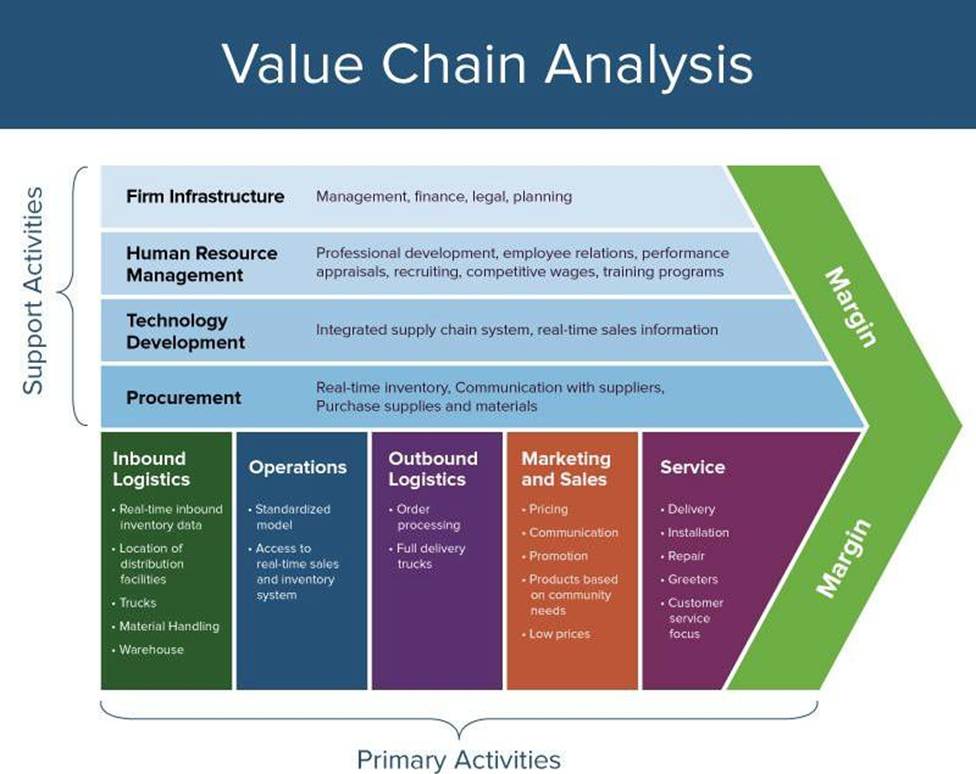
Picking and delivery components is inbound logistics.
Maintenance is an example of operations activity.
Sourcing transportation services is an activity of procurement
Assembly design is an activity in research and development (Technology)
Recruiting is an activity of human resource management
Reference: CIPS study guide page 71
LO 2, AC 2.1
Which of the following activities are considered as primary activities of an organization according to Porter’s value chain? Select TWO that apply:
- A . Maintenance
- B . Picking and delivery components
- C . Sourcing transportation services
- D . Trainees recruitment
- E . Assembly design
A, B
Explanation:
Primary activities consist of inbound logistics, operations, outbound logistics, sales & marketing, service.
Second activities consist of firm infrastructure, human resource management, technology development and procurement
The following graph illustrate the value chain (Source: Smartsheet)
Picking and delivery components is inbound logistics.
Maintenance is an example of operations activity.
Sourcing transportation services is an activity of procurement
Assembly design is an activity in research and development (Technology)
Recruiting is an activity of human resource management
Reference: CIPS study guide page 71
LO 2, AC 2.1
When analysing a market, the availability of substitute products or suppliers is the only competitive force to consider. Is this statement correct?
- A . No, availability of substitutes is not a competitive market force
- B . No, other forces include the threat of new entrants and bargaining strength of buyers and suppliers
- C . Yes, substitute products and therefore cost is the source of all competition
- D . Yes, it is the only competitive force relevant to procurement
B
Explanation:
While substitute products are an important factor, other forces such as new entrants, buyer and
supplier bargaining power, and industry rivalry also significantly influence market dynamics. These forces are part of frameworks like Porter’s Five Forces used in market analysis.
Reference: CIPS Level 4, Market Environment Analysis.
Gaskins Caskets (GC) is a manufacturing company that wants to identify new suppliers for a number of current parts. GC no longer has technical drawings for the parts and none of the engineers currently working for them have enough knowledge of the parts to write a specification.
What could GC do to get accurate pricing from suppliers for these parts to compare to the existing parts?
- A . GC’s engineers could estimate the specification and drawings that are sent to prospective suppliers
- B . GC could send samples of the parts to prospective suppliers as part of the request for quotation
- C . GC could communicate a cost to the suppliers that must be met regardless of the final specification
- D . GC could allow suppliers to develop and use their own specification as part of their cost proposal
Which of the following indicates types of waste that procurement department concentrates on when adopting Lean methods?
- A . DOWNTIME
- B . VA/VE
- C . OWN-IT
- D . SCAMPER
A
Explanation:
Copious amounts of waste can occur in the workplace, particularly in a manufacturing process, but do you know what the eight most commons wastes are and how they impact your organization? Taiichi Ohno, considered the father of Toyota Production System, created a lean manufacturing framework, which was based on the idea of preserving (or increasing) value with less work. Any-thing that doesn’t increase value in the eye of the customer must be considered waste, or "Muda", and every effort should be made to eliminate that waste. The following 8 lean manufacturing wastes, mostly derived from the TPS, have a universal application to businesses today. The acronym for the eight wastes is DOWNTIME. Downtime stands for:
– Defects
– Overproduction
– Waiting
– Not utilizing talent
– Transportation
– Inventory excess
– Motion waste
– Excess processing
OWN-IT is the acronym for the process of collecting and analysing the data and information needed in any field
SCAMPER is acronym for options addressing the underlying issues and achieving target
VA/VE is value analysis and value engineering
LO 3, AC 3.4