
VMware 2V0-31.24 Practice Exams
Last updated on Nov 16,2026- Exam Code: 2V0-31.24
- Exam Name: VMware Aria Automation 8.10 Professional V2
- Certification Provider: VMware
- Latest update: Nov 16,2026
Exhibit.
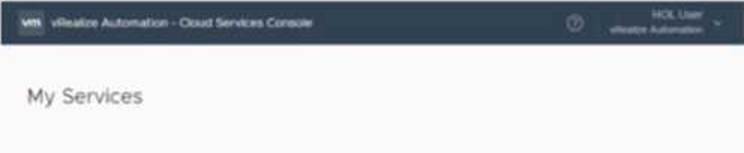
A new user that has been tasked with designing some workflow-based extensibility logs into VMware Aha Automation for the first time. Upon login, the user is presented with the attached screenshot. Security policy states each user should have the minimum set of privileges to achieve the role.
Which step must the Organization Administrator take to resolve the issue?
- A . Assign the user the VMware Aria Automation Pipelines Developer role
- B . Assign the user the VMware Aria Automation Orchestrator Administrator role
- C . Assign the user the VMware Aria Automation Assembler Administrator role
- D . Assign the user the VMware Aria Automation Orchestrator Workflow Designer role
D
Explanation:
The VMware Aria Automation Orchestrator Workflow Designer role is specifically designed for users who need to create and manage workflows within VMware Aria Automation. Assigning this role to the user will provide them with the necessary permissions to access the workflow design functionalities and carry out their tasks effectively. This aligns with the security policy of providing the minimum set of privileges required for the role, ensuring that users have the capabilities they need without unnecessary additional permissions.
Reference: VMware Aria Automation Orchestrator Documentation
Using Automation Orchestrator – VMware Docs
An administrator is using VMware Aria Automation to define optimized, compliant software states and enforce them across the environment.
In this scenario, which VMware Aria Automation component is used?
- A . VMware Aria Automation Pipelines
- B . VMware Aria Automation Orchestrator
- C . VMware Aria Automation Consumption
- D . VMware Aria Automation Config
D
Explanation:
VMware Aria Automation Config is the component used to define and enforce optimized and compliant software states across an environment. It allows administrators to create desired state configurations and apply them to various resources, ensuring compliance and optimal performance.
This component is essential for maintaining consistent and secure configurations in dynamic and hybrid cloud environments.
Reference: VMware Aria Automation Documentation
What disk storage type would an administrator select for a full life-cycle management of a virtual disk?
- A . Independent – Persistent disk mode
- B . Standard disk storage type
- C . Independent – NonPersistent disk mode
- D . First class disk storage type
D
Explanation:
The "First class disk storage type" is designed for full life-cycle management of a virtual disk in VMware environments. This type of disk allows advanced operations such as independent snapshots, cloning, and management separate from the VM lifecycle. It is the preferred choice for operations that require high flexibility and full lifecycle management capabilities.
Reference: VMware Aria Automation Documentation
A customer has requested that all of the Virtual Machines (VMs) computer accounts are created for the Human Resource associates in a specified Organizational Unit (OU) dedicated to HR Department within their Active Directory server prior to provisioning.
Which native integration in VMware Aria Automation can the administrator leverage to achieve this?
- A . SDDC Manager
- B . Active Directory
- C . IPAM
- D . GitLab
B
Explanation:
In VMware Aria Automation, to ensure that all VMs’ computer accounts for HR associates are created in a specified Organizational Unit (OU) within Active Directory, the native integration with Active Directory can be leveraged. This integration allows the administrator to configure and automate the placement of computer accounts into specific OUs during the provisioning process. This ensures compliance with organizational policies and simplifies the management of computer accounts within the Active Directory.
Reference
VMware Aria Automation AD Integration
An administrator is trying to synchronize a new VMware Aria Automation template into the App-Dev project. The administrator copies the VMware Aria Automation template code directly from VMware Aria Automation Assembler into a text file and uploads it into the GitHub repository so that it can be synchronized to the App-Dev project.
When the administrator clicks ‘Synch Repos’, a new VMware Aria Automation template does not appear.
Which step must the administrator take to allow it to synchronize from the GitHub repository?
- A . Clone the VMware Aria Automation template.
- B . Release the VMware Aria Automation template.
- C . Upload the VMware Aria Automation template.
- D . Add the name and version to the VMware Aria Automation template YAML code.
D
Explanation:
When synchronizing a new VMware Aria Automation template from a GitHub repository to a project in VMware Aria Automation, it’s essential that the template includes specific metadata within its YAML code.
The necessary metadata includes:
Name: This identifies the template uniquely within the system.
Version: This specifies the version of the template, allowing for version control and updates.
Without this metadata, the system cannot correctly identify and import the template, which results in the synchronization process failing to recognize the new template. By ensuring the YAML code of the template includes both the name and version, the administrator can successfully synchronize the template into the App-Dev project.
Reference
VMware Aria Automation Template Synchronization Documentation
An administrator configures the following with VMware Aria Automation:
• A constraint tag (location :london) on the production project.
• A capability tag (location:london.) on the storage policy.
• A capability tag (location:london.) on the network.
A Project Member then applies a constraint tag (location:boston) to a compute resource within a template in the production project.
Which tag will take precedence when the template is provisioned?
- A . Template
- B . Project
- C . Network
- D . Storage
B
Explanation:
When there is a conflict between constraint tags at different levels, the project-level constraint tags take precedence over the template-level constraint tags. This ensures that governance and compliance requirements set at the project level are always enforced, overriding the constraints set at the template level.
Thus, when the template is provisioned, the location:london tag from the project will take precedence over the location:boston tag from the template.
Reference: Using Automation Assembler project tags and custom properties Using constraint tags in Automation Assembler
A development team has created a VMware Aria Automation Template that has undergone multiple versions of development to accommodate the changes requested by the application owner.
An administrator is now tasked with identifying differences among these versions of the VMware Aria Automation template and publish the right one.
Which option can the administrator use to view to identify the differences between the versions?
- A . Diff
- B . View
- C . Clone
- D . Default
A
Explanation:
When working with multiple versions of a VMware Aria Automation Template, it is important to identify differences between these versions to understand what changes have been made and ensure the correct version is published. The Diff option is used to compare different versions of the template. This feature highlights the differences line-by-line, making it easier for administrators to see what modifications have been made across versions and decide which version to publish.
Reference
VMware Aria Automation Template Management
An administrator has been tasked with configuring a new image mapping for Linux deployments within VMware Aria Automation to meet the following requirements:
• The number of Virtual Machine templates must be minimized.
• Additional configuration (local users and groups) must always be applied irrespective of the cloud template used.
Which four steps should the administrator take to meet the requirement? (Choose four.)
- A . Apply the user and group configurations to the Linux OS and convert the virtual machine to a template.
- B . Select the newly modified VMware vCenter Virtual Machine template as the base image.
- C . Save the image mapping.
- D . Within vCenter, deploy a new Linux OS Virtual Machine based using the existing template.
- E . Create a new Image Mapping within VMware Aria Automation Assembler. H Select the original Linux OS Virtual Machine template as the base image.
- F . Add the required configuration into the cloud configuration.
B, C, E, F
Explanation:
Create a new Image Mapping within VMware Aria Automation Assembler: This step involves creating an image mapping that references the base image. It ensures that your deployment configurations are applied to the correct base image.
Select the original Linux OS Virtual Machine template as the base image: Instead of creating a new template, use the existing Linux OS template, minimizing the number of templates required.
Add the required configuration into the cloud configuration: This step ensures that additional configurations, such as creating local users and groups, are applied during the deployment process irrespective of the cloud template.
Save the image mapping: Finalize and save the image mapping to make it available for use in deployments.
These steps minimize the number of VM templates by reusing the existing template and ensure that additional configurations are always applied through the cloud configuration.
Reference: Getting Started with VMware Aria Automation
VMware Aria Automation 8.10 Reference Architecture Guide
Assuming no additional inputs have been added to the automation template and the custom form is not enabled, which two fields are always flagged as mandatory when requesting a catalog item? (Choose two.)
- A . Version
- B . Project
- C . Description
- D . Cloud zone
- E . Deployment name
B, E
Explanation:
When requesting a catalog item in VMware Aria Automation, certain fields are mandatory to ensure proper configuration and resource allocation. Even if no additional inputs have been added to the automation template and the custom form is not enabled, the following fields are always required: Project: This field specifies the project under which the deployment will be managed. It defines the scope and access permissions for the resources being deployed.
Deployment name: This field provides a unique identifier for the deployment, allowing administrators and users to easily manage and reference the specific deployment within the VMware Aria Automation portal.
These mandatory fields ensure that the deployment is correctly associated with the appropriate project and can be easily identified and managed.
Reference: VMware Aria Automation Form Customization Guide
VMware Aria Automation User Guide
Which vracli command should be run to check VMware Aria Automation cluster information?
- A . vracli cluster
- B . vracli status
- C . vracli vidm
- D . vracli db
A
Explanation:
The vracli command-line utility is used for various administrative tasks in VMware Aria Automation. To check the cluster information, the specific command is vracli cluster. This command provides detailed information about the cluster status, including the health and configuration of the nodes within the cluster. This is crucial for monitoring and managing the health and performance of the VMware Aria Automation environment.