
Snowflake COF-C02 Practice Exams
Last updated on Oct 24,2026- Exam Code: COF-C02
- Exam Name: SnowPro Core Certification Exam
- Certification Provider: Snowflake
- Latest update: Oct 24,2026
Which command is used to start configuring Snowflake for Single Sign-On (SSO)?
- A . CREATE SESSION POLICY
- B . CREATE NETWORK RULE
- C . CREATE SECURITY INTEGRATION
- D . CREATE PASSWORD POLICY
C
Explanation:
To start configuring Snowflake for Single Sign-On (SSO), the CREATE SECURITY
INTEGRATION command is used. This command sets up a security integration object in Snowflake, which is necessary for enabling SSO with external identity providers using SAML 2.01.
References: [COF-C02] SnowPro Core Certification Exam Study Guide
The is the minimum Fail-safe retention time period for transient tables?
- A . 1 day
- B . 7 days
- C . 12 hours
- D . 0 days
D
Explanation:
Transient tables in Snowflake have a minimum Fail-safe retention time period of 0 days. This means that once the Time Travel retention period ends, there is no additional Fail-safe period for transient tables
Which type of Snowflake virtual warehouse provides 16 times the memory for each node and is recommended for larger workloads like Machine Learning (ML) training?
- A . A size 6XL warehouse
- B . A standard warehouse
- C . A multi-cluster warehouse
- D . A Snowpark-optimized warehouse
D
Explanation:
The Snowpark-optimized warehouse is designed with significantly higher memory per node, making it ideal for machine learning (ML) training and other memory-intensive workloads. Snowpark-optimized warehouses provide the necessary computational power and memory for complex, large-scale data processing tasks.
Standard and multi-cluster warehouses do not offer the same memory advantage, while the 6XL warehouse is large but not specifically optimized for memory-intensive operations.
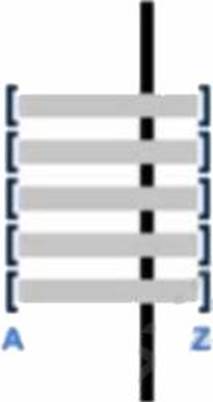
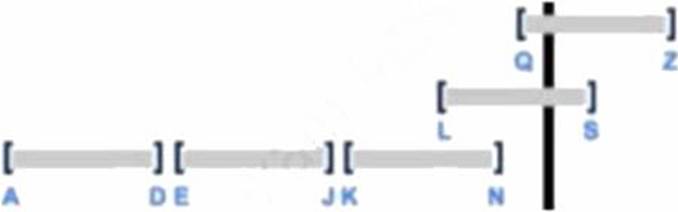
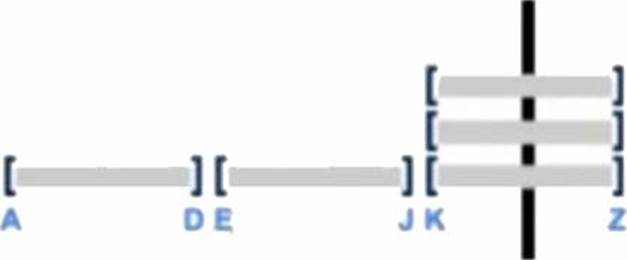
Assume there is a table consisting of five micro-partitions with values ranging from A to Z.
Which diagram indicates a well-clustered table?
A)

B)
C)
D)
- A . Option A
- B . Option B
- C . Option C
- D . Option D
C
Explanation:
A well-clustered table in Snowflake means that the data is organized in such a way that related data points are stored close to each other within the micro-partitions. This optimizes query performance by reducing the amount of scanned data. The diagram indicated by option C shows a well-clustered table, as it likely represents a more evenly distributed range of values across the micro-partitions1.
References = Snowflake Micro-partitions & Table Clustering
How can a data provider validate that a secure view is configured to display only the data the provider wishes to expose?
- A . Log in to the data consumer account and check if the secure view data is appearing as expected.
- B . Create a data share for a test data consumer account and check if the secure view data is appearing as expected.
- C . Query the secure view from a consumer account by setting the share_restrictions parameter.
- D . Simulate querying the secure view by setting the simulated_data_sharing_consumer session parameter.
B
Explanation:
The most effective way for a data provider to validate secure view configurations is to create a data share for a test data consumer account. This method allows the provider to review and confirm that only the intended data is accessible in the secure view. Secure views are designed to mask or restrict data visibility, so creating a test share replicates the consumer’s experience and ensures data security before sharing with actual consumers.
Which of the following is a data tokenization integration partner?
- A . Protegrity
- B . Tableau
- C . DBeaver
- D . SAP
A
Explanation:
Protegrity is listed as a data tokenization integration partner for Snowflake. This partnership allows Snowflake users to utilize Protegrity’s tokenization solutions within the Snowflake environment3.
References = [COF-C02] SnowPro Core Certification Exam Study Guide, Snowflake Documentation
Which type of loop requires a BREAK statement to stop executing?
- A . FOR
- B . LOOP
- C . REPEAT
- D . WHILE
B
Explanation:
The LOOP type of loop in Snowflake Scripting does not have a built-in termination condition and requires a BREAK statement to stop executing4.
Which type of loop requires a BREAK statement to stop executing?
- A . FOR
- B . LOOP
- C . REPEAT
- D . WHILE
B
Explanation:
The LOOP type of loop in Snowflake Scripting does not have a built-in termination condition and requires a BREAK statement to stop executing4.
A user created a new worksheet within the Snowsight Ul and wants to share this with teammates
How can this worksheet be shared?
- A . Create a zero-copy clone of the worksheet and grant permissions to teammates
- B . Create a private Data Exchange so that any teammate can use the worksheet
- C . Share the worksheet with teammates within Snowsight
- D . Create a database and grant all permissions to teammates
C
Explanation:
Worksheets in Snowsight can be shared directly with other Snowflake users within the same account. This feature allows for collaboration and sharing of SQL queries or Python code, as well as other data manipulation tasks1.
True or False: When you create a custom role, it is a best practice to immediately grant that role to ACCOUNTADMIN.
- A . True
- B . False
B
Explanation:
The ACCOUNTADMIN role is the most powerful role in Snowflake and should be limited to a select number of users within an organization. It is responsible for account-level configurations and should not be used for day-to-day object creation or management. Granting a custom role to ACCOUNTADMIN could inadvertently give broad access to users with this role, which is not a recommended security practice.
Reference: https://docs.snowflake.com/en/user-guide/security-access-control-considerations.html