
Salesforce marketing cloud intelligence Practice Exams
Last updated on Nov 16,2026- Exam Code: marketing cloud intelligence
- Exam Name: Marketing Cloud Intelligence Accredited Professional Exam
- Certification Provider: Salesforce
- Latest update: Nov 16,2026
Your client has provided sample files of their data from the following data sources:
Google Campaign Manager
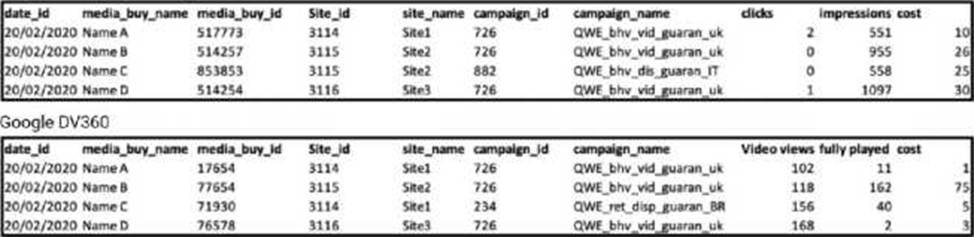
Below are the requirements from the client and additional information:
* The sources are linked to each other by shared Media Buy names.
* In addition to the mutual Media Buys, the sources contain campaign and site values. However, the client would like to see the campaign/site values coming from Google CM and not from Google DV360.
* The source of truth for cost is Google DV360
Which action(s) are needed to take place in order to meet the client’s requirement and set Google DV360 as the source of truth for Cost?
- A . Unmap ‘Cost’ in Google DV360
- B . Set ‘Inherit Attributes and Hierarchies’ as the Data updates Permissions for Google DV360
- C . Set Update Attributes and Hierarchies’ as the Data updates Permissions for Google DV360
- D . Unmap ‘Cost’ in Google Campaign Manager
A technical architect is provided with the logic and Opportunity file shown below:
The opportunity status logic is as follows:
For the opportunity stages “Interest”, “Confirmed Interest” and “Registered”, the status should be “Open”.
For the opportunity stage “Closed”, the opportunity status should be closed Otherwise, return null for the opportunity status
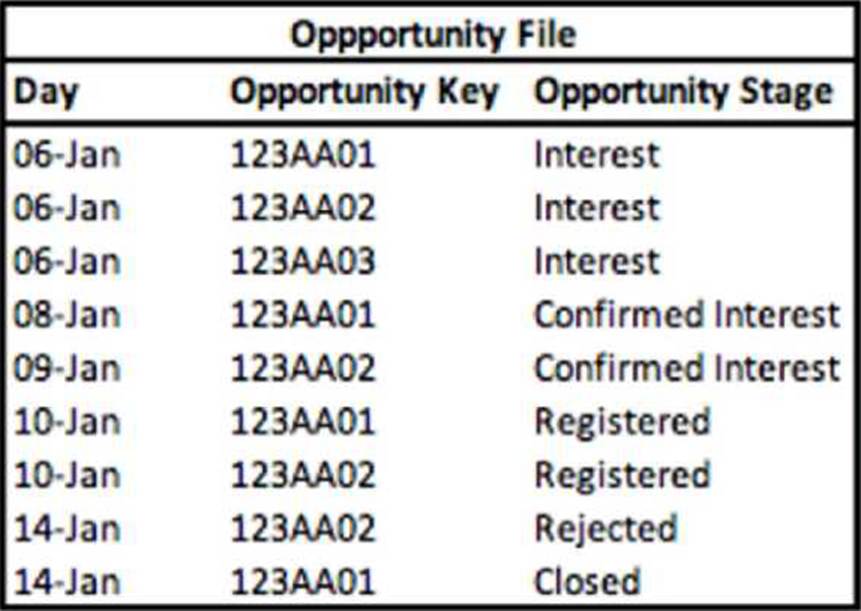
Given the above file and logic and assuming that the file is mapped in a GENERIC data stream type with the following mapping:
“Day” ― Standard “Day” field
“Opportunity Key” > Main Generic Entity Key
“Opportunity Stage” ― Generic Entity Key 2
“Opportunity Count” ― Generic Custom Metric
A pivot table was created to present the count of opportunities in each stage. The pivot table is filtered on January (entire month).
What is the number of opportunities in the Interest stage?
- A . 1
- B . 3
- C . 2
- D . 0
An implementation engineer is requested to create the harmonization field – Magician
This field should come from multiple Twitter Ads data streams, and should follow the below logic:
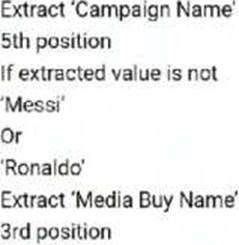
Using the Harmonization Center, the engineer created a single Pattern for Campaign Name.
What other action should the engineer take to meet the requirements?
- A . Create a second Pattern for Media Buy Name and apply two Classification Rules (one for ‘Messi’ and another for Ronaldo’) for the final Harmonized Dimension.
- B . Create a second Pattern for Media Buy Name
- C . Create a second Pattern for Media Buy Name and add a validation list (with the two values) for the final Harmonized Dimension.
- D . Create a second Pattern for Media Buy Name and apply a Classification Rule (with the two values) for the final Harmonized Dimension
A technical architect is provided with the logic and Opportunity file shown below:
The opportunity status logic is as follows:
For the opportunity stages “Interest”, “Confirmed Interest” and “Registered”, the status should be “Open”.
For the opportunity stage “Closed”, the opportunity status should be closed Otherwise, return null for the opportunity status.
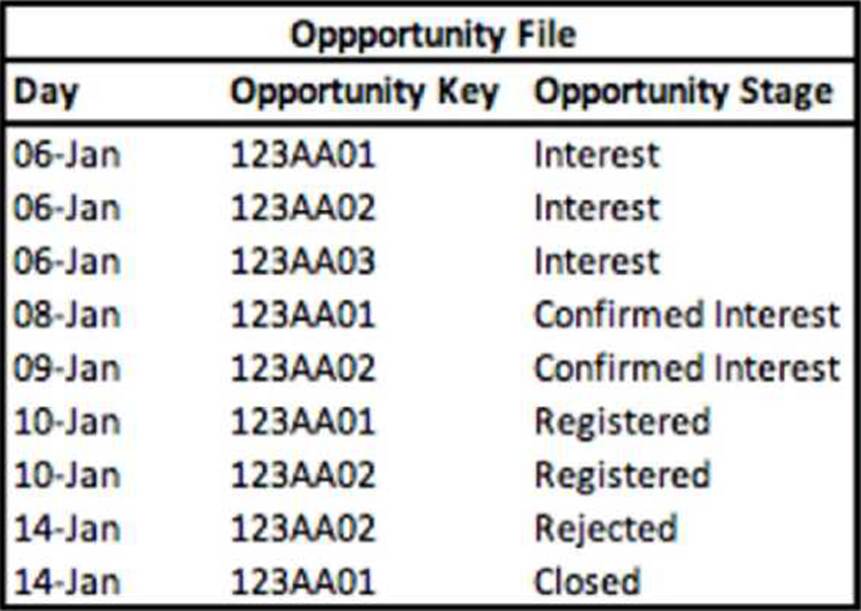
Given the above file and logic and assuming that the file is mapped in a generic data stream type with the following mapping
“Day” ― Standard “Day” field
“Opportunity Key” > Main Generic Entity Key
“Opportunity Stage” + Generic Entity Key 2
A pivot table was created to present the count of opportunities in each stage. The pivot table is filtered on Jan 7th – 11th.
Which option reflects the stage(s) the Opportunity key 123AA01 is associated with?
- A . Registered
- B . Interest & Registered
- C . Confirmed Interest & Registered
- D . Interest
- E . Confirmed Interest
An implementation engineer is requested to extract the first three-letter segment of the Campaign Name values.
For example:
Campaign Name: AFD@Mulop-1290
Desired outcome: AFD
Other examples:
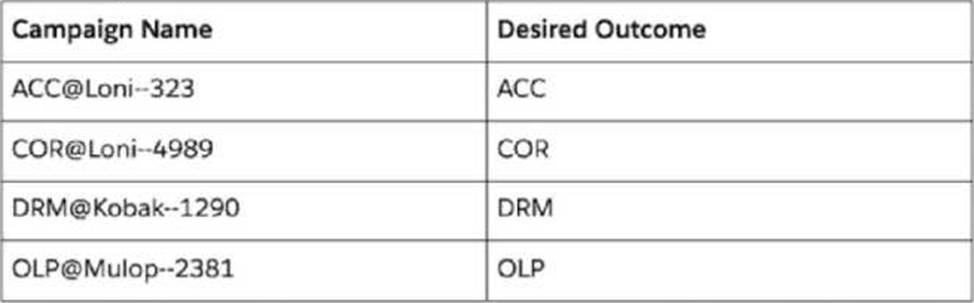
Which formula will return the desired values?
- A . LEFT(EXTRACT(csy[‘campaign_name]],~’,0),3)
- B . EXTRACT(csv[campaign_name!;@’,1)
- C . EXTRACT(csv[campaign_name’],―,0)
- D . EXTRACT(EXTRACT(csv[‘campaign_name]]/@’,1),-,0)
- E . LEFT(EXTRACT(csv[campaign_name’}/―’,1),3)
A technical architect is provided with the logic and Opportunity file shown below:
The opportunity status logic is as follows:
For the opportunity stages “Interest”, “Confirmed Interest” and “Registered”, the status should be “Open”.
For the opportunity stage “Closed”, the opportunity status should be closed.
Otherwise, return null for the opportunity status.
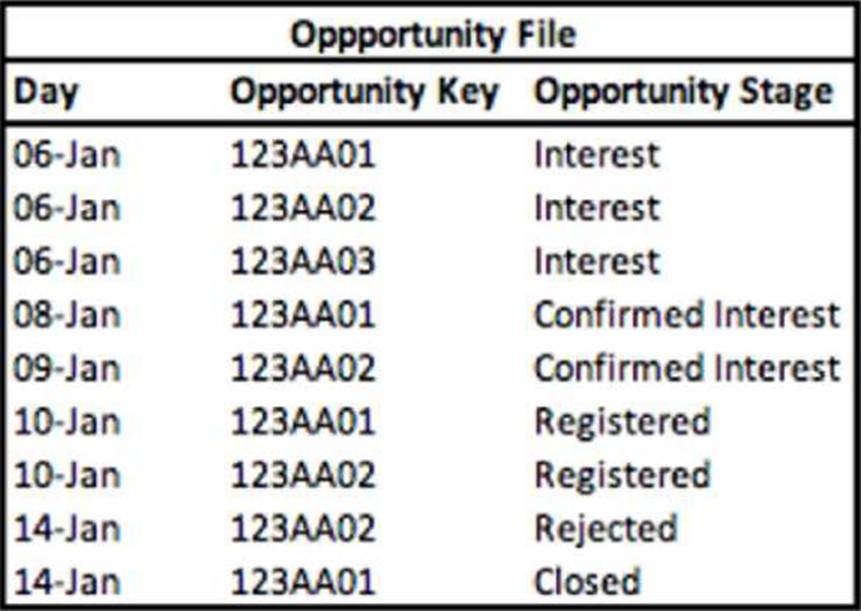
Given the above file and logic and assuming that the file is mapped in a GENERIC data stream type with the following mapping:
“Day” ― Standard “Day” field
“Opportunity Key” > Main Generic Entity Key
“Opportunity Stage” ― Generic Entity Key 2
“Opportunity Count” ― Generic Custom Metric
A pivot table was created to present the count of opportunities in each stage. The pivot table is filtered on Jan 7th – 10th.
How many different stages are presented in the table?
- A . 2
- B . 1
- C . 3
- D . 0
Placement Classification
4, Campaign Category Classification
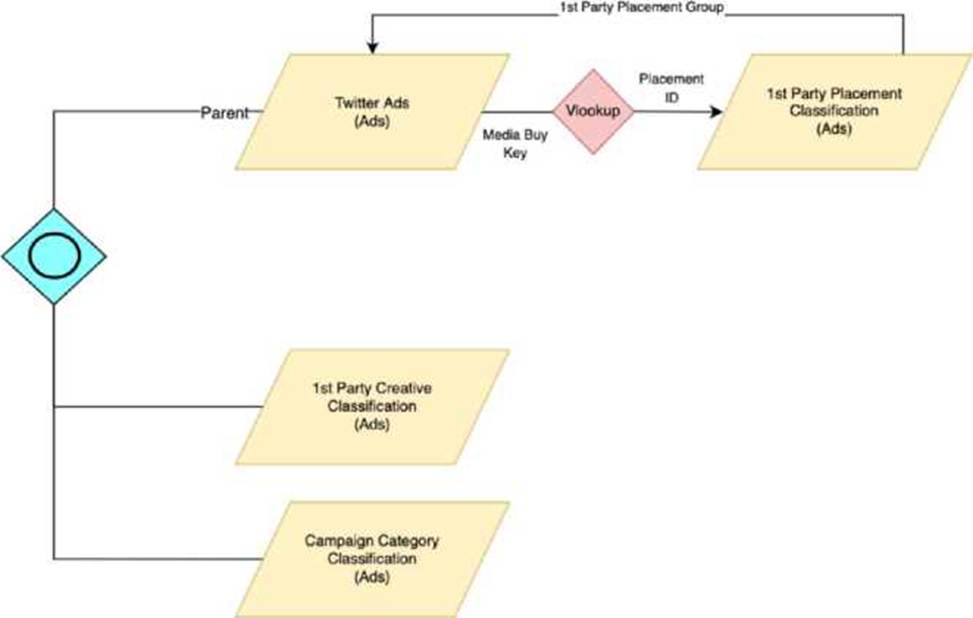
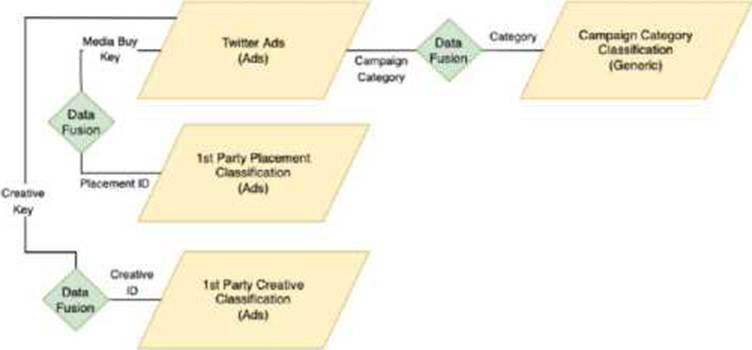
The main source is Twitter Ads (which includes various fields and KPIs), and the rest are classification files that connect to Twitter Ads and enrich different fields within it.
The connections between the files are described as follows:
1st Party Creative Classification
File structure/headers:

Creative ID ― links back to Creative Key (Twitter Ads)
1st Party Placement Classification &
File structure/headers:

Category ― links back to Campaign Category (Twitter Ads)
Which proposed solution meets the client’s requirements for the above use case?
A)
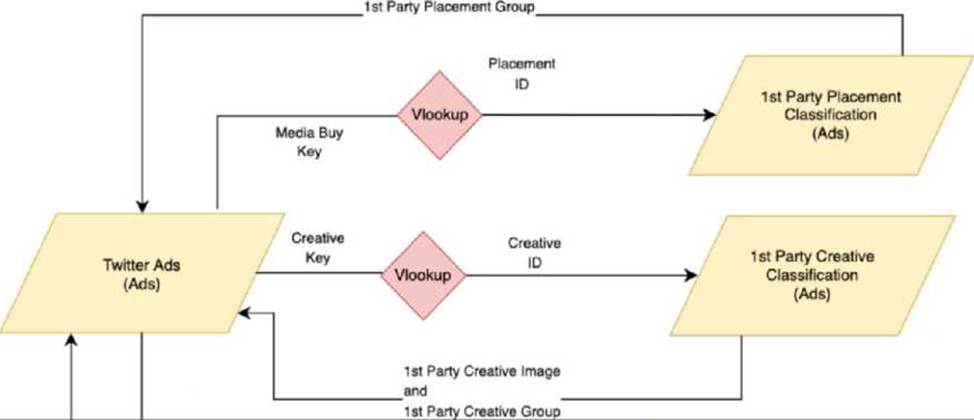
B)
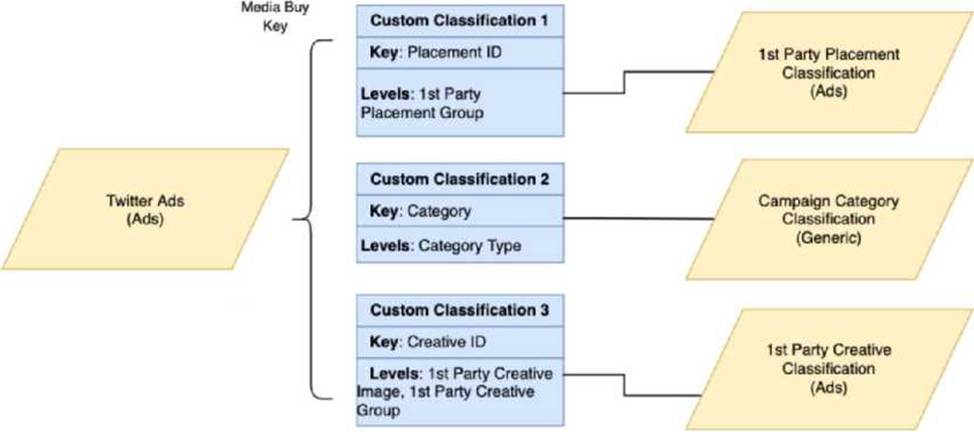
C)
D)
- A . Option A
- B . Option B
- C . Option C
- D . Option D
After uploading a standard file into Marketing Cloud intelligence via total Connect, you noticed that the number of rows uploaded (to the specific data stream) is NOT equal to the number of rows present in the source file.
What are two resource that may cause this gap?
- A . All mapped Measurements for a given row have values equal to zero
- B . Main entity is not mapped
- C . The source file does not contain the media Buy entity
- D . The file does not contain any measurements (dimension only)
A client wants to integrate their data within Marketing Cloud Intelligence to optimize their marketing insights and cross-channel marketing activity analysis.
Below are details regarding the different data sources and the number of data streams required for each source.
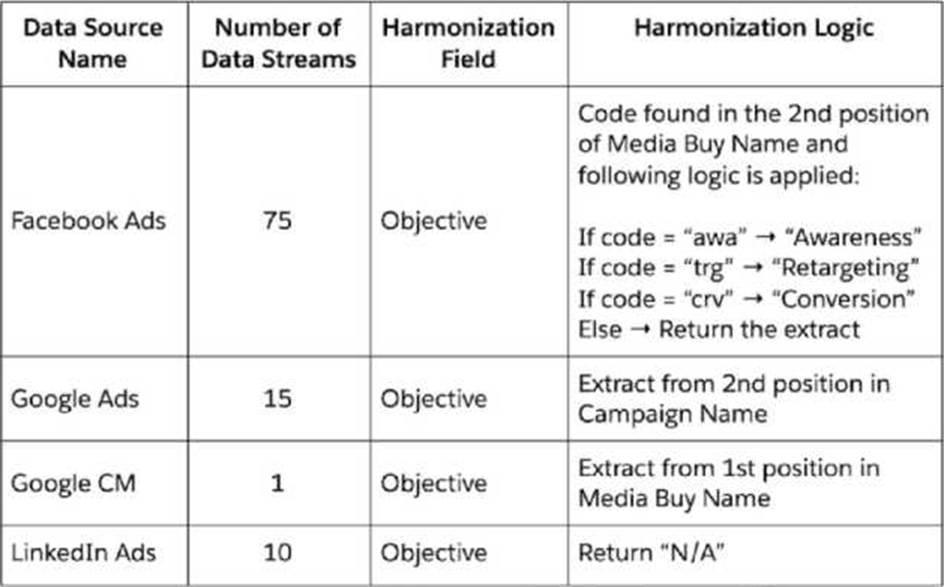
When harmonizing the Objective field from within the data stream mapping, which advantage is gained?
- A . Scalability
- B . Ease of Setup
- C . Performance (Performance when loading a dashboard page)
- D . Ease of Maintenance