
QlikView QSDA2024 Practice Exams
Last updated on Oct 21,2026- Exam Code: QSDA2024
- Exam Name: Qlik Sense Data Architect Certification Exam - 2024
- Certification Provider: QlikView
- Latest update: Oct 21,2026
Exhibit.
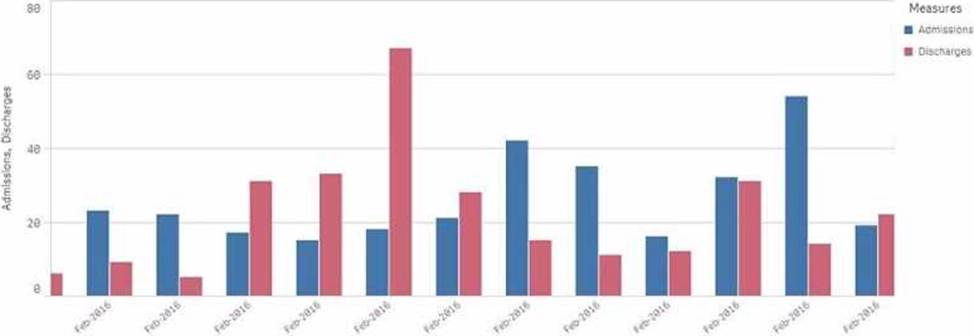
A chart for monthly hospital admissions and discharges incorrectly displays the month and year values on the x-axis.
The date format for the source data field "Common Date" is M/D/YYYY. This format was used in a calculated field named "Month-Year" in the data manager when the data model was first built.
Which expression should the data architect use to fix this issue?
- A . Date(MonthStart([Common Date]),’MMM-YYYY’)
- B . Date([Comraon Date],’MMM-YYYY’)
- C . Date(MonthsStart([Common Date]),’VMM-YYYY’)
- D . Date(InMontht[Common Date]),’MMM-YYYY’)
A data architect needs to write the expression for a measure on a KPI to show the sales person with the highest sales. The sort order of the values of the fields is unknown. When two or more sales people have sold the same amount, the expression should return all of those sales people.
Which expression should the data architect use?
A)

B)

C)

D)

- A . Option A
- B . Option B
- C . Option C
- D . Option D
Perform a Left Join Load on the Encounters table to the master calendar and alias the date fields appropriately for the Discharge Date
Perform a Left Join Load on the Encounters table to the master calendar and alias the date fields appropriately for the Discharge Date
Exhibit
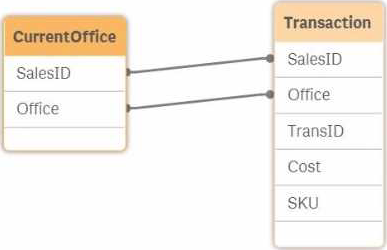
Refer to the exhibit.
The salesperson ID and the office to which the salesperson belongs is stored for each transaction. The data model also contains the current office for the salesperson. The current office of the salesperson and the office the salesperson was in when the transaction occurred must be visible. The current source table view of the model is shown. A data architect must resolve the synthetic key.
How should the data architect proceed?
- A . Comment out the Office in the Transaction table
- B . Inner Join the Transaction table to the CurrentOffice table
- C . Alias Office to CurrentOffice In the CurrentOffice table
- D . Force concatenation between the tables
Refer to the exhibit.
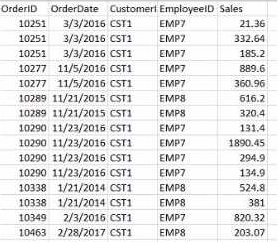
A data architect needs to build a dashboard that displays the aggregated sates for each sales representative. All aggregations on the data must be performed in the script.
Which script should the data architect use to meet these requirements?
A)
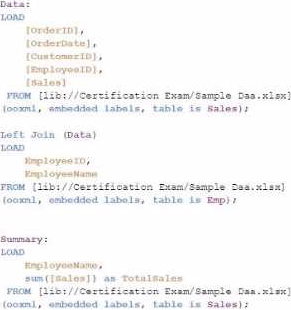
B)
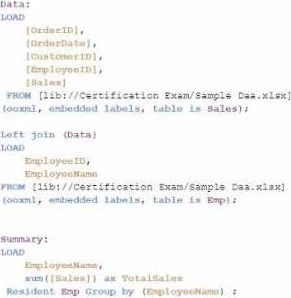
C)
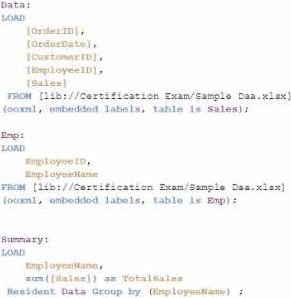
D)
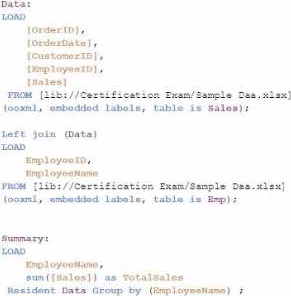
- A . Option A
- B . Option B
- C . Option C
- D . Option D
Exhibit.
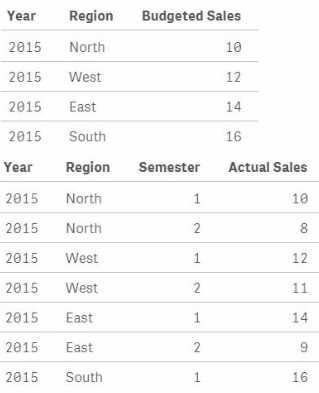
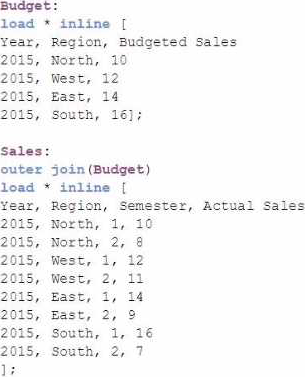
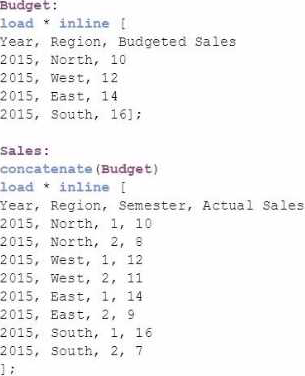
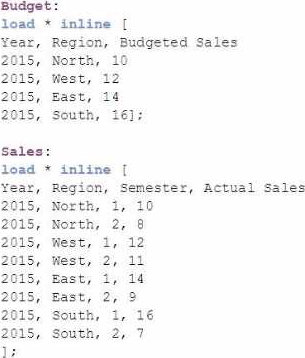
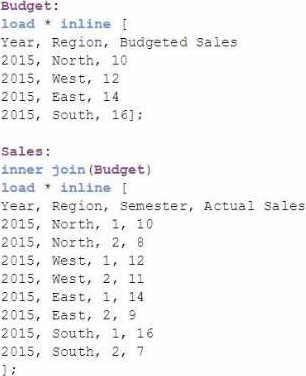
A data architect must load the two tables without creating a synthetic key. The data architect also must make sure expressions like Sum([Budgeted Sales]) are calculated correctly.
Which load script meets these requirements?
A)
B)
C)
D)
- A . Option A
- B . Option B
- C . Option C
- D . Option D
Exhibit.
A data architect must load the two tables without creating a synthetic key. The data architect also must make sure expressions like Sum([Budgeted Sales]) are calculated correctly.
Which load script meets these requirements?
A)
B)
C)
D)
- A . Option A
- B . Option B
- C . Option C
- D . Option D
The data architect has been tasked with building a sales reporting application.
• Part way through the year, the company realigned the sales territories
• Sales reps need to track both their overall performance, and their performance in their current territory
• Regional managers need to track performance for their region based on the date of the sale transaction
• There is a data table from HR that contains the Sales Rep ID, the manager, the region, and the start and end dates for that assignment
• Sales transactions have the salesperson in them, but not the manager or region.
What is the first step the data architect should take to build this data model to accurately reflect performance?
- A . Implement an "as of calendar against the sales table and use ApplyMap to fill in the needed management data
- B . Create a link table with a compound key of Sales Rep / Transaction Date to find the correct manager and region
- C . Use the IntervalMatch function with the transaction date and the HR table to generate point in time data
- D . Build a star schema around the sales table, and use the Hierarchy function to join the HR data to the model