
Microsoft DP-900 Practice Exams
Last updated on Oct 23,2026- Exam Code: DP-900
- Exam Name: Microsoft Azure Data Fundamentals
- Certification Provider: Microsoft
- Latest update: Oct 23,2026
HOTSPOT
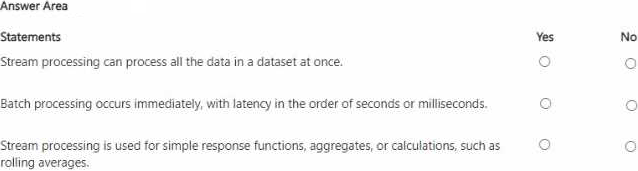
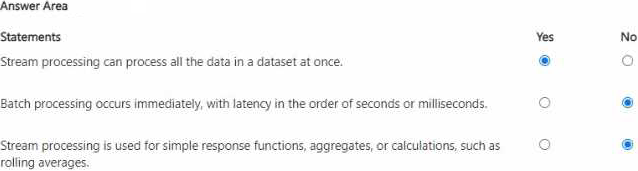
For each of the following statements, select Yes if the statement is true. Otherwise, select No. NOTE: Each correct selection is worth one point.




DRAG DROP
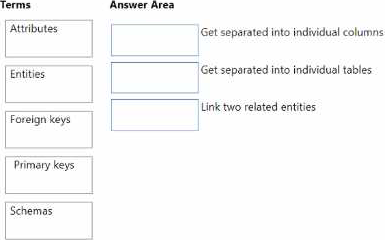
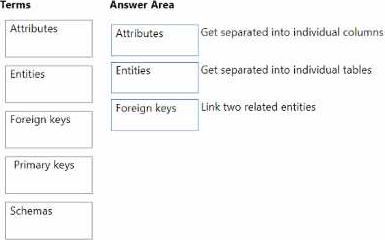
Match the database normalization terms to the appropriate descriptions.
To answer, drag the appropriate term from the column on the left to its description on the right. Each term may be used once, more than once, or not at all. NOTE: Each correct match is worth one point.
You have structured data in tabular format.
What represents an individual instance of a data entity?
- A . a column
- B . a cell
- C . a row
- D . a table
HOTSPOT
For each of the following statements, select Yes if the statement is true. Otherwise, select No. NOTE: Each correct selection is worth one point.
Which Azure Data Factory component provides the compute environment for activities?
- A . a linked service
- B . an integration runtime
- C . a control flow
- D . a pipeline
B
Explanation:
The Integration Runtime (IR) is the compute infrastructure used by Azure Data Factory to provide the following data integration capabilities across different network environments:
Data Flow
Data movement
Activity dispatch
SSIS package execution
Reference: https://docs.microsoft.com/en-us/azure/data-factory/concepts-integration-runtime
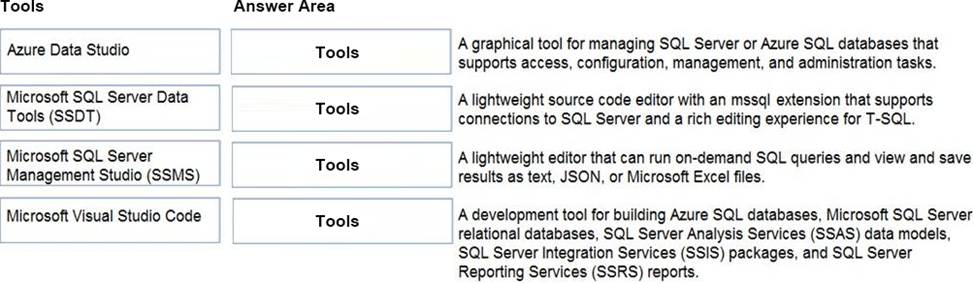
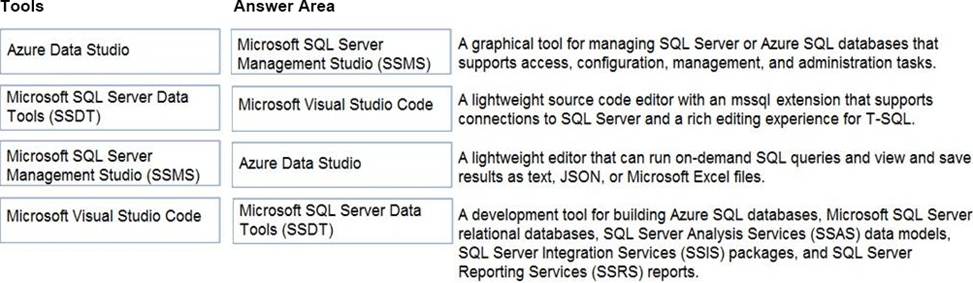
DRAG DROP
Match the tools to the appropriate descriptions.
To answer, drag the appropriate tool from the column on the left to its description on the right. Each tool may be used once, more than once, or not at all. NOTE: Each correct match is worth one point.
HOTSPOT
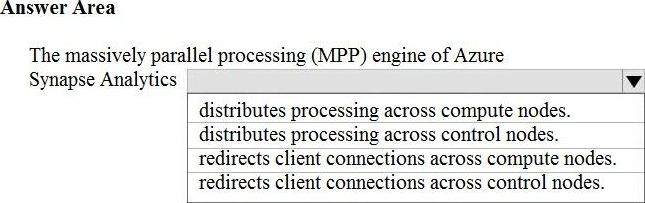
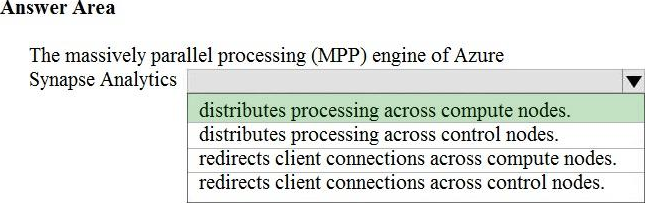
To complete the sentence, select the appropriate option in the answer area.
Explanation:
Reference: https://docs.microsoft.com/en-us/azure/synapse-analytics/sql-data-warehouse/massively-parallel-processing-mpp-architecture
You have data saved in the following format.
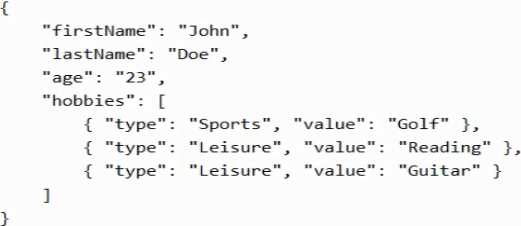
Which format was used?
- A . XML
- B . yaml
- C . JSON
- D . HTML

