Microsoft DP-900 Practice Exams
Last updated on Oct 23,2026- Exam Code: DP-900
- Exam Name: Microsoft Azure Data Fundamentals
- Certification Provider: Microsoft
- Latest update: Oct 23,2026
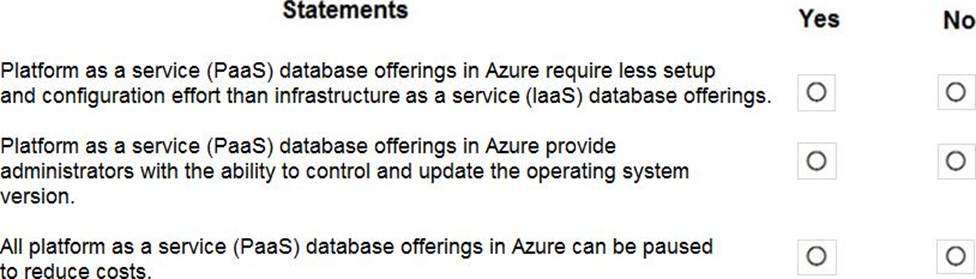
HOTSPOT
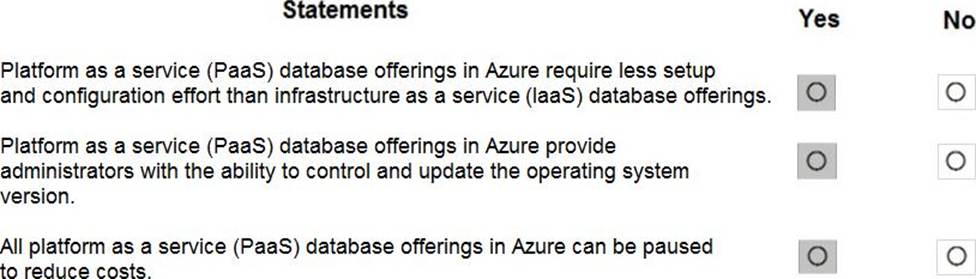
For each of the following statements, select Yes if the statement is true. Otherwise, select No. NOTE: Each correct selection is worth one point.
Explanation:
Box 1: Yes
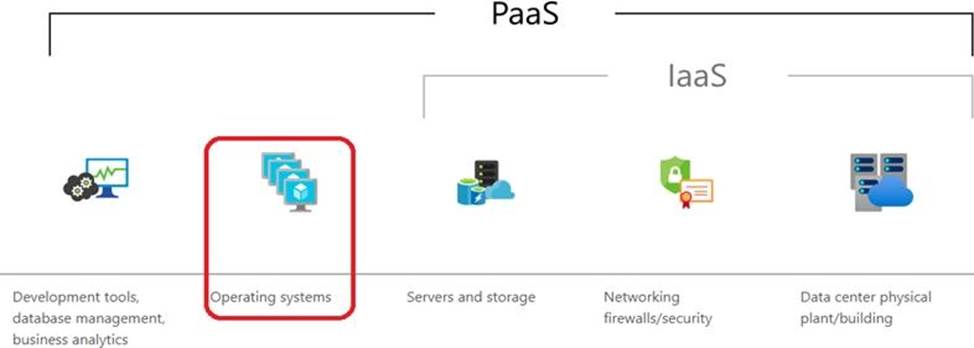
Like IaaS, PaaS includes infrastructure C servers, storage, and networking C but also middleware, development tools, business intelligence (BI) services, database management systems, and more. PaaS is designed to support the complete web application lifecycle: building, testing, deploying, managing, and updating.
PaaS allows you to avoid the expense and complexity of buying and managing software licenses, the underlying application infrastructure and middleware, container orchestrators such as Kubernetes, or
the development tools and other resources
Box 2: Yes
You manage the applications and services you develop, and the cloud service provider typically manages everything else.
Box 3: No
There really is no way to pause / stop billing for your Azure SQL Database.
Microsoft’s official answer "Yes, you can export your database. Delete the Azure SQL database and that will pause billing. Then when you need it you can create a new database and import your previously exported DB."
Reference:
https://azure.microsoft.com/en-us/overview/what-is-paas
https://feedback.azure.com/forums/217321-sql-database/suggestions/6931152-please-add-ability-to-temporarily-turn-off-on-sql
Which three services support Apache Spark? Each correct answer presents a complete solution NOTE: Each correct selection is worth one point.
- A . Azure Data Explorer
- B . Azure Synapse Analytics
- C . Azure Databricks
- D . Azure Stream Analytics
- E . Azure HDInsight


HOTSPOT
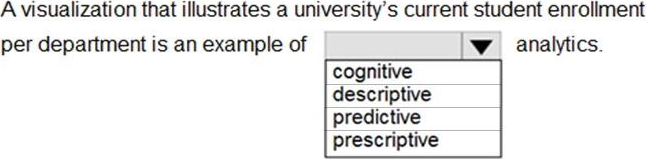
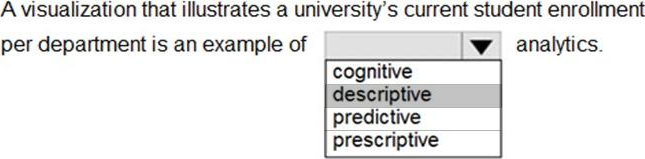
To complete the sentence, select the appropriate option in the answer area.
Explanation:
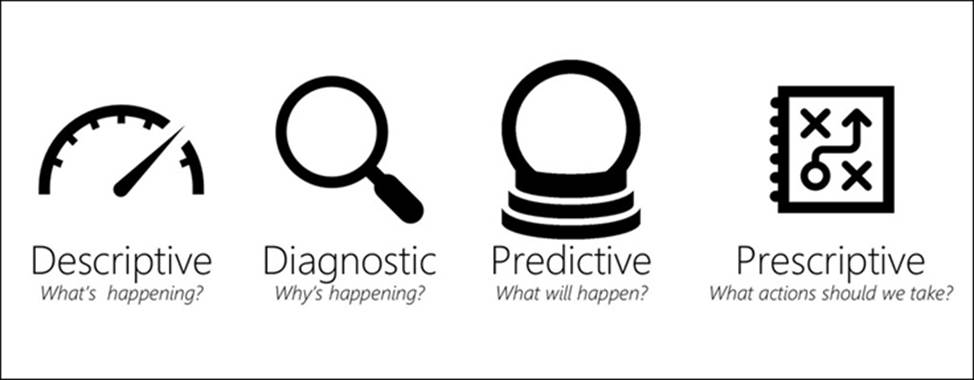
Generally speaking, data analytics comes in four types:
✑ Descriptive, to answer the question: What’s happening?
✑ Diagnostic, to answer the question: Why’s happening?
✑ Predictive, to answer the question: What will happen?
✑ Prescriptive, to answer the question: What actions should we take?
Reference: https://azure.microsoft.com/en-us/blog/answering-whats-happening-whys-happening-and-what-will-happen-with-iot-analytics/
What can you use to create data ingestion pipelines?
- A . Azure HDInsight
- B . Azure SQL Database
- C . Azure Data Factory
- D . Azure Cosmos DB
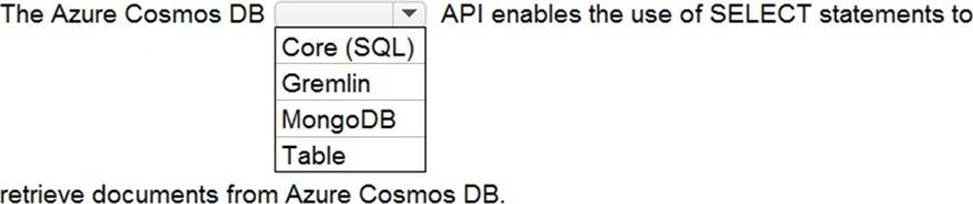
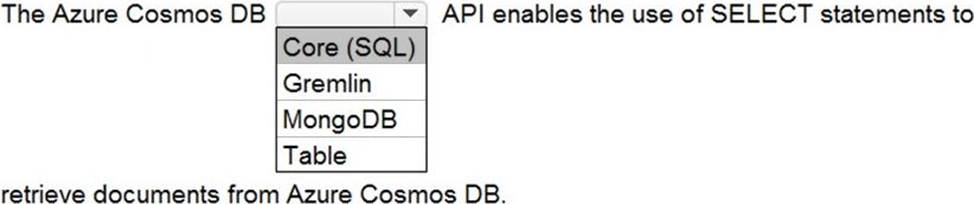
HOTSPOT
To complete the sentence, select the appropriate option in the answer area.
Explanation:
Azure Cosmos DB SQL API accounts provide support for querying items using the Structured Query Language (SQL) syntax.
Reference: https://docs.microsoft.com/en-us/azure/cosmos-db/choose-api
HOTSPOT
To complete the sentence, select the appropriate option in the answer area.


Explanation:
Disadvantages of non-relational databases include: Data Consistency ― non-relational databases do not perform ACID transactions.
Note: Relational databases are optimized for writes. They are optimized for consistency and availability. Advantages of relational databases include simplicity, ease of data retrieval, data integrity, and flexibility.
Incorrect Answers:
Use a relational database when data that you work with is structured, and the structure is not subject to frequent changes.
Use Cloud storage (no relational database) for geographically distributed writes.
Reference: https://towardsdatascience.com/choosing-the-right-database-c45cd3a28f77
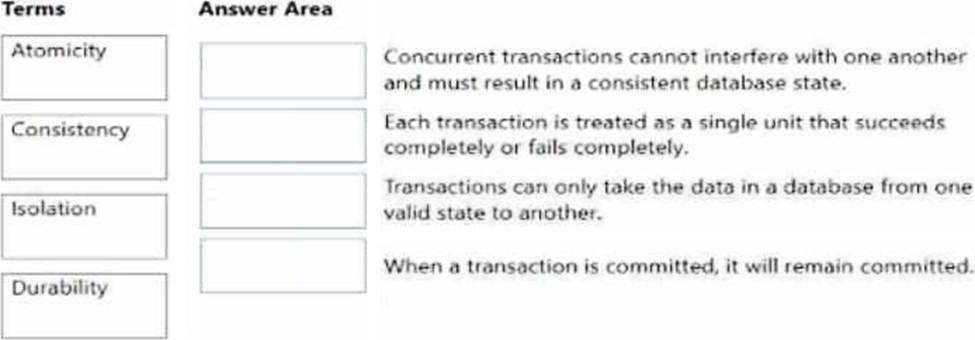
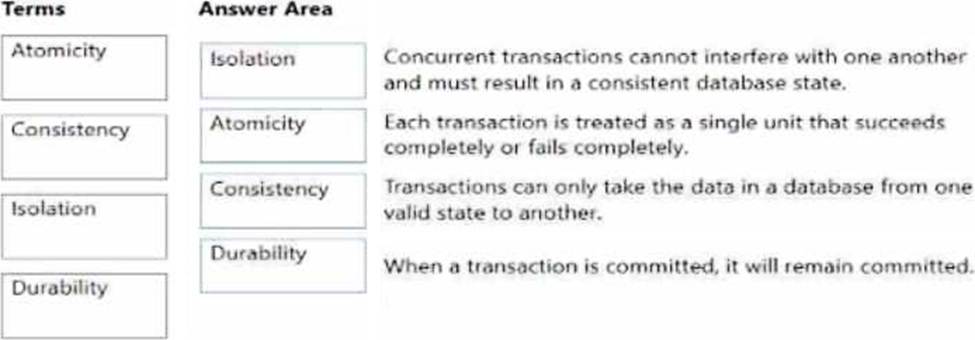
DRAG DROP
Match the ACID terms to the Appropriate descriptions.
To answer, drag the appropriate term from the column on the left to its description on the right Each term may be used once, more than once, or not at aft. NOTE: Each correct match is worth one point.
You have a SQL query that combines customer data and order data. The query includes calculated columns.
You need to create a database object that would allow other users to rerun the same SQL query.
What should you create?
- A . a scalar function
- B . a table
- C . an index
- D . a view
DRAG DROP
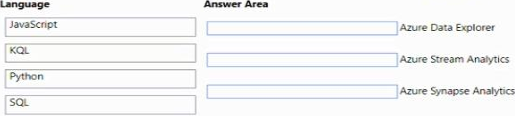
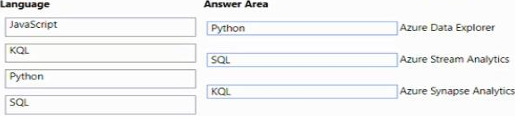
Match the data processing languages to the appropriate real-time analytics services.
To answer, drag the appropriate language from the column on the left to its service on the right. Each language may be used once, more than once, or not at all. NOTE: Each correct match is worth one point.