
Microsoft DP-300 Practice Exams
Last updated on Nov 16,2026- Exam Code: DP-300
- Exam Name: Administering Microsoft Azure SQL Solutions
- Certification Provider: Microsoft
- Latest update: Nov 16,2026
HOTSPOT
You have an Azure SQL database named DB1 that contains a table named Table 1.
You run a query to load data into Table1.
The performance metrics of Table1 during the load operation are shown in the following exhibit.
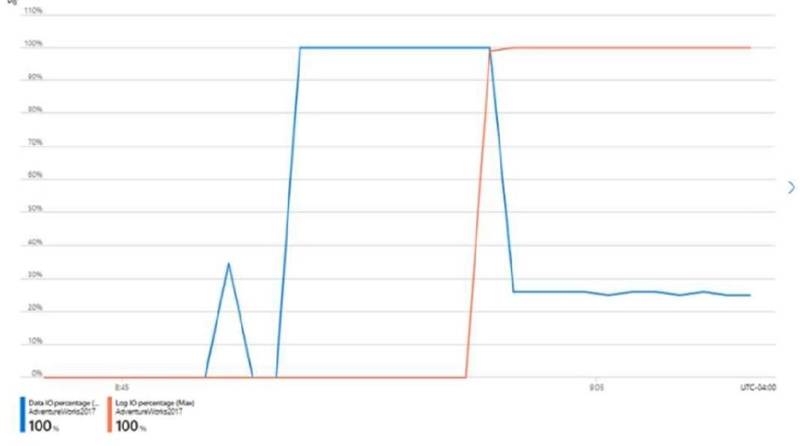
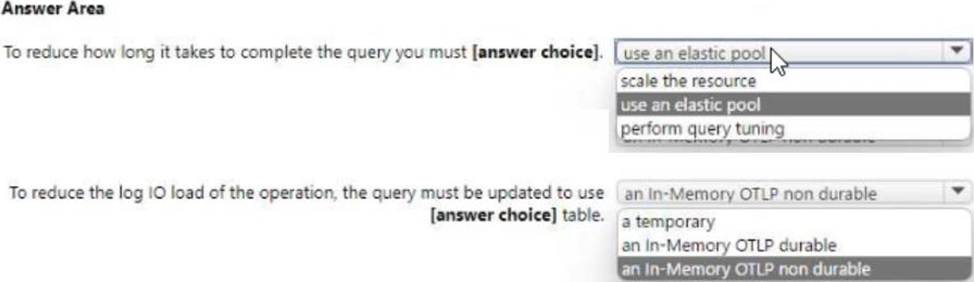
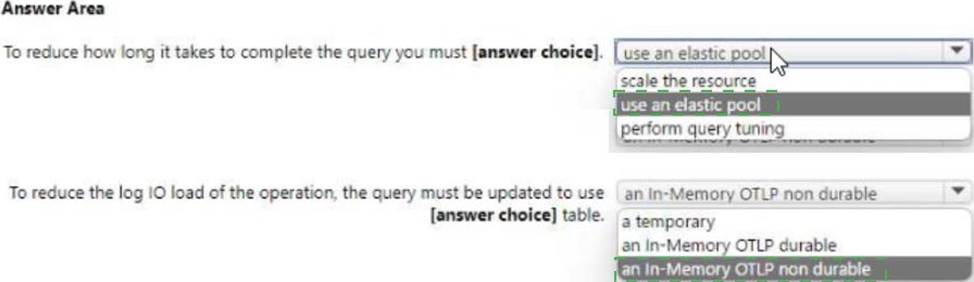
Use the drop-down menus to select the answer choice that completes each statement based on the information presented in the graphic. NOTE: Each correct selection is worth one point.
HOTSPOT
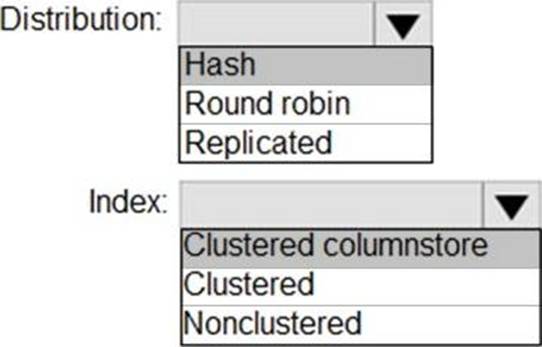
You are designing an enterprise data warehouse in Azure Synapse Analytics that will store website traffic analytics in a star schema.
You plan to have a fact table for website visits. The table will be approximately 5 GB.
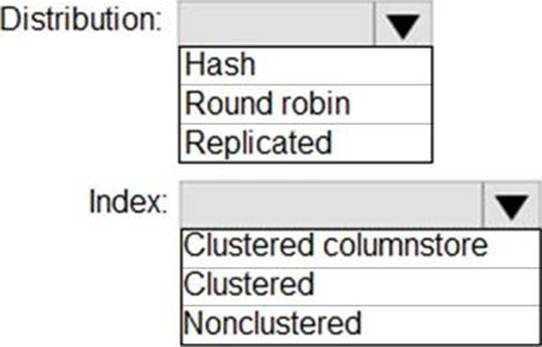
You need to recommend which distribution type and index type to use for the table. The solution must provide the fastest query performance.
What should you recommend? To answer, select the appropriate options in the answer area. NOTE: Each correct selection is worth one point.
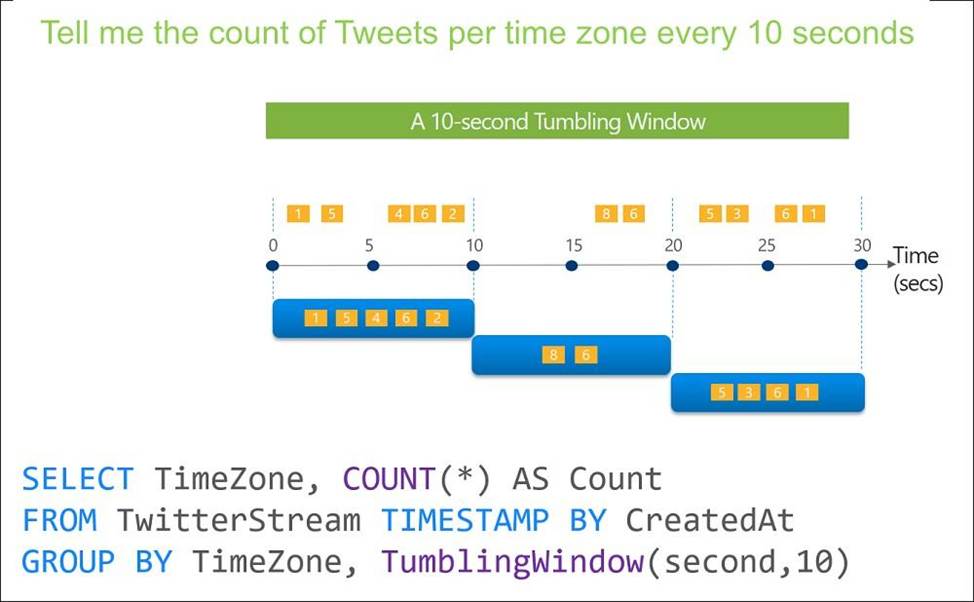
Which windowing function should you use to perform the streaming aggregation of the sales data?
- A . Sliding
- B . Hopping
- C . Session
- D . Tumbling
Note: This question is part of a series of questions that present the same scenario. Each question in the series contains a unique solution that might meet the stated goals. Some question sets might have more than one correct solution, while others might not have a correct solution.
After you answer a question in this section, you will NOT be able to return to it. As a result, these questions will not appear in the review screen.
You have an Azure SQL database named Sales.
You need to implement disaster recovery for Sales to meet the following requirements:
✑ During normal operations, provide at least two readable copies of Sales.
✑ Ensure that Sales remains available if a datacenter fails.
Solution: You deploy an Azure SQL database that uses the Business Critical service tier and Availability Zones.
Does this meet the goal?
- A . Yes
- B . No
HOTSPOT
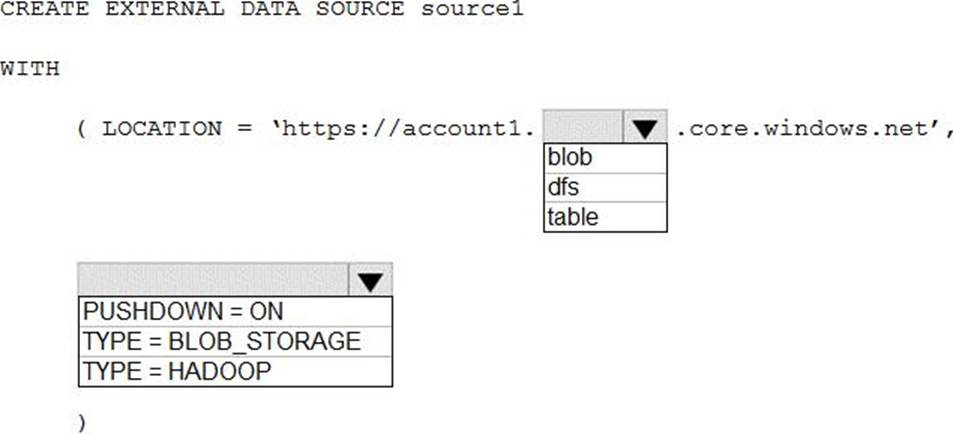
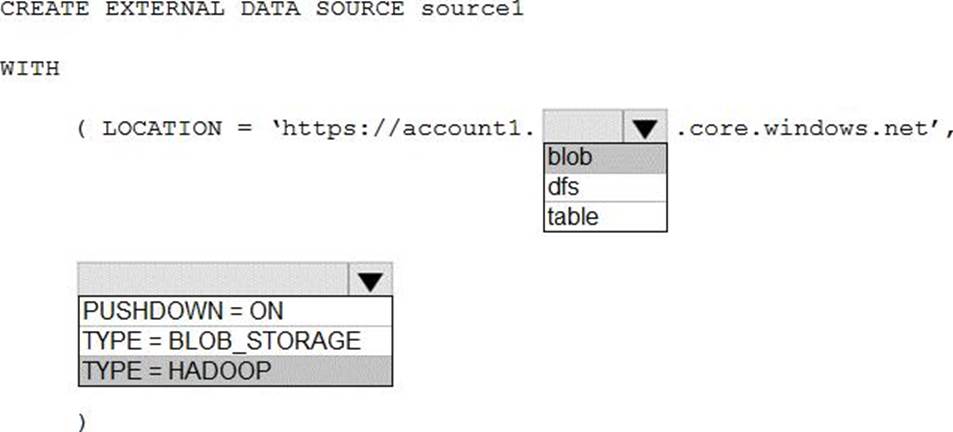
You have an Azure Synapse Analytics dedicated SQL pool named Pool1 and an Azure Data Lake Storage Gen2 account named Account1.
You plan to access the files in Account1 by using an external table.
You need to create a data source in Pool1 that you can reference when you create the external table.
How should you complete the Transact-SQL statement? To answer, select the appropriate options in the answer area. NOTE: Each correct selection is worth one point.
DRAG DROP
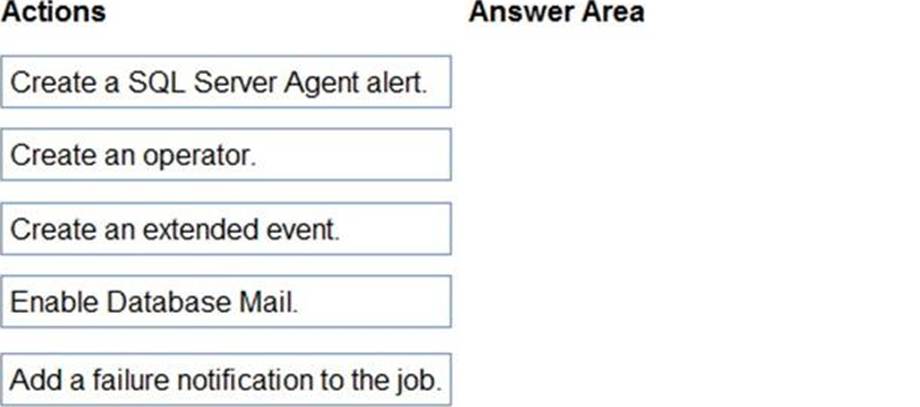
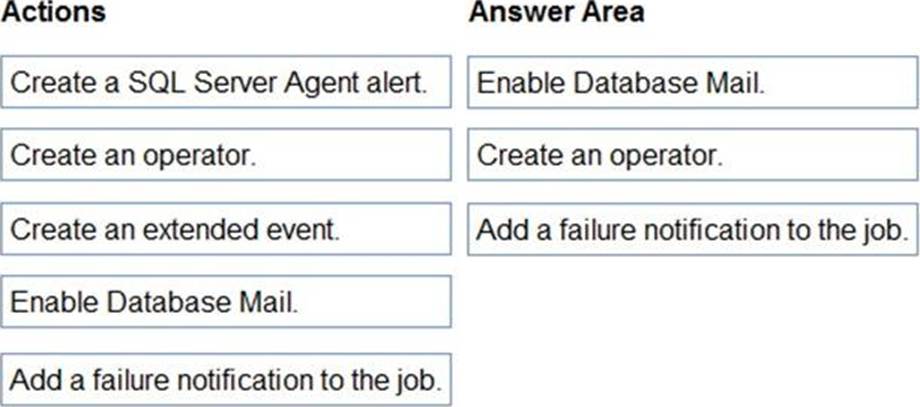
You have an Azure subscription that contains an Azure SQL managed instance named SQLMi1 and a SQL Agent job named Backupdb. Backupdb performs a daily backup of the databases hosted on SQLMi1.
You need to be notified by email if the job fails.
Which three actions should you perform in sequence? To answer, move the appropriate actions from the list of actions to the answer area and arrange them in the correct order. NOTE: More than one order of answer choices is correct. You will receive credit for any of the correct orders you select.
You need to identify the event_file target for monitonng DB3 after the migration to Azure SQL Database. The solution must meet the management requirements.
What should you use as the event_file target?
- A . an Azure SQL database
- B . an Azure Blob Storage container
- C . a SQL Server filegroup
- D . an Azure Files share
You have an instance of SQL Server on Azure Virtual Machines named VM1.
You need to implement a disaster recovery solution that meets the following requirements:
• Returns the solution to an operational state within 15 minutes of a failure
• Can perform disaster recovery testing in an isolated environment
• Minimizes administrative effort
What should you include in the solution?
- A . Azure Site Recovery
- B . a failover cluster instance (FCI)
- C . auto-failover groups
- D . active geo-replication
You have an Azure virtual machine based on a custom image named VM1.
VM1 hosts an instance of Microsoft SQL Server 2019 Standard.
You need to automate the maintenance of VM1 to meet the following requirements:
Automate the patching of SQL Server and Windows Server.
Automate full database backups and transaction log backups of the databases on VM1.
Minimize administrative effort.
What should you do first?
- A . Enable a system-assigned managed identity for VM1
- B . Register VM1 to the Microsoft.Sql resource provider
- C . Install an Azure virtual machine Desired State Configuration (DSC) extension on VM1
- D . Register VM1 to the Microsoft.SqlVirtualMachine resource provider