Microsoft AZ-801 Practice Exams
Last updated on Nov 16,2026- Exam Code: AZ-801
- Exam Name: Configuring Windows Server Hybrid Advanced Services
- Certification Provider: Microsoft
- Latest update: Nov 16,2026
HOTSPOT
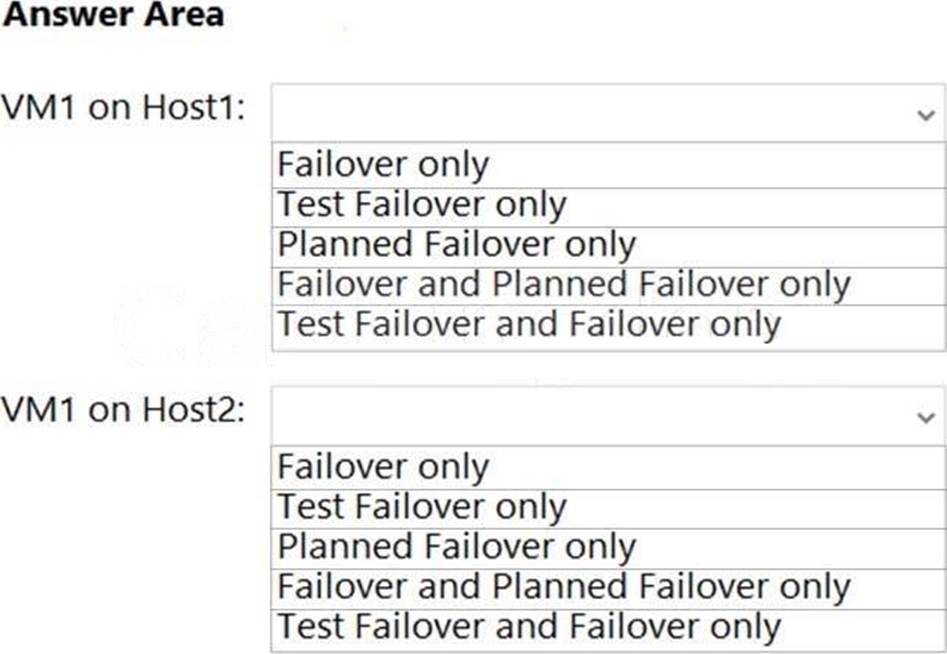
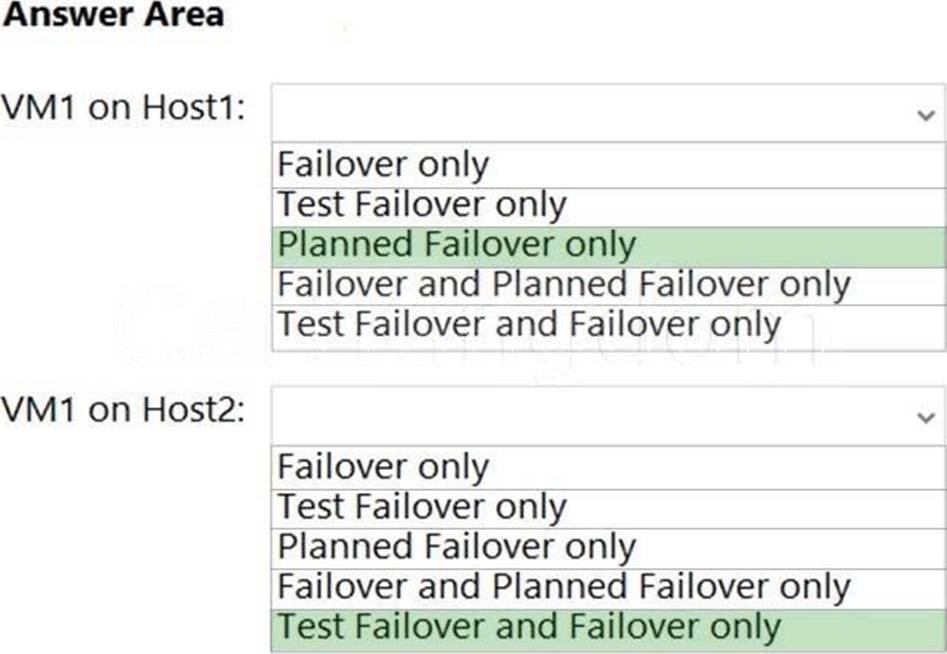
You have three servers named Host1, Host2, and VM1 that run Windows Server. Host1 and Host2 have the Hyper-V server role installed. VM1 is a virtual machine hosted on Host1.
You configure VM1 to replicate to Host2 by using Hyper-V Replica.
Which types of failovers can you perform on VM1 on each host? To answer, select the appropriate options in the answer area. NOTE: Each correct selection is worth one point.
HOTSPOT
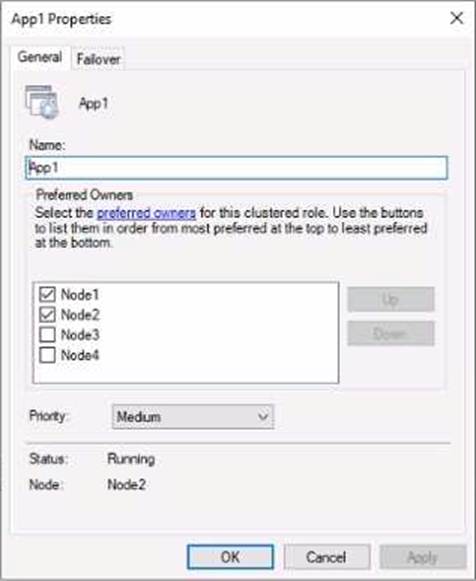
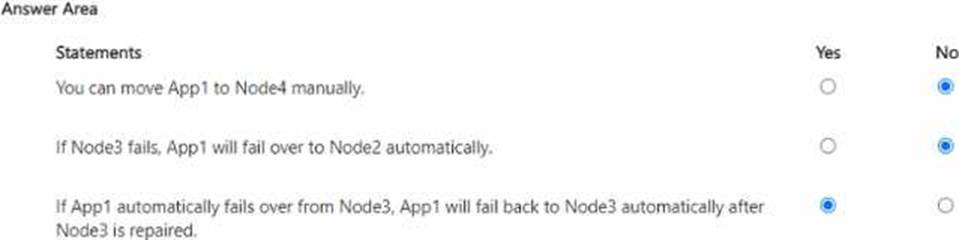
You have a Windows Server Failover Cluster (WSFQ that has the following configurations:
• Name: App1
• Owner node: Node3
• Type: Generic Application
The General settings for App1 are shown in the General exhibit. (Click the General tab.)
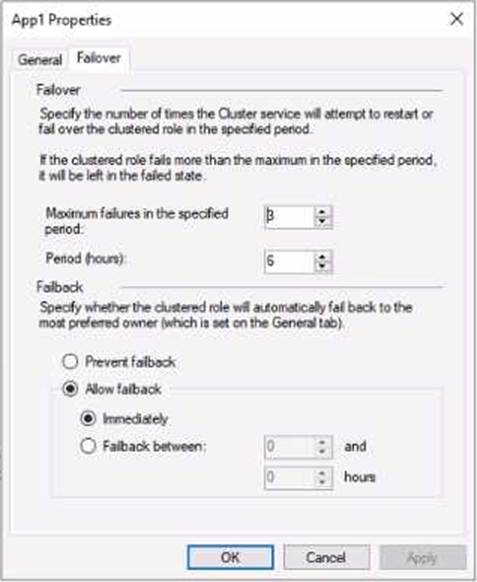
The Failover settings for App1 are shown in the Failover exhibit. (Click the Failover tab.)
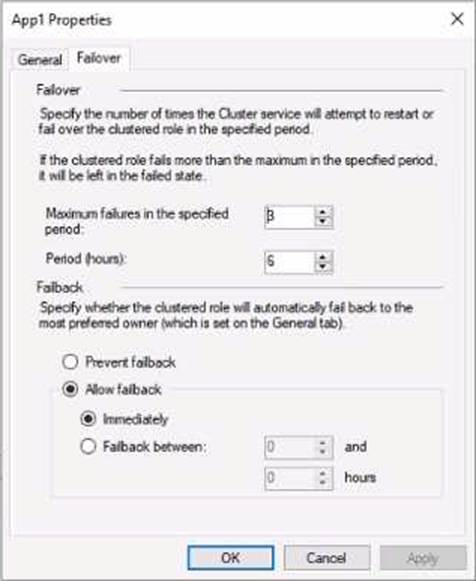
The Advanced Policies settings for App1 are shown in the Advanced Policies exhibit. (Click the Advanced Policies tab.)
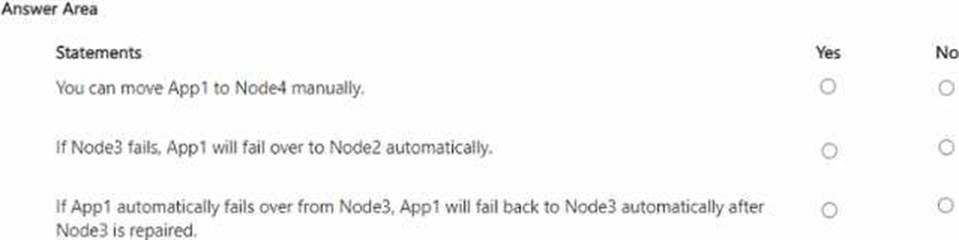
For each of the following statements, select Yes if the statement is true Otherwise, select No. NOTE: Each correct selection is worth one point.
Your company uses Storage Spaces Direct.
You need to view the available storage in a Storage Space Direct storage pool.
What should you use?
- A . File Server Resource Manager (FSRM)
- B . the Get-StorageSubsystem cmdlet
- C . Disk Management
- D . Windows Admin Center
Note: This question is part of a series of questions that present the same scenario. Each question in the series contains a unique solution that might meet the stated goals. Some question sets might have more than one correct solution, while others might not have a correct solution.
After you answer a question in this section, you will NOT be able to return to it as a result, these questions will not appear in the review screen.
You have an on-premises server named Server1 that runs Windows Server.
You have a Microsoft Sentinel instance.
You add the Windows Firewall data connector in Microsoft Sentine1.
You need to ensure that Microsoft Sentinel can collect Windows Firewall logs from Server1.
Solution: You install the Azure Connected Machine agent on Server1.
Does this meet the goal?
- A . Yes
- B . No
You deploy Azure Migrate to an on-premises network.
You have an on-premises physical server named Server! that runs Windows Server and has the following configurations:
• Operating system disk; 600 GB
• Data disk: 3 TB
• NIC Teaming: Enabled
• Mobility service: Installed
• Windows Defender Firewall: Enabled
• Microsoft Defender Antivirus: Enabled
You need to ensure that you can use Azure Migrate to migrate Server1.
Solution: You disable Windows Defender Firewall on Server 1.
Does this meet the goal?
- A . Yes
- B . No
HOTSPOT
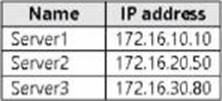
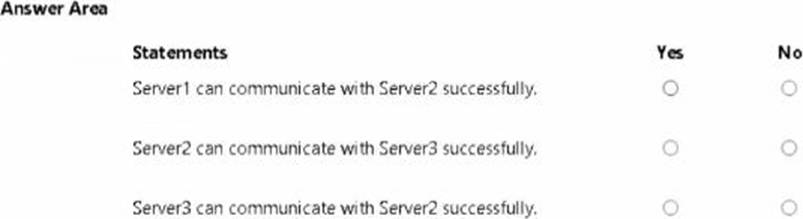
Your network contains an Active Directory Domain Services (AD DS) domain.
The domain contains servers that run Windows Server as shown in the following table.
Server1 has the connection security rules shown in the following table.
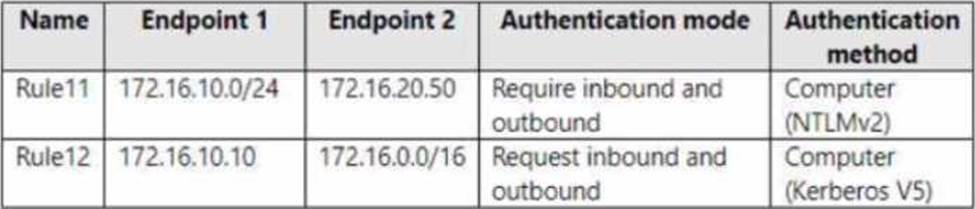
Server1 has the connection security rules shown in the following table.
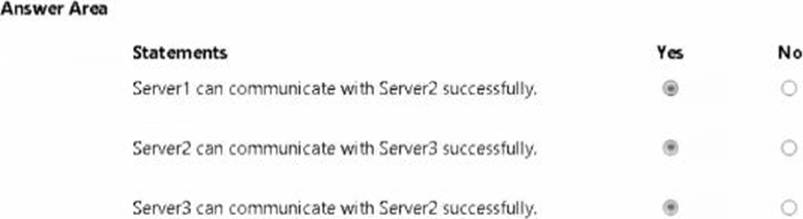
HOTSPOT
Your network contains an Active Directory Domain Services (AD DS) domain. The domain contains a server named Server1 that runs Windows Server.
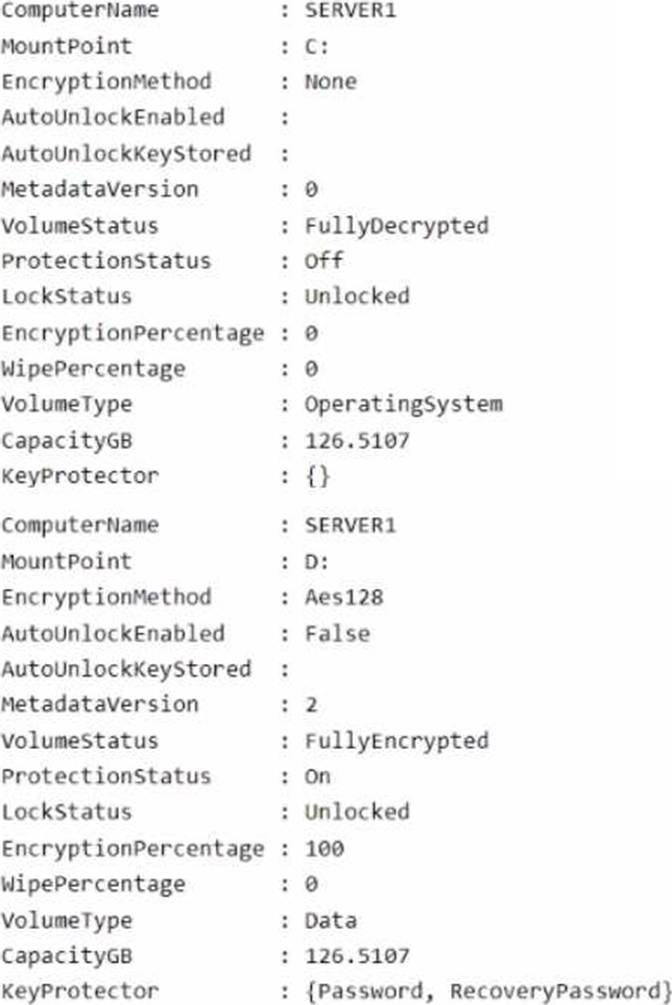


You are planning the data share migration to support the on-premises migration plan.
What should you use to perform the migration?
- A . Storage Migration Service
- B . Microsoft File Server Migration Toolkit
- C . File Server Resource Manager (FSRM)
- D . Windows Server Migration Tools
A
Explanation:
Reference: https://docs.microsoft.com/en-us/windows-server/storage/storage-migration-service/migrate-data
DRAG DROP
You have an Azure subscription that contains an Azure Recovery Services vault.
You have an on-premises physical server that runs Windows Server.
You need to back up the server daily to Azure.
Which three actions should you perform in sequence? To answer, move the appropriate actions from the list of actions to the answer area and arrange them in the correct order.
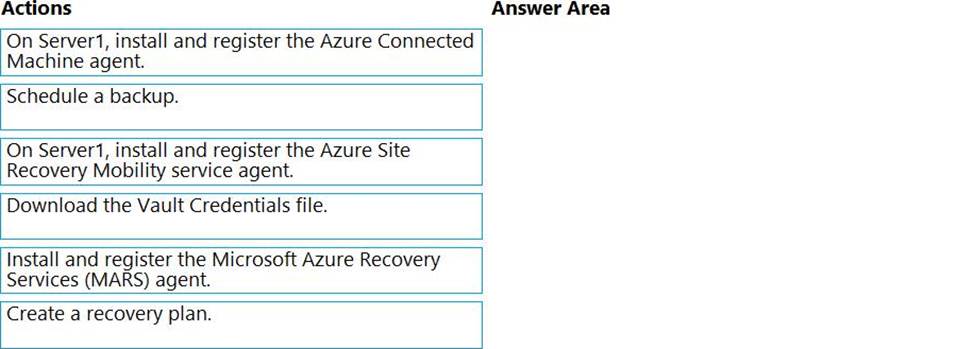
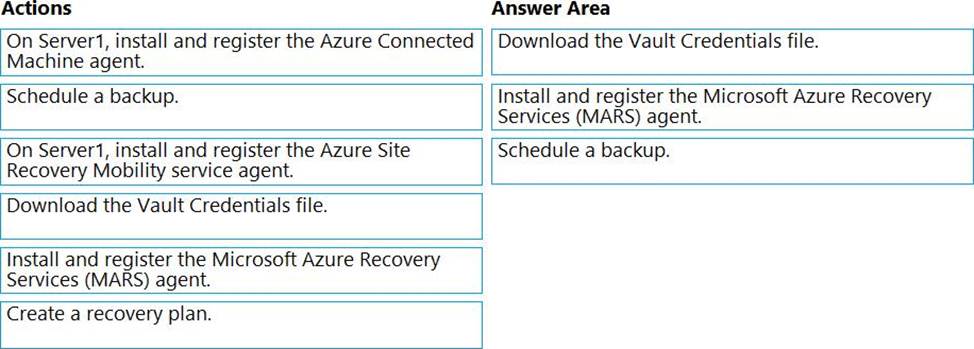
Explanation:
Reference: https://docs.microsoft.com/en-us/azure/backup/tutorial-backup-windows-server-to-azure
DRAG DROP
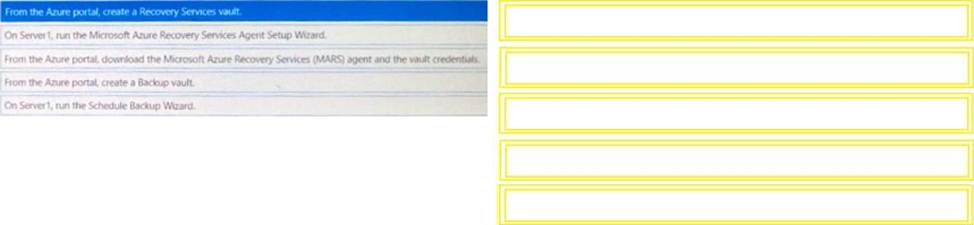
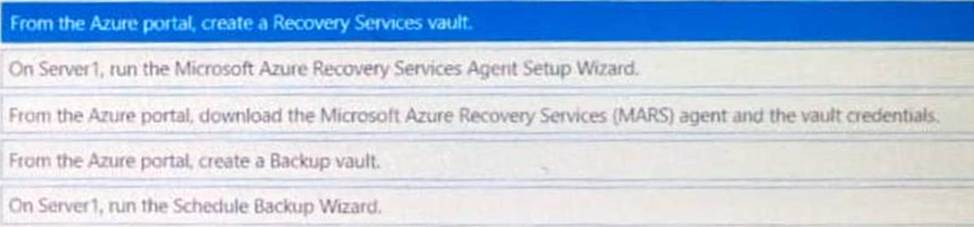
You have an on-premises server named Server1 that runs Windows Server. You need to perform an on-demand backup of the files on Server 1 by using Azure Backup.
Which five actions should you perform in sequence? To answer, move the appropriate actions actions from the list of actions to the answer are and arrange them in the correct order.