
IBM C1000-162 Practice Exams
Last updated on Oct 21,2026- Exam Code: C1000-162
- Exam Name: IBM Security QRadar SIEM V7.5 Analysis
- Certification Provider: IBM
- Latest update: Oct 21,2026
How can adding indexed properties to QRadar improve the efficiency of searches?
- A . By reducing the size of the data set required to find non-indexed search values
- B . By increasing the size of the data set required to find non-indexed search values
- C . By slowing down the search process
- D . By reducing the number of indexed search values
A
Explanation:
Adding indexed properties to QRadar can significantly improve the efficiency of searches by reducing the size of the data set required to locate matches for non-indexed search values. Indexing creates references to unique terms in the data and their locations, which means that the search engine can filter the data set by indexed properties first, eliminating irrelevant portions of the data set and thereby reducing the overall volume of data that needs to be searched.
HOTSPOT
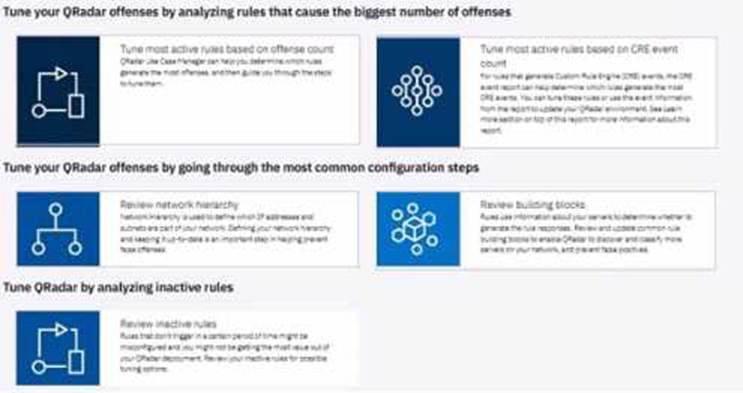
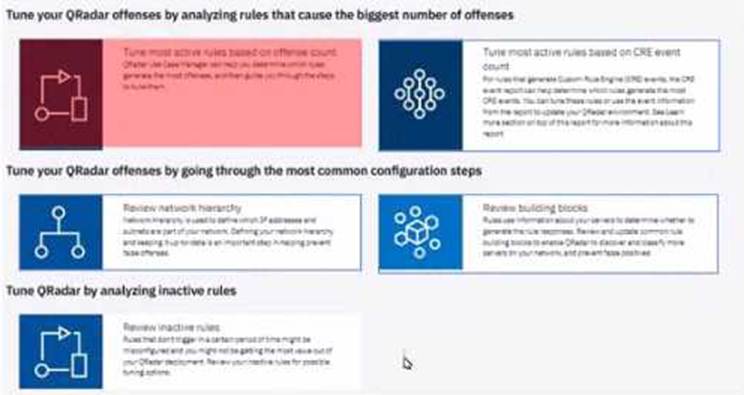
New vulnerability scanners are deployed in the company’s infrastructure and generate a high number of offenses.
Which function in the Use Case Manager app does an analyst use to update the list of vulnerability scanners?
What is the effect of toggling the Global/Local option to Global in a Custom Rule?
- A . It allows a rule to compare events & flows in real time.
- B . It allows a rule to analyze the geographic location of the event source.
- C . It allows rules to be tracked by the central processor for detection by any Event Processor.
- D . It allows a rule to inject new events back into the pipeline to affect and update other incoming events.
Which two (2) options are at the top level when an analyst right-clicks on the Source IP or Destination IP that is associated with an offense at the Offense Summary?
- A . Information
- B . DNS Lookup
- C . Navigate
- D . WHOIS Lookup
- E . Asset Summary page
B, D
Explanation:
When an analyst right-clicks on the Source IP or Destination IP that is associated with an offense at
the Offense Summary in QRadar, two of the top-level options areDNS LookupandWHOIS Lookup1.These options provide additional information about the IP address, such as its domain name (DNS Lookup) and registration information (WHOIS Lookup)1.
Which of these statements regarding the deletion of a generated content report is true?
- A . Only specific reports that were not generated from the report template as well as the report template are deleted.
- B . All reports that were generated from the report template are deleted, but the report template is retained.
- C . All reports that were generated from the report template as well as the report template are deleted.
- D . Only specific reports that were not generated from the report template are deleted, but the report template is retained.
B
Explanation:
When deleting a generated content report in QRadar, all reports that were generated from the report template are deleted, but the report template itself is retained. This ensures that the structure for generating future reports remains intact, while only the instances of reports generated from that template are removed.
How long does QRadar store payload indexes by default?
- A . 7 days
- B . 30 days
- C . 14 days
- D . 90 days
B
Explanation:
By default, QRadar stores payload indexes for a duration of 30 days. This retention period is configurable, allowing administrators to adjust how long specific data is retained based on their requirements.
A mapping of a username to a user’s manager can be stored in a Reference Table and output in a search or a report.
Which mechanism could be used to do this?
- A . Quick Search filters can select users based on their manager’s name.
- B . Reference Table lookup values can be accessed in an advanced search.
- C . Reference Table lookup values can be accessed as custom event properties.
- D . Reference Table lookup values are automatically used whenever a saved search is run.
What happens when you select "False Positive" from the right-click menu in the Log Activity tab?
- A . You can tune out events that are known to be false positives.
- B . You can investigate an IP address or a user name.
- C . Items are filtered that match or do not match the selection.
- D . The selected event is filtered based on the selected parameter in the event.
A
Explanation:
Selecting "False Positive" from the right-click menu in the Log Activity tab opens a window that enables users to tune out events that are known to be false positives, preventing them from generating offenses. This feature is crucial for minimizing noise and focusing on genuine threats, thereby enhancing the efficiency of threat detection and response processes within QRadar.
Offense chaining is based on which field that is specified in the rule?
- A . Rule action field
- B . Offense response field
- C . Rule response field
- D . Offense index field
D
Explanation:
Offense chaining in IBM Security QRadar SIEM V7.5 is based on the offense index field specified in the rule. This means that if a rule is configured to use a specific field, such as the source IP address, as the offense index field, there will only be one offense for that specific source IP address while the offense is active. This mechanism is crucial for tracking and managing offenses efficiently within the system.
What are two characteristics of a SIEM? (Choose two.)
- A . Log Management
- B . System Deployment
- C . Endpoint Software patching
- D . Enterprise User management
- E . Event Normalization & Correlation