
Huawei H12-323_V2.0-ENU Practice Exams
Last updated on Oct 22,2026- Exam Code: H12-323_V2.0-ENU
- Exam Name: HCIP-WLAN V2.0
- Certification Provider: Huawei
- Latest update: Oct 22,2026
After the terminal is associated with the wireless signal, use the CloudCampus APP to view the basic information of the current connected network. The query results are shown in the figure below. The current working channel of the AP associated with the terminal is (). 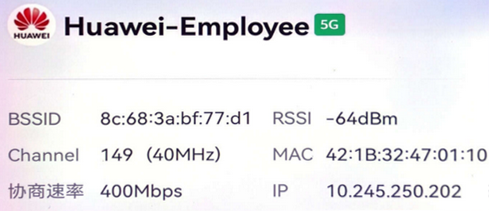
A company has deployed a WLAN network. In order to prevent too many users from fiercely occupying the wireless channel, the company has configured user CAC. The specific configuration of the RRN template is as follows. Which of the following descriptions of the configuration is wrong? 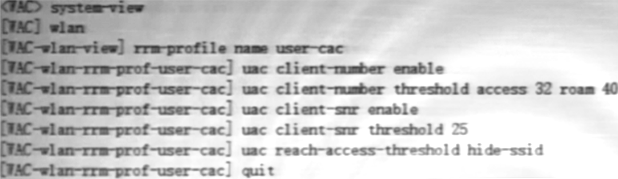
- A . The threshold for the number of new users is 32
- B . When the number of online users reaches 40, the AP begins to reject access requests from other new users.
- C . The user number threshold for roaming users is 40
- D . The signal threshold for prohibiting weak signal terminals from accessing is 25dB
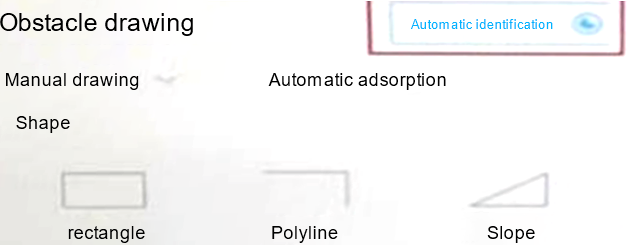
When using WLAN Planner to automatically identify obstacles, which of the following types of drawings does not support the "automatic identification" function as shown in the figure?
- A . PDF
- B . JPG
- C . PNG
- D . CAD
In a WLAN network, which of the following configuration commands can change the GI mode of the AP2.4GHz radio to 1.6 microseconds?
- A . [WAC-wlan-radio-2g-prof-default] guard – interval-mode norma
- B . [WAC-wlan-radio-2g-prof-default] guard-interval-mode dotllax 1dot6
- C . [WAC-wlan-radio-2g-prof-default] guard-interval-mode short
- D . [WAC-wlan-radio-2g-prof-default] guard-interval-mode dotllax 3dot2
When designing indoor AP coverage, in order to ensure user experience, APs should be deployed separately in key areas and areas with special needs.
- A . True
- B . False
Under the premise of the same material thickness, which of the following obstacles has the greatest attenuation for 5GHz signals?
- A . Asbestos
- B . Colored thick glass
- C . Synthetic Materials
- D . Wooden door
In WLAN networking, which of the following descriptions about GI are correct? (Multiple choice)
- A . GI refers to the protection interval between symbols, which is used to reduce the impact of interference.
- B . The larger the GI, the stronger the anti-interference ability
- C . The smaller the GI, the higher the transmission efficiency
- D . GI can be divided into normal GI and Short GI. When there are few interference factors in the indoor environment, it is recommended to use Short GI.
In WLAN networks, the spatial direction of the electric field vector in the direction of maximum radiation of the antenna is usually taken as the polarization direction of the electromagnetic wave.
Which of the following descriptions of antenna polarization are correct? (Multiple choice)
- A . Single-polarized antennas receive and transmit signals in two separate antennas, and one antenna contains only one polarization mode, vertical or horizontal.
- B . Single polarization and dual polarization are both linear polarizations in nature, usually in two types: horizontal polarization and vertical polarization.
- C . Antennas can be divided into single-polarized antennas and dual-polarized antennas according to polarization.
- D . Dual-polarized antennas use the same antenna for both reception and transmission, and one antenna contains both vertical and horizontal polarization modes
Which of the following protocols defines the standards and specifications of Mesh technology?
- A . 802.11s
- B . 802.11i
- C . 802.11r
- D . 802.11e
In WLAN networks, antenna gain is one of the most important parameters for selecting antennas.
Which of the following descriptions of antenna gain are correct? (Multiple choice)
- A . The higher the gain, the farther the radio wave propagates. In actual implementation, high gain is preferred.
- B . Antenna gain is used to measure the ability of an antenna to send and receive signals in a specific direction.
- C . The parameters that represent antenna gain are dBa and dBi
- D . Antenna gain is a passive phenomenon; the antenna does not increase power.