
Google Professional Cloud Architect Practice Exams
Last updated on Oct 21,2026- Exam Code: Professional Cloud Architect
- Exam Name: Google Certified Professional – Cloud Architect (GCP)
- Certification Provider: Google
- Latest update: Oct 21,2026
One of the developers on your team deployed their application in Google Container Engine with the Dockerfile below.
They report that their application deployments are taking too long.
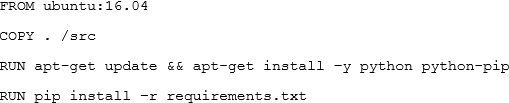
You want to optimize this Dockerfile for faster deployment times without adversely affecting the app’s functionality.
Which two actions should you take? Choose 2 answers.
- A . Remove Python after running pip.
- B . Remove dependencies from requirements.txt.
- C . Use a slimmed-down base image like Alpine linux.
- D . Use larger machine types for your Google Container Engine node pools.
- E . Copy the source after the package dependencies (Python and pip) are installed.
For this question, refer to the Mountkirk Games case study.
Mountkirk Games wants to set up a real-time analytics platform for their new game. The new platform must meet their technical requirements .
Which combination of Google technologies will meet all of their requirements?
- A . Container Engine, Cloud Pub/Sub, and Cloud SQL
- B . Cloud Dataflow, Cloud Storage, Cloud Pub/Sub, and BigQuery
- C . Cloud SQL, Cloud Storage, Cloud Pub/Sub, and Cloud Dataflow
- D . Cloud Dataproc, Cloud Pub/Sub, Cloud SQL, and Cloud Dataflow
- E . Cloud Pub/Sub, Compute Engine, Cloud Storage, and Cloud Dataproc
For this question, refer to the TerramEarth case study.
TerramEarth has equipped unconnected trucks with servers and sensors to collet telemetry data. Next year they want to use the data to train machine learning models. They want to store this data in the cloud while reducing costs .
What should they do?
- A . Have the vehicle’ computer compress the data in hourly snapshots, and store it in a Google Cloud storage (GCS) Nearline bucket.
- B . Push the telemetry data in Real-time to a streaming dataflow job that compresses the data, and store it in Google BigQuery.
- C . Push the telemetry data in real-time to a streaming dataflow job that compresses the data, and store it in Cloud Bigtable.
- D . Have the vehicle’s computer compress the data in hourly snapshots, a Store it in a GCS Coldline bucket.
You are working at a financial institution that stores mortgage loan approval documents on Cloud Storage. Any change to these approval documents must be uploaded as a separate approval file, so you want to ensure that these documents cannot be deleted or overwritten for the next 5 years .
What should you do?
- A . Create a retention policy on the bucket for the duration of 5 years. Create a lock on the retention policy.
- B . Create the bucket with uniform bucket-level access, and grant a service account the role of Object Writer. Use the service account to upload new files.
- C . Use a customer-managed key for the encryption of the bucket. Rotate the key after 5 years.
- D . Create the bucket with fine-grained access control, and grant a service account the role of Object Writer. Use the service account to upload new files.
Your organization requires that metrics from all applications be retained for 5 years for future analysis in possible legal proceedings .
Which approach should you use?
- A . Grant the security team access to the logs in each Project.
- B . Configure Stackdriver Monitoring for all Projects, and export to BigQuery.
- C . Configure Stackdriver Monitoring for all Projects with the default retention policies.
- D . Configure Stackdriver Monitoring for all Projects, and export to Google Cloud Storage.
Topic 5, Misc Questions
Your company has a Google Cloud project that uses BigQuery for data warehousing They
have a VPN tunnel between the on-premises environment and Google Cloud that is configured with Cloud VPN. The security team wants to avoid data exfiltration by malicious insiders, compromised code, and accidental oversharing .
What should they do?
- A . Configure Private Google Access for on-premises only.
- B . Perform the following tasks:
1) Create a service account.
2) Give the BigQuery JobUser role and Storage Reader role to the service account.
3) Remove all other IAM access from the project. - C . Configure VPC Service Controls and configure Private Google Access.
- D . Configure Private Google Access.
For this question, refer to the TerramEarth case study.
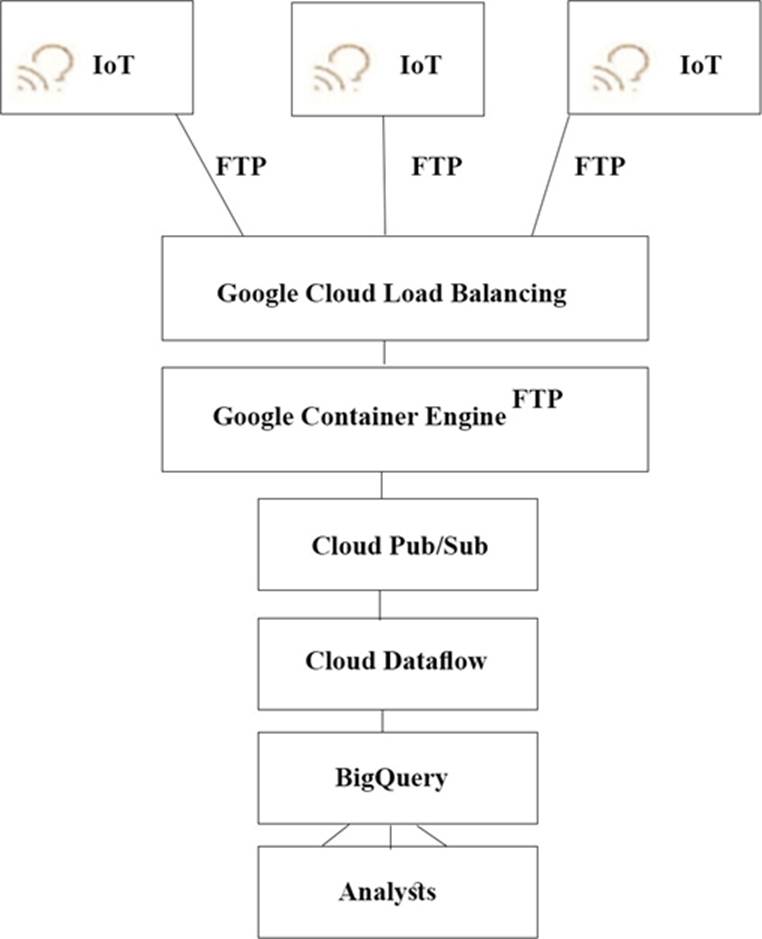
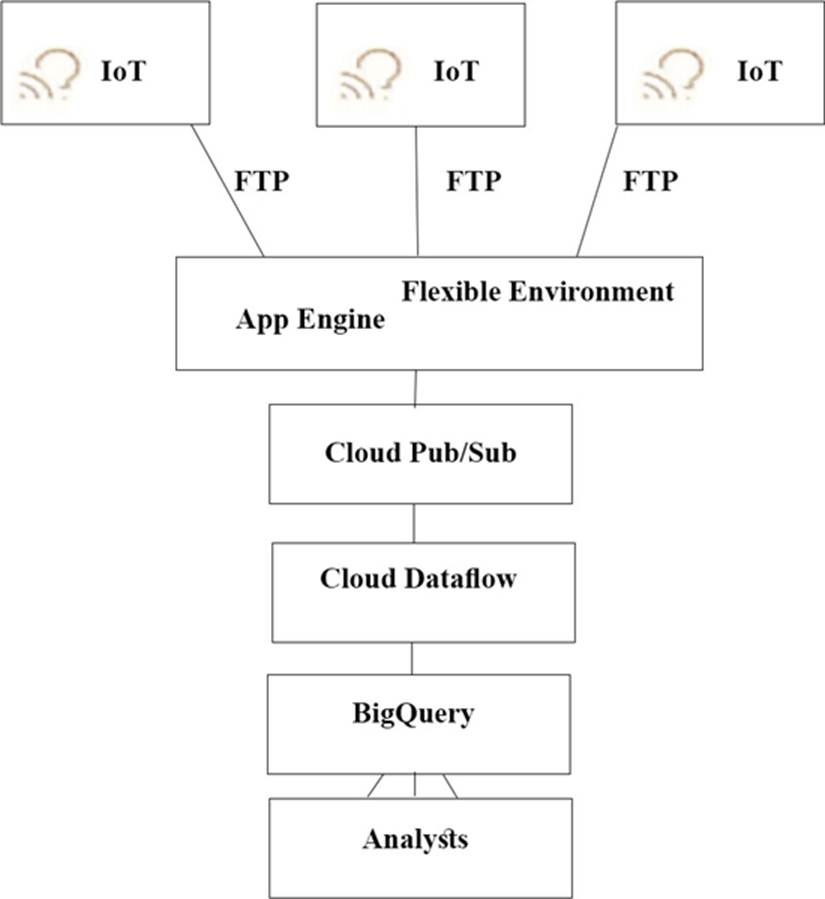
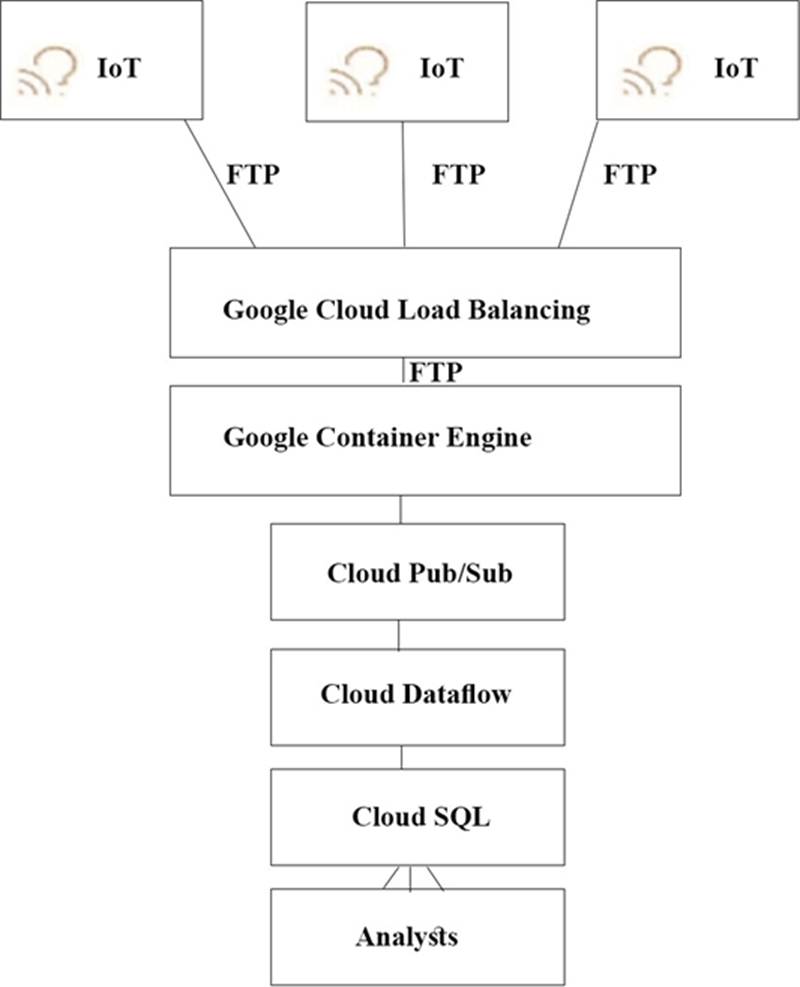
TerramEarth’s CTO wants to use the raw data from connected vehicles to help identify approximately when a vehicle in the development team to focus their failure. You want to allow analysts to centrally query the vehicle data .
Which architecture should you recommend?
A)
B)
C)
D)
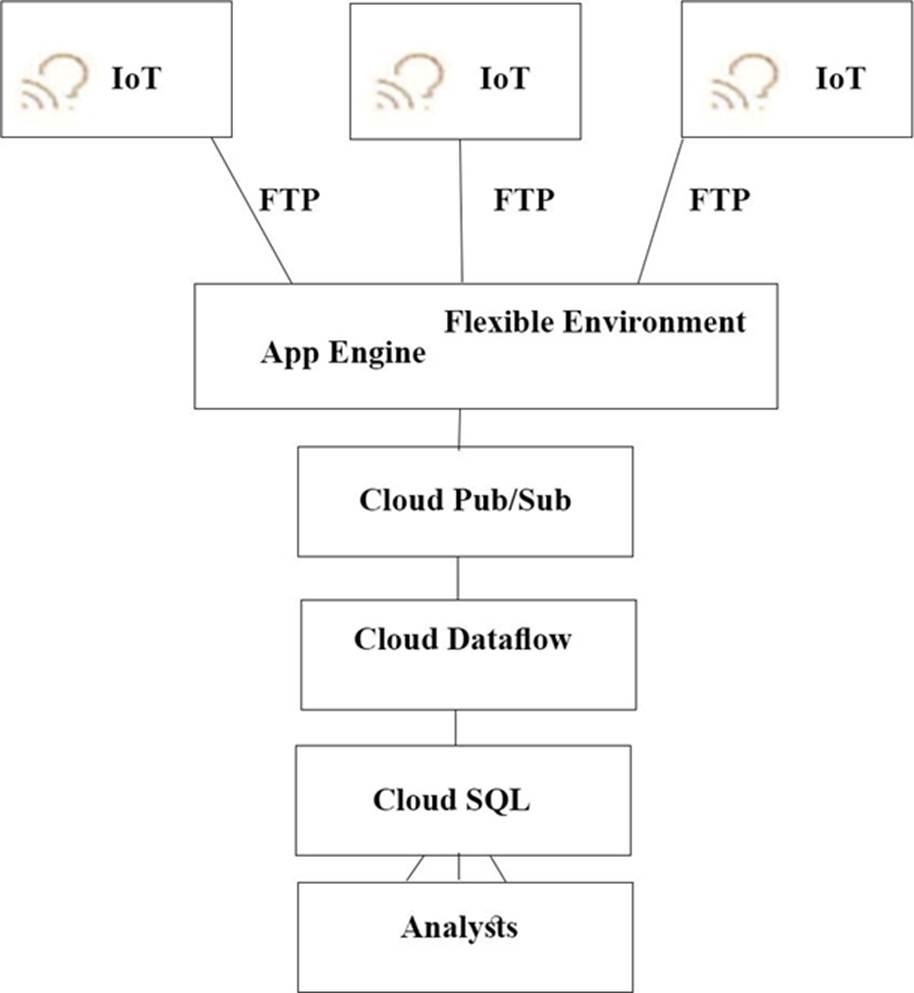
- A . Option A
- B . Option B
- C . Option C
- D . Option D
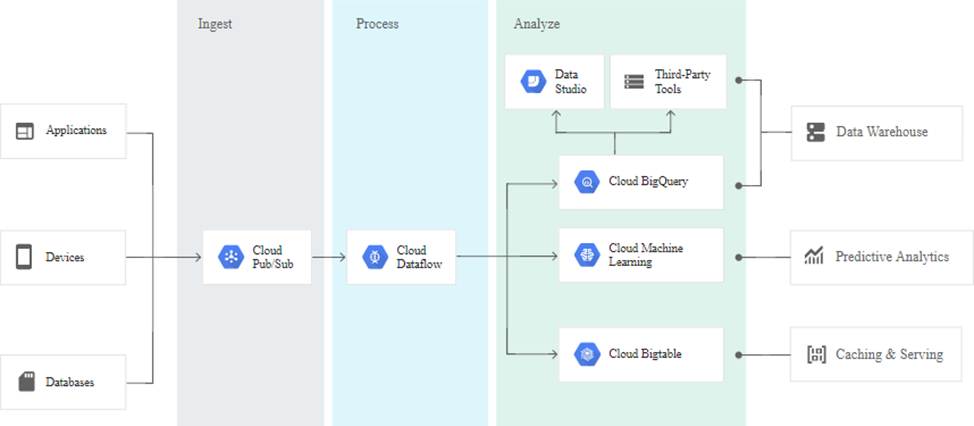
For this question, refer to the TerramEarth case study.
To speed up data retrieval, more vehicles will be upgraded to cellular connections and be able to transmit data to the ETL process. The current FTP process is error-prone and restarts the data transfer from the start of the file when connections fail, which happens often. You want to improve the reliability of the solution and minimize data transfer time on the cellular connections .
What should you do?
- A . Use one Google Container Engine cluster of FTP servers. Save the data to a Multi-Regional bucket. Run the ETL process using data in the bucket.
- B . Use multiple Google Container Engine clusters running FTP servers located in different regions. Save the data to Multi-Regional buckets in us, eu, and asia. Run the ETL process using the data in the bucket.
- C . Directly transfer the files to different Google Cloud Multi-Regional Storage bucket locations in us, eu, and asia using Google APIs over HTTP(S). Run the ETL process using the data in the bucket.
- D . Directly transfer the files to a different Google Cloud Regional Storage bucket location in us, eu, and asia using Google APIs over HTTP(S). Run the ETL process to retrieve the data from each Regional bucket.
The application reliability team at your company has added a debug feature to their backend service to send all server events to Google Cloud Storage for eventual analysis. The event records are at least 50 KB and at most 15 MB and are expected to peak at 3,000 events per second. You want to minimize data loss.
Which process should you implement?
- A . • Append metadata to file body.
• Compress individual files.
• Name files with serverName-Timestamp.
• Create a new bucket if bucket is older than 1 hour and save individual files to the new bucket. Otherwise, save files to existing bucket - B . • Batch every 10,000 events with a single manifest file for metadata.
• Compress event files and manifest file into a single archive file.
• Name files using serverName-EventSequence.
• Create a new bucket if bucket is older than 1 day and save the single archive file to the new bucket. Otherwise, save the single archive file to existing bucket. - C . • Compress individual files.
• Name files with serverName-EventSequence.
• Save files to one bucket
• Set custom metadata headers for each object after saving. - D . • Append metadata to file body.
• Compress individual files.
• Name files with a random prefix pattern.
• Save files to one bucket
A recent audit that a new network was created in Your GCP project. In this network, a GCE instance has an SSH port open the world. You want to discover this network’s origin .
What should you do?
- A . Search for Create VM entry in the Stackdriver alerting console.
- B . Navigate to the Activity page in the Home section. Set category to Data Access and search for Create VM entry.
- C . In the logging section of the console, specify GCE Network as the logging section.
Search for the Create Insert entry. - D . Connect to the GCE instance using project SSH Keys. Identify previous logins in system logs, and match these with the project owners list.