
Fortinet FCSS_SASE_AD-24 Practice Exams
Last updated on Oct 22,2026- Exam Code: FCSS_SASE_AD-24
- Exam Name: FCSS - FortiSASE 24 Administrator
- Certification Provider: Fortinet
- Latest update: Oct 22,2026
Refer to the exhibits.
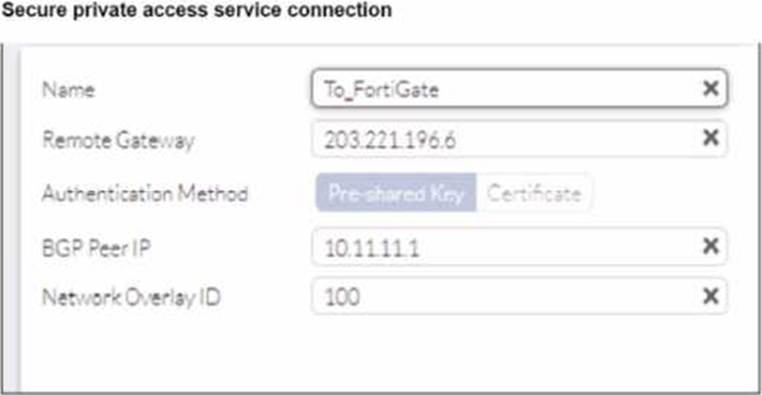
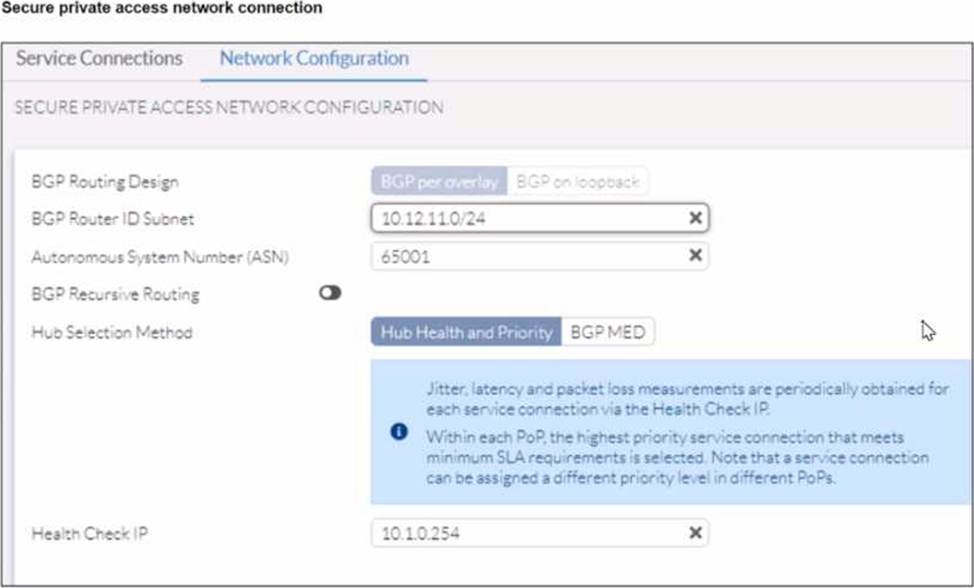
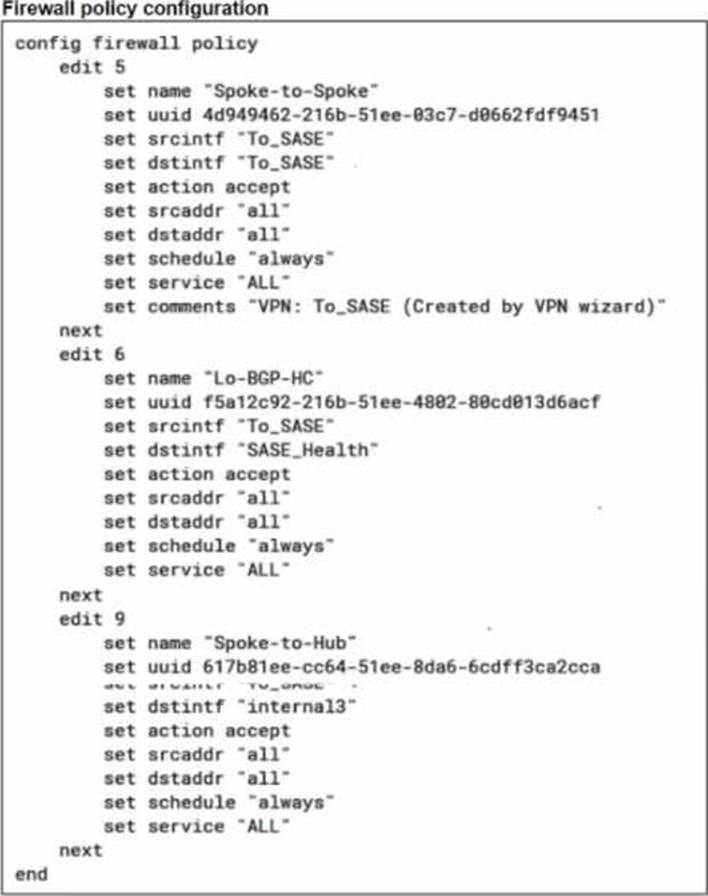
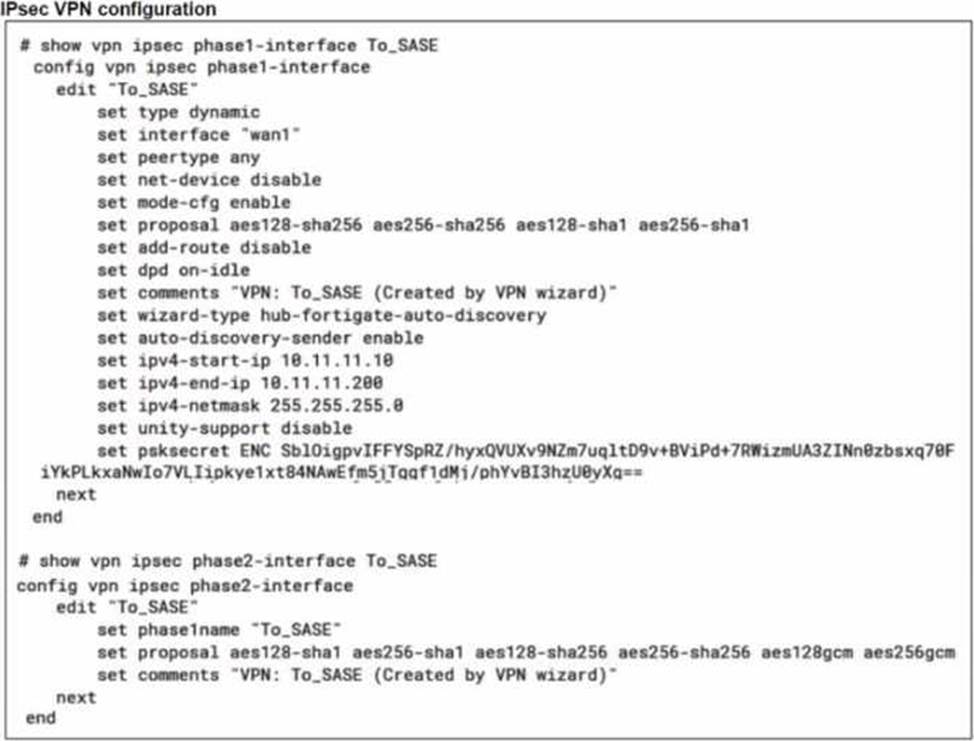
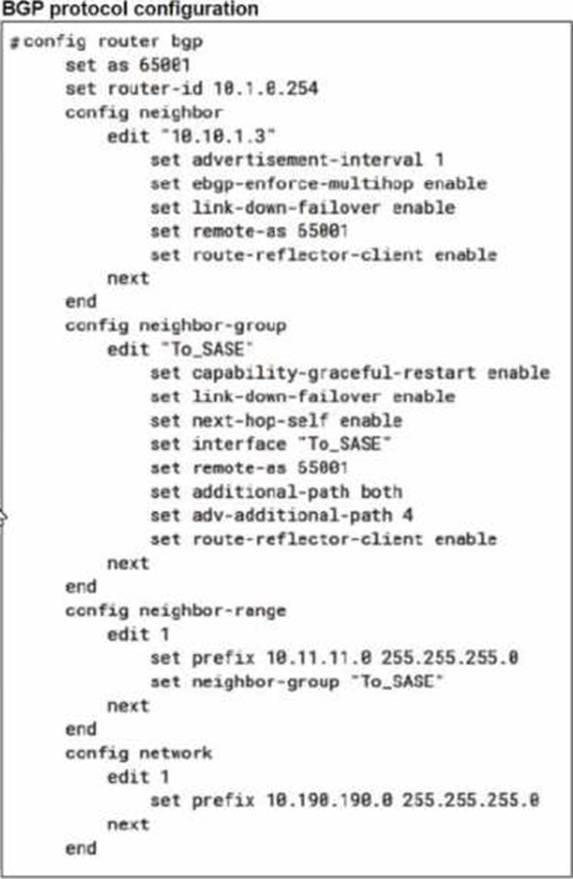
A FortiSASE administrator is trying to configure FortiSASE as a spoke to a FortiGate hub. The VPN tunnel does not establish
Based on the provided configuration, what configuration needs to be modified to bring the tunnel up?
- A . NAT needs to be enabled in the Spoke-to-Hub firewall policy.
- B . The BGP router ID needs to match on the hub and FortiSASE.
- C . FortiSASE spoke devices do not support mode config.
- D . The hub needs IKEv2 enabled in the IPsec phase 1 settings.
Which secure internet access (SIA) use case minimizes individual workstation or device setup, because you do not need to install FortiClient on endpoints or configure explicit web proxy settings on web browser-based end points?
- A . SIA for inline-CASB users
- B . SIA for agentless remote users
- C . SIA for SSLVPN remote users
- D . SIA for site-based remote users
B
Explanation:
The Secure Internet Access (SIA) use case that minimizes individual workstation or device setup is SIA for agentless remote users. This use case does not require installing FortiClient on endpoints or configuring explicit web proxy settings on web browser-based endpoints, making it the simplest and most efficient deployment.
SIA for Agentless Remote Users:
Agentless deployment allows remote users to connect to the SIA service without needing to install any client software or configure browser settings.
This approach reduces the setup and maintenance overhead for both users and administrators.
Minimized Setup:
Without the need for FortiClient installation or explicit proxy configuration, the deployment is straightforward and quick.
Users can securely access the internet with minimal disruption and administrative effort.
Reference: FortiOS 7.2 Administration Guide: Details on different SIA deployment use cases and configurations. FortiSASE 23.2 Documentation: Explains how SIA for agentless remote users is implemented and the benefits it provides.
To complete their day-to-day operations, remote users require access to a TCP-based application that is hosted on a private web server.
Which FortiSASE deployment use case provides the most efficient and secure method for meeting the remote users’ requirements?
- A . SD-WAN private access
- B . inline-CASB
- C . zero trust network access (ZTNA) private access
- D . next generation firewall (NGFW)
C
Explanation:
Zero Trust Network Access (ZTNA) private access provides the most efficient and secure method for
remote users to access a TCP-based application hosted on a private web server. ZTNA ensures that
only authenticated and authorized users can access specific applications based on predefined
policies, enhancing security and access control.
Zero Trust Network Access (ZTNA):
ZTNA operates on the principle of "never trust, always verify," continuously verifying user identity and device security posture before granting access.
It provides secure and granular access to specific applications, ensuring that remote users can securely access the TCP-based application hosted on the private web server.
Secure and Efficient Access:
ZTNA private access allows remote users to connect directly to the application without needing a full VPN tunnel, reducing latency and improving performance.
It ensures that only authorized users can access the application, providing robust security controls.
Reference: FortiOS 7.2 Administration Guide: Provides detailed information on ZTNA and its deployment use cases.
FortiSASE 23.2 Documentation: Explains how ZTNA can be used to provide secure access to private applications for remote users.
Bulk user registration through automated scripts is less secure than individual user registration in FortiSASE.
- A . False
- B . True
Which method is most effective for onboarding a large number of remote users into a SASE framework?
- A . Bulk user registration through automated scripts
- B . Individual user registration via email invitations
- C . Open registration allowing user self-enrollment
- D . Temporary guest accounts with limited access
What aspects should be considered when configuring logging settings in FortiSASE? (Select all that apply)
- A . Log rotation frequency
- B . Error and event logs
- C . Debug level logs for everyday operations
- D . Privacy settings for sensitive information
How does FortiSASE’s SIA enhance compliance with security policies? (Select all that apply)
- A . By enforcing consistent security policies across all endpoints
- B . By monitoring and logging all web traffic
- C . By disabling all non-compliant devices
- D . By providing real-time security updates
What critical information should be included in reports analyzing user traffic and security issues?
- A . Trends in data usage over weekends
- B . Peak usage times and potential security breaches
- C . List of all users’ home addresses
- D . Office Wi-Fi strength and availability
Which three ways does FortiSASE provide Secure Private Access (SPA) to corporate, non-web applications?
(Choose three.)
- A . Using SD-WAN technology
- B . Using secure web gateway (SWG)
- C . Using zero trust network access (ZTNA) technology
- D . Using digital experience monitoring
- E . Using next generation firewall (NGFW)
Which FortiSASE Secure Private Access (SPA) deployment involves installing FortiClient on remote endpoints?
- A . MicroBranch
- B . zero trust network access (ZTNA)
- C . secure web gateway (SWG)
- D . SD-WAN