
DELL EMC D-PE-FN-01 Practice Exams
Last updated on Oct 23,2026- Exam Code: D-PE-FN-01
- Exam Name: Dell PowerEdge Foundations v2 Exam
- Certification Provider: DELL EMC
- Latest update: Oct 23,2026
How does GPGPU compare to CPU in a Dell EMC PowerEdge server?
- A . GPGPU is somewhat limited on running instructions concurrently, and CPU simultaneously executes a single instruction stream on multiple data elements
- B . GPGPU is only used for video output in servers, and CPU is used for computational power
- C . GPGPU has no memory on its own and fully relies on RAM, but CPU memory resource is reduced by 20GB per installed GPGPU
- D . GPGPU simultaneously executes a single instruction stream on multiple data elements, and CPU is somewhat limited on running instructions concurrently
Which technical concept does Disk Mirroring use?
- A . Calculation of data from at least two disks that is stored on another disk
- B . Division of data into blocks and spreading the data across hard drives
- C . Duplication of system components for backup in case of failure
- D . Duplication of data across separate hard drives
What protocol is used by the In-Band Management tools for basic communication and messaging?
- A . ICMP
- B . SMTP
- C . SNMP
- D . RedFish
Which RAID level requires a minimum of four hard drives?
- A . RAID 0
- B . RAID 1
- C . RAID 5
- D . RAID 6
What is the objective of the Patch Management process?
- A . Confirm that industry cable management techniques are followed
- B . Ensure that all software within a company is up-to-date
- C . Correctly install and configure Dell EMC Open Manage Essentials
- D . Upgrade server hardware to the latest PCB revisions
What is the correct sequence to deploy the operating systems when using the Lifecycle Controller?
Note: Answers to this question are not verified by our experts, please study yourself and select the appropriate answers.
- A . a) Select the operating system.
b) Enter the Lifecycle Controller.
c) Insert the operating system installation media.
d) Select OS Deployment and deploy.
e) Configure the RAID disk. - B . a) Enter the Lifecycle Controller.
b) Select the operating system.
c) Insert the operating system installation media.
d) Select OS Deployment and deploy.
e) Configure the RAID disk. - C . a) Insert the operating system installation media.
b) Enter the Lifecycle Controller.
c) Select the operating system.
d) Select OS Deployment and deploy.
e) Configure the RAID disk. - D . a) Select the operating system.
b) Configure the RAID disk.
c) Insert the operating system installation media.
d) Select OS Deployment and deploy.
e) Enter the Lifecycle Controller. - E . a) Enter the Lifecycle Controller.
b) Insert the operating system installation media.
c) Select OS Deployment and deploy.
d) Select the operating system.
e) Configure the RAID disk.
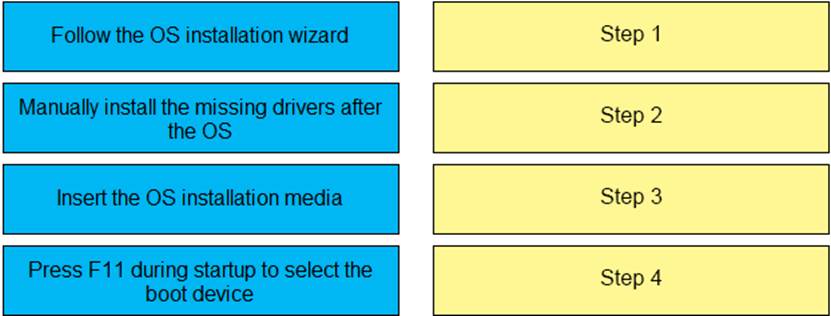
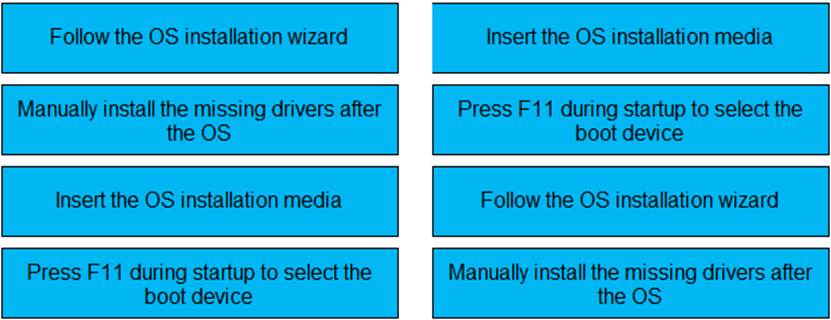
What is the correct sequence when deploying the operating systems by directly booting from media?
What is an accurate statement in reference to software RAID?
- A . Software RAID does not have any data integrity issues
- B . Software RAID requires a hardware license
- C . Software RAID is an additional cost
- D . Software RAID uses CPU resources
Where can an administrator view alerts in the iDRAC?
- A . Quick Sync > QR Code
- B . Settings > Alerts
- C . Help > QR Code
- D . Maintenance > System event log
Which type of server eliminates resource silos and manages physical, virtual, and logical infrastructures?
- A . Software-Defined Servers
- B . Tower Servers
- C . Modular Servers
- D . Accelerated Servers