
CompTIA SY0-701 Practice Exams
Last updated on Nov 16,2026- Exam Code: SY0-701
- Exam Name: CompTIA Security+
- Certification Provider: CompTIA
- Latest update: Nov 16,2026
The security operations center is researching an event concerning a suspicious IP address A security analyst looks at the following event logs and discovers that a significant portion of the user accounts have experienced faded log-In attempts when authenticating from the same IP address:

Which of the following most likely describes attack that took place?
- A . Spraying
- B . Brute-force
- C . Dictionary
- D . Rainbow table
A
Explanation:
Password spraying is a type of attack where an attacker tries a small number of commonly used passwords across a large number of accounts. The event logs showing failed login attempts for many user accounts from the same IP address are indicative of a password spraying attack, where the attacker is attempting to gain access by guessing common passwords.
Reference = CompTIA Security+ SY0-701 study materials, particularly in the domain of identity and access management and common attack vectors like password spraying.
A security analyst is investigating an application server and discovers that software on the server is behaving abnormally. The software normally runs batch jobs locally and does not generate traffic, but the process is now generating outbound traffic over random high ports.
Which of the following vulnerabilities has likely been exploited in this software?
- A . Memory injection
- B . Race condition
- C . Side loading
- D . SQL injection
A
Explanation:
Memory injection vulnerabilities allow unauthorized code or commands to be executed within a software program, leading to abnormal behavior such as generating outbound traffic over random high ports. This issue often arises from software not properly validating or encoding input, which can be exploited by attackers to inject malicious code.
Reference: CompTIA Security+ SY0-701 course content and official CompTIA study resources.
Which of the following steps in the risk management process involves establishing the scope and potential risks involved with a project?
- A . Risk mitigation
- B . Risk identification
- C . Risk treatment
- D . Risk monitoring and review
B
Explanation:
Risk identification is the first step in the risk management process, where potential threats and vulnerabilities are analyzed to understand their impact on an organization. This includes identifying assets, evaluating threats, and assessing potential vulnerabilities. Risk mitigation: Reducing risk by implementing controls.
Risk treatment: Determining how to handle identified risks.
Risk monitoring and review: Ongoing evaluation of risk controls.
Reference: CompTIA Security+ SY0-701 Official Study Guide, Security Program Management and Oversight domain.
Which of the following methods to secure credit card data is best to use when a requirement is to see only the last four numbers on a credit card?
- A . Encryption
- B . Hashing
- C . Masking
- D . Tokenization
C
Explanation:
Masking is a method to secure credit card data that involves replacing some or all of the digits with symbols, such as asterisks, dashes, or Xs, while leaving some of the original digits visible. Masking is best to use when a requirement is to see only the last four numbers on a credit card, as it can prevent unauthorized access to the full card number, while still allowing identification and verification of the cardholder. Masking does not alter the original data, unlike encryption, hashing, or tokenization, which use algorithms to transform the data into different formats.
Reference: CompTIA Security+ Study Guide: Exam SY0-701, 9th Edition, Chapter 2: Compliance and Operational Security, page 721. CompTIA Security+ Certification Kit: Exam SY0-701, 7th Edition, Chapter 2: Compliance and Operational Security, page 722.
An organization has a new regulatory requirement to implement corrective controls on a financial system.
Which of the following is the most likely reason for the new requirement?
- A . To defend against insider threats altering banking details
- B . To ensure that errors are not passed to other systems
- C . To allow for business insurance to be purchased
- D . To prevent unauthorized changes to financial data
D
Explanation:
Detailed
Corrective controls, such as auditing and versioning, help prevent unauthorized changes to financial data, ensuring data integrity and compliance with regulations.
Reference: CompTIA Security+ SY0-701 Study Guide, Domain 5: Security Program Management, Section: "Controls for Financial Systems".
Which of the following is the stage in an investigation when forensic images are obtained?
- A . Acquisition
- B . Preservation
- C . Reporting
- D . E-discovery
A
Explanation:
Detailed The acquisition phase involves creating forensic images (exact replicas) of storage devices or memory to ensure data integrity for further analysis.
Reference: CompTIA Security+ SY0-701 Study Guide, Domain 4: Security Operations, Section: "Forensic Imaging and Chain of Custody".
During a recent company safety stand-down, the cyber-awareness team gave a presentation on the importance of cyber hygiene. One topic the team covered was best practices for printing centers.
Which of the following describes an attack method that relates to printing centers?
- A . Whaling
- B . Credential harvesting
- C . Prepending
- D . Dumpster diving
D
Explanation:
Dumpster diving is an attack method where attackers search through physical waste, such as discarded documents and printouts, to find sensitive information that has not been properly disposed of. In the context of printing centers, this could involve attackers retrieving printed documents containing confidential data that were improperly discarded without shredding or other secure disposal methods. This emphasizes the importance of proper disposal and physical security measures in cyber hygiene practices.
Reference =
CompTIA Security+ SY0-701 Course Content: Domain 04 Security Operations.
CompTIA Security+ SY0-601 Study Guide: Chapter on Physical Security and Cyber Hygiene.
HOTSPOT
You are security administrator investigating a potential infection on a network.
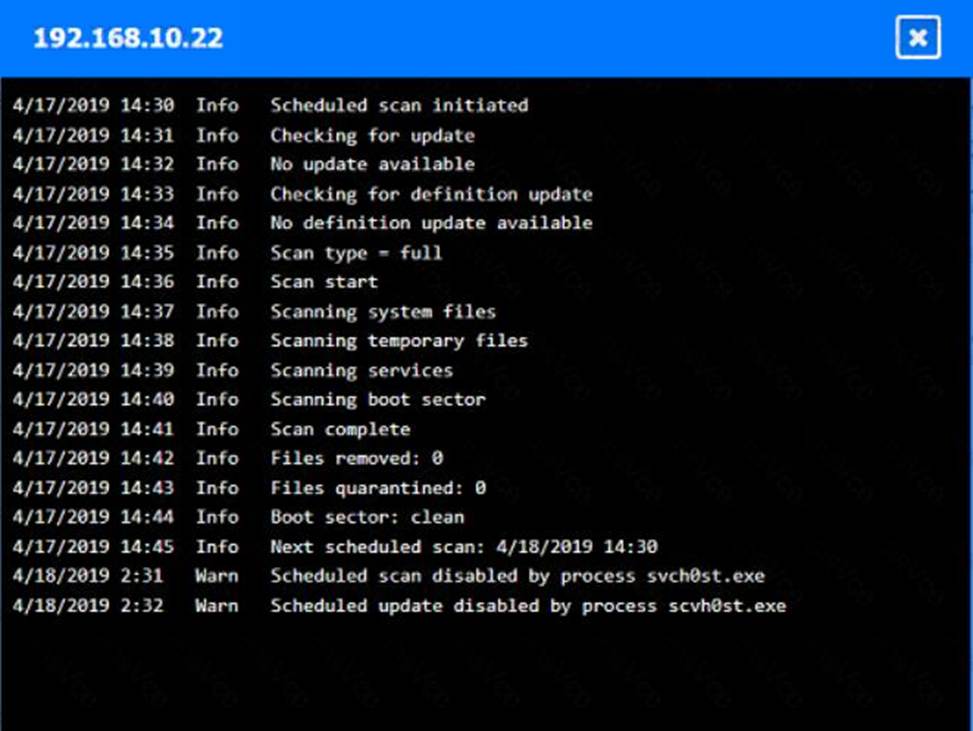
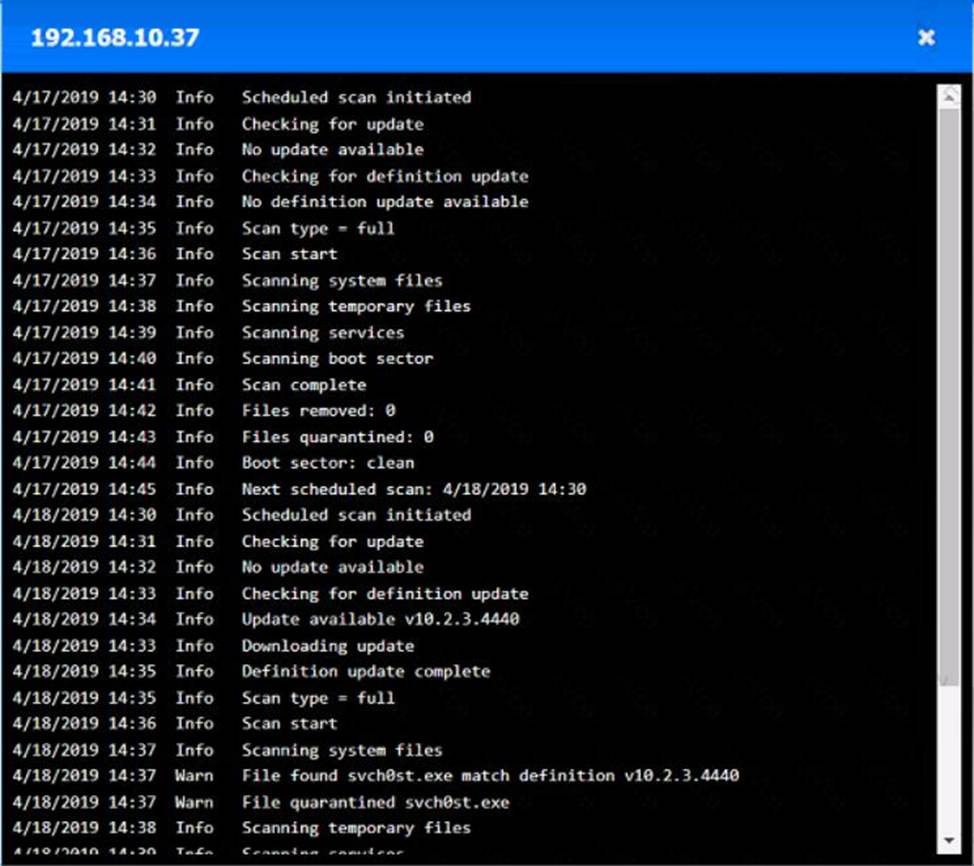
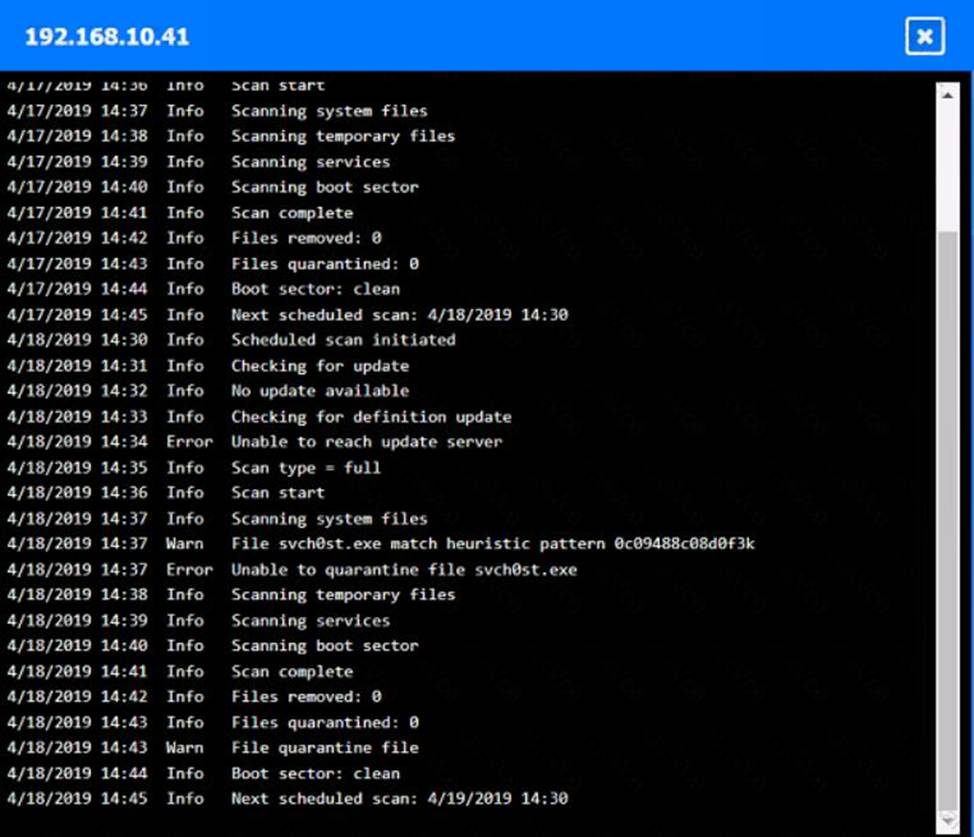
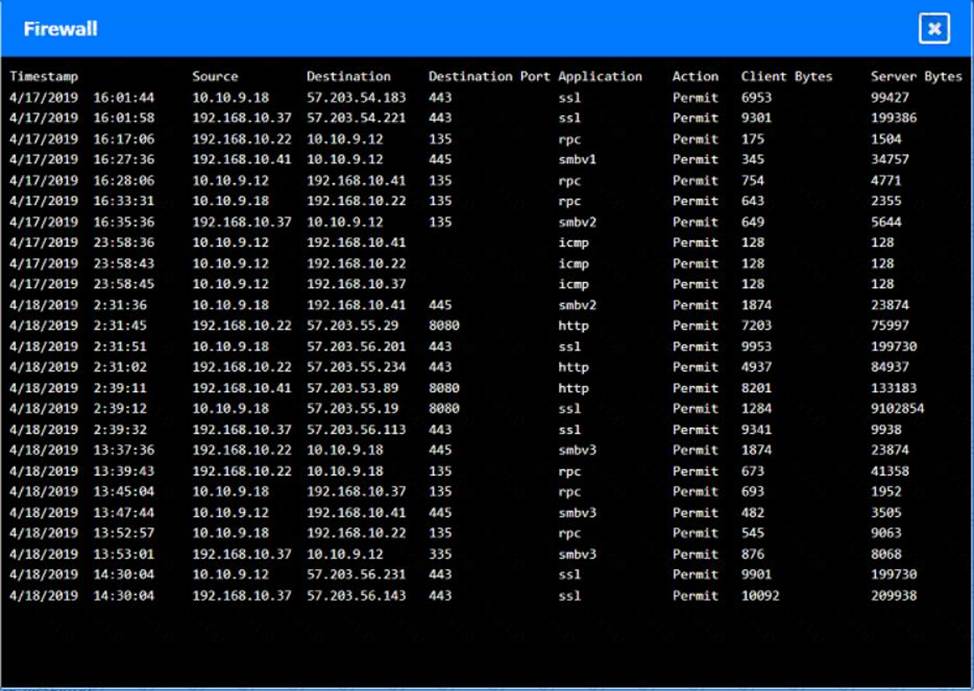
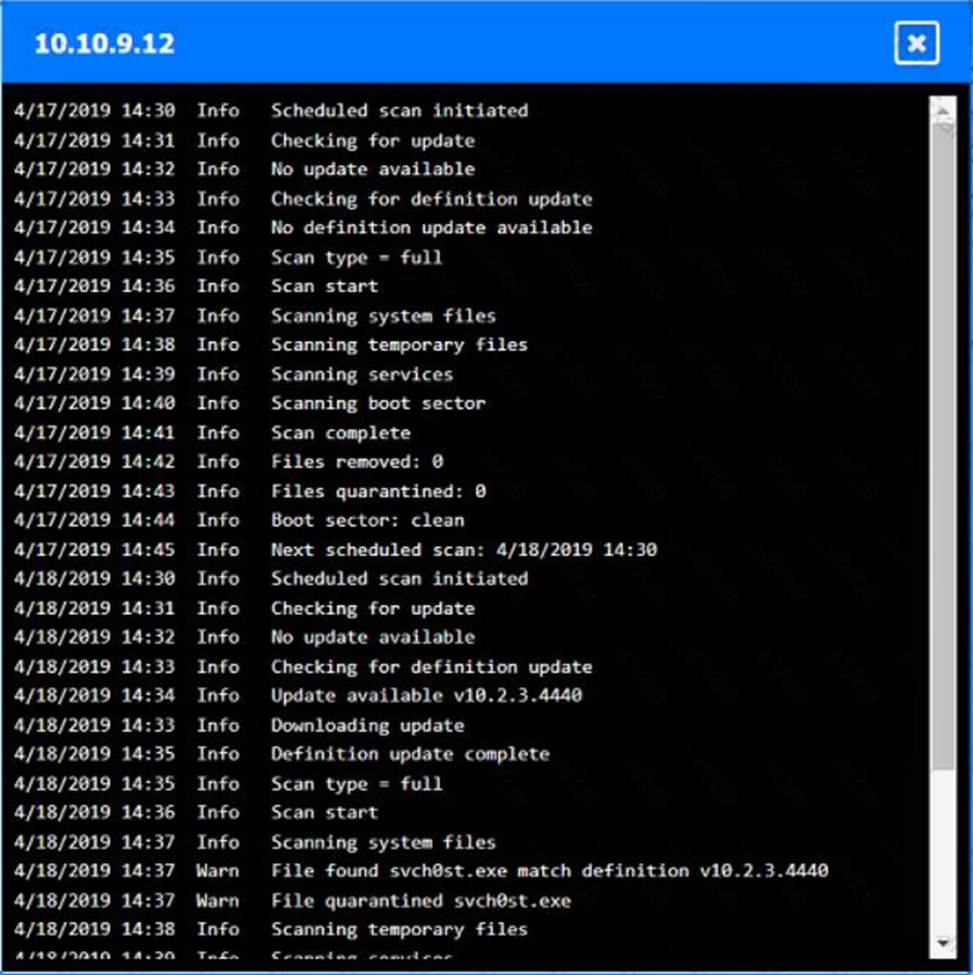
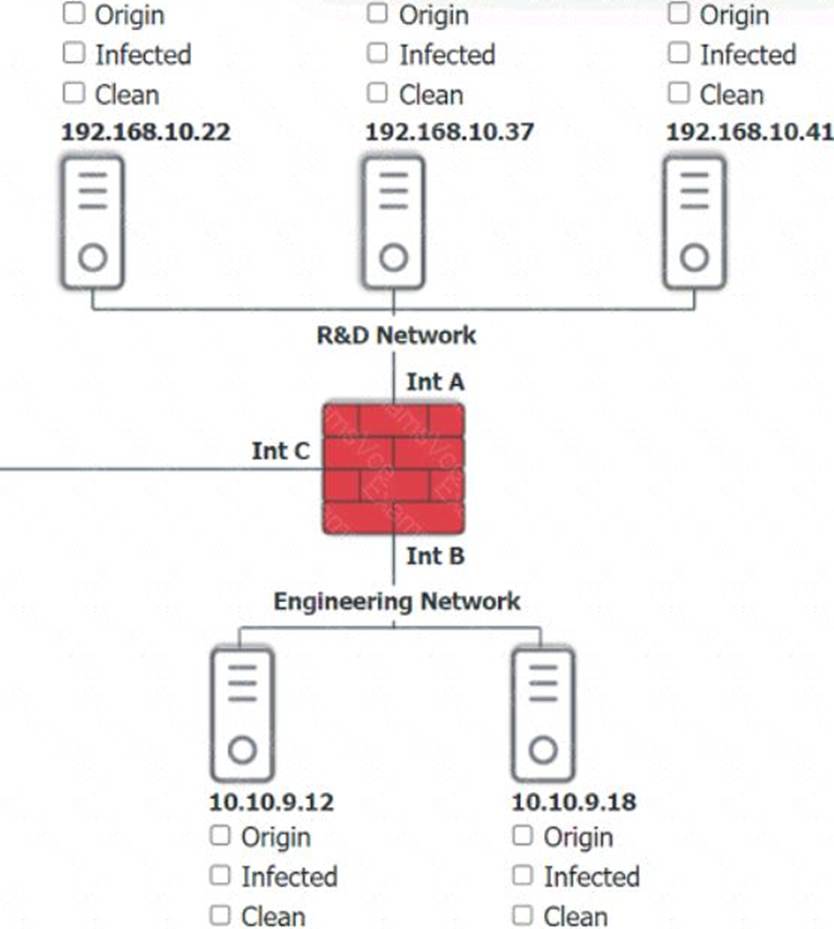
Click on each host and firewall. Review all logs to determine which host originated the Infecton and then deny each remaining hosts clean or infected.
Explanation:
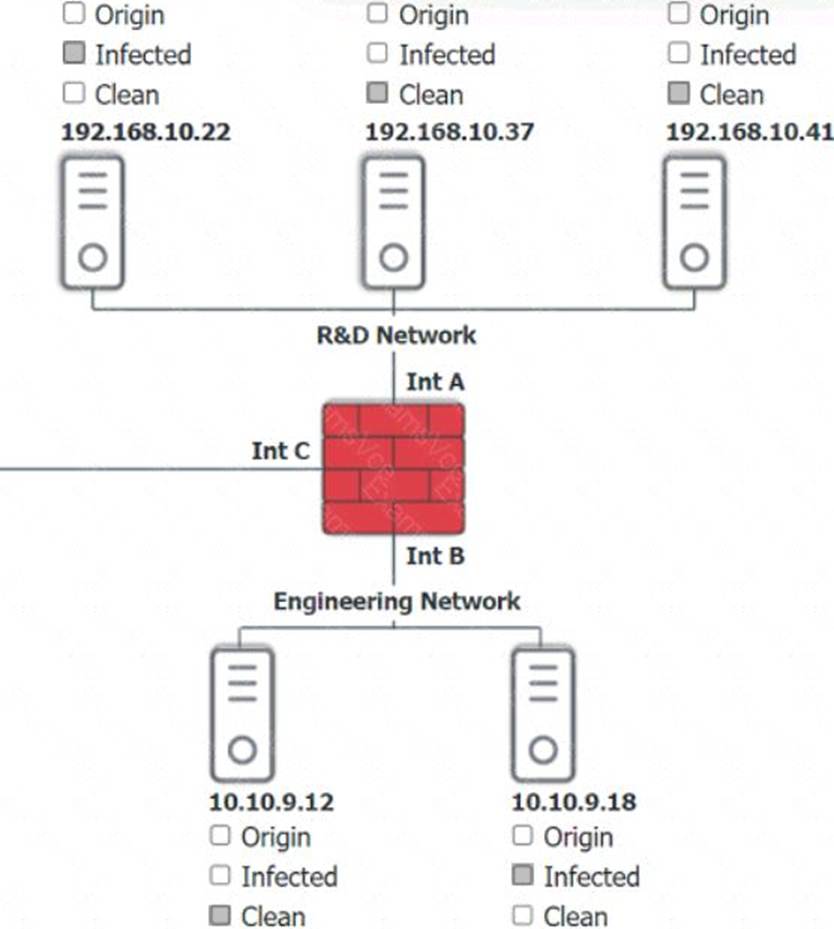
Based on the logs, it seems that the host that originated the infection is 192.168.10.22. This host has a suspicious process named svchost.exe running on port 443, which is unusual for a Windows service. It also has a large number of outbound connections to different IP addresses on port 443, indicating that it is part of a botnet.
The firewall log shows that this host has been communicating with 10.10.9.18, which is another infected host on the engineering network. This host also has a suspicious process named svchost.exe running on port 443, and a large number of outbound connections to different IP addresses on port 443.
The other hosts on the R&D network (192.168.10.37 and 192.168.10.41) are clean, as they do not have any suspicious processes or connections.
Which of the following describes the maximum allowance of accepted risk?
- A . Risk indicator
- B . Risk level
- C . Risk score
- D . Risk threshold
D
Explanation:
Risk threshold is the maximum amount of risk that an organization is willing to accept for a given activity or decision. It is also known as risk appetite or risk tolerance. Risk threshold helps an organization to prioritize and allocate resources for risk management. Risk indicator, risk level, and risk score are different ways of measuring or expressing the likelihood and impact of a risk, but they do not describe the maximum allowance of accepted risk.
Reference: CompTIA Security+ Study Guide: Exam SY0-701, 9th Edition, page 34; Accepting Risk: Definition, How It Works, and Alternatives
A company has a website in a server cluster. One server is experiencing very high usage, while others are nearly unused.
Which of the following should the company configure to help distribute traffic quickly?
- A . Server multiprocessing
- B . Warm site
- C . Load balancer
- D . Proxy server
C
Explanation:
Comprehensive and Detailed In-Depth
A load balancer distributes incoming traffic evenly across multiple servers to prevent any single server from becoming overloaded. This ensures high availability, scalability, and optimal performance of the company’s website.
Server multiprocessing (A) refers to the use of multiple processors within a single server but does not distribute traffic across multiple servers.
A warm site (B) is a disaster recovery strategy, not a method for balancing real-time traffic.
A proxy server (D) acts as an intermediary between users and web services but does not distribute server load.
Using a load balancer allows for efficient traffic management and prevents server overload.