
CompTIA N10-009 Practice Exams
Last updated on Nov 16,2026- Exam Code: N10-009
- Exam Name: CompTIA Network+ Certification
- Certification Provider: CompTIA
- Latest update: Nov 16,2026
SIMULATION
You have been tasked with setting up a wireless network in an office. The network will consist of 3
Access Points and a single switch. The network must meet the following parameters:
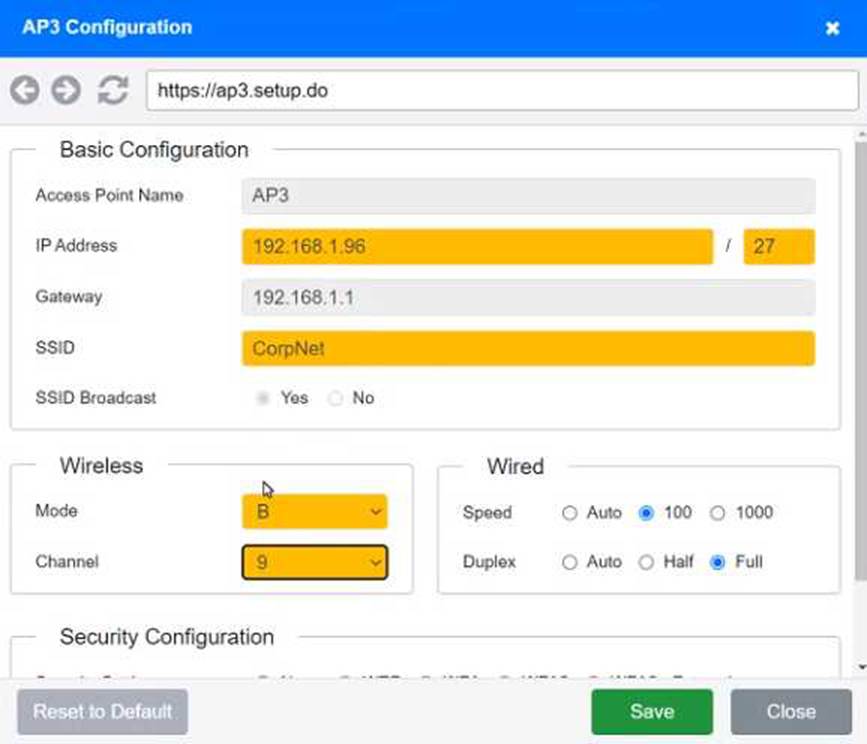
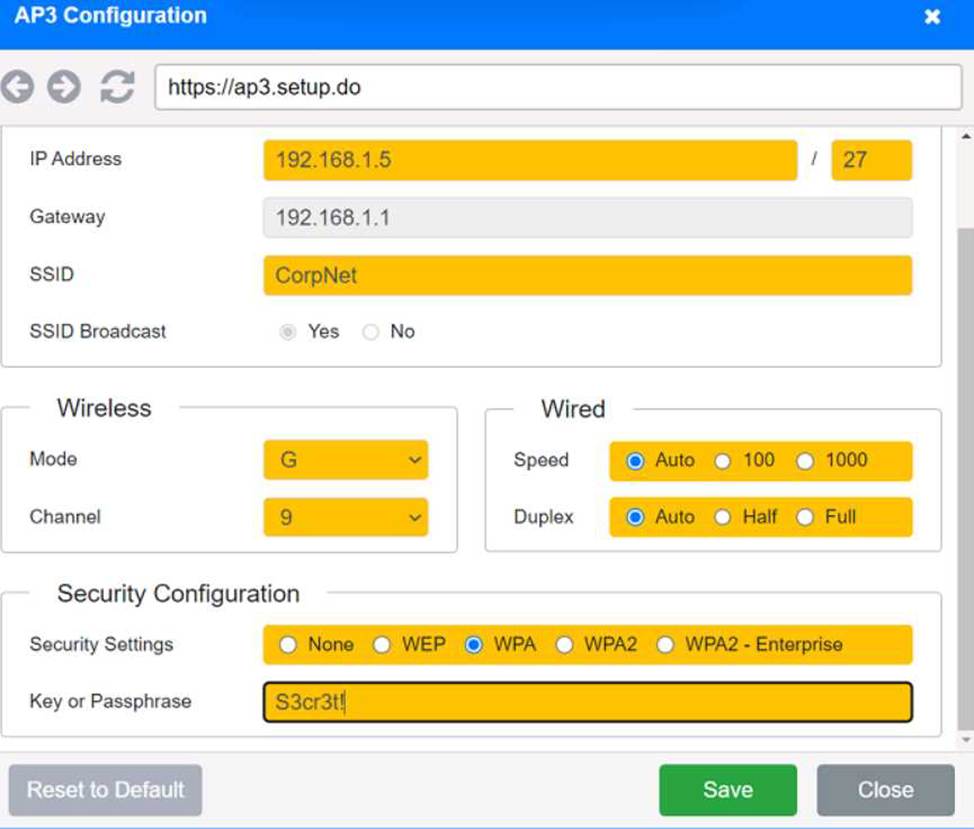
The SSIDs need to be configured as CorpNet with a key of S3cr3t!
The wireless signals should not interfere with each other
The subnet the Access Points and switch are on should only support 30 devices maximum The Access Points should be configured to only support TKIP clients at a maximum speed
INSTRUCTONS
Click on the wireless devices and review their information and adjust the settings of the access points to meet the given requirements.
If at any time you would like to bring back the initial state of the simulation, please click the Reset All button.
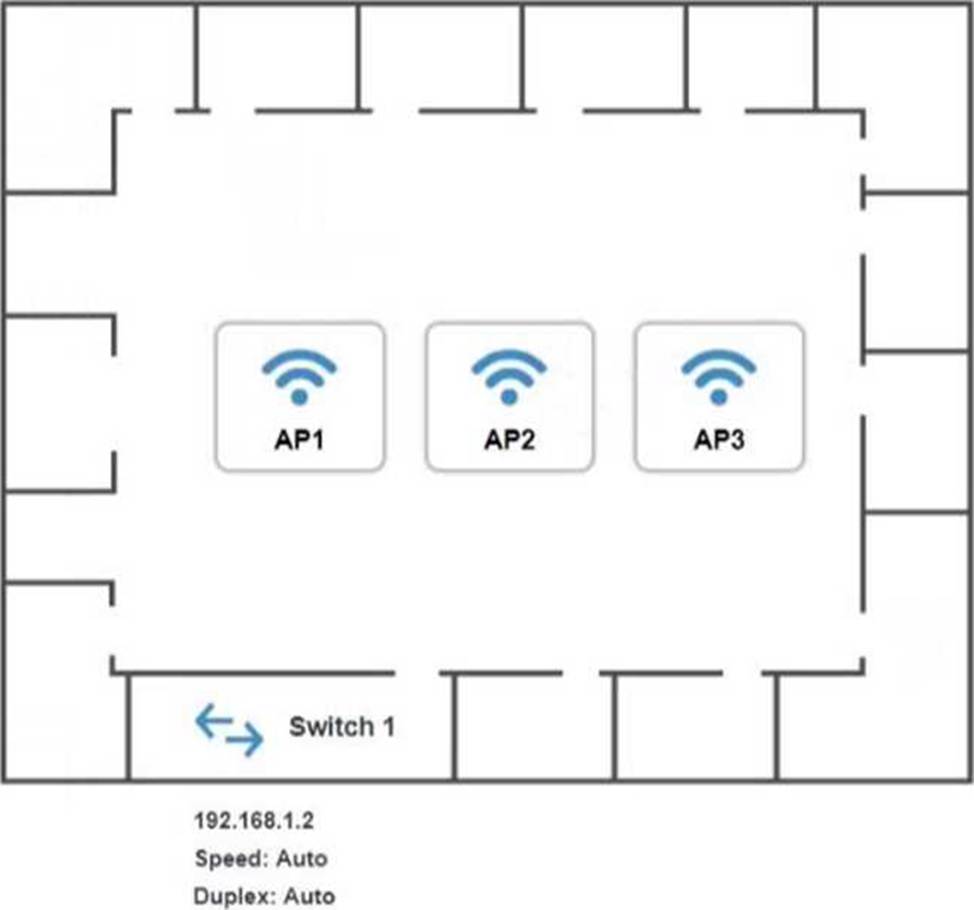
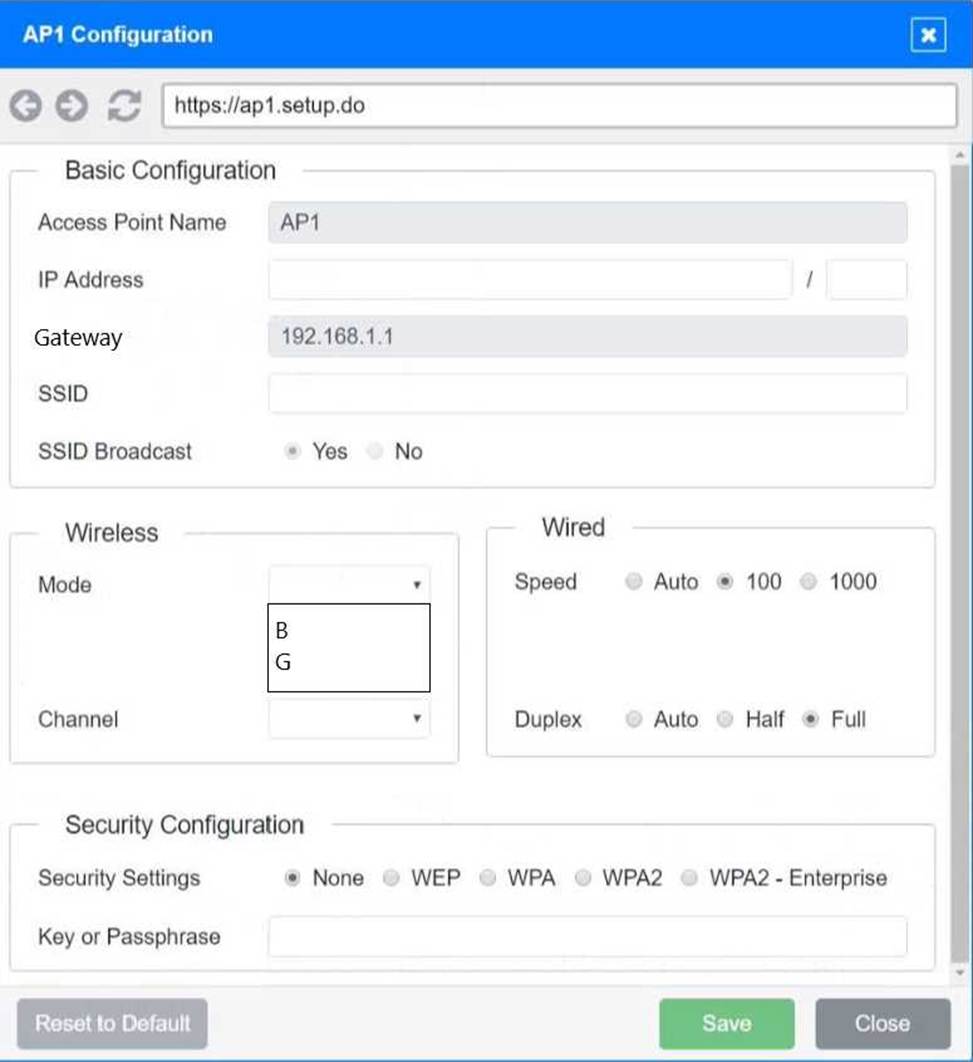
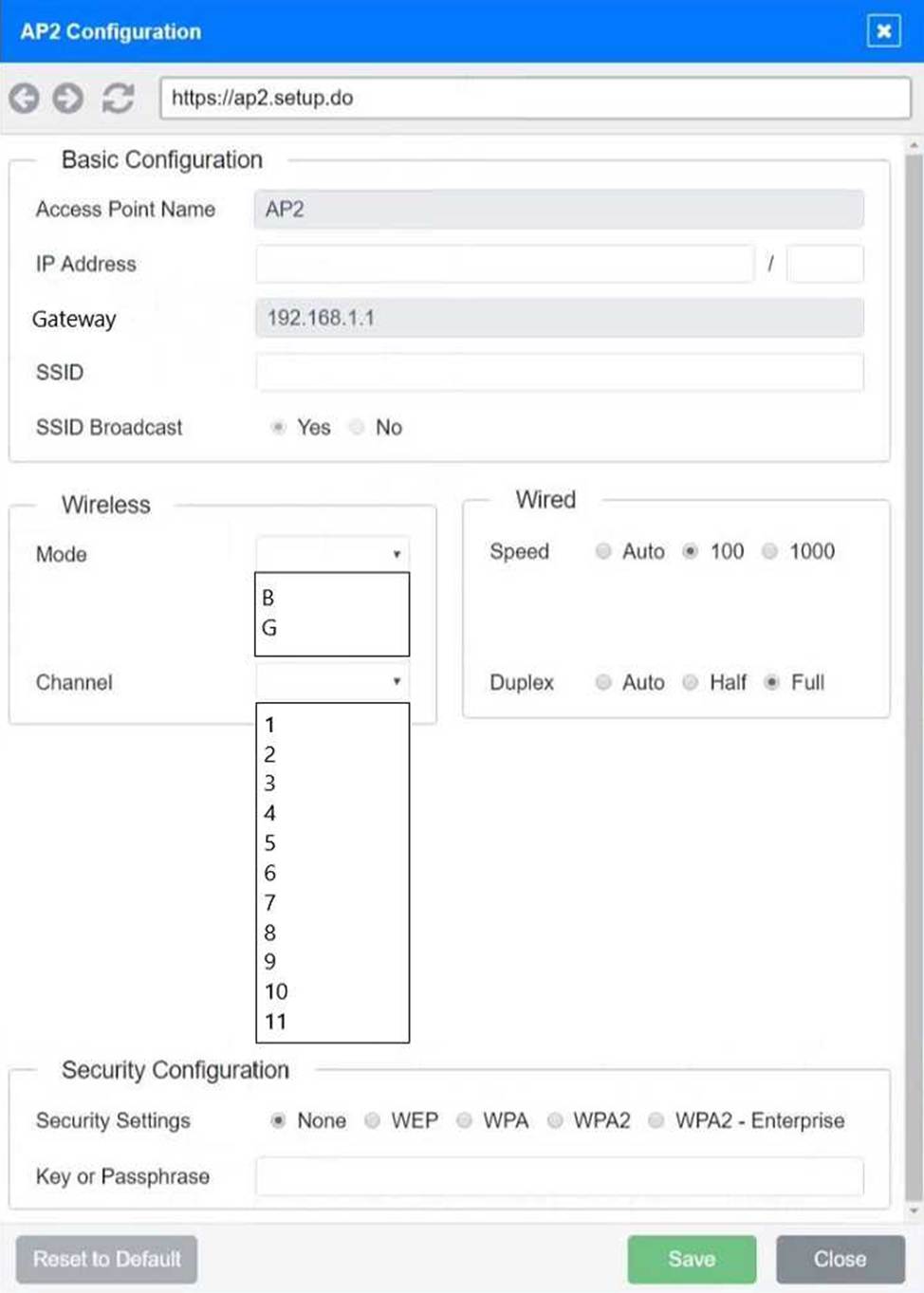
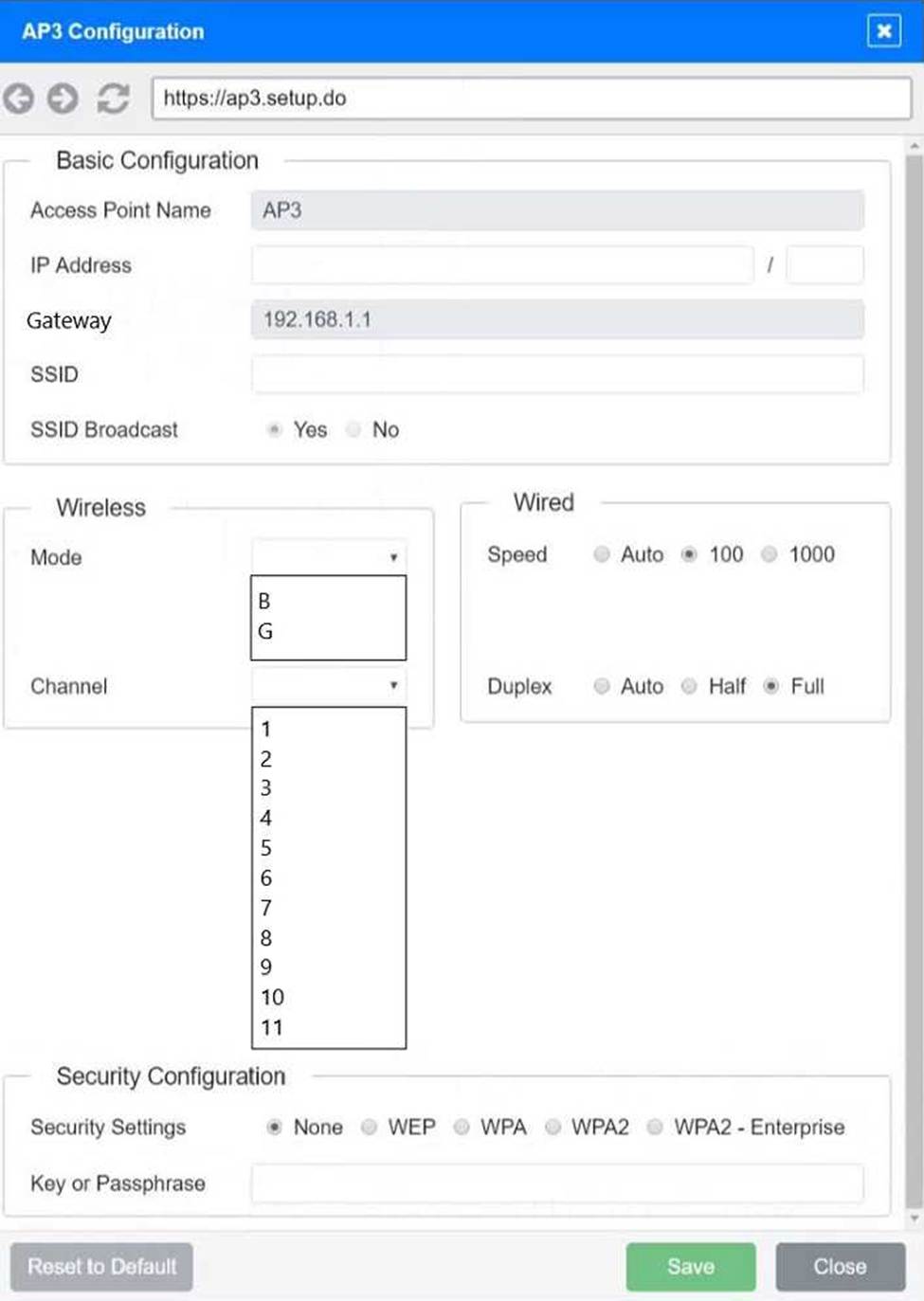
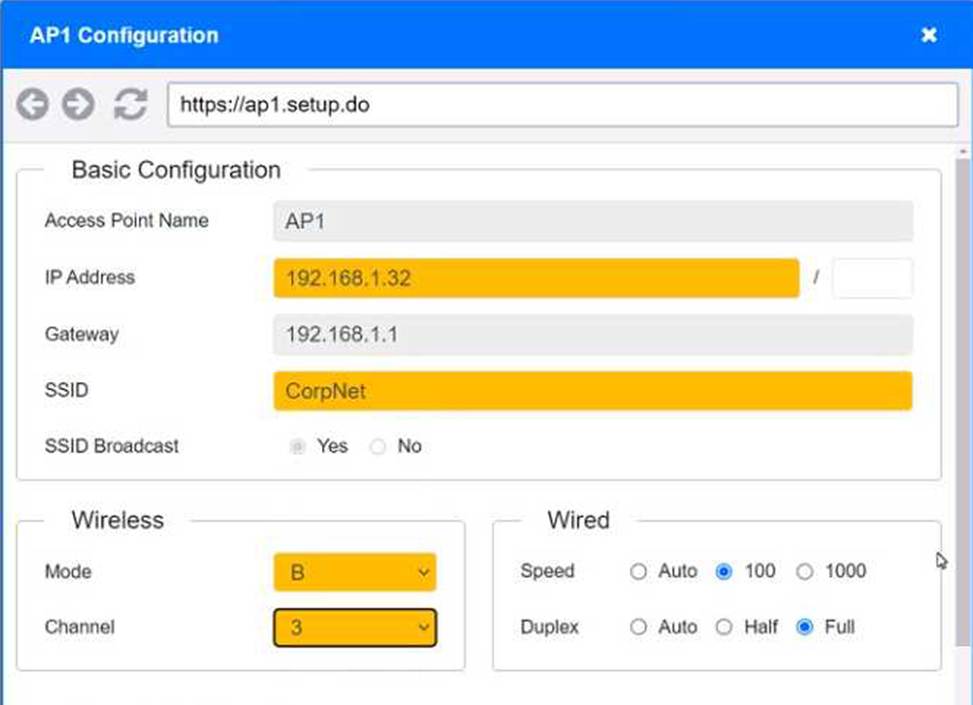
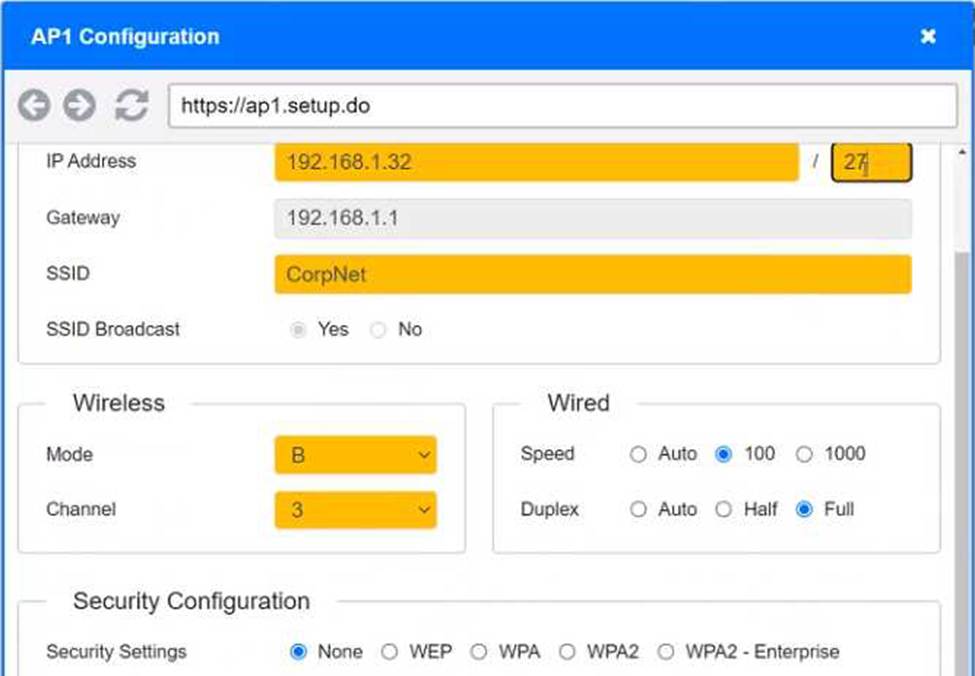

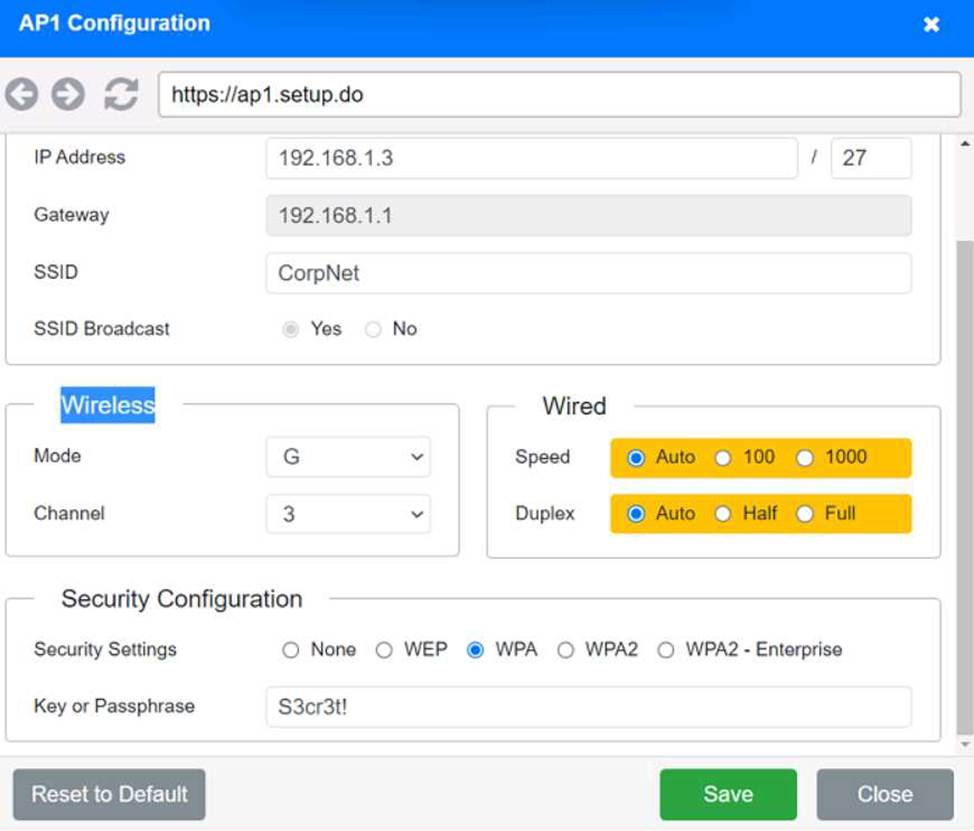
Exhibit 2 as follows
Access Point Name AP2
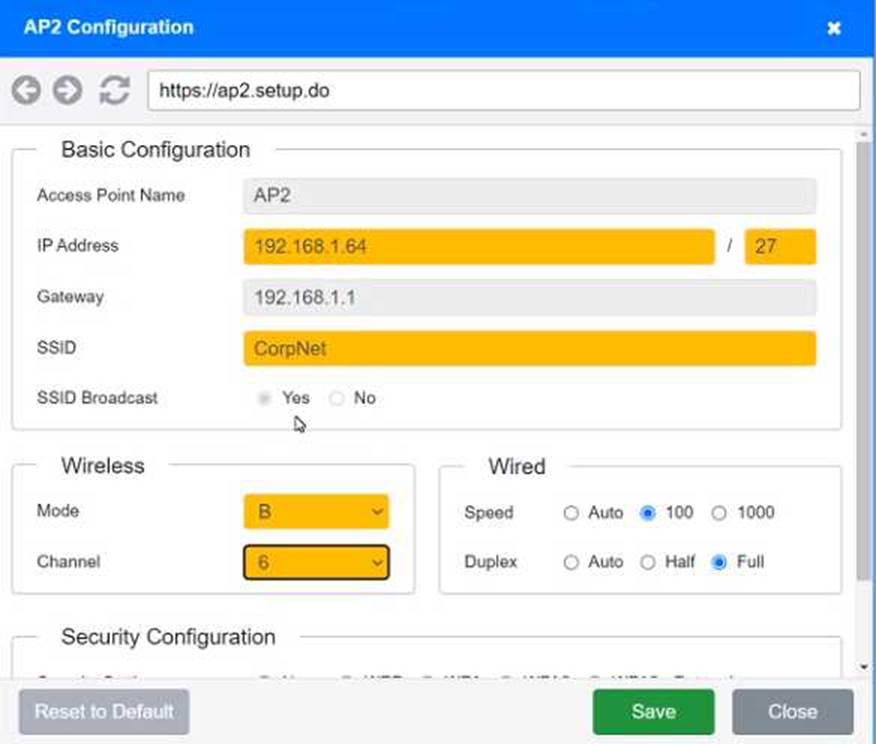

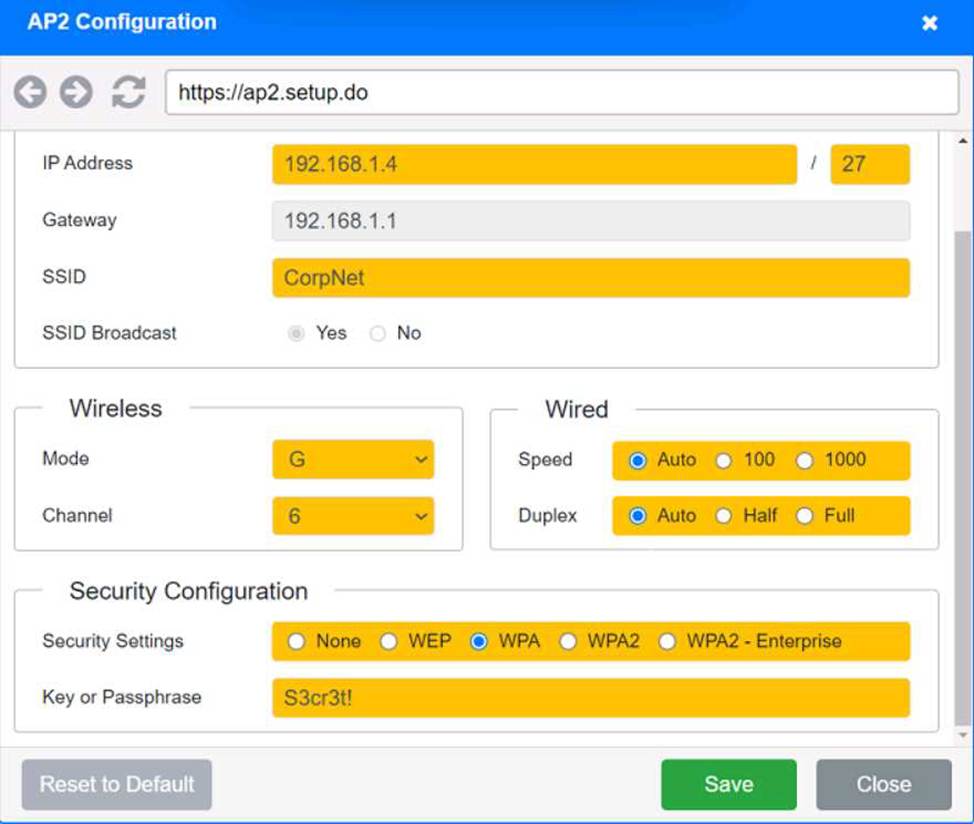
Exhibit 3 as follows
Access Point Name AP3

Which of the following attacks utilizes a network packet that contains multiple network tags?
- A . MAC flooding
- B . VLAN hopping
- C . DNS spoofing
- D . ARP poisoning
B
Explanation:
VLAN hopping is an attack where an attacker crafts packets with multiple VLAN tags, allowing them to traverse VLAN boundaries improperly. This can result in gaining unauthorized access to network segments that are supposed to be isolated. The other options do not involve the use of multiple network tags. MAC flooding aims to overwhelm a switch’s MAC address table, DNS spoofing involves forging DNS responses, and ARP poisoning involves sending fake ARP messages.
Reference: According to the CompTIA Network+ course materials, VLAN hopping exploits the tagging mechanism in network packets to gain unauthorized access.
Three access points have Ethernet that runs through the ceiling. One of the access points cannot reach the internet.
Which of the following tools can help identify the issue?
- A . Network tap
- B . Cable tester
- C . Visual fault locator
- D . Toner and probe
B
Explanation:
A cable tester is a tool that can help identify issues with the physical cabling, such as breaks or improper terminations, which may prevent the access point from reaching the internet.
Which of the following can support a jumbo frame?
- A . Access point
- B . Bridge
- C . Hub
- D . Switch
D
Explanation:
Definition of Jumbo Frames:
Jumbo frames are Ethernet frames with more than 1500 bytes of payload, typically up to 9000 bytes. They are used to improve network performance by reducing the overhead caused by smaller frames.
Why Switches Support Jumbo Frames:
Switches are network devices designed to manage data packets and can be configured to support
jumbo frames. This capability enhances throughput and efficiency, particularly in high-performance
networks and data centers.
Incompatibility of Other Devices:
Access Point: Primarily handles wireless communications and does not typically support jumbo frames.
Bridge: Connects different network segments but usually operates at standard Ethernet frame sizes.
Hub: A simple network device that transmits packets to all ports without distinguishing between devices, incapable of handling jumbo frames.
Practical Application:
Enabling jumbo frames on switches helps in environments where large data transfers are common,
such as in storage area networks (SANs) or large-scale virtualized environments.
Reference: CompTIA Network+ course materials and networking hardware documentation.
A technician is planning an equipment installation into a rack in a data center that practices hot aisle/cold aisle ventilation.
Which of the following directions should the equipment exhaust face when installed in the rack?
- A . Sides
- B . Top
- C . Front
- D . Rear
D
Explanation:
In a data center that uses hot aisle/cold aisle ventilation, equipment is typically installed so that cool air enters from the cold aisle (front) and hot air is exhausted to the hot aisle (rear). This configuration maximizes cooling efficiency.
A company recently converted most of the office laptops to connect wirelessly to the corporate network. After a high-traffic malware attack, narrowing the event to a specific user was difficult because of the wireless configuration.
Which of the following actions should the company take?
- A . Restrict users to the 5GHz frequency.
- B . Upgrade to a mesh network.
- C . Migrate from PSK to Enterprise.
- D . Implement WPA2 encryption.
C
Explanation:
Comprehensive and Detailed
Using Pre-Shared Key (PSK) authentication means that all users share the same Wi-Fi password, making it difficult to identify individual users when security incidents occur.
Migrating to WPA2-Enterprise (or WPA3-Enterprise) replaces PSK authentication with individual user credentials using 802.1X authentication and a RADIUS server. This allows the organization to: Track and log specific user activity
Enforce per-user authentication policies
Improve network security
Breakdown of Options:
An investment bank is seeking a DR backup solution.
Which of the following provides the most cost-effective backup site?
- A . Hot
- B . Cold
- C . Cluster
- D . Warm
B
Explanation:
• Cold sites are the most cost-effective disaster recovery (DR) option since they require the least infrastructure investment. They provide space and power but no pre-configured systems.
• Hot sites (A) are fully operational and very expensive.
• Warm sites (D) offer some pre-configured hardware but still require setup, making them more costly than cold sites.
• Clusters (C) are active failover systems, not DR sites.
Reference: CompTIA Network+ N10-009 Official Documentation C Disaster Recovery & Business Continuity Planning.
Which of the following are environmental factors that should be considered when installing equipment in a building? (Select two).
- A . Fire suppression system
- B . UPS location
- C . Humidity control
- D . Power load
- E . Floor construction type
- F . Proximity to nearest MDF
A
Explanation:
When installing equipment in a building, environmental factors are critical to ensure the safety and longevity of the equipment. A fire suppression system is essential to protect the equipment from fire hazards. Humidity control is crucial to prevent moisture-related damage, such as corrosion and short circuits, which can adversely affect electronic components. Both factors are vital for maintaining an optimal environment for networking equipment.
Reference: CompTIA Network+ study materials.