
CIPS L4M5 Practice Exams
Last updated on Oct 24,2026- Exam Code: L4M5
- Exam Name: Commercial Negotiation
- Certification Provider: CIPS
- Latest update: Oct 24,2026
From government’s statistics
- A . 2 and 4 only
- B . 3 and 4 only
- C . 1 and 2 only
- D . 1 and 3 only
B
Explanation:
Macroeconomic indicators are statistics or data readings that reflect the economic circumstances of a particular country, region or sector. They are used by analysts and governments to assess the current and future health of the economy and financial markets. Macroeconomic indicators will vary in their meaning and the impact that they have on the economy, but broadly speaking there are two main types of indicator.
– Leading indicators, which forecast where an economy might be heading. They are often used by governments to implement policies because they represent the first phase of a new economic cycle. These include the yield curve, interest rates and share prices.
– Lagging indicators, which reflect an economy’s historical performance and only change after a trend has been established. They are used to confirm a trend is underway. These include gross domestic product (GDP), inflation and employment figures.
There is also the category of coincident indicators, but these are generally grouped in with lagging indicators as they either happen at the same time or after an economic shift.
The best macroeconomic indicator to watch will heavily depend on your personal preferences, what positions you are taking and which country your portfolio is focused on. However, there are some very common indicators that most traders and investors will keep an eye on.
For simplicity’s sake, we have split these out into leading and lagging indicators. Top leading indicators:
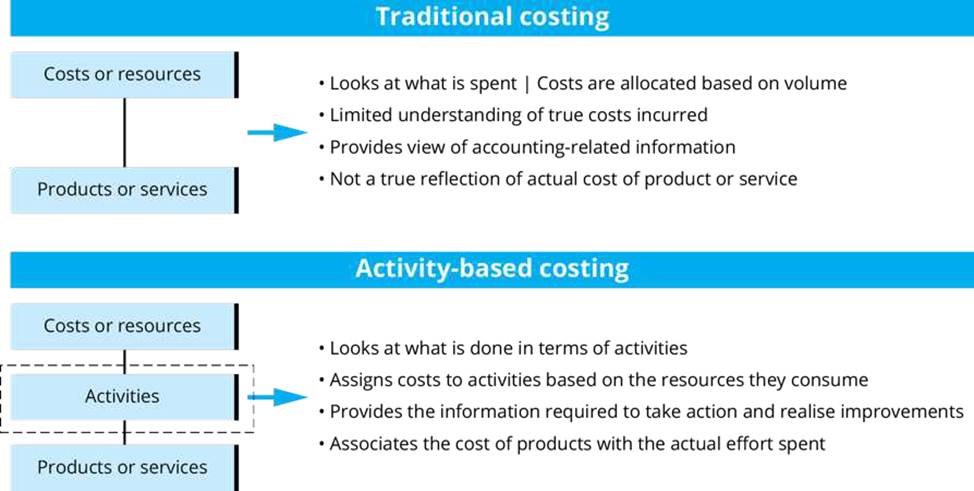
Which of the following is a disadvantage of absorption costing method?
- A . Fixed cost allocated to products on the basis of the cost of activities used in producing them
- B . Variable costs are not taken into product final costs
- C . Using marginal cost of producing addition units
- D . Limited understanding of true costs incurred
D
Explanation:
Absorption costing is an approach to allocating overheads in which indirect costs are loaded or absorbed into direct costs related to specific jobs, processes or outputs, using an estimated basis of allocation.
Which of the following may help the procurement professional increase expert power in commercial negotiation? Select TWO that apply.
- A . Personality
- B . Official positions
- C . Insights
- D . Ability to compensation
- E . Expertise knowledge
C, E
Explanation:
Expert power is based on a person’s high levels of skill and knowledge, formal training, qualifications and experience in a particular procurement category would give someone expert status and mean that in negotiation their voice is listened to as a more objective, informed knowledge leader. Expert power is based on facts, knowledge, research, insight and study.
Legitimate power comes from rules, formal authority, organisation rank, staff rate or official position held.
Reward power comes from one person’s ability to compensate or reward another for compliance. Referent power stems from their personality, way of engaging with others and habit of acting in a way that is in line with a strong set of values and principles.
Langham Industries is seeking to expand its operations globally. The CEO has asked the procurement department to engage in a macroeconomic analysis for its potential new supply chain to meet organisational objectives and outcomes.
Which of the following would be a source of macroeconomic data?
- A . Competitor analysis
- B . Attending trade conferences
- C . Published market indices
- D . Online supplier forums
C
Explanation:
Published market indices are a source of macroeconomic data, as they reflect broader economic trends and provide insights into the overall market environment, which is essential for global expansion planning. Macroeconomic analysis focuses on high-level economic indicators, as recommended in CIPS’s guidelines on sourcing macroeconomic data.
Tony is undertaking a negotiation with a strategic supplier and is frustrated by the lack of progress. He proposes using threats to get what he wants from the negotiations.
Is this the correct course of action?
- A . Yes, Tony will get what he requires from the negotiations
- B . Yes, a long-term relationship is not required with the supplier
- C . No, a long-term relationship built on trust is required with the supplier
- D . No, it does not guarantee Tony will get what he requires from the negotiations
C
Explanation:
Using threats is generally inappropriate in strategic supplier negotiations where a long-term, trust-based relationship is required (C). Threatening tactics can damage the relationship and may result in resistance from the supplier. CIPS advocates for collaborative approaches in strategic relationships to foster mutual trust and achieve sustainable agreements.
In a detailed cost breakdown, a company has a salary cost of 9%, raw materials cost 51% and overheads cost 24%.
Which of the following represents the mark-up of that company?
- A . Approximately 84%
- B . Approximately 19%
- C . Approximately 116%
- D . Approximately 16%
B
Explanation:
Mark-up is the amount added to the cost of an item to get to its selling price and is expressed as a percentage.
Mark-up (%) = (Price – Cost) / Cost x 100
= (100 – 9 – 51 – 24) / (9 +51 +24) x 100 = 16 / 84 x 100 = 19.04% LO 2, AC 2.1
During a negotiation, a procurement manager suggests that the two companies should split the difference which would benefit both the supplier and buyer.
Which persuasion method is she using?
- A . Compromise
- B . Threat
- C . Good cop/bad cop
- D . Logic
A
Explanation:
In the scenario, the manager propose to ‘split the difference’, which means each party will accept some of their demands and concede some. This is known as ‘Compromise’.
Reference: CIPS study guide page 163-165